UEG Week Recordings UEG Week Posters Online courses Guidelines Mistakes in... Podcasts Webinars
new
Gut Guide online
Visit ueg.eu Create myUEG account Log In

Filters:

UEG Mistakes In Articles
Share via Email Share on Facebook Share on X Share on LinkedIn Share on Bluesky

Log in to continue.

This content is part of Gutflix. Log in with your myUEG account, or create one free, to watch it.

Log In Create a free account

Not sure what you can access? Learn more about account types.

Mistakes in the management of postoperative Crohn’s disease and how to avoid them

Miriam Mañosa Ciria, Eugeni Domenech Morral

Summary

AI Generated

This material addresses common management errors to avoid in postoperative Crohn's disease patients, focusing on the prevention and recognition of postoperative recurrence following intestinal resection.

  • Up to 70% of Crohn's disease patients develop new mucosal lesions in the neoterminal ileum within the first year after intestinal resection if no preventive therapy is started early after surgery.
  • Postoperative recurrence occurs in three forms: endoscopic (mucosal lesions on ileocolonoscopy), clinical (symptomatic), and surgical (requiring repeat resection), with endoscopic recurrence preceding clinical symptoms.
  • Ileocecal resection plus ileocolic anastomosis is the most common surgical procedure for managing Crohn's disease complications including strictures, fistulae, inflammatory masses and abscesses.
  • The material provides guidance based on available evidence and clinical experience for gastroenterologists managing postoperative Crohn's disease patients.
Download PDF

Was this helpful?

Thanks for your feedback.

This summary was generated by an AI large language model based on the content transcript. It is for informational purposes only and should not be considered a substitute for clinical judgment. Always rely on your professional expertise and the full clinical context when making clinical decisions.

References

Mistakes
References
Mistake 1 Mistake 2 Mistake 3 Mistake 4 Mistake 5 Mistake 6 Mistake 7 Mistake 8 Mistake 9 Mistake 10
1.
Bossuyt P, et al. The operative risk and natural history after the diagnosis of ileal penetrating Crohn's disease. Eur J Gastroenterol Hepatol 2018; 30: 539–545. [Link]
2.
Domènech E, Mañosa M and Cabré E. An overview of the natural history of inflammatory bowel disease. Dig Dis 2014; 32: 320–327. [Link]
3.
Rutgeerts P, et al. Predictability of the postoperative course of Crohn's disease. Gastroenterology 1990; 99: 956–963. [Link]
4.
Reese GE, et al. The effect of smoking after surgery for Crohn’s disease: a meta-analysis of observational studies. Int J Colorectal Dis 2008; 23: 1213–1221. [Link]
5.
De Cruz P, et al. Postoperative recurrent luminal Crohn’s disease: a systematic review. Inflamm Bowel Dis 2012; 18: 758–777. [Link]
6.
Domènech E, et al. Recommendations of the Spanish Working Group on Crohn’s disease and ulcerative colitis (GETECCU) on the monitoring, prevention and treatment of postoperative recurrence in Crohn’s disease. Gastroenterol Hepatol 2017; 40: 472–483. [Link]
7.
Nguyen GC, et al. American Gastroenterological Association Institute guideline on the management of Crohn’s disease after surgical resection. Gastroenterology 2017; 152: 271–275. [Link]
8.
Boschetti G, et al. Levels of fecal calprotectin are associated with the severity of postoperative endoscopic recurrence in asymptomatic patients with Crohn's disease. Am J Gastroenterol 2015; 110: 865–872. [Link]
9.
Wright EK, et al. Measurement of fecal calprotectin improves monitoring and detection of recurrence of Crohn's disease after surgery. Gastroenterology 2015; 148: 938–947. [Link]
10.
Garcia-Planella E, et al. Fecal calprotectin levels are closely correlated with the absence of relevant mucosal lesions in postoperative Crohn’s disease. Inflamm Bowel Dis 2016; 22: 2879–2885. [Link]
11.
Lamb CA, et al. Faecal calprotectin or lactoferrin can identify postoperative recurrence in Crohn's disease. Br J Surg 2009; 96: 663–674. [Link]
12.
D'Amico F, et al. International consensus on methodological issues in standardization of fecal calprotectin measurement in inflammatory bowel diseases. United European Gastroenterol J 2021; 9: 451–460. [Link]
13.
Mañosa M, et al. Addition of metronidazole to azathioprine for the prevention of postoperative recurrence of Crohn’s disease: a randomized, double-blind, placebo-controlled trial. Inflamm Bowel Dis 2013; 19: 1889–1895. [Link]
14.
Ferrante M, et al. Systematic versus endoscopy-driven treatment with azathioprine to prevent postoperative ileal Crohn's disease recurrence. J Crohns Colitis 2015; 9: 617–624. [Link]
15.
Cañete F, et al. Antitumor necrosis factor agents to treat endoscopic postoperative recurrence of Crohn's disease: A nationwide study with propensity-matched score analysis. Clin Transl Gastroenterol 2020; 11: e00218. [Link]
16.
Pouillon L, et al. Risk of late postoperative recurrence of Crohn's disease in patients in endoscopic remission after ileocecal resection, over 10 years at multiple centers. Clin Gastroenterol Hepatol 2021; 19: 1218–1225. [Link]
17.
De Cruz P, et al. Crohn’s disease management after intestinal resection: a randomised trial. Lancet 2015; 385: 1406–1417. [Link]
18.
Rivière P, et al. Rates of postoperative recurrence of Crohn's disease and effects of immunosuppressive and biologic therapies. Clin Gastroenterol Hepatol 2021; 19: 713–720. [Link]
19.
Lémann M, et al. A randomized, double-blind, controlled withdrawal trial in Crohn's disease patients in long-term remission on azathioprine. Gastroenterology 2005; 128: 1812–1818. [Link]
20.
Fumery M, et al. Systematic review with meta-analysis: recurrence of Crohn's disease after total colectomy with permanent ileostomy. Aliment Pharmacol Ther 2017; 45: 381–390. [Link]
21.
Ghishan FK and Kiela PR. Vitamins and minerals in inflammatory bowel disease. Gastroenterol Clin North Am 2017; 46: 797–808. [Link]
22.
Dignass AU, et al. European consensus on the diagnosis and management of iron deficiency and anaemia in inflammatory bowel diseases. J Crohns Colitis 2015; 9 : 211–222. [Link]

Abstract

Crohn’s disease is a chronic immune-mediated inflammatory condition that usually produces cumulative transmural intestinal damage. Disease-related complications, such as intestinal strictures and intra-abdominal penetrating complications (including enteric fistulae, inflammatory masses and abscesses), are mostly managed via a surgical approach, with ileocecal resection plus ileocolic anastomosis being the most common procedure. Despite the curative intention of surgery, however, up to 70% of patients develop new mucosal lesions in the neoterminal ileum within the first year of intestinal resection if no preventive therapy is started early after surgery. This postoperative recurrence (POR) can be described as endoscopic, clinical or surgical. Endoscopic POR—defined as the presence of mucosal lesions in the neoterminal ileum, as assessed by ileocolonoscopy—precedes the development of symptoms (clinical POR), which may lead to the need for new surgical resections (surgical POR). Here we discuss the errors to avoid when managing patients with Crohn’s disease in the postoperative setting. The discussion is based on evidence, whenever possible, as well as on our clinical experience and perception of the field.


Topics

IBD

Citation

Domènech E and Mañosa M. Mistakes in the management of postoperative Crohn’s disease and how to avoid them. UEG Education 2022; 22: 5–7. 

Published

2022

More Like This:

Fascinating histories and curiosities in gastroenterology

Fascinating histories and curiosities in gastroenterology

Enrique de-Madaria Enrique de-Madaria, Pradeep Mundre

The Evolving Landscape of Scientific Publishing: Navigating Trends, Challenges, and Opportunities

The Evolving Landscape of Scientific Publishing: Navigating Trends, Challenges, and Opportunities

Joost Drenth Joost Drenth, Pradeep Mundre

Transitional care with Patrizia Burra & Jorge Amil Dias

Transitional care with Patrizia Burra & Jorge Amil Dias

Pradeep Mundre Pradeep Mundre, Jorge Amil Dias, Patrizia Burra

Mistakes in imaging hepatic lesions and how to avoid them

Mistakes in imaging hepatic lesions and how to avoid them

Katja De Paepe Katja De Paepe

Intestinal failure and parenteral nutrition

Intestinal failure and parenteral nutrition

Sarah Williams Sarah Williams

DURABLE EFFECTS OF DUODENAL ABLATION USING ELECTROPORATION COMBINED WITH SEMAGLUTIDE TO ELIMINATE INSULIN THERAPY IN PATIENTS WITH TYPE 2 DIABETES; THE 24-MONTH RESULTS

DURABLE EFFECTS OF DUODENAL ABLATION USING ELECTROPORATION COMBINED WITH SEMAGLUTIDE TO ELIMINATE INSULIN THERAPY IN PATIENTS WITH TYPE 2 DIABETES; THE 24-MONTH RESULTS

Frits Holleman Frits Holleman, Jacques J. Bergman, Max Nieuwdorp, Suzanne Meiring, Annieke van Baar, Kim van den Hoek, Celine B. E. Busch

UEG Podcast Episode
UEG Podcast
Share via Email Share on Facebook Share on X Share on LinkedIn Share on Bluesky

Log in to continue.

This content is part of Gutflix. Log in with your myUEG account, or create one free, to watch it.

Log In Create a free account

Not sure what you can access? Learn more about account types.

Fascinating histories and curiosities in gastroenterology

Pradeep Mundre 1, Enrique de-Madaria 2

Affiliations

1 Bradford Teaching Hospitals NHS trust, Leeds, United Kingdom

2 Hospital General Universitario de Alicante, Alicante, Spain

Summary

AI Generated

Summary is not available for this content yet.

Download PDF

Was this helpful?

Thanks for your feedback.

This summary was generated by an AI large language model based on the content transcript. It is for informational purposes only and should not be considered a substitute for clinical judgment. Always rely on your professional expertise and the full clinical context when making clinical decisions.

Abstract

Topics

Education & Training

Published

2023

More Like This:

Fascinating histories and curiosities in gastroenterology

Fascinating histories and curiosities in gastroenterology

Enrique de-Madaria Enrique de-Madaria, Pradeep Mundre

The Evolving Landscape of Scientific Publishing: Navigating Trends, Challenges, and Opportunities

The Evolving Landscape of Scientific Publishing: Navigating Trends, Challenges, and Opportunities

Joost Drenth Joost Drenth, Pradeep Mundre

Transitional care with Patrizia Burra & Jorge Amil Dias

Transitional care with Patrizia Burra & Jorge Amil Dias

Pradeep Mundre Pradeep Mundre, Jorge Amil Dias, Patrizia Burra

Mistakes in imaging hepatic lesions and how to avoid them

Mistakes in imaging hepatic lesions and how to avoid them

Katja De Paepe Katja De Paepe

Intestinal failure and parenteral nutrition

Intestinal failure and parenteral nutrition

Sarah Williams Sarah Williams

DURABLE EFFECTS OF DUODENAL ABLATION USING ELECTROPORATION COMBINED WITH SEMAGLUTIDE TO ELIMINATE INSULIN THERAPY IN PATIENTS WITH TYPE 2 DIABETES; THE 24-MONTH RESULTS

DURABLE EFFECTS OF DUODENAL ABLATION USING ELECTROPORATION COMBINED WITH SEMAGLUTIDE TO ELIMINATE INSULIN THERAPY IN PATIENTS WITH TYPE 2 DIABETES; THE 24-MONTH RESULTS

Frits Holleman Frits Holleman, Jacques J. Bergman, Max Nieuwdorp, Suzanne Meiring, Annieke van Baar, Kim van den Hoek, Celine B. E. Busch

UEG Podcast Episode
UEG Podcast
Share via Email Share on Facebook Share on X Share on LinkedIn Share on Bluesky

Log in to continue.

This content is part of Gutflix. Log in with your myUEG account, or create one free, to watch it.

Log In Create a free account

Not sure what you can access? Learn more about account types.

The Evolving Landscape of Scientific Publishing: Navigating Trends, Challenges, and Opportunities

Pradeep Mundre 1, Joost Drenth 2

Affiliations

1 Bradford Teaching Hospitals NHS trust, Leeds, United Kingdom

2 Amsterdam UMC, Netherlands

Summary

AI Generated

Summary is not available for this content yet.

Download PDF

Was this helpful?

Thanks for your feedback.

This summary was generated by an AI large language model based on the content transcript. It is for informational purposes only and should not be considered a substitute for clinical judgment. Always rely on your professional expertise and the full clinical context when making clinical decisions.

Abstract

Topics

Education & Training

Published

2024

More Like This:

Fascinating histories and curiosities in gastroenterology

Fascinating histories and curiosities in gastroenterology

Enrique de-Madaria Enrique de-Madaria, Pradeep Mundre

The Evolving Landscape of Scientific Publishing: Navigating Trends, Challenges, and Opportunities

The Evolving Landscape of Scientific Publishing: Navigating Trends, Challenges, and Opportunities

Joost Drenth Joost Drenth, Pradeep Mundre

Transitional care with Patrizia Burra & Jorge Amil Dias

Transitional care with Patrizia Burra & Jorge Amil Dias

Pradeep Mundre Pradeep Mundre, Jorge Amil Dias, Patrizia Burra

Mistakes in imaging hepatic lesions and how to avoid them

Mistakes in imaging hepatic lesions and how to avoid them

Katja De Paepe Katja De Paepe

Intestinal failure and parenteral nutrition

Intestinal failure and parenteral nutrition

Sarah Williams Sarah Williams

DURABLE EFFECTS OF DUODENAL ABLATION USING ELECTROPORATION COMBINED WITH SEMAGLUTIDE TO ELIMINATE INSULIN THERAPY IN PATIENTS WITH TYPE 2 DIABETES; THE 24-MONTH RESULTS

DURABLE EFFECTS OF DUODENAL ABLATION USING ELECTROPORATION COMBINED WITH SEMAGLUTIDE TO ELIMINATE INSULIN THERAPY IN PATIENTS WITH TYPE 2 DIABETES; THE 24-MONTH RESULTS

Frits Holleman Frits Holleman, Jacques J. Bergman, Max Nieuwdorp, Suzanne Meiring, Annieke van Baar, Kim van den Hoek, Celine B. E. Busch

UEG Podcast Episode
UEG Podcast
Share via Email Share on Facebook Share on X Share on LinkedIn Share on Bluesky

Log in to continue.

This content is part of Gutflix. Log in with your myUEG account, or create one free, to watch it.

Log In Create a free account

Not sure what you can access? Learn more about account types.

Transitional care with Patrizia Burra & Jorge Amil Dias

Patrizia Burra, Jorge Amil Dias, Pradeep Mundre

Summary

AI Generated

Summary is not available for this content yet.

Download PDF

Was this helpful?

Thanks for your feedback.

This summary was generated by an AI large language model based on the content transcript. It is for informational purposes only and should not be considered a substitute for clinical judgment. Always rely on your professional expertise and the full clinical context when making clinical decisions.

Abstract

Topics

Paediatrics

Published

2025

More Like This:

Fascinating histories and curiosities in gastroenterology

Fascinating histories and curiosities in gastroenterology

Enrique de-Madaria Enrique de-Madaria, Pradeep Mundre

The Evolving Landscape of Scientific Publishing: Navigating Trends, Challenges, and Opportunities

The Evolving Landscape of Scientific Publishing: Navigating Trends, Challenges, and Opportunities

Joost Drenth Joost Drenth, Pradeep Mundre

Transitional care with Patrizia Burra & Jorge Amil Dias

Transitional care with Patrizia Burra & Jorge Amil Dias

Pradeep Mundre Pradeep Mundre, Jorge Amil Dias, Patrizia Burra

Mistakes in imaging hepatic lesions and how to avoid them

Mistakes in imaging hepatic lesions and how to avoid them

Katja De Paepe Katja De Paepe

Intestinal failure and parenteral nutrition

Intestinal failure and parenteral nutrition

Sarah Williams Sarah Williams

DURABLE EFFECTS OF DUODENAL ABLATION USING ELECTROPORATION COMBINED WITH SEMAGLUTIDE TO ELIMINATE INSULIN THERAPY IN PATIENTS WITH TYPE 2 DIABETES; THE 24-MONTH RESULTS

DURABLE EFFECTS OF DUODENAL ABLATION USING ELECTROPORATION COMBINED WITH SEMAGLUTIDE TO ELIMINATE INSULIN THERAPY IN PATIENTS WITH TYPE 2 DIABETES; THE 24-MONTH RESULTS

Frits Holleman Frits Holleman, Jacques J. Bergman, Max Nieuwdorp, Suzanne Meiring, Annieke van Baar, Kim van den Hoek, Celine B. E. Busch

UEG Mistakes In Articles
Share via Email Share on Facebook Share on X Share on LinkedIn Share on Bluesky

Log in to continue.

This content is part of Gutflix. Log in with your myUEG account, or create one free, to watch it.

Log In Create a free account

Not sure what you can access? Learn more about account types.

Mistakes in imaging hepatic lesions and how to avoid them

Katja De Paepe

Summary

AI Generated

Summary is not available for this content yet.

Download PDF

Was this helpful?

Thanks for your feedback.

This summary was generated by an AI large language model based on the content transcript. It is for informational purposes only and should not be considered a substitute for clinical judgment. Always rely on your professional expertise and the full clinical context when making clinical decisions.

References

Mistakes
References
Mistake 1 Mistake 2 Mistake 3 Mistake 4 Mistake 5 Mistake 6 Mistake 7 Mistake 8 Mistake 9 Mistake 10
1.
Bossuyt P, et al. The operative risk and natural history after the diagnosis of ileal penetrating Crohn's disease. Eur J Gastroenterol Hepatol 2018; 30: 539–545. [Link]
2.
Domènech E, Mañosa M and Cabré E. An overview of the natural history of inflammatory bowel disease. Dig Dis 2014; 32: 320–327. [Link]
3.
Rutgeerts P, et al. Predictability of the postoperative course of Crohn's disease. Gastroenterology 1990; 99: 956–963. [Link]
4.
Reese GE, et al. The effect of smoking after surgery for Crohn’s disease: a meta-analysis of observational studies. Int J Colorectal Dis 2008; 23: 1213–1221. [Link]
5.
De Cruz P, et al. Postoperative recurrent luminal Crohn’s disease: a systematic review. Inflamm Bowel Dis 2012; 18: 758–777. [Link]
6.
Domènech E, et al. Recommendations of the Spanish Working Group on Crohn’s disease and ulcerative colitis (GETECCU) on the monitoring, prevention and treatment of postoperative recurrence in Crohn’s disease. Gastroenterol Hepatol 2017; 40: 472–483. [Link]
7.
Nguyen GC, et al. American Gastroenterological Association Institute guideline on the management of Crohn’s disease after surgical resection. Gastroenterology 2017; 152: 271–275. [Link]
8.
Boschetti G, et al. Levels of fecal calprotectin are associated with the severity of postoperative endoscopic recurrence in asymptomatic patients with Crohn's disease. Am J Gastroenterol 2015; 110: 865–872. [Link]
9.
Wright EK, et al. Measurement of fecal calprotectin improves monitoring and detection of recurrence of Crohn's disease after surgery. Gastroenterology 2015; 148: 938–947. [Link]
10.
Garcia-Planella E, et al. Fecal calprotectin levels are closely correlated with the absence of relevant mucosal lesions in postoperative Crohn’s disease. Inflamm Bowel Dis 2016; 22: 2879–2885. [Link]
11.
Lamb CA, et al. Faecal calprotectin or lactoferrin can identify postoperative recurrence in Crohn's disease. Br J Surg 2009; 96: 663–674. [Link]
12.
D'Amico F, et al. International consensus on methodological issues in standardization of fecal calprotectin measurement in inflammatory bowel diseases. United European Gastroenterol J 2021; 9: 451–460. [Link]
13.
Mañosa M, et al. Addition of metronidazole to azathioprine for the prevention of postoperative recurrence of Crohn’s disease: a randomized, double-blind, placebo-controlled trial. Inflamm Bowel Dis 2013; 19: 1889–1895. [Link]
14.
Ferrante M, et al. Systematic versus endoscopy-driven treatment with azathioprine to prevent postoperative ileal Crohn's disease recurrence. J Crohns Colitis 2015; 9: 617–624. [Link]
15.
Cañete F, et al. Antitumor necrosis factor agents to treat endoscopic postoperative recurrence of Crohn's disease: A nationwide study with propensity-matched score analysis. Clin Transl Gastroenterol 2020; 11: e00218. [Link]
16.
Pouillon L, et al. Risk of late postoperative recurrence of Crohn's disease in patients in endoscopic remission after ileocecal resection, over 10 years at multiple centers. Clin Gastroenterol Hepatol 2021; 19: 1218–1225. [Link]
17.
De Cruz P, et al. Crohn’s disease management after intestinal resection: a randomised trial. Lancet 2015; 385: 1406–1417. [Link]
18.
Rivière P, et al. Rates of postoperative recurrence of Crohn's disease and effects of immunosuppressive and biologic therapies. Clin Gastroenterol Hepatol 2021; 19: 713–720. [Link]
19.
Lémann M, et al. A randomized, double-blind, controlled withdrawal trial in Crohn's disease patients in long-term remission on azathioprine. Gastroenterology 2005; 128: 1812–1818. [Link]
20.
Fumery M, et al. Systematic review with meta-analysis: recurrence of Crohn's disease after total colectomy with permanent ileostomy. Aliment Pharmacol Ther 2017; 45: 381–390. [Link]
21.
Ghishan FK and Kiela PR. Vitamins and minerals in inflammatory bowel disease. Gastroenterol Clin North Am 2017; 46: 797–808. [Link]
22.
Dignass AU, et al. European consensus on the diagnosis and management of iron deficiency and anaemia in inflammatory bowel diseases. J Crohns Colitis 2015; 9 : 211–222. [Link]

Abstract

Incidental liver lesions are increasingly found due to the incremental use of cross-sectional imaging. They encompass a large group of benign and malignant lesions, and the combined use of different imaging modalities is often required to make an accurate diagnosis. It is of utmost importance for clinicians and radiologists to be familiar with each imaging modality's strengths and limitations and be aware of common pitfalls that can confound the correct interpretation of findings. The article will discuss eight common mistakes in the interpretation and acquisition of radiological images. Recommendations on avoiding these mistakes will be based on clinical experience and literature where possible. As MRI plays an essential role in the characterisation of liver lesions, a standard MRI protocol with a brief explanation of the sequences has been added for reference

Topics

Hepatobiliary Radiology & Imaging

Citation

DePaepe K. Mistakes in imaging hepatic lesions and how to avoid them. UEG Education 2022; 22: 37-42.

Published

2022

More Like This:

Fascinating histories and curiosities in gastroenterology

Fascinating histories and curiosities in gastroenterology

Enrique de-Madaria Enrique de-Madaria, Pradeep Mundre

The Evolving Landscape of Scientific Publishing: Navigating Trends, Challenges, and Opportunities

The Evolving Landscape of Scientific Publishing: Navigating Trends, Challenges, and Opportunities

Joost Drenth Joost Drenth, Pradeep Mundre

Transitional care with Patrizia Burra & Jorge Amil Dias

Transitional care with Patrizia Burra & Jorge Amil Dias

Pradeep Mundre Pradeep Mundre, Jorge Amil Dias, Patrizia Burra

Mistakes in imaging hepatic lesions and how to avoid them

Mistakes in imaging hepatic lesions and how to avoid them

Katja De Paepe Katja De Paepe

Intestinal failure and parenteral nutrition

Intestinal failure and parenteral nutrition

Sarah Williams Sarah Williams

DURABLE EFFECTS OF DUODENAL ABLATION USING ELECTROPORATION COMBINED WITH SEMAGLUTIDE TO ELIMINATE INSULIN THERAPY IN PATIENTS WITH TYPE 2 DIABETES; THE 24-MONTH RESULTS

DURABLE EFFECTS OF DUODENAL ABLATION USING ELECTROPORATION COMBINED WITH SEMAGLUTIDE TO ELIMINATE INSULIN THERAPY IN PATIENTS WITH TYPE 2 DIABETES; THE 24-MONTH RESULTS

Frits Holleman Frits Holleman, Jacques J. Bergman, Max Nieuwdorp, Suzanne Meiring, Annieke van Baar, Kim van den Hoek, Celine B. E. Busch

UEG Presentation
Share via Email Share on Facebook Share on X Share on LinkedIn Share on Bluesky
Intestinal failure and parenteral nutrition

Log in to continue.

This content is part of Gutflix. Log in with your myUEG account, or create one free, to watch it.

Log In Create a free account

Not sure what you can access? Learn more about account types.

Intestinal failure and parenteral nutrition

Sarah Williams 1

Affiliations

1 None, None, United Kingdom

Summary

AI Generated

Summary is not available for this content yet.

Download PDF

Was this helpful?

Thanks for your feedback.

This summary was generated by an AI large language model based on the content transcript. It is for informational purposes only and should not be considered a substitute for clinical judgment. Always rely on your professional expertise and the full clinical context when making clinical decisions.

Abstract

Event

UEG Week Vienna 2024

Topics

Endoscopy Radiology & Imaging Small Intestine & Nutrition Stomach & H. Pylori Surgery

Session

Mistakes in...: Upper GI

Citation

United European Gastroenterology Journal 2024; 12 (Supplement 8)

Published

2024

More Like This:

Fascinating histories and curiosities in gastroenterology

Fascinating histories and curiosities in gastroenterology

Enrique de-Madaria Enrique de-Madaria, Pradeep Mundre

The Evolving Landscape of Scientific Publishing: Navigating Trends, Challenges, and Opportunities

The Evolving Landscape of Scientific Publishing: Navigating Trends, Challenges, and Opportunities

Joost Drenth Joost Drenth, Pradeep Mundre

Transitional care with Patrizia Burra & Jorge Amil Dias

Transitional care with Patrizia Burra & Jorge Amil Dias

Pradeep Mundre Pradeep Mundre, Jorge Amil Dias, Patrizia Burra

Mistakes in imaging hepatic lesions and how to avoid them

Mistakes in imaging hepatic lesions and how to avoid them

Katja De Paepe Katja De Paepe

Intestinal failure and parenteral nutrition

Intestinal failure and parenteral nutrition

Sarah Williams Sarah Williams

DURABLE EFFECTS OF DUODENAL ABLATION USING ELECTROPORATION COMBINED WITH SEMAGLUTIDE TO ELIMINATE INSULIN THERAPY IN PATIENTS WITH TYPE 2 DIABETES; THE 24-MONTH RESULTS

DURABLE EFFECTS OF DUODENAL ABLATION USING ELECTROPORATION COMBINED WITH SEMAGLUTIDE TO ELIMINATE INSULIN THERAPY IN PATIENTS WITH TYPE 2 DIABETES; THE 24-MONTH RESULTS

Frits Holleman Frits Holleman, Jacques J. Bergman, Max Nieuwdorp, Suzanne Meiring, Annieke van Baar, Kim van den Hoek, Celine B. E. Busch

UEG Presentation
Share via Email Share on Facebook Share on X Share on LinkedIn Share on Bluesky
DURABLE EFFECTS OF DUODENAL ABLATION USING ELECTROPORATION COMBINED WITH SEMAGLUTIDE TO ELIMINATE INSULIN THERAPY IN PATIENTS WITH TYPE 2 DIABETES; THE 24-MONTH RESULTS

Log in to continue.

This content is part of Gutflix. Log in with your myUEG account, or create one free, to watch it.

Log In Create a free account

Not sure what you can access? Learn more about account types.

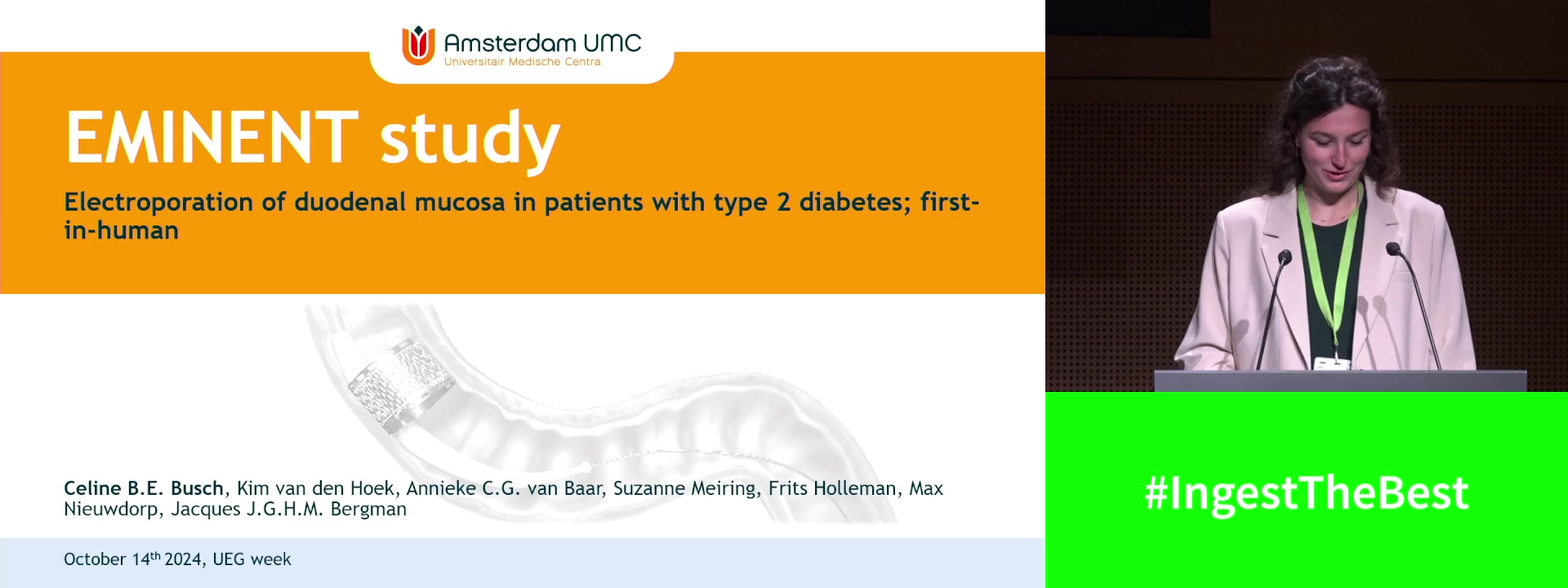
DURABLE EFFECTS OF DUODENAL ABLATION USING ELECTROPORATION COMBINED WITH SEMAGLUTIDE TO ELIMINATE INSULIN THERAPY IN PATIENTS WITH TYPE 2 DIABETES; THE 24-MONTH RESULTS

Celine B. E. Busch 1, Kim van den Hoek 1, Annieke van Baar 1, Suzanne Meiring 1, Frits Holleman 1, Max Nieuwdorp 1, Jacques J. Bergman 1

Affiliations

1 Amsterdam UMC, Amsterdam, Netherlands

Summary

AI Generated

Summary is not available for this content yet.

Download PDF

Was this helpful?

Thanks for your feedback.

This summary was generated by an AI large language model based on the content transcript. It is for informational purposes only and should not be considered a substitute for clinical judgment. Always rely on your professional expertise and the full clinical context when making clinical decisions.

Abstract

Introduction

Progressive hyperglycemia in type 2 diabetes (T2D) leads to the need for exogenous insulin therapy in many patients, which is associated with weight gain and hypoglycemia. Studies have shown that hydrothermal duodenal mucosal ablation improves glycemic control by improving insulin resistance. Re-Cellularization via Electroporation Therapy (ReCET) is a novel endoscopic procedure that uses electroporation to induce duodenal mucosal renewal. This technology uses pulsed electric fields to induce natural cell death through an apoptosis-like process without generating heat, thereby eliminating the risk of thermal damage to deeper layers of the duodenum. In this study, we aimed to eliminate insulin treatment in T2D patients with a single ReCET procedure combined with a GLP-1 receptor agonist (GLP-1RA, semaglutide). Here, we present our 24-month results.

Aims & Methods

Single-arm, single-center, first-in-human study in 14 patients with T2D (28-75 years, body mass index (BMI) 24-40 kg/m2, glycosylated hemoglobin (HbA1c) ≤8.0%, basal insulin dose <1U/kg/day, C-peptide ≥0.2 nmol/L). All patients underwent the ReCET procedure under deep sedation followed by a 2-week isocaloric liquid diet. Thereafter, semaglutide was titrated up to 1 mg/week. Primary feasibility endpoints were procedure time (catheter in–out), technical success, and % of patients tolerating GLP-1RA. Primary safety endpoints were (serious) adverse events ([S]AEs) and hypoglycemic events. Efficacy endpoint was the percentage of patients off exogenous insulin at 6 months while maintaining HbA1c ≤7.5%. Baseline and follow-up glycemic and metabolic data and treatment satisfaction scores were assessed.

Results

The technical success rate of the ReCET procedure was 100% (14/14 patients) with a median axial treatment length of 12cm. The median procedure time was 58 minutes (IQR 49–79). No device-related SAEs or severe hypoglycemic events were observed. The maximum dose of semaglutide was tolerated by 13 (93%) patients. At 6 and 12 months, 12 (86%) patients were still not using insulin, yet showed significant improvements in glycemic control (HbA1c) and metabolic parameters (Table 1). Eleven patients completed the 24-month follow-up; one patient withdrew consent after 18 months while in good glycemic control. All eleven remained off insulin with adequate glycemic control.

Baseline6 monthsp-value12 months* p-value18 monthsp-value24 monthsp-value
Number of patients1414NA13NA12NA11NA
Haemoglobin A1c, %7.2 (7.0 – 7.4)6.6 (5.8 – 6.9)0.0036.5 (6.1 – 7.0)0.0116.7 (5.9 – 7.1)0.0126.7 (6.0 – 7.4)0.126
Fasting plasma glucose, mmol/L8.8 (7.6 – 10.6)6.8 (6.1 – 8.7)0.0046.6 (5.8 – 7.2)0.0037.6 (6.6 – 8.8)0.0607.5 (6.8 – 8.1)0.286
Homeostatic model assessment for insulin resistance5.84 (3.92 – 7.50)2.47 (1.50 – 3.25)0.0131.78 (1.05 – 2.71)0.0022.70 (1.44 – 4.81)0.0413.16 (1.64 – 3.78)0.008
Time in range, %72 (46 – 85)92 (79 – 96)0.01989 (76 – 97)0.01191 (81 – 93)**0.24886 (78 – 98)0.062
Weight, kg90.7 (82.3 – 104.2)77.6 (75.4 – 93.4)<0.00174.0 (67.2 – 98.6)0.00274.5 (65.8 – 90.4)0.00273.0 (64.4 – 89.5)0.003
Body mass index, kg/m228.8 (25.1 – 31.2)24.9 (23.0 – 27.0)<0.00122.6 (22.1 – 27.1)0.00222.9 (21.8 – 27.0)0.00223.6 (22.2 – 26.8)0.003
Waist circumference, cm107 (97 – 111)95 (85 – 99)0.00291 (79 – 101)0.00289 (81 – 98)0.00393 (79 – 100)0.010
Liver fat fraction, %9.2 (6.0 – 15.4)6.3 (4.3 – 10.5)0.0304.2 (3.0 – 10.0)0.016NANA3.9 (1.8 – 9.8)0.006
Table 1. Glycaemic and metabolic secondary endpoints. Values are presented as median (interquartile range). Differences between the baseline, 6, 12, 18 and 24 months data were assessed using the Wilcoxon signed-rank paired test. *One patient was excluded due to steroid use. **One patient was excluded since GLP1-RA was discontinued once sensor was placed.

Conclusion

These results suggest that duodenal ReCET is feasible and safe. Combined with semaglutide, ReCET eliminated the need for insulin therapy in 86% of patients until 12 months post-treatment while improving glycaemia and metabolic health. Patients who were off exogenous insulin at 12 months had a durable glycaemic response and remained insulin-free at 24 months.

Disclosure

Unrestricted research grant from Endogenex.
Event

UEG Week Vienna 2024

Topics

Endoscopy Mechanisms & Personalised Medicine Oesophagus

Submission format

Abstract

Session

Obesity: Endoscopy and drugs

Citation

United European Gastroenterology Journal 2024; 12 (Supplement 8)

Published

2024

More Like This:

Fascinating histories and curiosities in gastroenterology

Fascinating histories and curiosities in gastroenterology

Enrique de-Madaria Enrique de-Madaria, Pradeep Mundre

The Evolving Landscape of Scientific Publishing: Navigating Trends, Challenges, and Opportunities

The Evolving Landscape of Scientific Publishing: Navigating Trends, Challenges, and Opportunities

Joost Drenth Joost Drenth, Pradeep Mundre

Transitional care with Patrizia Burra & Jorge Amil Dias

Transitional care with Patrizia Burra & Jorge Amil Dias

Pradeep Mundre Pradeep Mundre, Jorge Amil Dias, Patrizia Burra

Mistakes in imaging hepatic lesions and how to avoid them

Mistakes in imaging hepatic lesions and how to avoid them

Katja De Paepe Katja De Paepe

Intestinal failure and parenteral nutrition

Intestinal failure and parenteral nutrition

Sarah Williams Sarah Williams

DURABLE EFFECTS OF DUODENAL ABLATION USING ELECTROPORATION COMBINED WITH SEMAGLUTIDE TO ELIMINATE INSULIN THERAPY IN PATIENTS WITH TYPE 2 DIABETES; THE 24-MONTH RESULTS

DURABLE EFFECTS OF DUODENAL ABLATION USING ELECTROPORATION COMBINED WITH SEMAGLUTIDE TO ELIMINATE INSULIN THERAPY IN PATIENTS WITH TYPE 2 DIABETES; THE 24-MONTH RESULTS

Frits Holleman Frits Holleman, Jacques J. Bergman, Max Nieuwdorp, Suzanne Meiring, Annieke van Baar, Kim van den Hoek, Celine B. E. Busch

The global reference point for the digestive health community

Platform Publisher

United European Gastroenterology

Wickenburggasse 1 1080 Vienna, Austria

Contact us

support@ueg.eu

ueg.eu

T: +43 1 997 1639

Legal

Terms & Conditions

Imprint

Privacy Policy

Explore

My Bookmarks

My recommendations

My fields of interest

© 2026 United European Gastroenterology

Change fields of interest

These fields are selected based on the interests in your myUEG profile.
Click the item to unselect it. You can select multiple items.