UEG's educational platform for gastroenterology education bringing recordings, courses, guidelines, and more together in one place.
Most popular content
Rate for better recommendations!
Your feedback helps us show you more of what you like and less of what you dislike!
Log in to access this content.
Free for all myUEG account holders. Your access level is set automatically based on your occupation. Medical professionals get full access to all content. If you are a non-medical user, you can only access UEG Week content from congresses you attended.
Not sure what you can access? Learn more about account types.

REAL-WORLD EVIDENCE VALIDATES AI-BASED ENDOSCOPIC SCORING FOR ULCERATIVE COLITIS
Alvaro Gomariz 1, Bernhard Stimpel 1, Carmen Stefanescu 2, Benjamin Gutierrez Becker 1, Stefan Frässle 1, Rafal Girycki 1, Emily Fisher 1, Yoram Bouhnik 2, Steven Levitte 3, Teresa Karrer 1
1 Roche, Basel, Switzerland
2 Institut des MICI, Neuilly-sur-Seine, France
3 Genentech, South San Francisco, United States
Conference
Topics
Submission format
Session
Citation
Published
Log in to access this content.
Free for all myUEG account holders. Your access level is set automatically based on your occupation. Medical professionals get full access to all content. If you are a non-medical user, you can only access UEG Week content from congresses you attended.
Not sure what you can access? Learn more about account types.
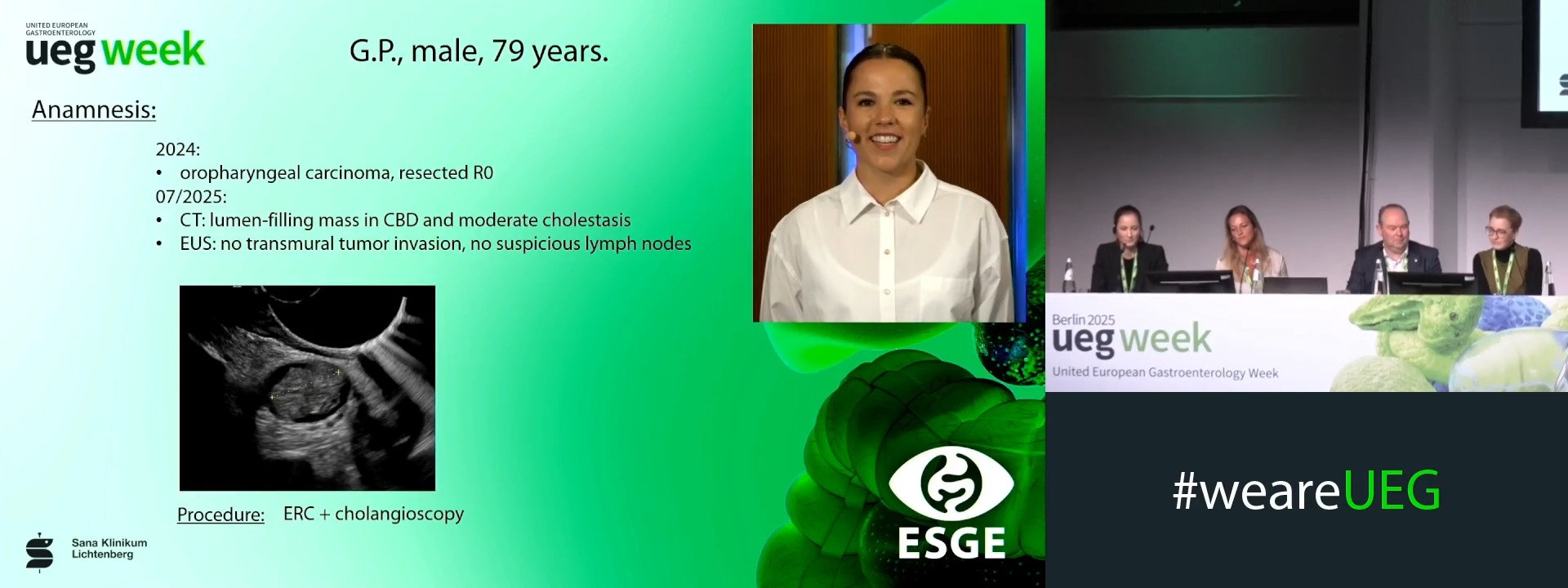
ESGE Live Endoscopy III (Complete Session)
Event
Session
Citation
Published
Log in to access this content.
Free for all myUEG account holders. Your access level is set automatically based on your occupation. Medical professionals get full access to all content. If you are a non-medical user, you can only access UEG Week content from congresses you attended.
Not sure what you can access? Learn more about account types.
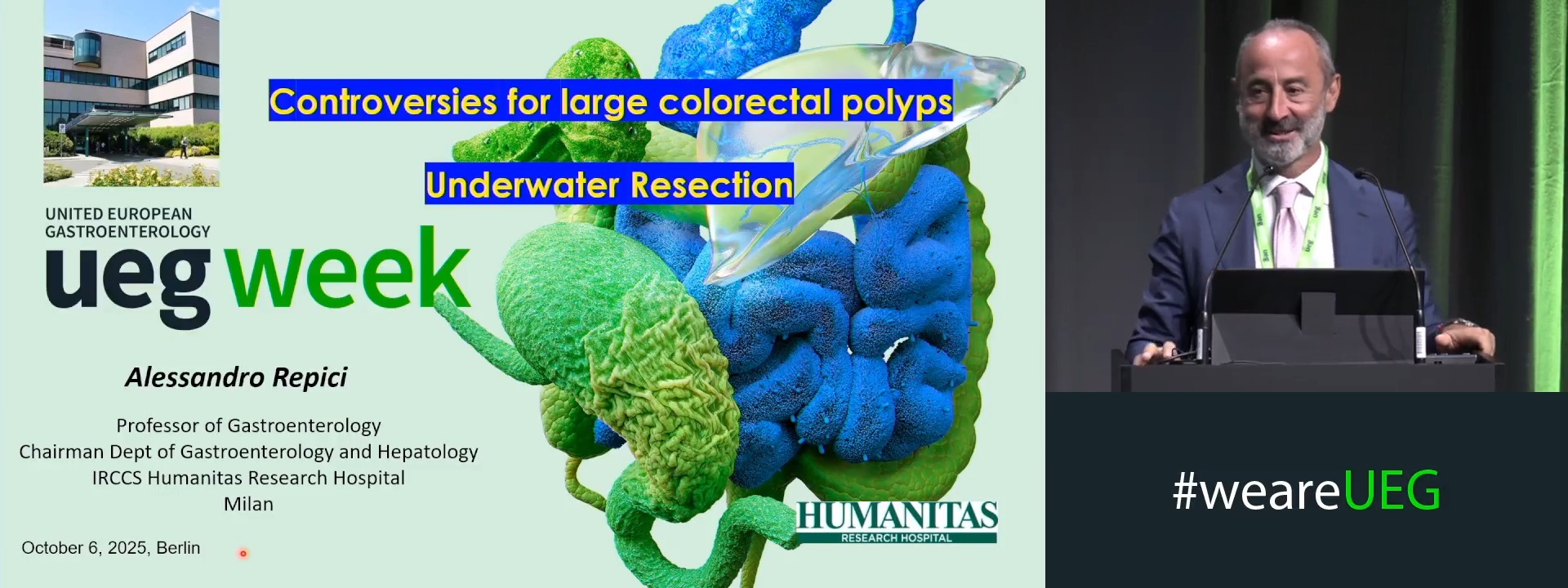
I do underwater resection
1 Westmead Hospital Sydney, Westmead, Australia
Event
Citation
Published
Log in to access this content.
Free for all myUEG account holders. Your access level is set automatically based on your occupation. Medical professionals get full access to all content. If you are a non-medical user, you can only access UEG Week content from congresses you attended.
Not sure what you can access? Learn more about account types.
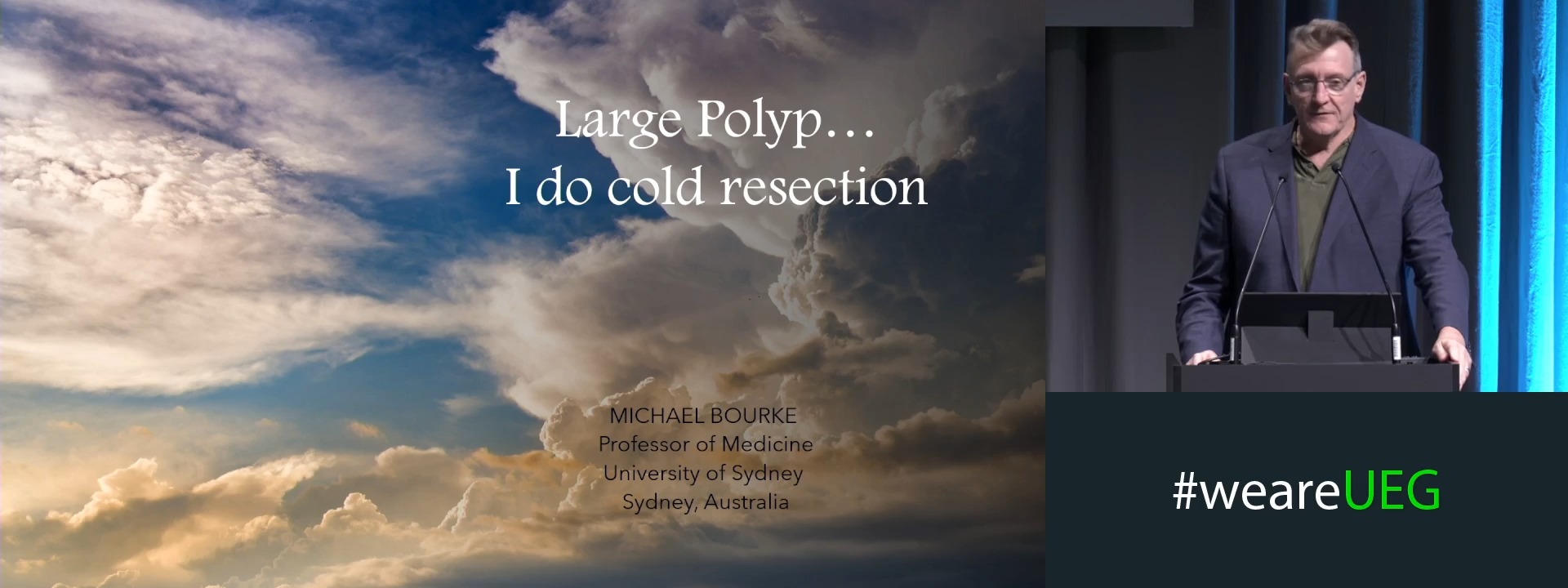
I do cold resection
1 Ist. Clinico Humanitas Rozzano Dept. of Gastroenterology, Milano, Italy
Event
Citation
Published
Log in to access this content.
Free for all myUEG account holders. Your access level is set automatically based on your occupation. Medical professionals get full access to all content. If you are a non-medical user, you can only access UEG Week content from congresses you attended.
Not sure what you can access? Learn more about account types.
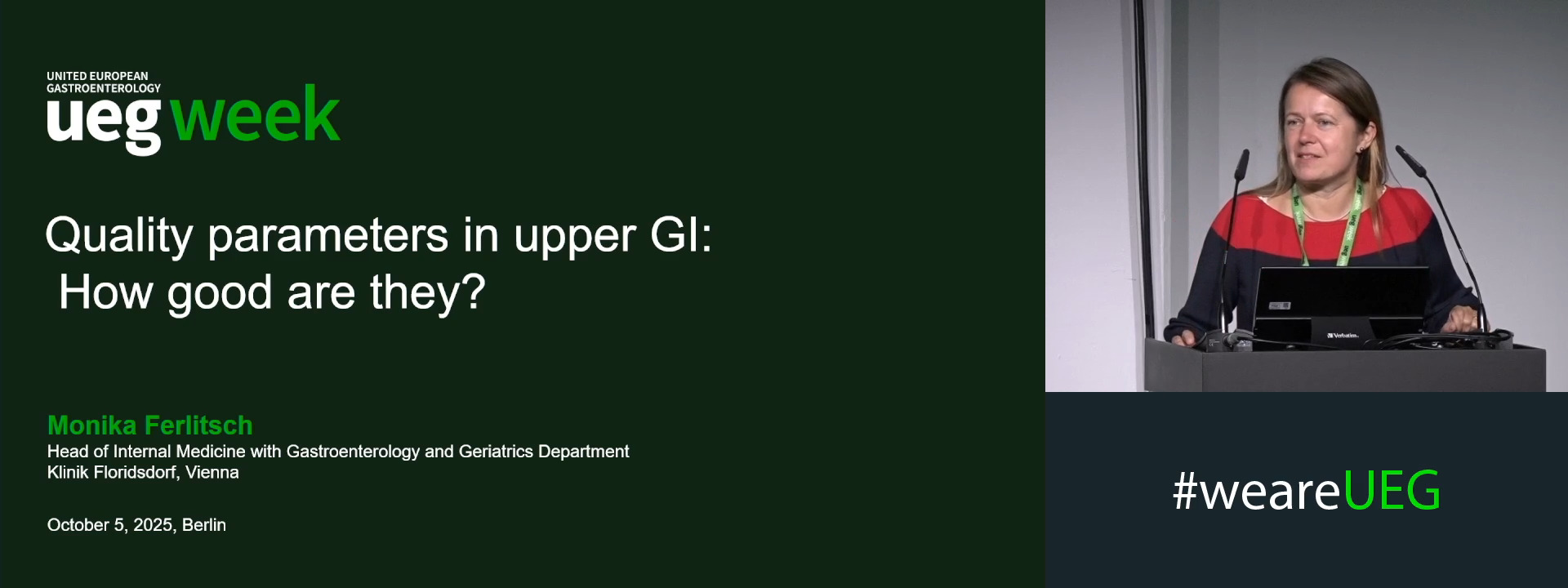
Quality parameters in upper-GI: How good are they?
1 Medical University Vienna, Wien, Austria
Event
Citation
Published
Log in to access this content.
Free for all myUEG account holders. Your access level is set automatically based on your occupation. Medical professionals get full access to all content. If you are a non-medical user, you can only access UEG Week content from congresses you attended.
Not sure what you can access? Learn more about account types.
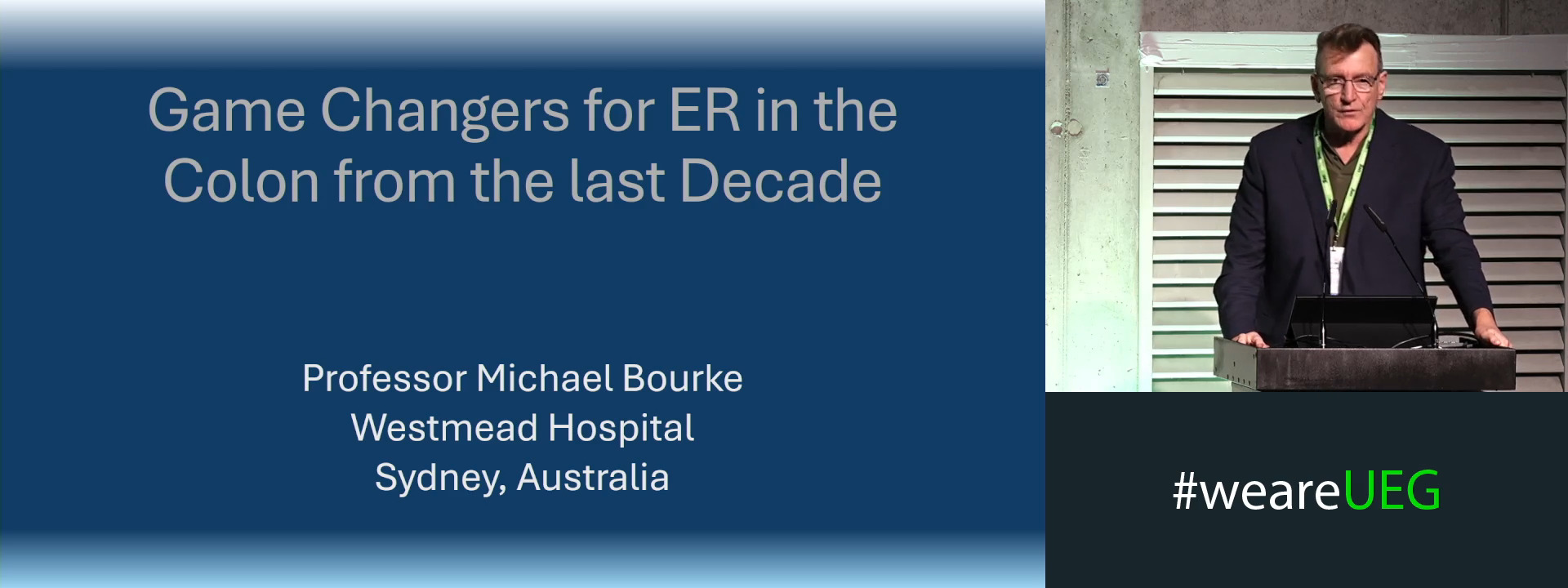
For the endoscopist
1 Westmead Hospital Sydney, Westmead, Australia
Event
Topics
Citation
Published
Log in to access this content.
Free for all myUEG account holders. Your access level is set automatically based on your occupation. Medical professionals get full access to all content. If you are a non-medical user, you can only access UEG Week content from congresses you attended.
Not sure what you can access? Learn more about account types.
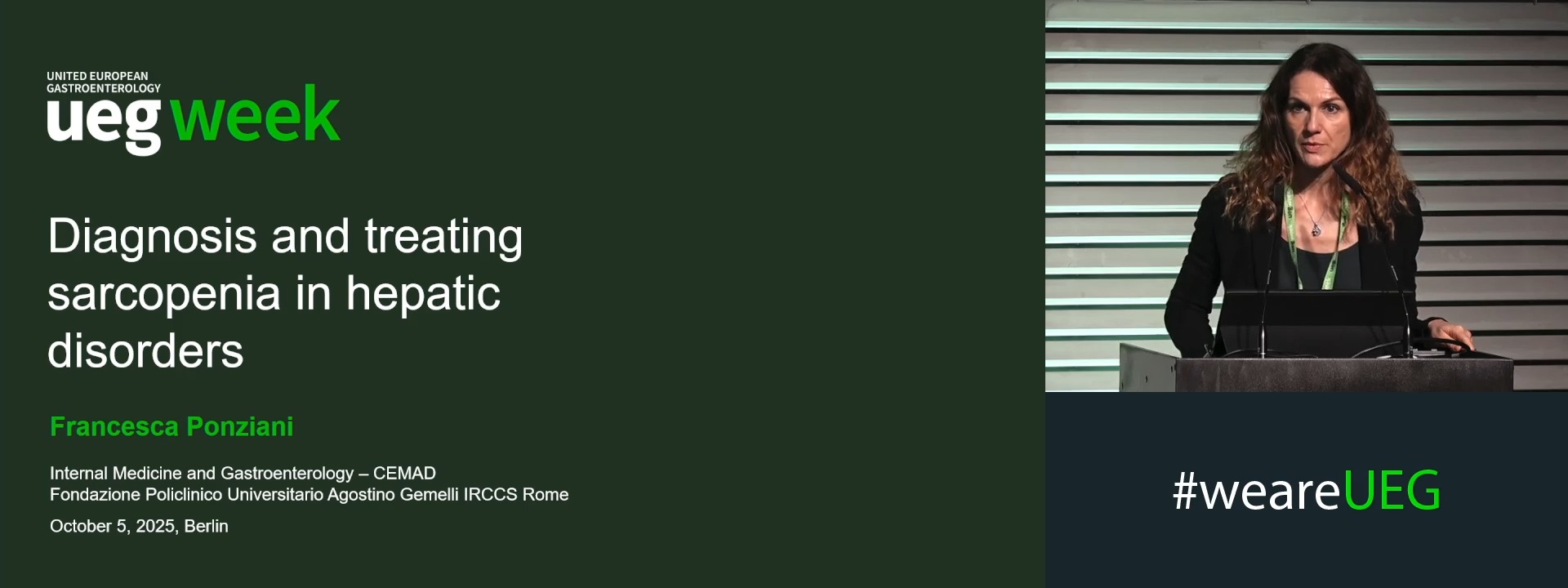
Diagnosis and treating sarcopenia in hepatic disorders
1 Agostino Gemelli Hospital, Rome, Italy
Event
Topics