UEG's content platform for gastroenterology education bringing recordings, courses, guidelines, and more together in one place.
Trending on Gutflix
Rate for better recommendations!
Your feedback helps us show you more of what you like and less of what you dislike!
Log in to continue.
This content is part of Gutflix. Log in with your myUEG account, or create one free, to watch it.
Not sure what you can access? Learn more about account types.
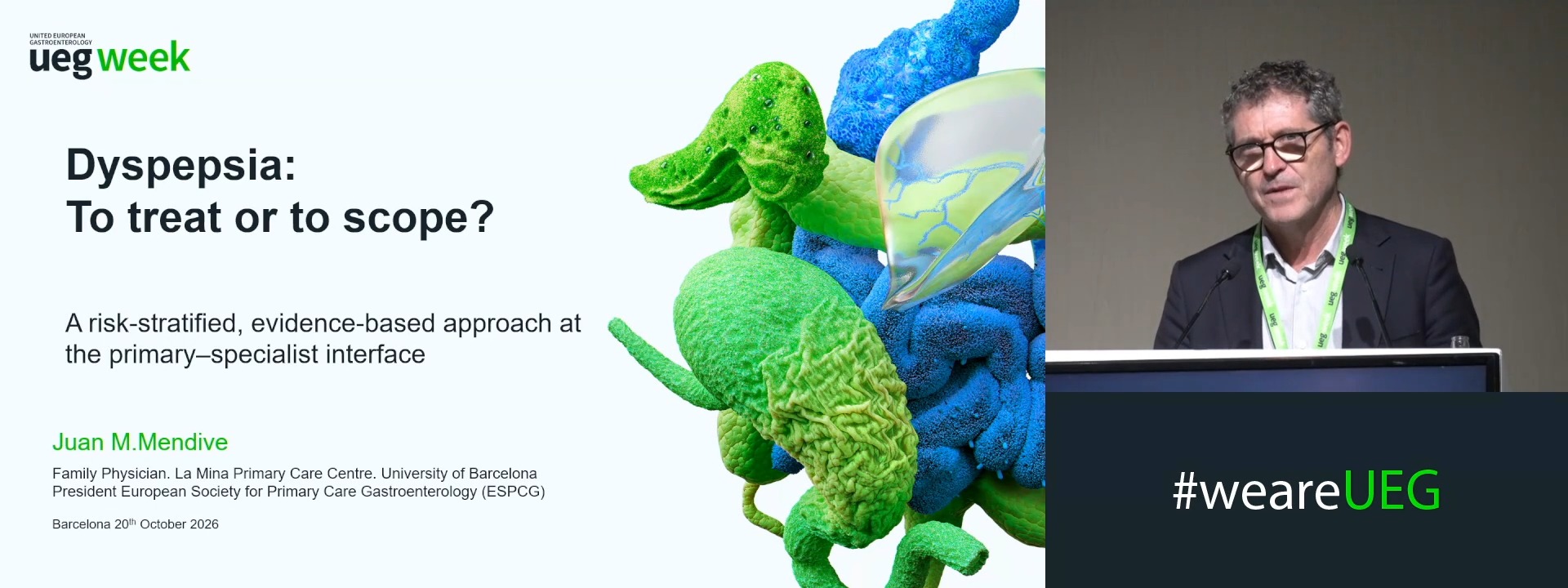
Dyspepsia: To treat or to scope
Affiliations
1 European Society for Primary Care Gastroenterology (ESPCG), Sant Adrià de Besòs ( Barcelona), Spain
Log in to continue.
This content is part of Gutflix. Log in with your myUEG account, or create one free, to watch it.
Not sure what you can access? Learn more about account types.
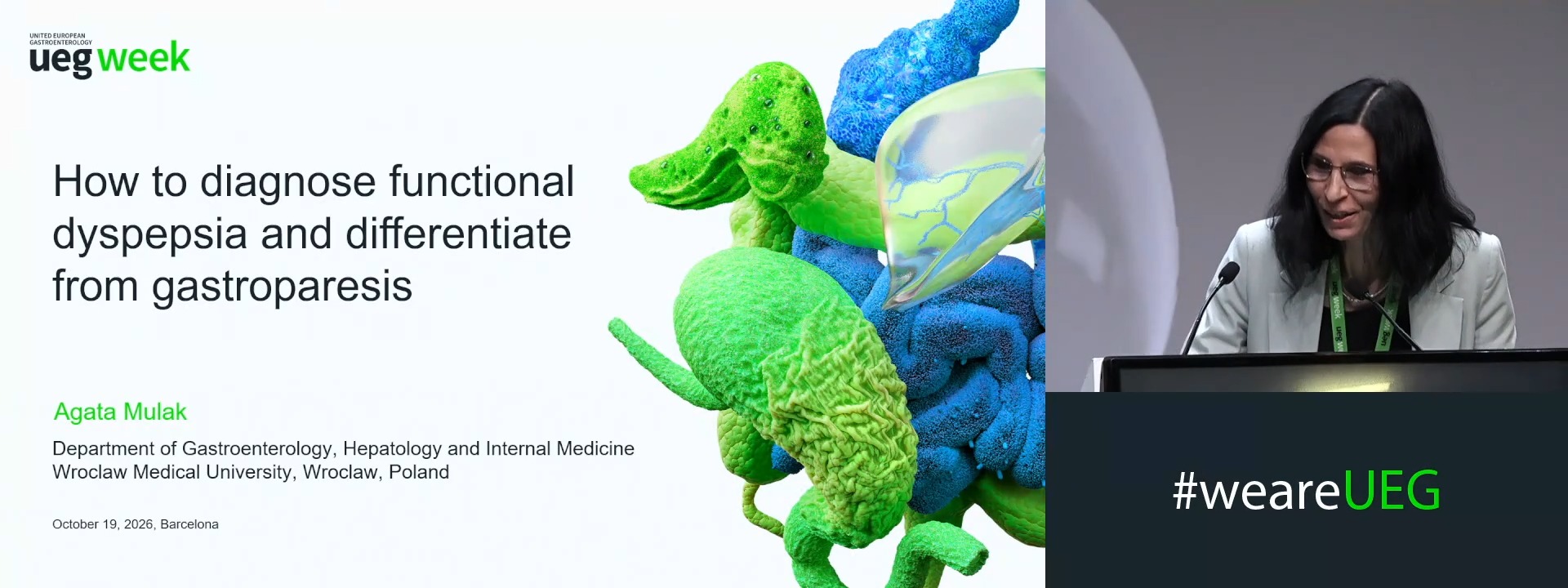
How to diagnose functional dyspepsia and differentiate from gastroparesis
Affiliations
1 Wroclaw Medical University, Wroclaw, Poland
Log in to continue.
This content is part of Gutflix. Log in with your myUEG account, or create one free, to watch it.
Not sure what you can access? Learn more about account types.
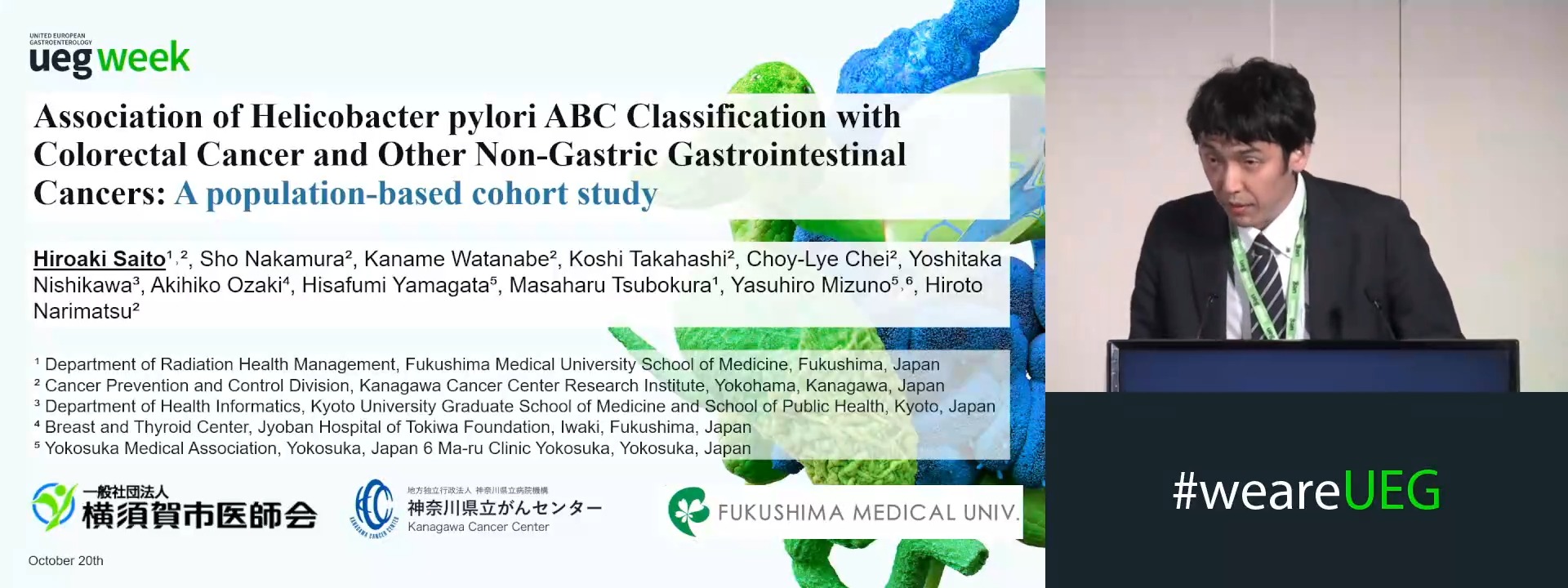
ASSOCIATION OF HELICOBACTER PYLORI ABC CLASSIFICATION WITH COLORECTAL CANCER AND OTHER NON-GASTRIC GASTROINTESTINAL CANCERS: A POPULATION-BASED COHORT STUDY
HIROAKI SAITO 1,2, Sho Nakamura 2, Kaname Watanabe 2, Koshi Takahashi 2, Choy-Lye Chei 2, Yoshitaka Nishikawa 3, Akihiko Ozaki 2,4, Hisafumi Yamagata 5, Masaharu Tsubokura 1, Yasuhiro Mizuno 6,5, Hiroto Narimatsu 2
Affiliations
1 Fukushima Medical University School of Medicine, Fukushima, Japan
2 Kanagawa Cancer Center Research Institute, Yokohama, Japan
3 Kyoto University Graduate School of Medicine and School of Public Health, Kyoto, Japan
4 Jyoban Hospital of Tokiwa Foundation, Iwaki, Japan
5 Yokosuka Medical Association, Yokosuka, Japan
6 Ma-ru Clinic Yokosuka, Yokosuka, Japan
Log in to continue.
This content is part of Gutflix. Log in with your myUEG account, or create one free, to watch it.
Not sure what you can access? Learn more about account types.
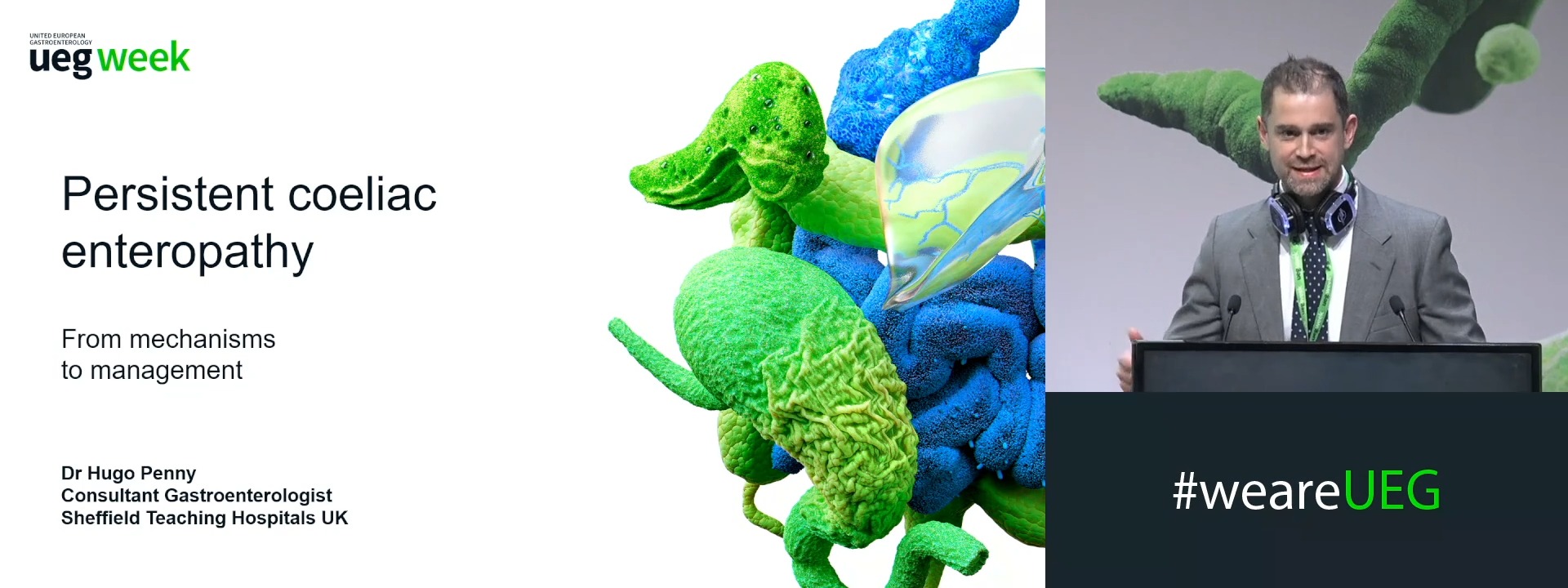
Persistent coeliac disease enteropathy
Affiliations
1 University of Sheffield, Sheffield, United Kingdom
Log in to continue.
This content is part of Gutflix. Log in with your myUEG account, or create one free, to watch it.
Not sure what you can access? Learn more about account types.
What are the diagnostic options?
Affiliations
1 Hospital Universitari Vall d'Hebrón, Barcelona, Spain
Log in to continue.
This content is part of Gutflix. Log in with your myUEG account, or create one free, to watch it.
Not sure what you can access? Learn more about account types.
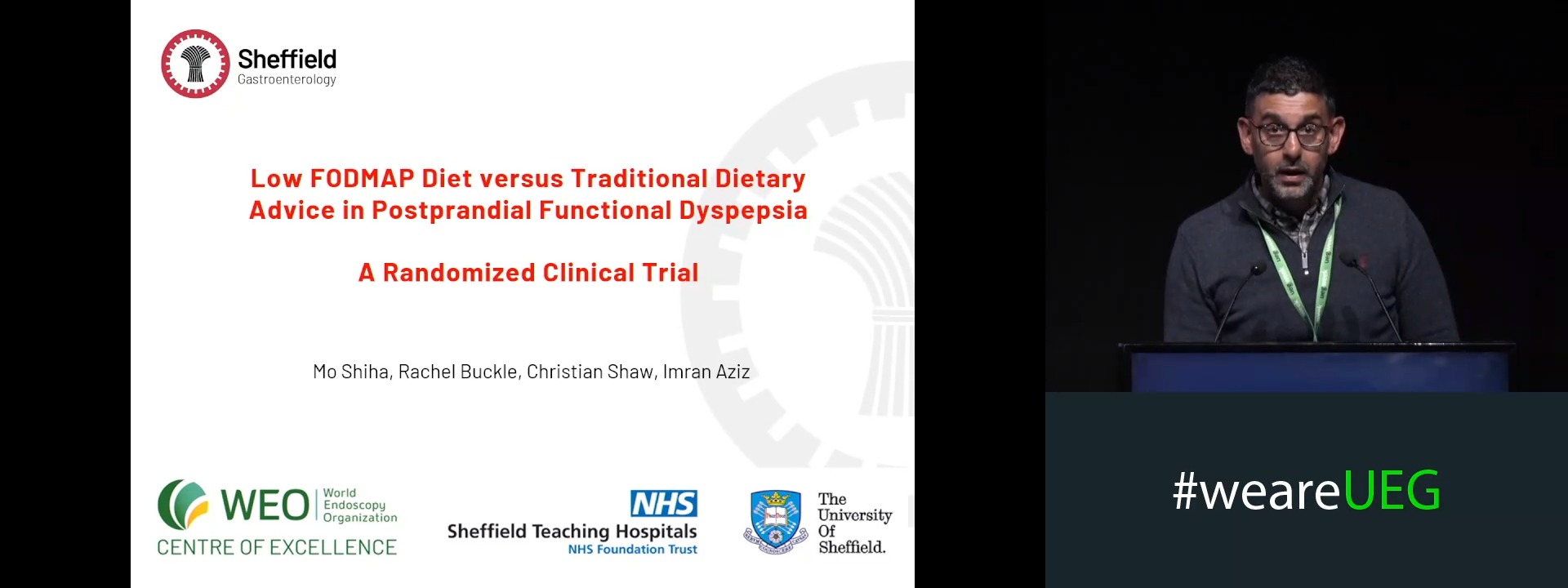
LOW FODMAP DIET VERSUS TRADITIONAL DIETARY ADVICE IN POSTPRANDIAL FUNCTIONAL DYSPEPSIA: A RANDOMIZED CLINICAL TRIAL
Affiliations
1 Division of Clinical Medicine, School of Medicine and Population Health, University of Sheffield, Sheffield, United Kingdom
2 Department of Dietetics, Sheffield Teaching Hospitals, Sheffield, United Kingdom