UEG's educational platform for gastroenterology education bringing recordings, courses, guidelines, and more together in one place.
Most popular content
Rate for better recommendations!
Your feedback helps us show you more of what you like and less of what you dislike!
Log in to access this content.
Free for all myUEG account holders. Your access level is set automatically based on your occupation. Medical professionals get full access to all content. If you are a non-medical user, you can only access UEG Week content from congresses you attended.
Not sure what you can access? Learn more about account types.

BURDEN OF ILLNESS AND TREATMENT PATTERNS OF EOSINOPHILIC OESOPHAGITIS PATIENTS: EVIDENCE FROM A MULTINATIONAL MEDICAL RECORD REVIEW
Christopher Ma 1, Tiffany Pela 2, angela khodzhayev 3, Amr Radwan 3, Juby Jacob-Nara 2, Rohan C. Parikh 4, Kinga Borsos 2, Ryan Thomas 3, Sarette T. Tilton 2
1 University of Caglary, Calgary, Canada
2 Sanofi, Cambridge, United States
3 Regeneron Pharmaceuticals, Inc., Tarrytown, United States
4 RTI Health Solutions, Research Triangle Park, United States
Conference
Topics
Submission format
Session
Citation
Published
Log in to access this content.
Free for all myUEG account holders. Your access level is set automatically based on your occupation. Medical professionals get full access to all content. If you are a non-medical user, you can only access UEG Week content from congresses you attended.
Not sure what you can access? Learn more about account types.
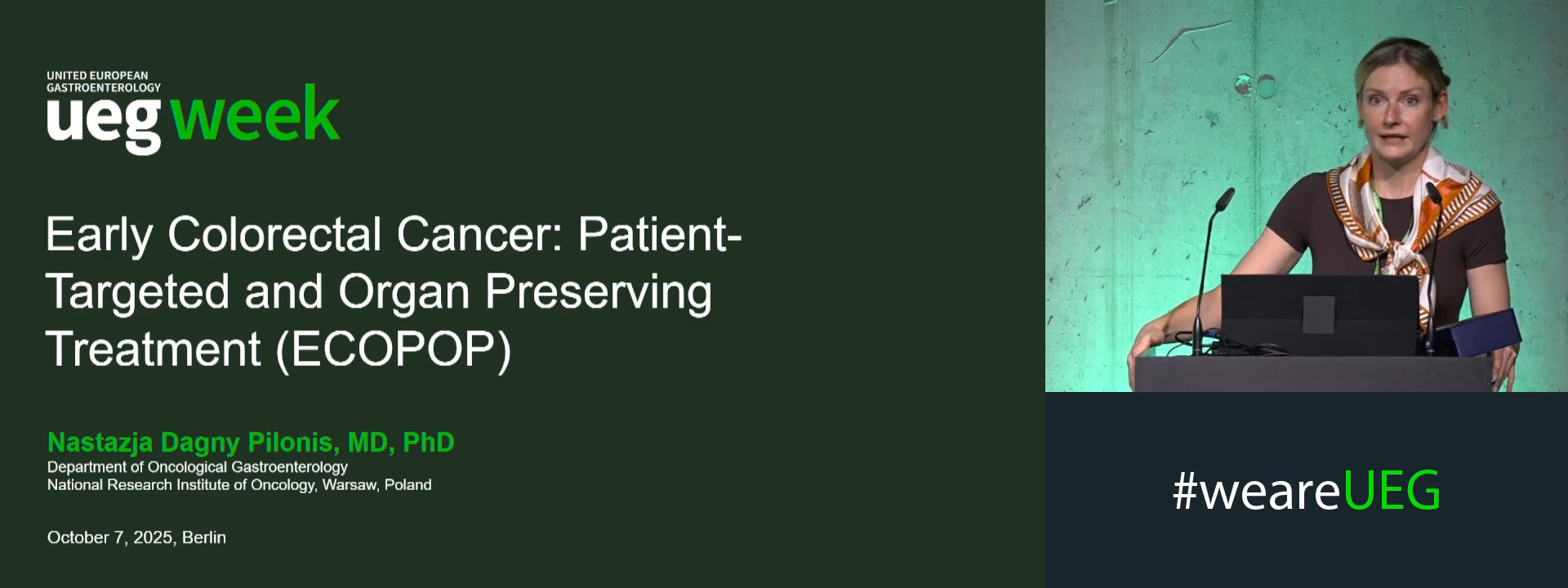
Early colorectal cancer: Patient-targeted and organ preserving treatment (ECOPOP Project)
1 The Maria Sklodowska-Curie Institute - Oncology Institute, Warsaw, Poland
Event
Session
Citation
Published
Log in to access this content.
Free for all myUEG account holders. Your access level is set automatically based on your occupation. Medical professionals get full access to all content. If you are a non-medical user, you can only access UEG Week content from congresses you attended.
Not sure what you can access? Learn more about account types.
Panel discussion: Early colorectal cancer
Event
Session
Citation
Published
Log in to access this content.
Free for all myUEG account holders. Your access level is set automatically based on your occupation. Medical professionals get full access to all content. If you are a non-medical user, you can only access UEG Week content from congresses you attended.
Not sure what you can access? Learn more about account types.
Panel discussion: Hereditary GI cancer syndromes - Surveillance strategies
Event
Citation
Published
Log in to access this content.
Free for all myUEG account holders. Your access level is set automatically based on your occupation. Medical professionals get full access to all content. If you are a non-medical user, you can only access UEG Week content from congresses you attended.
Not sure what you can access? Learn more about account types.
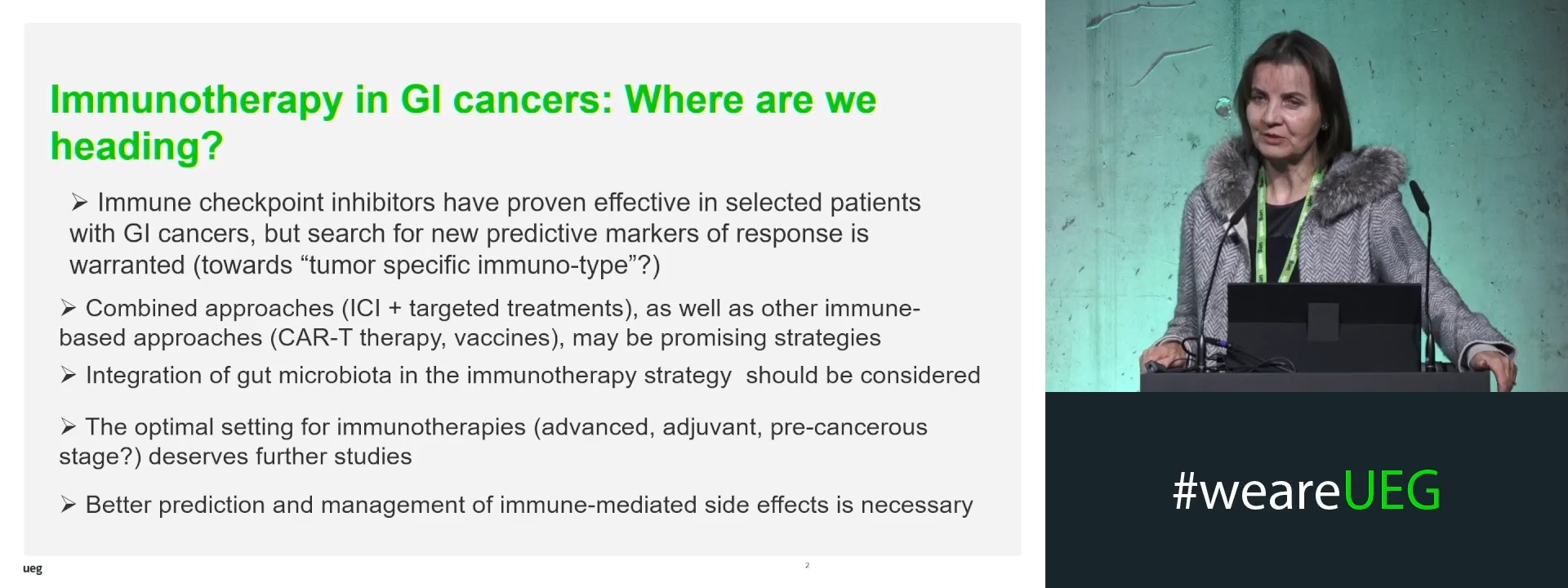
Summary: Immunotherapy in digestive cancers - Where are we heading?
1 CHU de Nantes IMAD, Nantes, France
Event
Citation
Published
Log in to access this content.
Free for all myUEG account holders. Your access level is set automatically based on your occupation. Medical professionals get full access to all content. If you are a non-medical user, you can only access UEG Week content from congresses you attended.
Not sure what you can access? Learn more about account types.
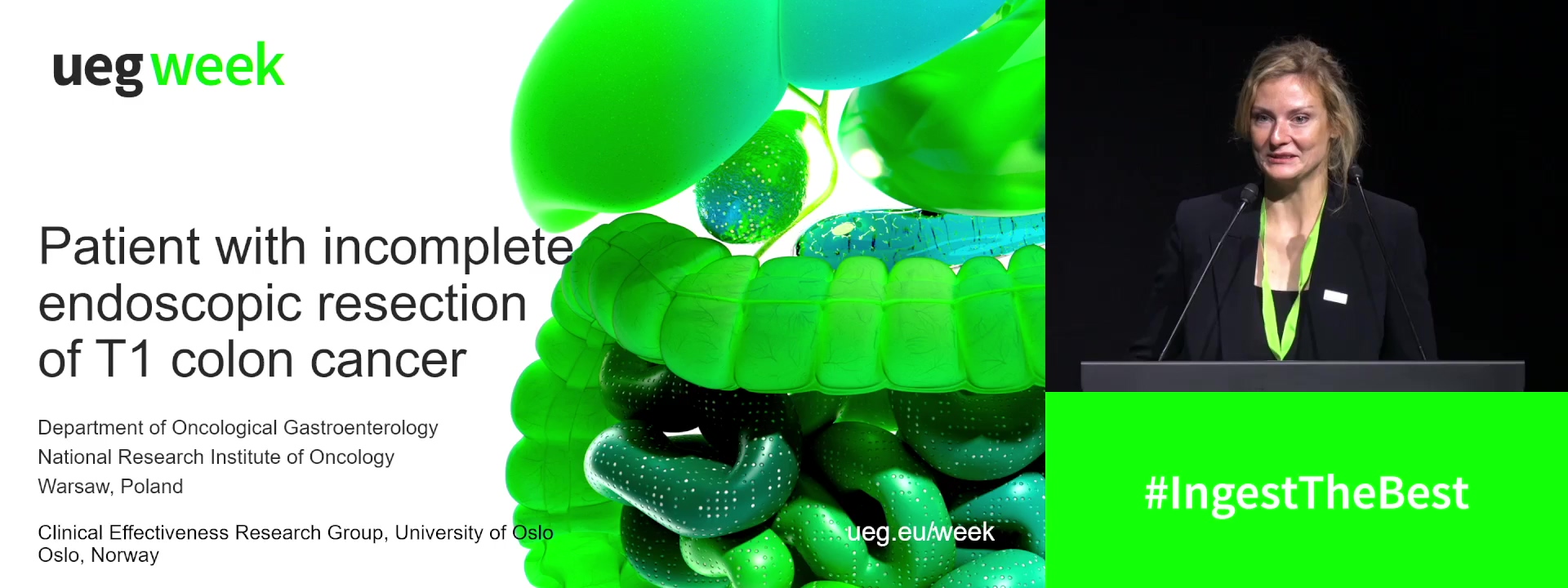
Patient with incomplete endoscopic resection of T1 colon cancer
1 The Maria Sklodowska-Curie Institute - Oncology Institute Warsaw, Poland, Warsaw, Poland
Event
Session
Citation
Published
Log in to access this content.
Free for all myUEG account holders. Your access level is set automatically based on your occupation. Medical professionals get full access to all content. If you are a non-medical user, you can only access UEG Week content from congresses you attended.
Not sure what you can access? Learn more about account types.
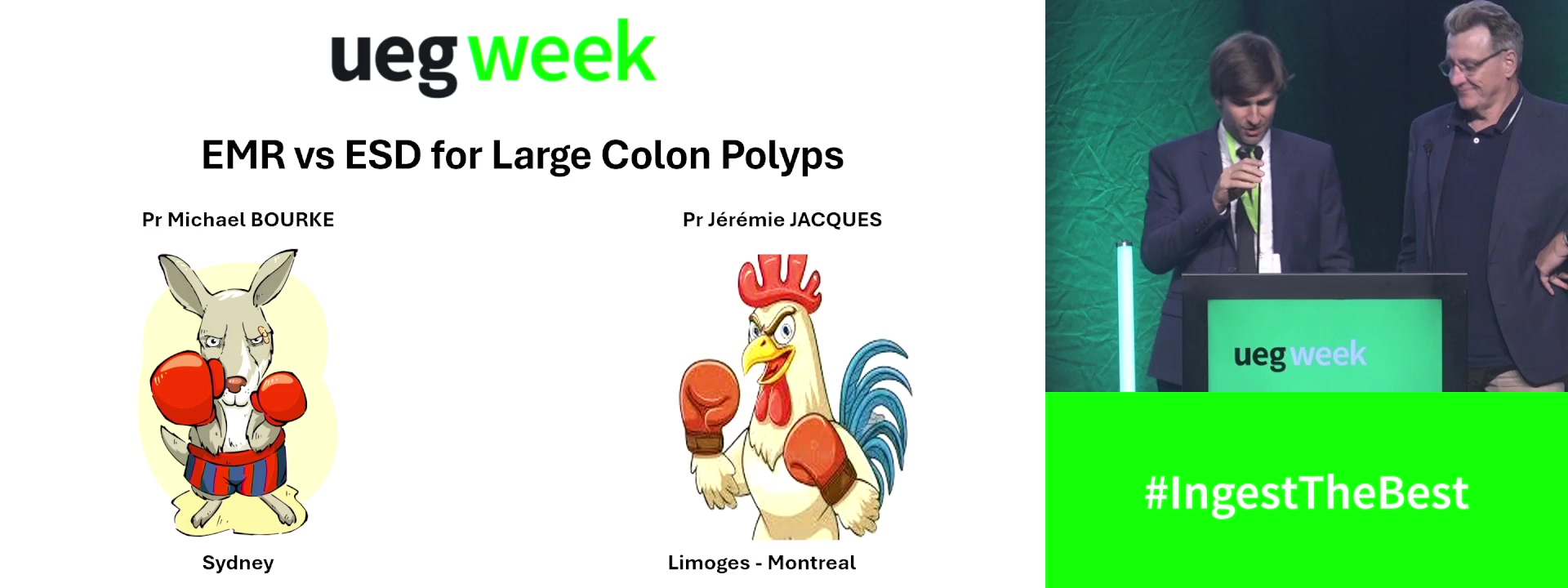
EMR and ESD for large colonic polyps
1 Westmead Hospital Sydney, Westmead, Australia
2 CHU Limoges - Hepato-Gastro-Enterology, CHU Limoges; Limoges/FR, Limoges, France