UEG's content platform for gastroenterology education bringing recordings, courses, guidelines, and more together in one place.
Trending on Gutflix
Rate for better recommendations!
Your feedback helps us show you more of what you like and less of what you dislike!
Log in to continue.
This content is part of Gutflix. Log in with your myUEG account, or create one free, to watch it.
Not sure what you can access? Learn more about account types.
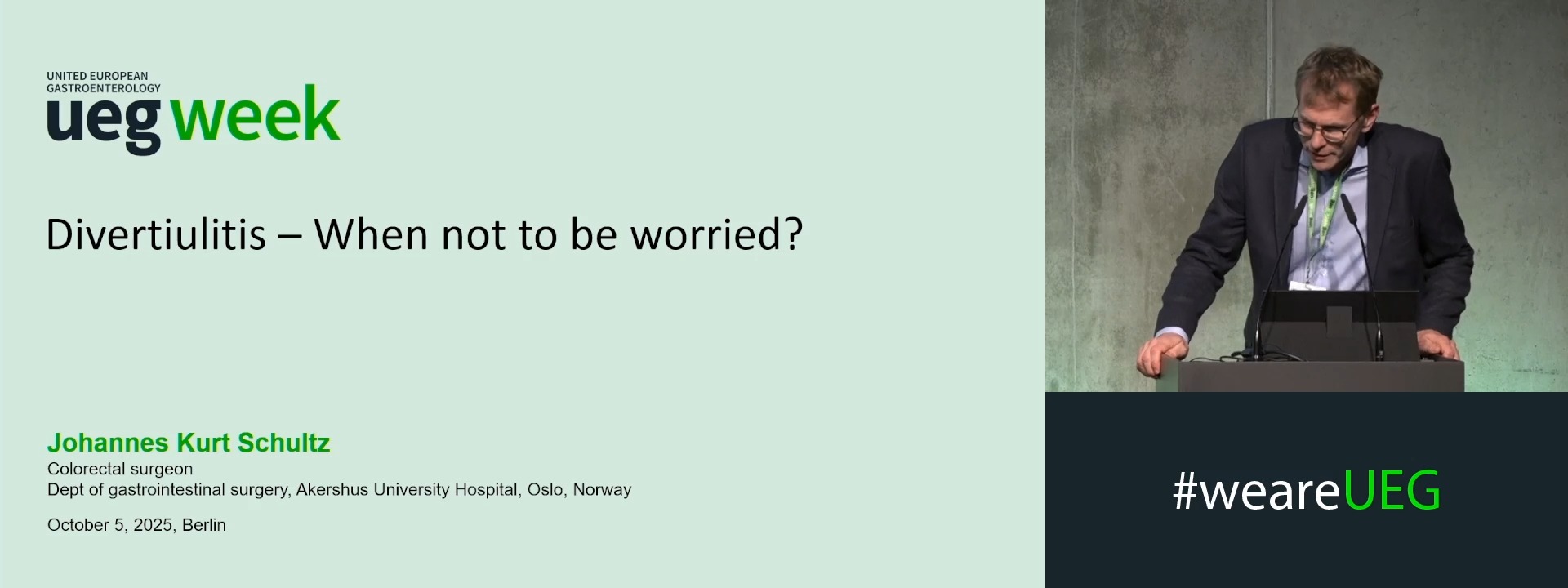
Diverticulitis: When not to be worried?
Affiliations
1 Univertsity of Oslo, Oslo, Norway
Log in to continue.
This content is part of Gutflix. Log in with your myUEG account, or create one free, to watch it.
Not sure what you can access? Learn more about account types.
EUS-guided biliary drainage (Complete Session)
Log in to continue.
This content is part of Gutflix. Log in with your myUEG account, or create one free, to watch it.
Not sure what you can access? Learn more about account types.
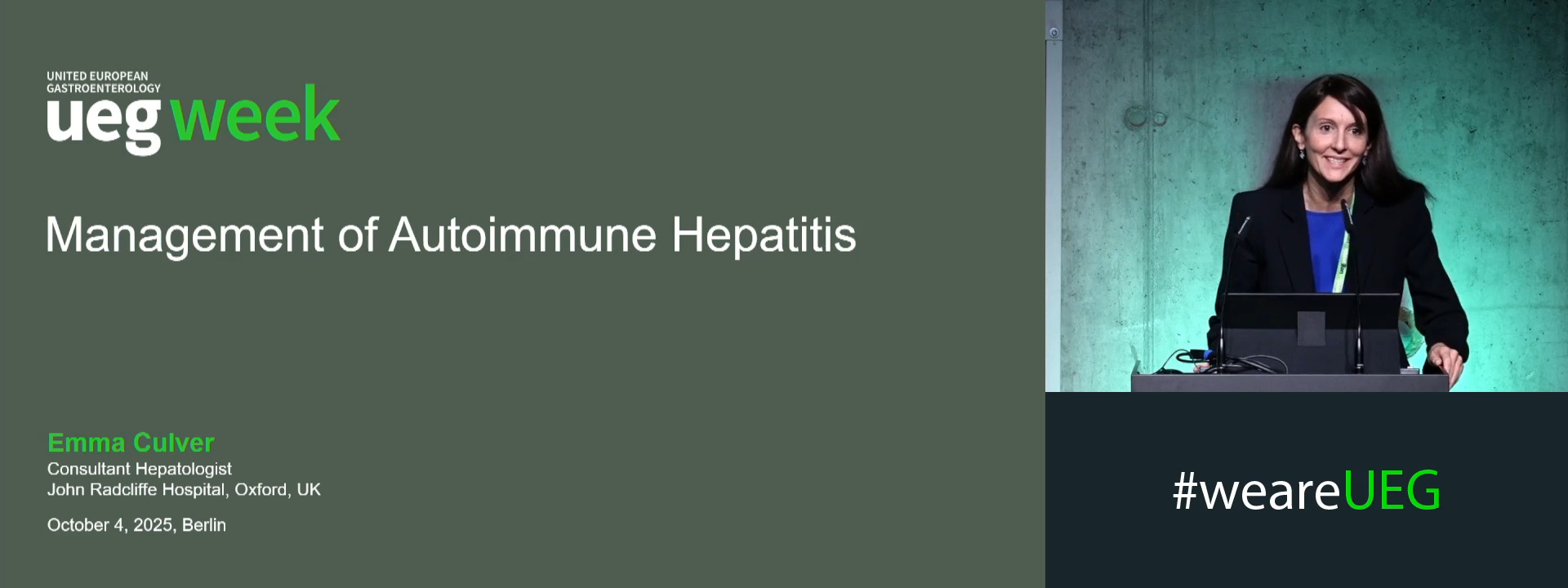
Management of autoimmune hepatitis
Affiliations
1 Oxford University Hospitals NHS Foundation Trust, University of Oxford, Oxford, United Kingdom
Log in to continue.
This content is part of Gutflix. Log in with your myUEG account, or create one free, to watch it.
Not sure what you can access? Learn more about account types.
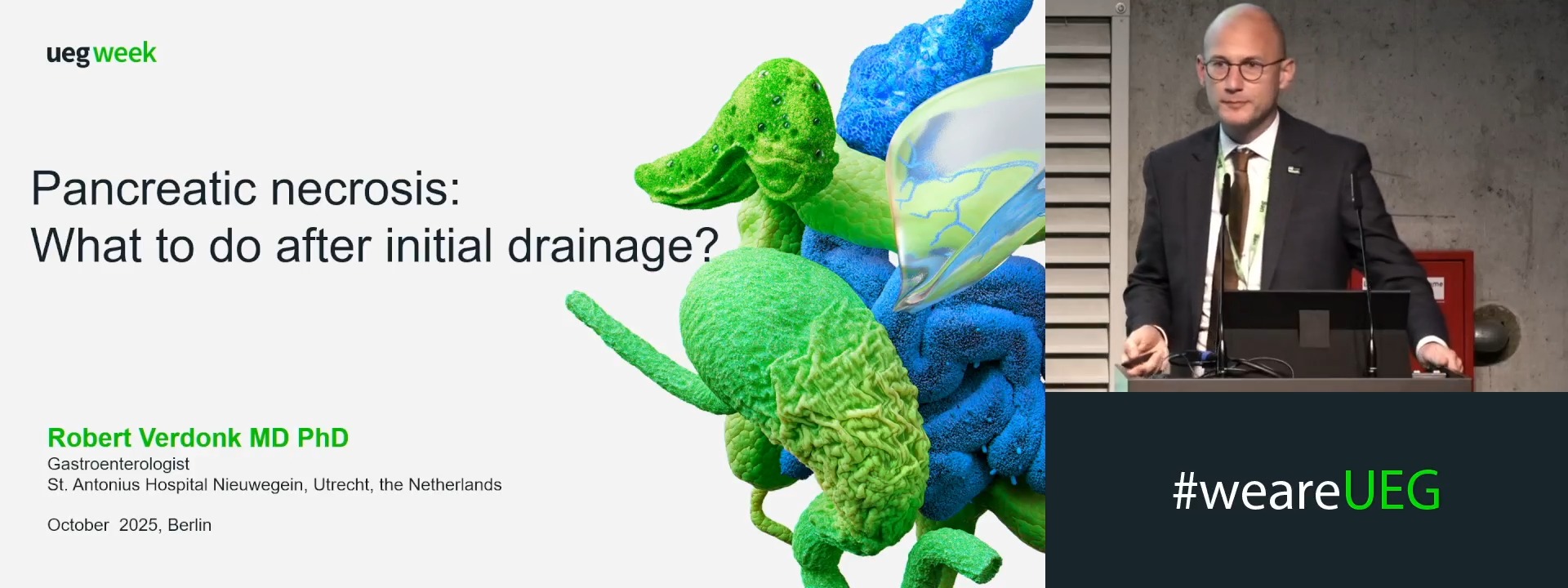
Pancreas necrosis: What to do after initial drainage
Affiliations
1 St. Antonius Ziekenhuis, Nieuwegein, Netherlands
Log in to continue.
This content is part of Gutflix. Log in with your myUEG account, or create one free, to watch it.
Not sure what you can access? Learn more about account types.
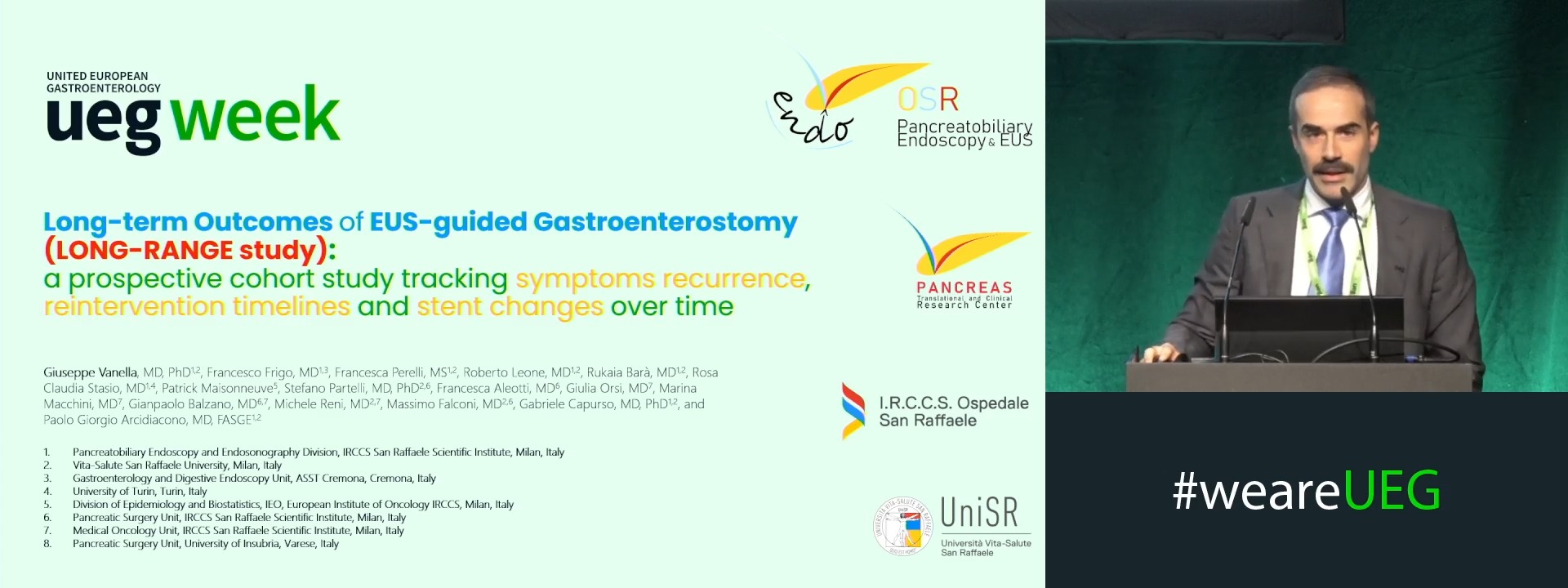
LONG-TERM OUTCOMES OF EUS-GUIDED GASTROENTEROSTOMY (LONG-RANGE STUDY): A PROSPECTIVE COHORT STUDY TRACKING SYMPTOMS RECURRENCE, REINTERVENTION TIMELINES AND STENT CHANGES OVER TIME
Giuseppe Vanella 1,2, Francesco Frigo 1,3, Francesca Perelli 2, Roberto Leone 1,2, Rukaia Barà 1,2, Rosa Claudia Stasio 1,4, Patrick Maisonneuve 5, Stefano Partelli 1,2, Francesca Aleotti 1, Giulia Orsi 1, Marina Macchini 1, Gianpaolo Balzano 1,6, Michele Reni 1,2, Massimo Falconi 2,1, Gabriele Capurso 1,2, Paolo Giorgio Arcidiacono 1,2
Affiliations
1 IRCCS San Raffaele Institute, Milan, Italy
2 Vita-Salute San Raffaele University, Milan, Italy
3 ASST Cremona, Cremona, Italy
4 University of Turin, Turin, Italy
5 IRCCS European Institute of Oncology, Milan, Italy
6 University of Insubria, Varese, Italy
Log in to continue.
This content is part of Gutflix. Log in with your myUEG account, or create one free, to watch it.
Not sure what you can access? Learn more about account types.
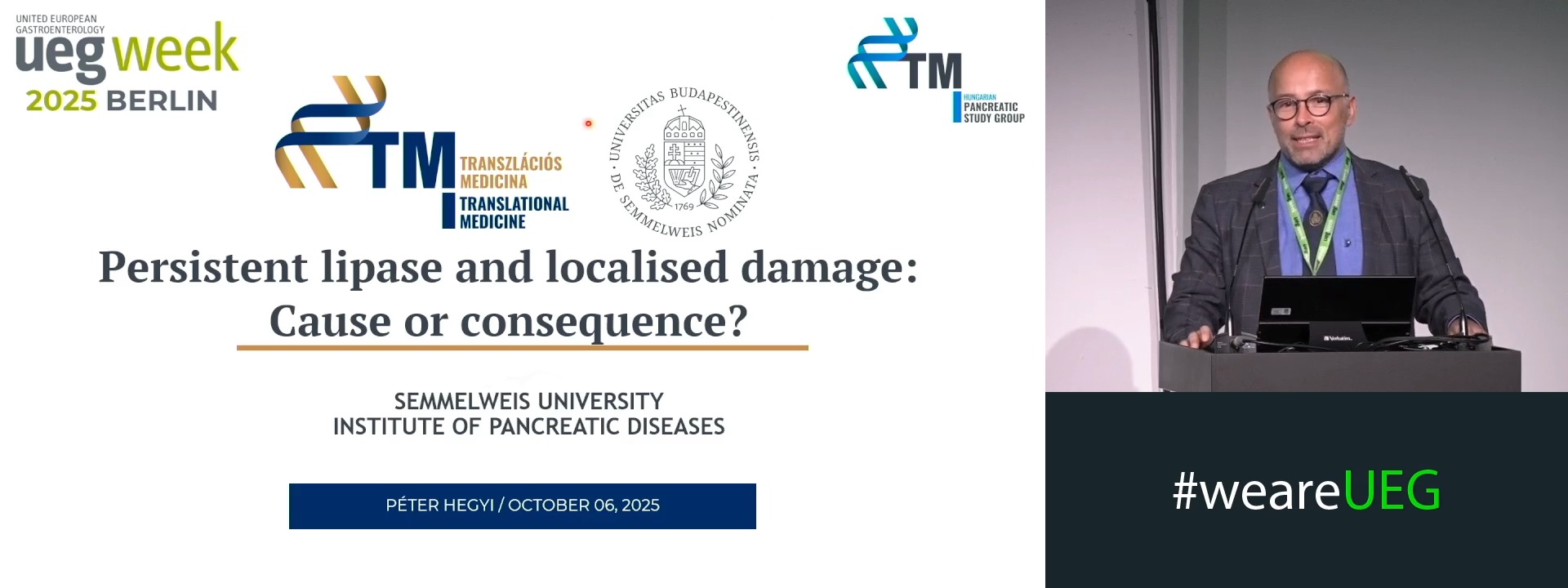
Persistent lipase and localised damage: Cause or consequence?
Affiliations
1 University of Pecs, Pecs, Hungary