UEG's content platform for gastroenterology education bringing recordings, courses, guidelines, and more together in one place.
Trending on Gutflix
Rate for better recommendations!
Your feedback helps us show you more of what you like and less of what you dislike!
Log in to continue.
This content is part of Gutflix. Log in with your myUEG account, or create one free, to watch it.
Not sure what you can access? Learn more about account types.
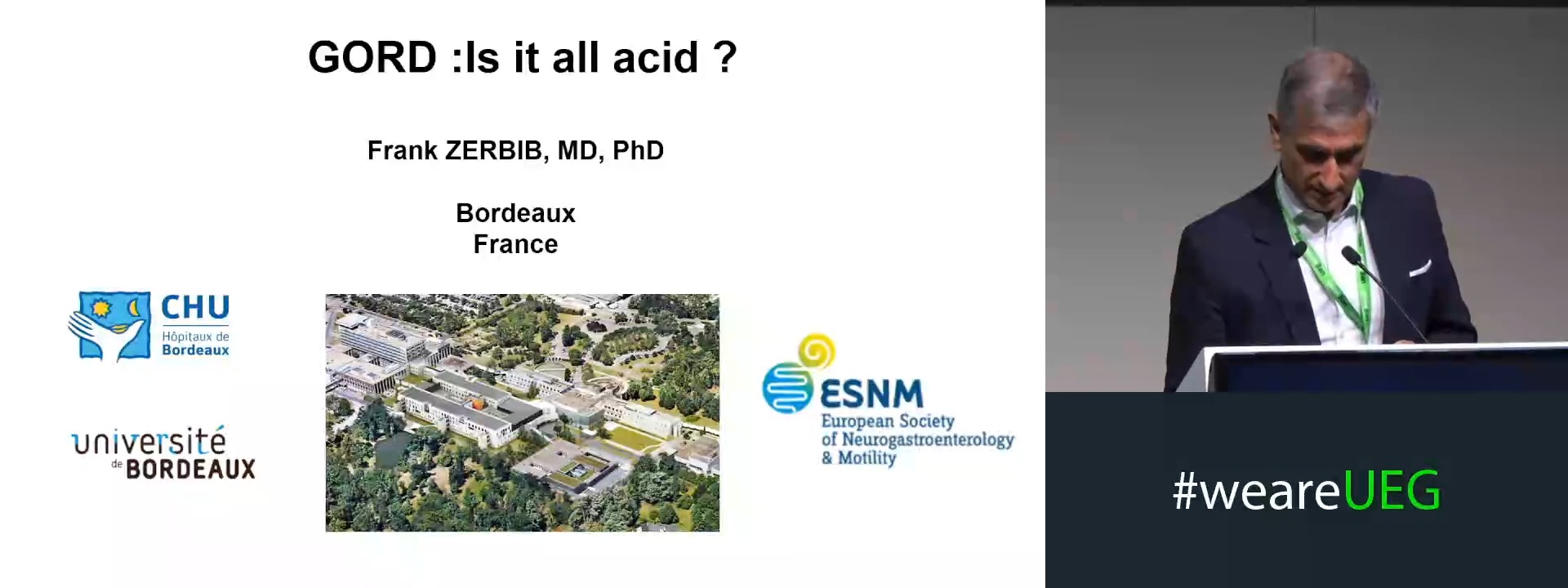
GORD: Is it all acid?
Affiliations
1 CHU de Bordeaux - Hôpital Haut Leveque, Pessac, France

Log in to continue.
This content is part of Gutflix. Log in with your myUEG account, or create one free, to watch it.
Not sure what you can access? Learn more about account types.
PHARMACOKINETICS AND PHARMACODYNAMICS OF LINAPRAZAN GLURATE AFTER MULTIPLE ORAL DOSES UP TO 14 DAYS IN HEALTHY SUBJECTS
Matjaž Fležar 1,2, Kajsa Larsson 3, Kjell Andersson 3, Gunilla Huledal 3, Kristofer Katkits 3, Elham Yektaei 3, Peter Unge 3
Affiliations
1 University of Ljubljana, Ljubljana, Slovenia
2 University Clinic Golnik, Golnik, Slovenia
3 Cinclus Pharma Holding AB (publ), Stockholm, Sweden
Log in to continue.
This content is part of Gutflix. Log in with your myUEG account, or create one free, to watch it.
Not sure what you can access? Learn more about account types.
Summary: Autoimmune disease of liver and bile ducts
Affiliations
1 Klinikum rechts der Isar, München, Germany
Log in to continue.
This content is part of Gutflix. Log in with your myUEG account, or create one free, to watch it.
Not sure what you can access? Learn more about account types.
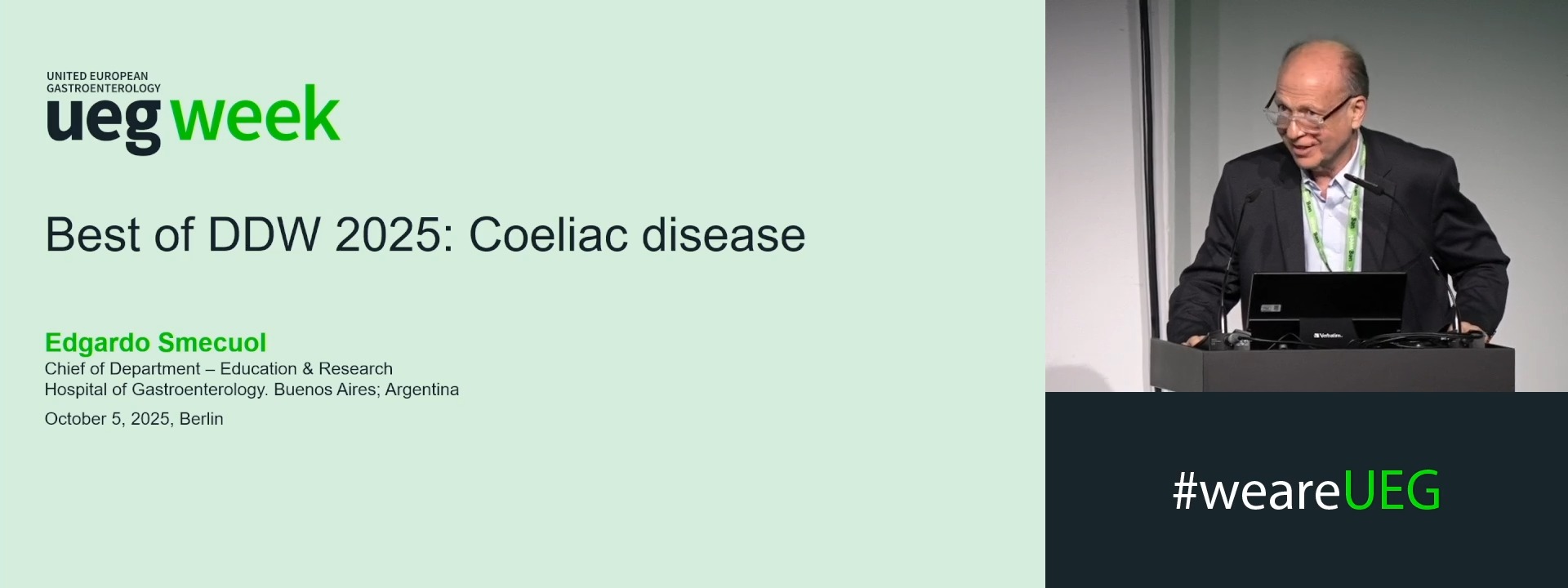
Coeliac disease
Affiliations
1 Hospital de Gastroenterologia, Buenos Aires, Argentina

Log in to continue.
This content is part of Gutflix. Log in with your myUEG account, or create one free, to watch it.
Not sure what you can access? Learn more about account types.
How to prevent adverse events and complications in sedation
Affiliations
1 Copenhagen University Hospitals Gentofte and Herlev, Herlev, Denmark