UEG's content platform for gastroenterology education bringing recordings, courses, guidelines, and more together in one place.
Trending on Gutflix
Rate for better recommendations!
Your feedback helps us show you more of what you like and less of what you dislike!
Log in to continue.
This content is part of Gutflix. Log in with your myUEG account, or create one free, to watch it.
Not sure what you can access? Learn more about account types.
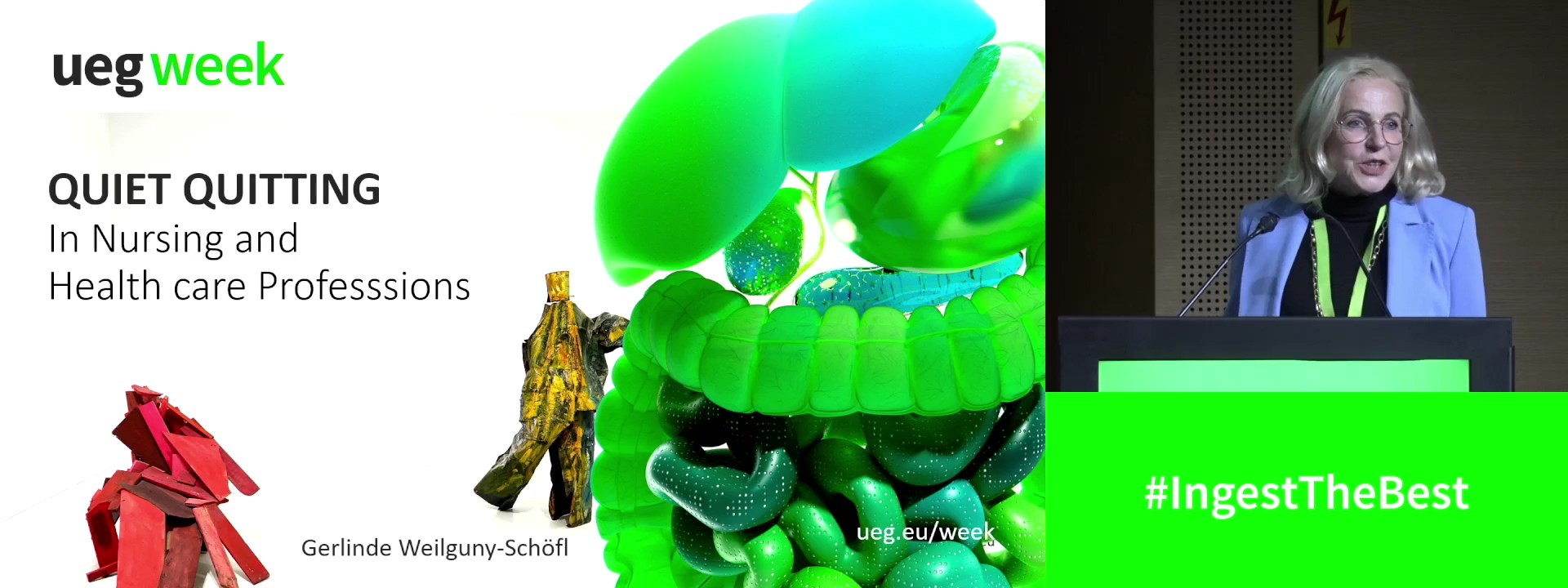
Quiet quitting in nursing and healthcare professions
Affiliations
1 Allg. Krankenhaus Wien Abt. für Innere Medizin Abt. Endoskopie, Wien, Austria

Log in to continue.
This content is part of Gutflix. Log in with your myUEG account, or create one free, to watch it.
Not sure what you can access? Learn more about account types.
Follow-up presentation
Affiliations
1 Amsterdam UMC, Amsterdam, Netherlands
Log in to continue.
This content is part of Gutflix. Log in with your myUEG account, or create one free, to watch it.
Not sure what you can access? Learn more about account types.
Endoscopic options for patients with suspected deep submucosal invasion
Affiliations
1 National Cancer Center Hospital Endoscopy Division, Tokyo, Japan

Log in to continue.
This content is part of Gutflix. Log in with your myUEG account, or create one free, to watch it.
Not sure what you can access? Learn more about account types.
T1b cancer: Only endoscopic treatment?
Affiliations
1 Gemelli Hospital, Roma, Italy
Log in to continue.
This content is part of Gutflix. Log in with your myUEG account, or create one free, to watch it.
Not sure what you can access? Learn more about account types.
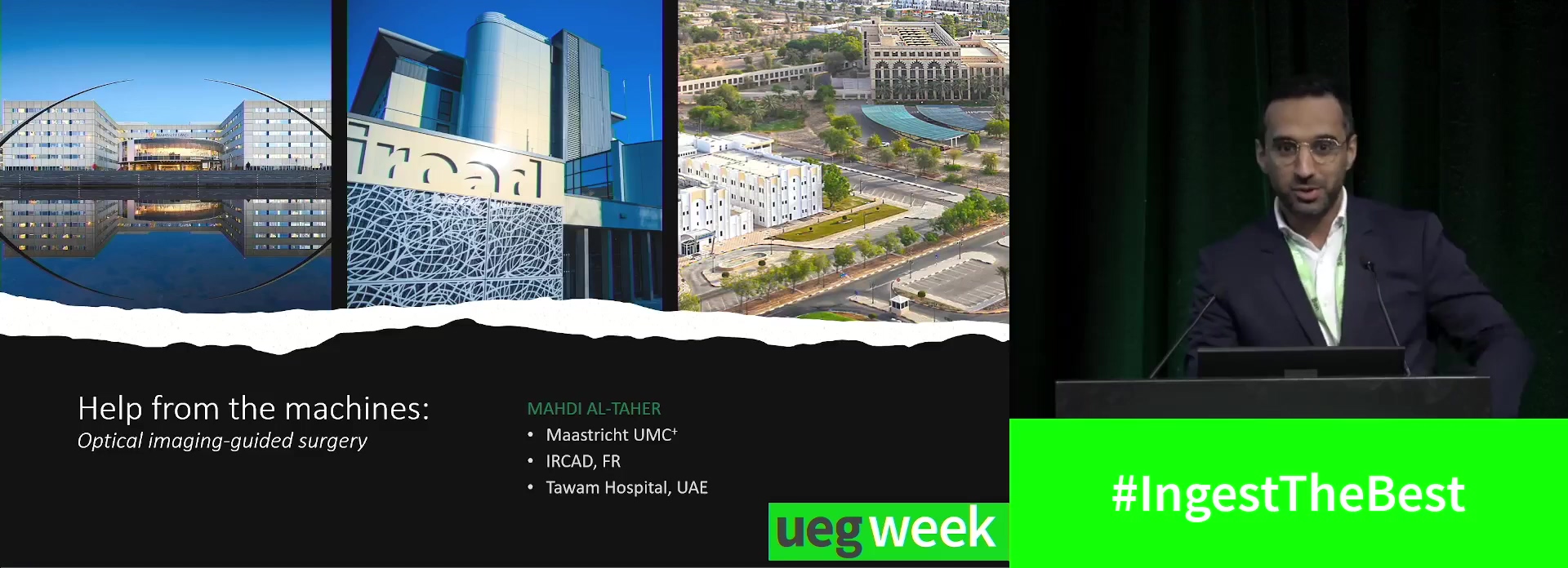
Image-guided surgery techniques
Affiliations
1 Maastricht UMC, Dubai, United Arab Emirates