UEG's content platform for gastroenterology education bringing recordings, courses, guidelines, and more together in one place.
Trending on Gutflix
Rate for better recommendations!
Your feedback helps us show you more of what you like and less of what you dislike!
Log in to continue.
This content is part of Gutflix. Log in with your myUEG account, or create one free, to watch it.
Not sure what you can access? Learn more about account types.
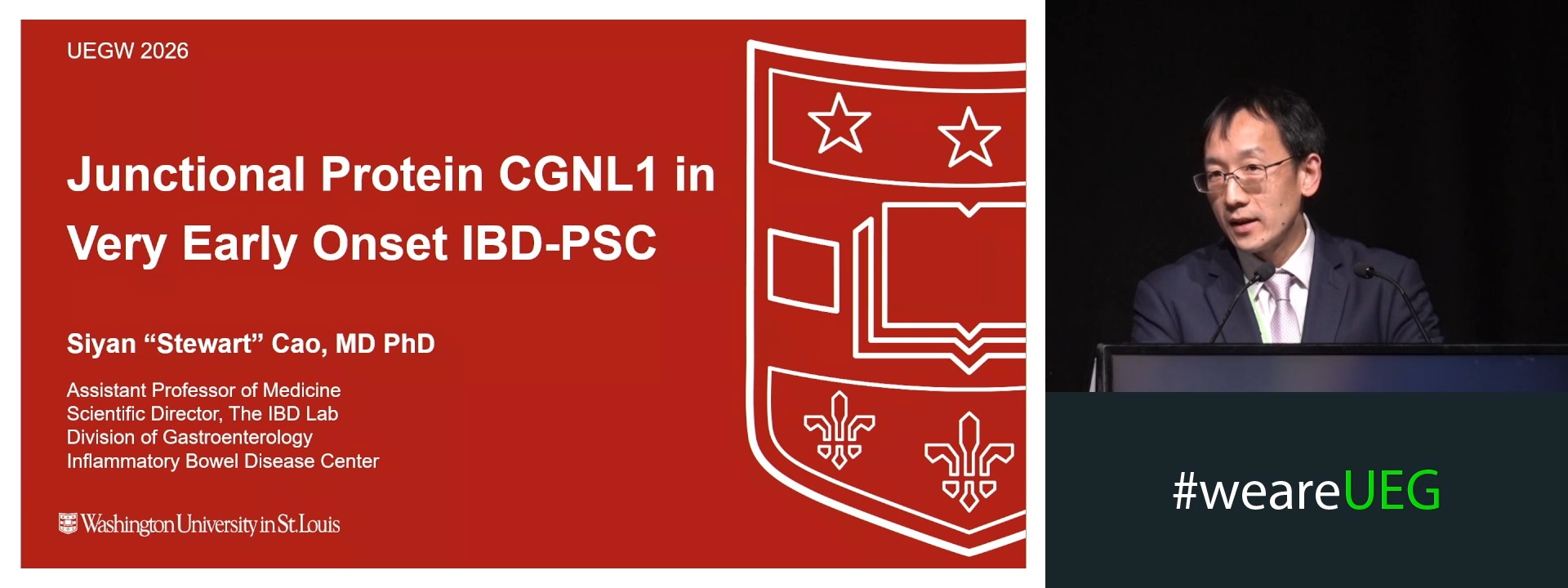
CGNL1 CONTROLS VERY EARLY ONSET INFLAMMATORY BOWEL DISEASE AND AUTOIMMUNE HEPATOBILIARY DISEASE
Affiliations
1 Washington University in St. Louis, Chesterfield, United States
Log in to continue.
This content is part of Gutflix. Log in with your myUEG account, or create one free, to watch it.
Not sure what you can access? Learn more about account types.
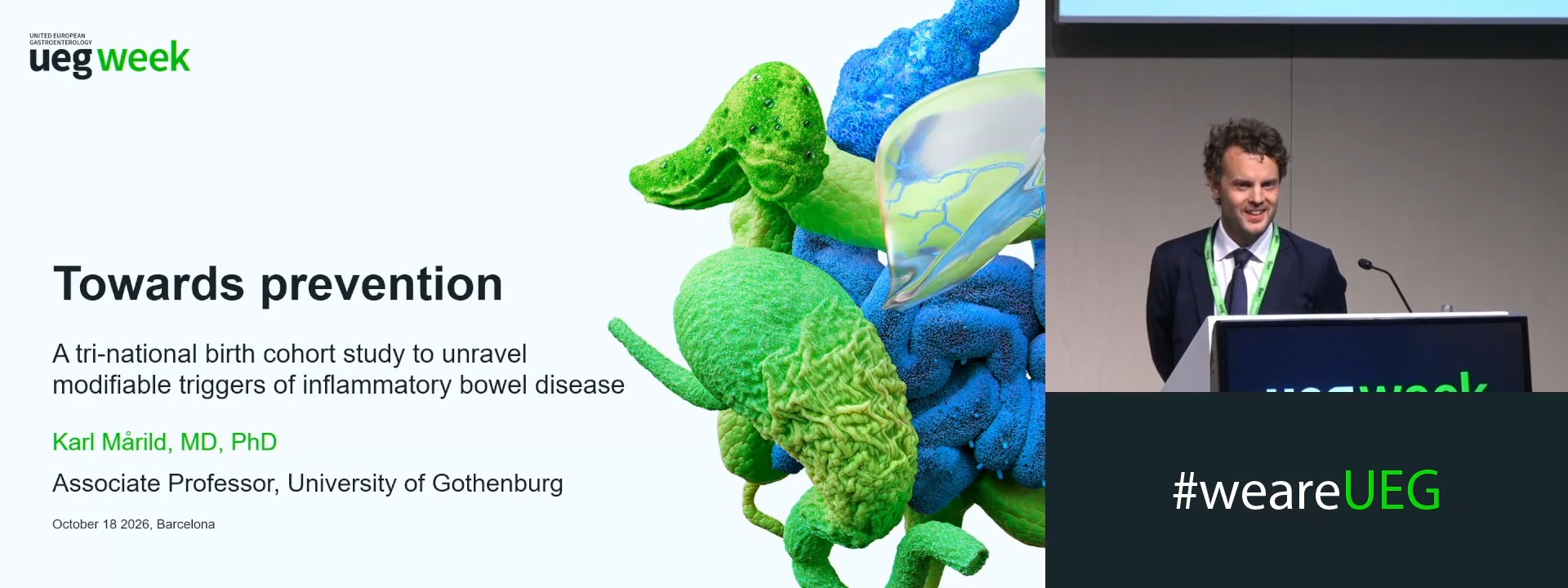
Towards prevention: A trinational birth cohort study to unravel modifiable triggers of inflammatory bowel disease
Affiliations
1 University of Gothenburg, Gothenburg, Sweden
Log in to continue.
This content is part of Gutflix. Log in with your myUEG account, or create one free, to watch it.
Not sure what you can access? Learn more about account types.
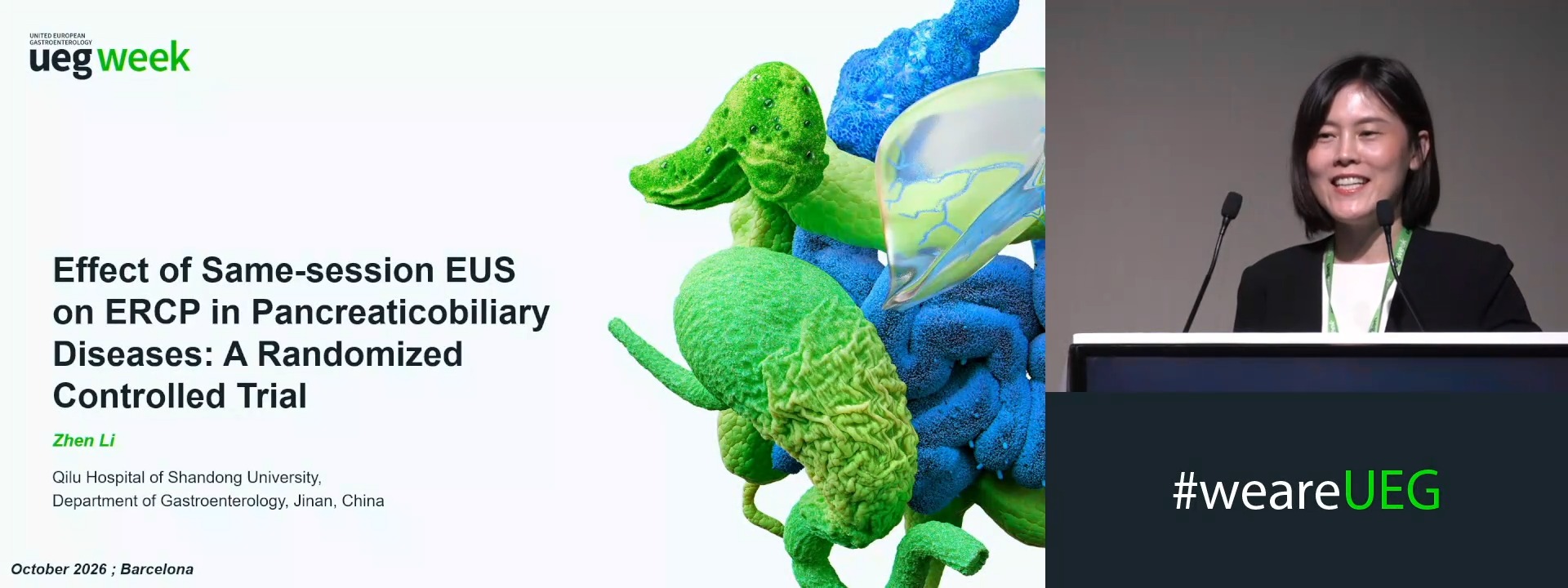
EFFECT OF SAME-SESSION ENDOSCOPIC ULTRASONOGRAPHY ON ENDOSCOPIC RETROGRADE CHOLANGIOPANCREATOGRAPHY IN PANCREATICOBILIARY DISEASES: A RANDOMIZED CONTROLLED TRIAL
Affiliations
1 Qilu Hospital of Shandong University, Jinan, China