UEG's content platform for gastroenterology education bringing recordings, courses, guidelines, and more together in one place.
Trending on Gutflix
Rate for better recommendations!
Your feedback helps us show you more of what you like and less of what you dislike!
Log in to continue.
This content is part of Gutflix. Log in with your myUEG account, or create one free, to watch it.
Not sure what you can access? Learn more about account types.
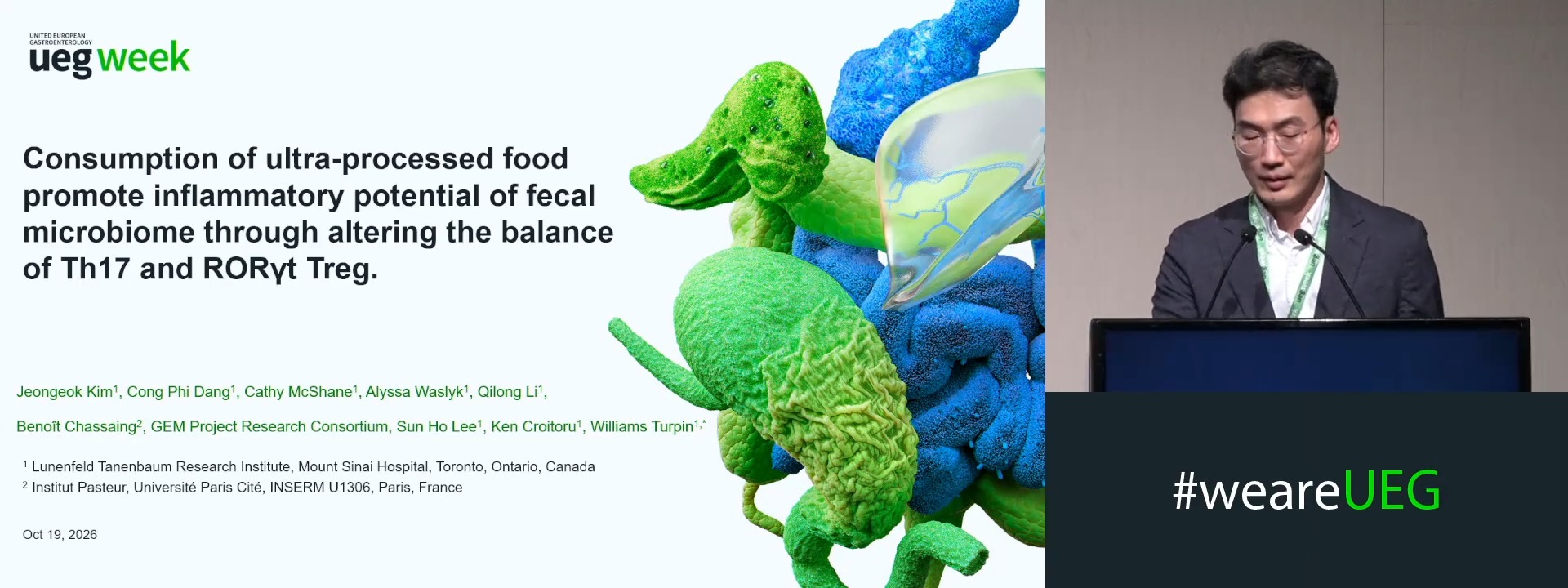
CONSUMPTION OF ULTRA-PROCESSED FOOD PROMOTE INFLAMMATORY POTENTIAL OF FECAL MICROBIOME THROUGH ALTERING THE BALANCE OF TH17 AND RORYT TREG
Jeongseok Kim 1, Cong Phi Dang 2, Cathy McShane 1, Alyssa Waslyk 1, Qilong Li 1, Benoît Chassaing 3, Sun-Ho Lee 1,2, Ken Croitoru 1,2, Williams Turpin 1,2
Affiliations
1 Lunenfeld Tanenbaum Research Institute, Mount Sinai Hospital, Toronto, Canada
2 Temerty Faculty of Medicine, University of Toronto, Toronto, Canada
3 Institut Pasteur, Université Paris Cité, INSERM U1306, Paris, France
Log in to continue.
This content is part of Gutflix. Log in with your myUEG account, or create one free, to watch it.
Not sure what you can access? Learn more about account types.
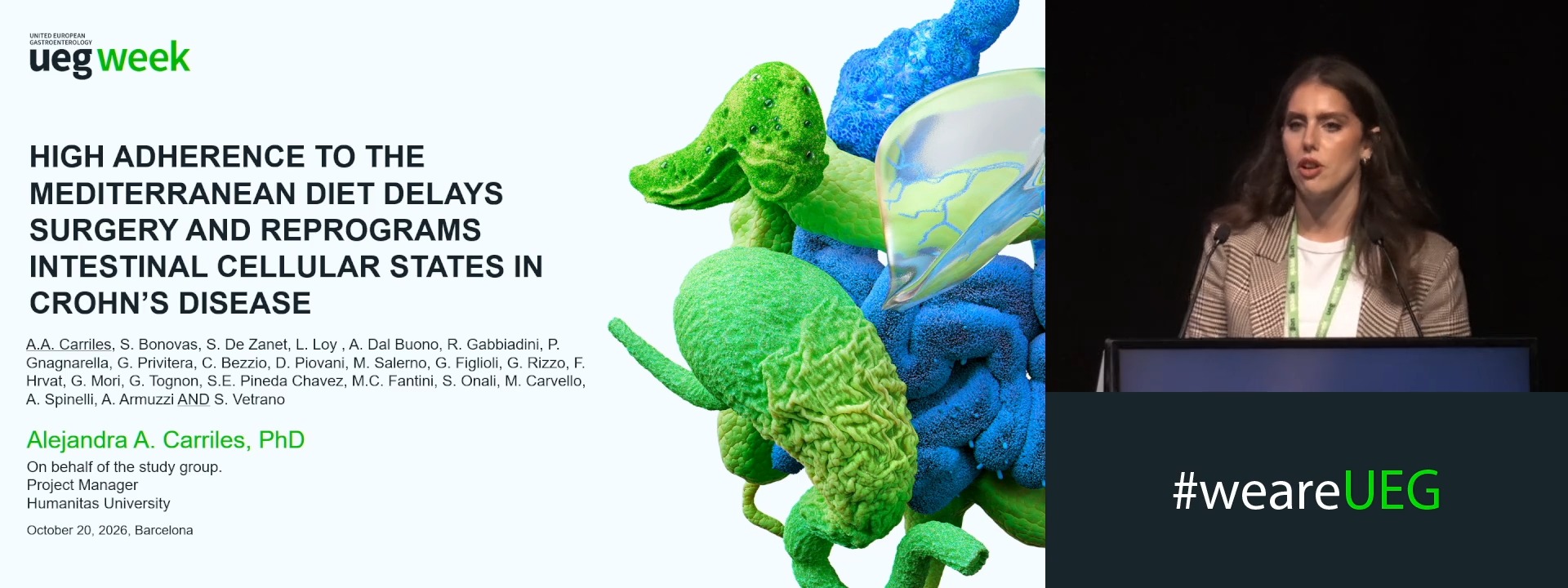
HIGH ADHERENCE TO THE MEDITERRANEAN DIET DELAYS SURGERY AND REPROGRAMS INTESTINAL CELLULAR STATES IN CROHN’S DISEASE
Alejandra Angela Carriles Linares 1,2, Michele Salerno 1,2, Stefano De Zanet 1,2, Faris Hrvat 1, Laura Loy 2, Roberto Gabbiadini 2, Patrizia Gnagnarella 3, Giuseppe Privitera 1,2, Arianna Dal Buono 2, Cristina Bezzio 1,2, Daniele Piovani 1,2, Stefanos Bonovas 1,2, Gisella Figlioli 1,2, Giulia Rizzo 2, Giada Mori 2, Gianluca Tognon 4, Samuel Elias Pineda Chavez 2,1, Massimo Claudio Fantini 5,6, Sara Onali 5,6, Michele Carvello 1,2, Antonino Spinelli 1,2, Alessandro Armuzzi 1,2, Stefania Vetrano 2,1
Affiliations
1 Humanitas University, Pieve Emanuele, Milan, Italy
2 IRCCS Humanitas Research Hospital, Rozzano, Milan, Italy
3 IEO European Institute of Oncology IRCCS, Milan, Italy
4 University of Skövde, Skövde, Sweden
5 Azienda Ospedaliero-Universitaria di Cagliari, Monserrato, Cagliari, Italy
6 University of Cagliari, Monserrato, Cagliari, Italy
Log in to continue.
This content is part of Gutflix. Log in with your myUEG account, or create one free, to watch it.
Not sure what you can access? Learn more about account types.
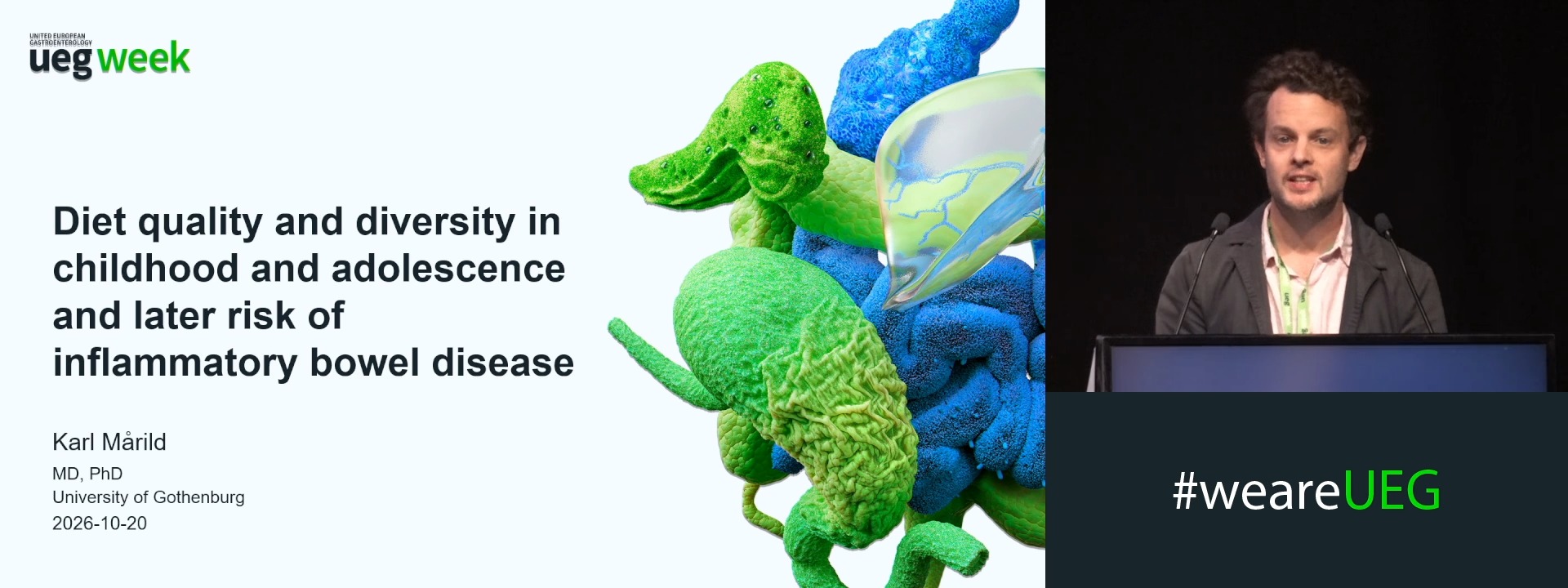
DIET QUALITY AND DIVERSITY IN CHILDHOOD AND ADOLESCENCE AND LATER RISK OF INFLAMMATORY BOWEL DISEASE: A TRI-NATIONAL BIRTH COHORT STUDY
Annie Guo 1, Ida Sigvardsson 1, Sabine Jansson 2,3, Henrik Imberg 4,5, Anne Lise Brantsæter 6, Anne Vibeke Wewer 7,2,3, Johnny Ludvigsson 8,9, Ketil Størdal 10,11, Mikkel Malham 3,2, Karl Mårild 12,1
Affiliations
1 University of Gothenburg, Gothenburg, Sweden
2 Hvidovre Hospital, Hvidovre, Denmark
3 Copenhagen University Hospital, Hvidovre, Denmark
4 Statistiska Konsultgruppen Sweden AB, Gothenburg, Sweden
5 University of Gothenburg, Gothenburgsw, Sweden
6 Norwegian Institute of Public Health, Oslo, Norway
7 Copenhagen University Hospital, Hvidovre, Hvidovre, Denmark
8 Crown Princess Victoria Children’s Hospital, Linköping, Sweden
9 Linköping University, Linköping, Sweden
10 Oslo University Hospital, Oslo, Norway
11 University of Oslo, Oslo, Norway
12 Queen Silvia Children’s Hospital, Gothenburg, Sweden
Log in to continue.
This content is part of Gutflix. Log in with your myUEG account, or create one free, to watch it.
Not sure what you can access? Learn more about account types.
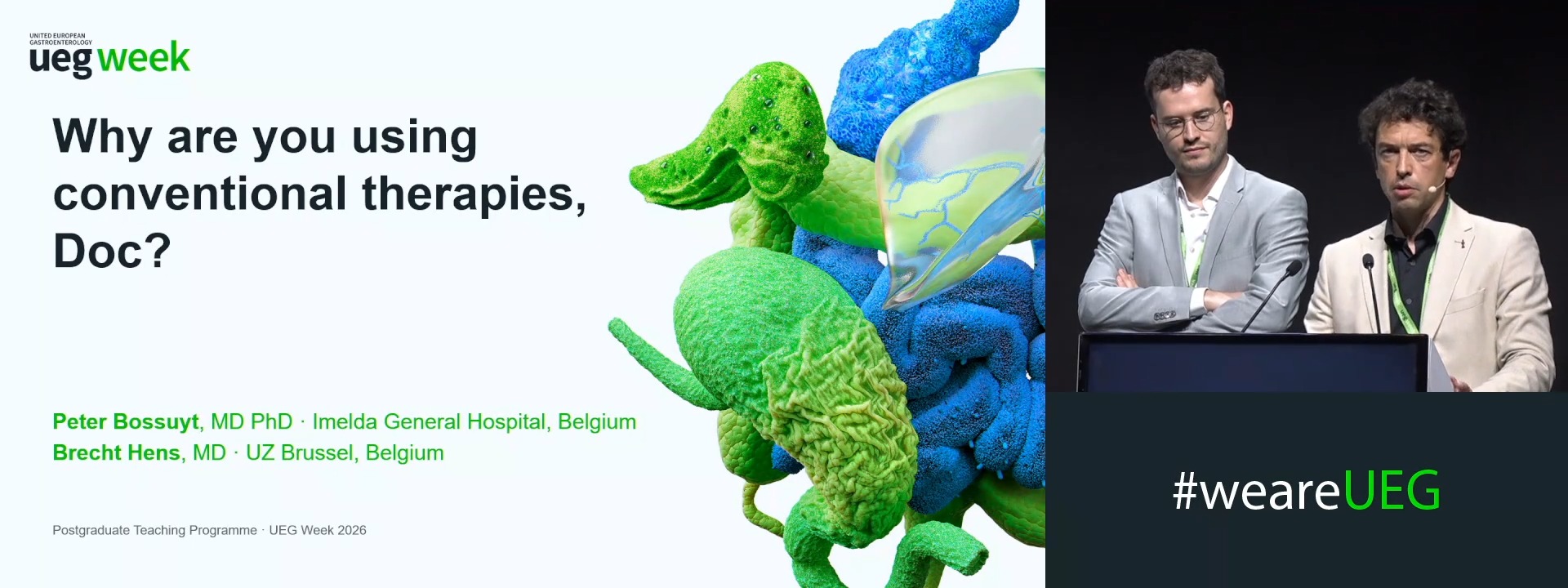
Why are you using conventional therapies, doc? A case-based perspective and state-of-the-art overview
Affiliations
1 Imelda General Hospital, Bonheiden, Belgium
2 UZ Brussel, Brussels, Belgium
Log in to continue.
This content is part of Gutflix. Log in with your myUEG account, or create one free, to watch it.
Not sure what you can access? Learn more about account types.
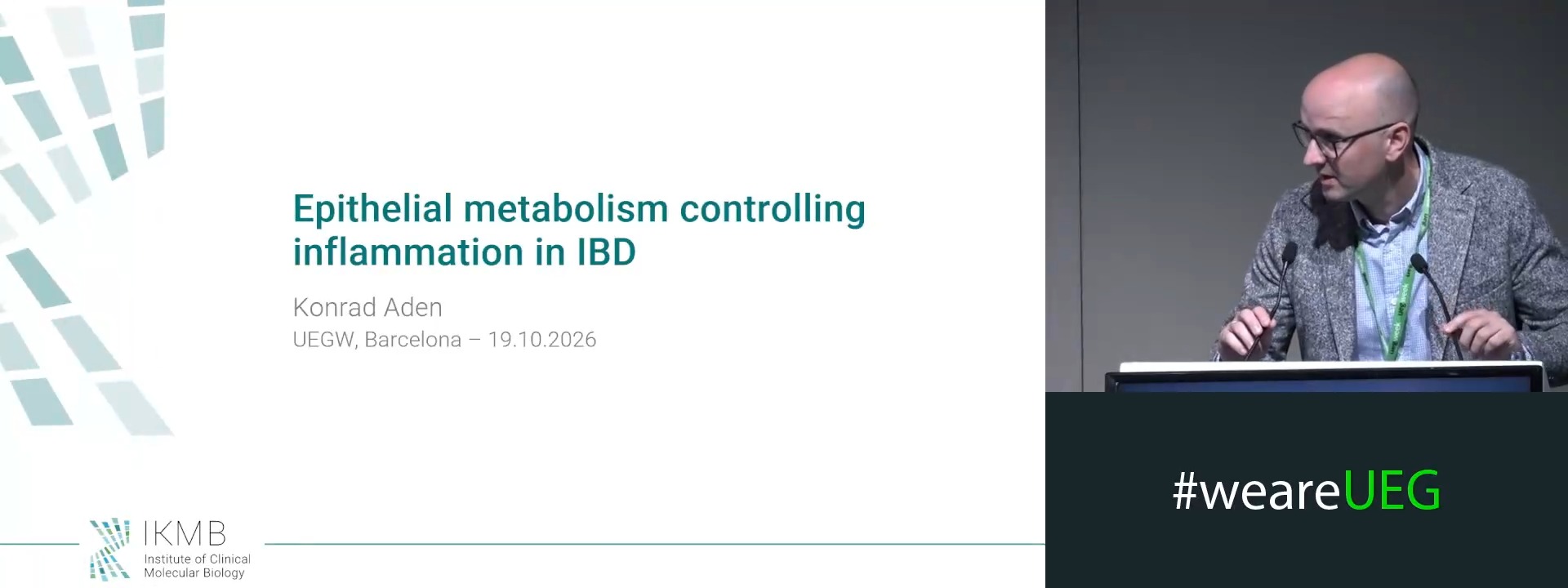
Epithelial metabolism controlling inflammation in IBD
Affiliations
1 IKMB + First Medical Department, Kiel, Germany