UEG's content platform for gastroenterology education bringing recordings, courses, guidelines, and more together in one place.
Trending on Gutflix
Rate for better recommendations!
Your feedback helps us show you more of what you like and less of what you dislike!
Log in to continue.
This content is part of Gutflix. Log in with your myUEG account, or create one free, to watch it.
Not sure what you can access? Learn more about account types.
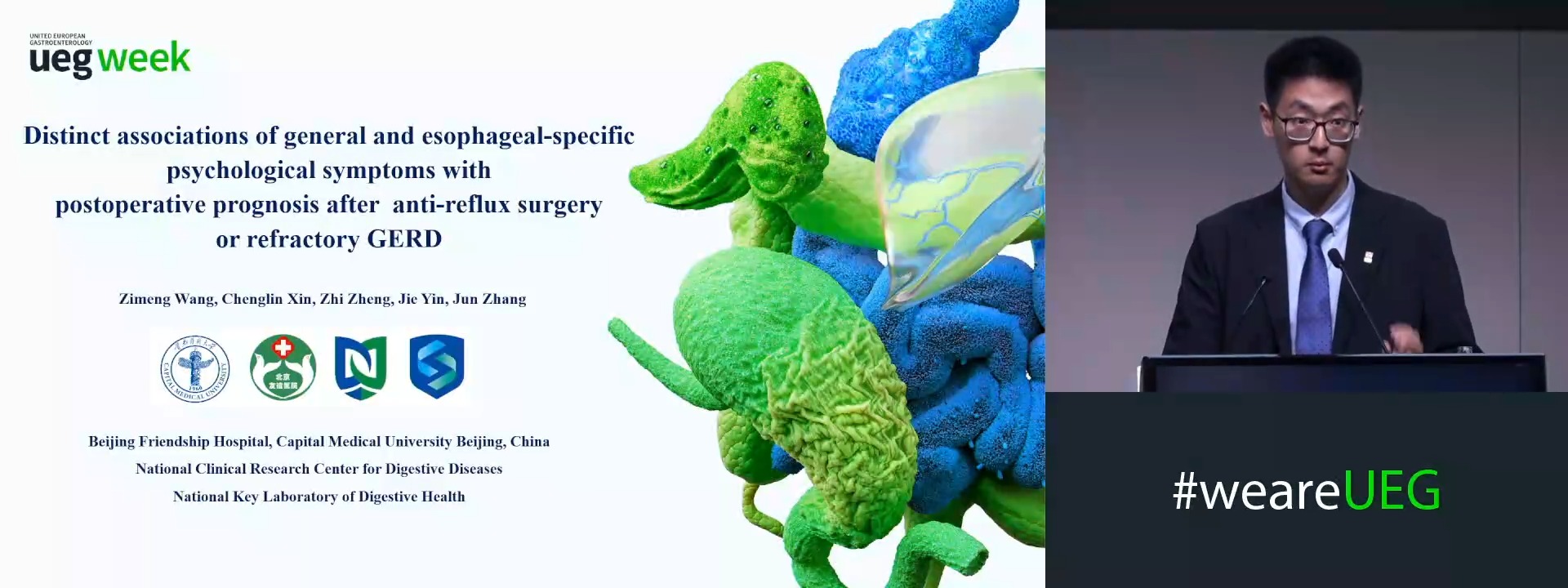
DISTINCT ASSOCIATIONS OF GENERAL AND ESOPHAGEAL-SPECIFIC PSYCHOLOGICAL SYMPTOMS WITH POSTOPERATIVE PROGNOSIS AFTER ANTI-REFLUX SURGERY FOR REFRACTORY GERD
Zimeng Wang 1, Chenglin Xin 1, Zhi Zheng 1, Wei Wang 2, Xueqi Li 1, yixiao sun 1, Haiqiao Zhang 1, Qian Zhang 3, Xiaoye Liu 1, Wenyan Li 3, Fandong Meng 3, Yu Fu 4, Jie Yin 1, Jun Zhang 1, Yingchi Yang 1, Zhongtao Zhang 1
Affiliations
1 Beijing Friendship Hospital, Capital Medical University, Beijing, China
2 Beijing Anding Hospital, Capital Medical University, Beijing, China
3 State Key Lab of Digestive Health, Beijing, China
4 China General Microbiological Culture Collection Center, Institute of Microbiology, Chinese Academy of Sciences, Beijing, China
Log in to continue.
This content is part of Gutflix. Log in with your myUEG account, or create one free, to watch it.
Not sure what you can access? Learn more about account types.
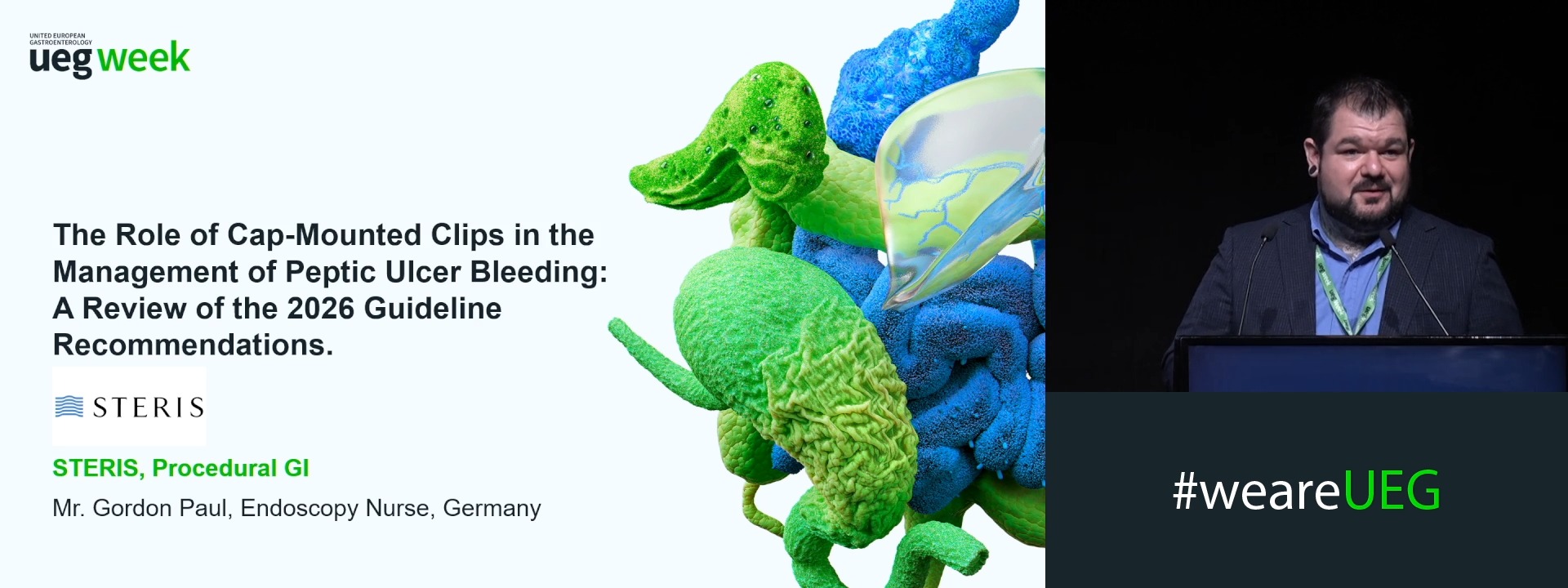
The role of cap-mounted clips in the management of peptic ulcer bleeding: A review of the 2026 guideline recommendations (Steris)
Log in to continue.
This content is part of Gutflix. Log in with your myUEG account, or create one free, to watch it.
Not sure what you can access? Learn more about account types.
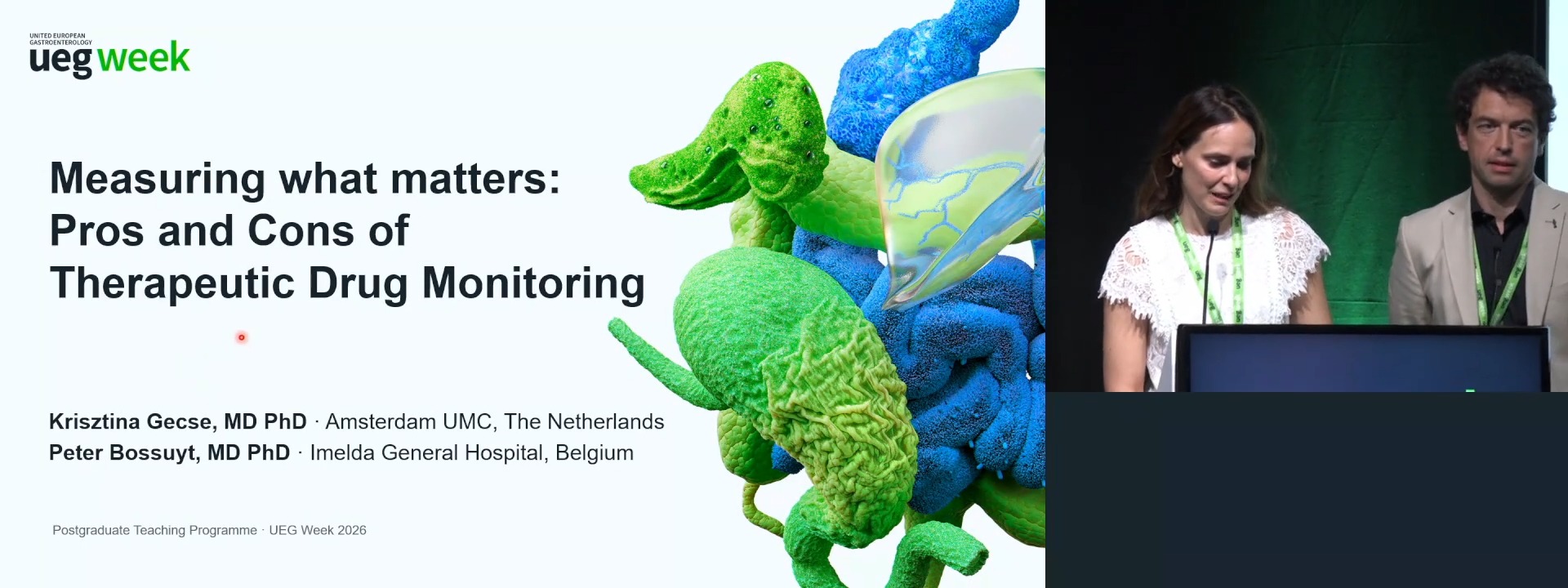
Measuring what matters: Pros and cons of therapeutic drug monitoring in IBD
Affiliations
1 Department of Gastroenterology and Hepatology, Amsterdam, Netherlands
2 Imelda General Hospital, Bonheiden, Belgium
Log in to continue.
This content is part of Gutflix. Log in with your myUEG account, or create one free, to watch it.
Not sure what you can access? Learn more about account types.
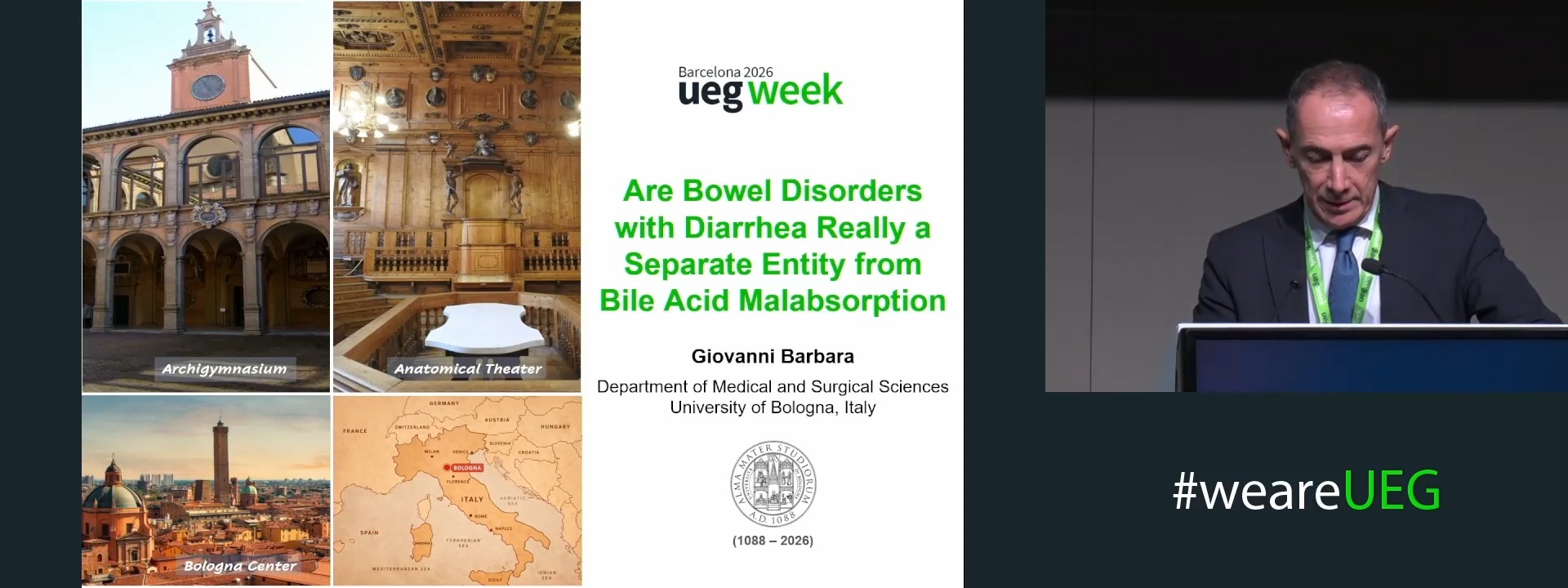
Are bowel disorders with diarrhoea really a separate entity from bile acid malabsorption?
Affiliations
1 University of Bologna, Bologna, Italy
Log in to continue.
This content is part of Gutflix. Log in with your myUEG account, or create one free, to watch it.
Not sure what you can access? Learn more about account types.
Shortness of breath: Pulmonary vascular complications from liver disease
Affiliations
1 Ghent University Hospital, Gent, Belgium
Log in to continue.
This content is part of Gutflix. Log in with your myUEG account, or create one free, to watch it.
Not sure what you can access? Learn more about account types.
Outcome of radical resections
Affiliations
1 Amsterdam UMC, Amsterdam, Netherlands
Log in to continue.
This content is part of Gutflix. Log in with your myUEG account, or create one free, to watch it.
Not sure what you can access? Learn more about account types.
Using vacuum therapy in the management of anastomotic leaks
Affiliations
1 Amsterdam UMC, Amsterdam, Netherlands