UEG's content platform for gastroenterology education bringing recordings, courses, guidelines, and more together in one place.
Trending on Gutflix
Rate for better recommendations!
Your feedback helps us show you more of what you like and less of what you dislike!
Log in to continue.
This content is part of Gutflix. Log in with your myUEG account, or create one free, to watch it.
Not sure what you can access? Learn more about account types.
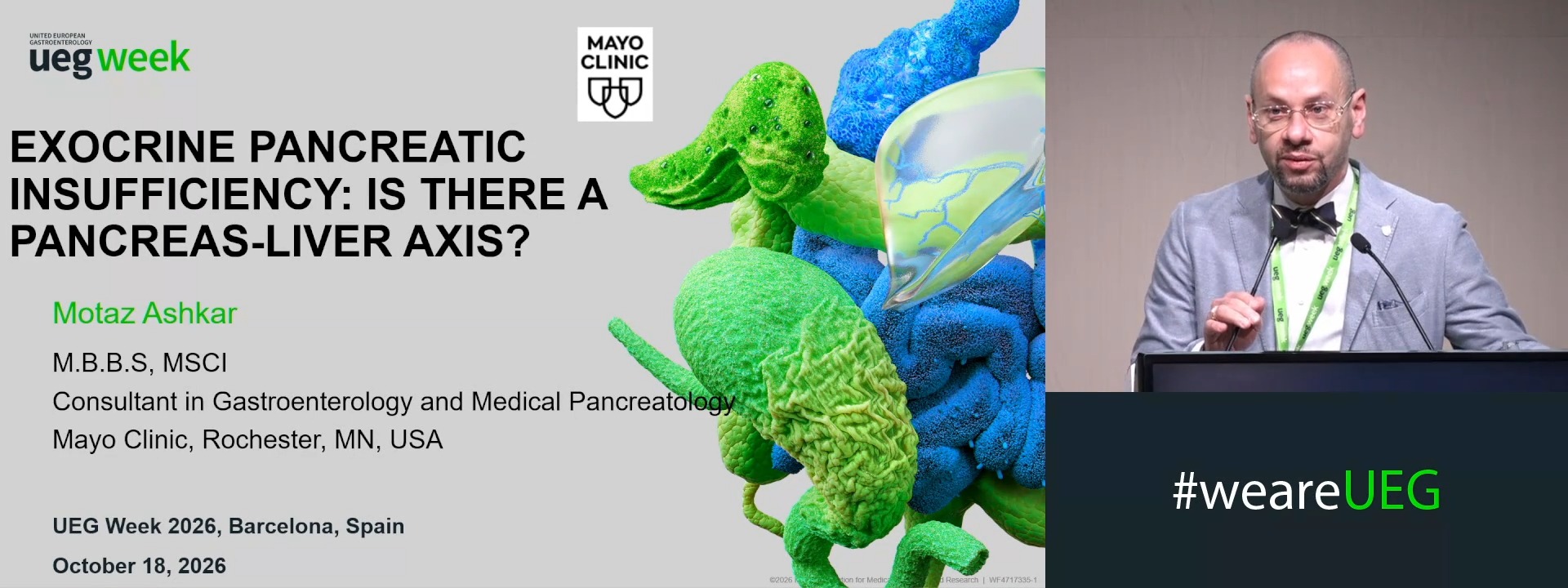
Exocrine pancreatic insufficiency: is there a pancreas-liver axis?
Affiliations
1 Mayo Clinic, Rochester, United States of America
Log in to continue.
This content is part of Gutflix. Log in with your myUEG account, or create one free, to watch it.
Not sure what you can access? Learn more about account types.
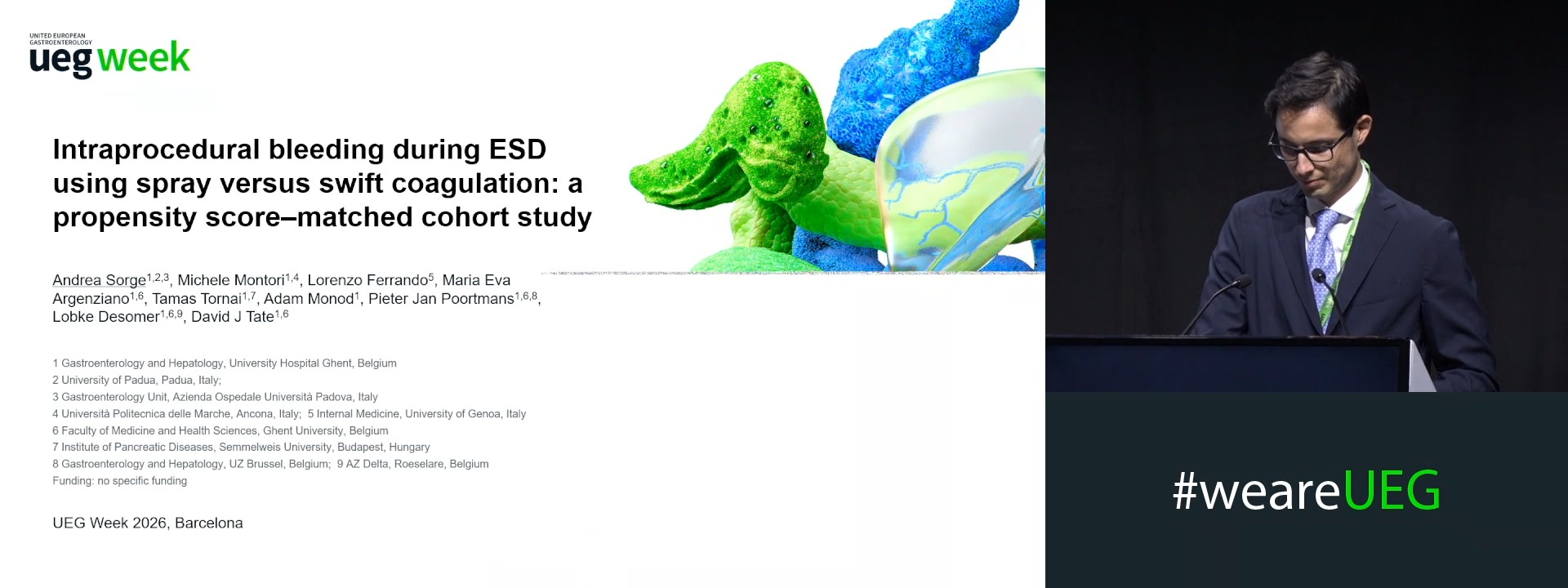
SPRAY COAGULATION REDUCES INTRAPROCEDURAL BLEEDING DURING ENDOSCOPIC SUBMUCOSAL DISSECTION COMPARED TO SWIFT COAGULATION: A PROPENSITY SCORE–MATCHED COHORT STUDY
Andrea Sorge 1,2, Michele Montori 2, Maria Eva Argenziano 2, Tamás Tornai 3, Adam Monod 2, Pieter Jan Poortmans 4, Lobke Desomer 5, David James Tate 6
Affiliations
1 University of Padua, Padua, Italy
2 University Hospital Ghent, Ghent, Belgium
3 Semmelweis University, Budapest, Hungary
4 University Hospital Ghent, University Hospital Brussels, Asse, Belgium
5 Az Delta, Drongen, Belgium
6 University Hospital Ghent, Gent, Belgium
Log in to continue.
This content is part of Gutflix. Log in with your myUEG account, or create one free, to watch it.
Not sure what you can access? Learn more about account types.
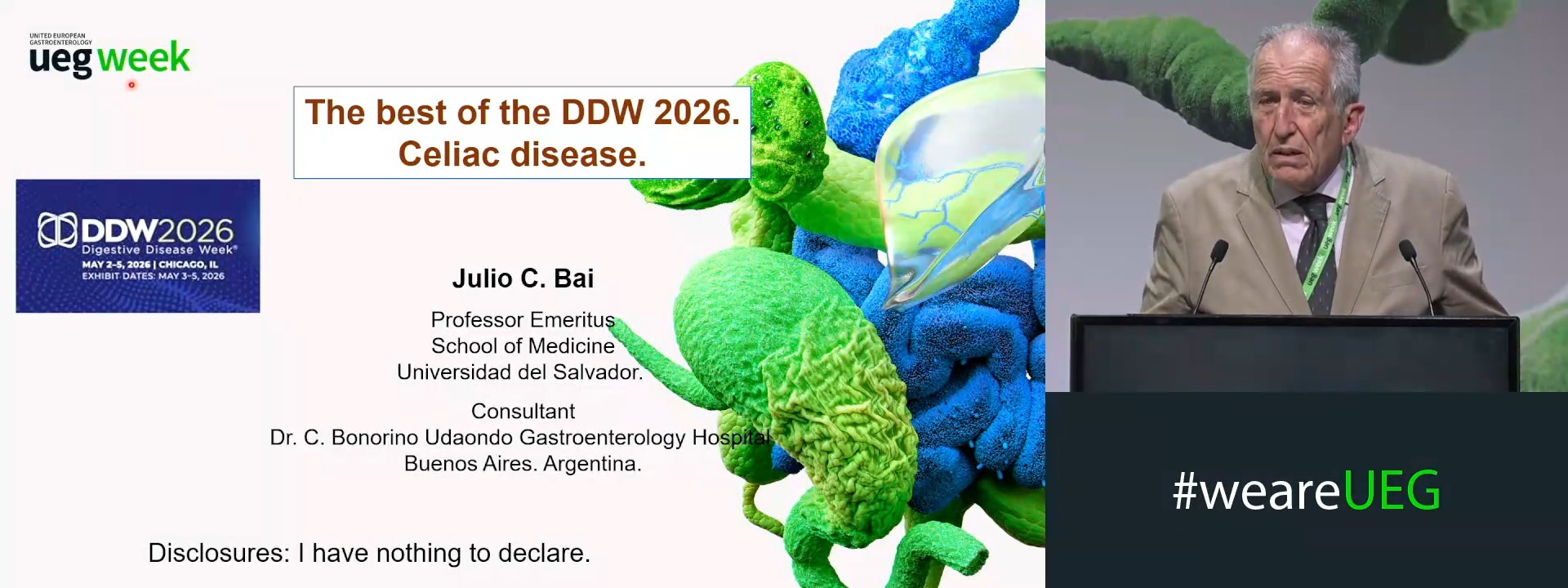
Coeliac disease and gluten-related disorders
Affiliations
1 Hospital de Gastroenterología Dr. C. Bonorino Udaondo, Buenos Aires, Argentina
Log in to continue.
This content is part of Gutflix. Log in with your myUEG account, or create one free, to watch it.
Not sure what you can access? Learn more about account types.
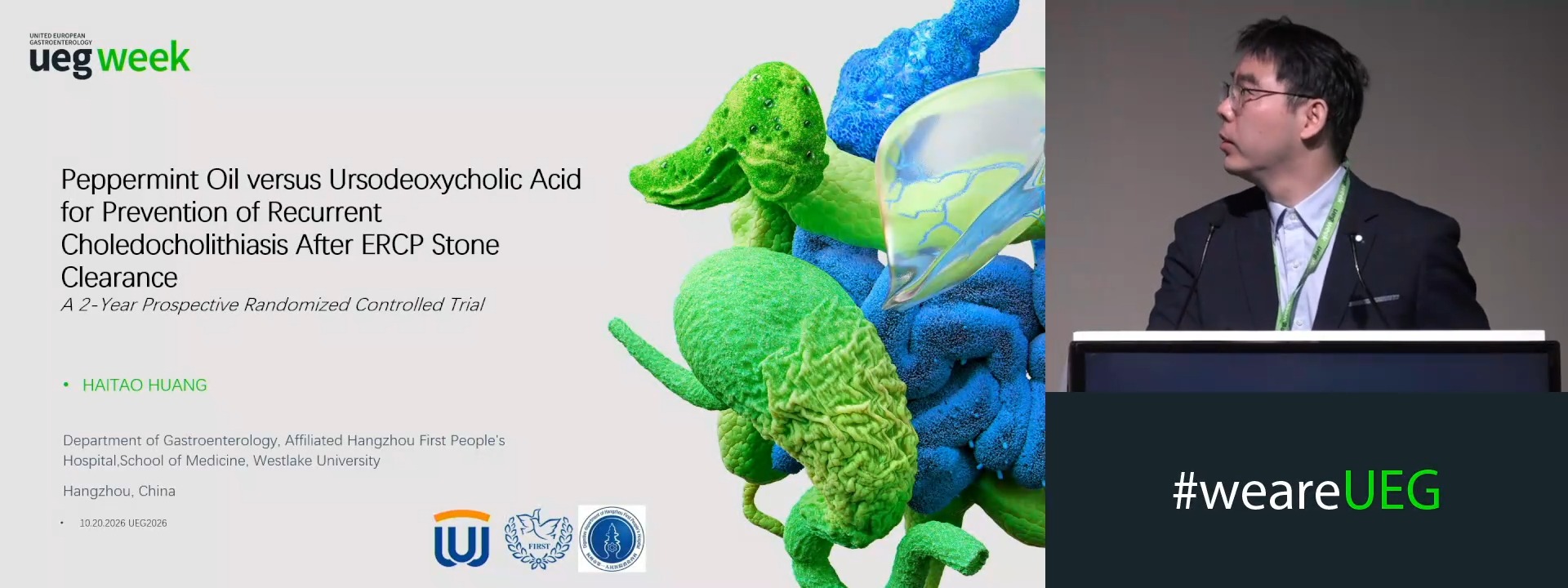
PEPPERMINT OIL VERSUS URSODEOXYCHOLIC ACID FOR PREVENTING RECURRENT CHOLEDOCHOLITHIASIS AFTER ERCP STONE CLEARANCE: A 2-YEAR PROSPECTIVE RANDOMIZED CONTROLLED TRIAL
Haitao Huang 1,2, Yiwen Feng 3, Huanlu Xu 3, Jianlong Chen 3, Liyun Zheng 1, Dongchao Xu 1, Xiaofeng Zhang 1,2, Hangbin Jin 1,2, jing Yang 1,2, Hongzhang Shen 1,2
Affiliations
1 Hangzhou First People's Hospital, Hangzhou, China
2 School of Medicine, Westlake University, Hangzhou, China
3 The Fourth Clinical Medical College, Zhejiang Chinese Medical University, Hangzhou, China
Log in to continue.
This content is part of Gutflix. Log in with your myUEG account, or create one free, to watch it.
Not sure what you can access? Learn more about account types.
Introduction: Are you stuck in the biliary cannulation nightmare: Wake up, here comes the sun
Affiliations
1 San Matteo Hospital, Pavia, Italy
Log in to continue.
This content is part of Gutflix. Log in with your myUEG account, or create one free, to watch it.
Not sure what you can access? Learn more about account types.
PREVENTION OF DELAYED POST-POLYPECTOMY HEMORRHAGE BY DOPPLER ENDOSCOPIC PROBE MONITORING AND FOCAL BLOOD FLOW ABLATION IN A RANDOMIZED CONTROLLED TRIAL
Affiliations
1 University of California Los Angeles, Santa Monica, United States
2 Harbor-UCLA Medical Center, Torrance, United States
3 Kaiser Permanente, Downey, United States
4 West Los Angeles Veterans Administration Medical Center, Los Angeles, United States
5 University of California Los Angeles, Los Angeles, United States