UEG's educational platform for gastroenterology education bringing recordings, courses, guidelines, and more together in one place.
Most popular content
Rate for better recommendations!
Your feedback helps us show you more of what you like and less of what you dislike!
Log in to access this content.
Free for all myUEG account holders. Your access level is set automatically based on your occupation. Medical professionals get full access to all content. If you are a non-medical user, you can only access UEG Week content from congresses you attended.
Not sure what you can access? Learn more about account types.
ELEVATED SERUM CYSTATIN C LEVELS ARE ASSOCIATED WITH AN INCREASED RISK OF CLINICAL DECOMPENSATION IN PATIENTS WITH LIVER CIRRHOSIS
Lucia Amairani Robles Casanova 1, Moises Coutiño Flores 2, Gabriela Breton 3, Eumir Israel Juárez Valdés 3, Scherezada Mejia 3, Maria Herrero Maceda 3
1 Universidad Nacional Autónoma de Mexico, Ciudad De México, Mexico
2 Universidad Nacional Autónoma de Mexico, México, Mexico
3 Hospital Juárez de México, Ciudad De México, Mexico
Conference
Topics
Submission format
Citation
Published
Log in to access this content.
Free for all myUEG account holders. Your access level is set automatically based on your occupation. Medical professionals get full access to all content. If you are a non-medical user, you can only access UEG Week content from congresses you attended.
Not sure what you can access? Learn more about account types.
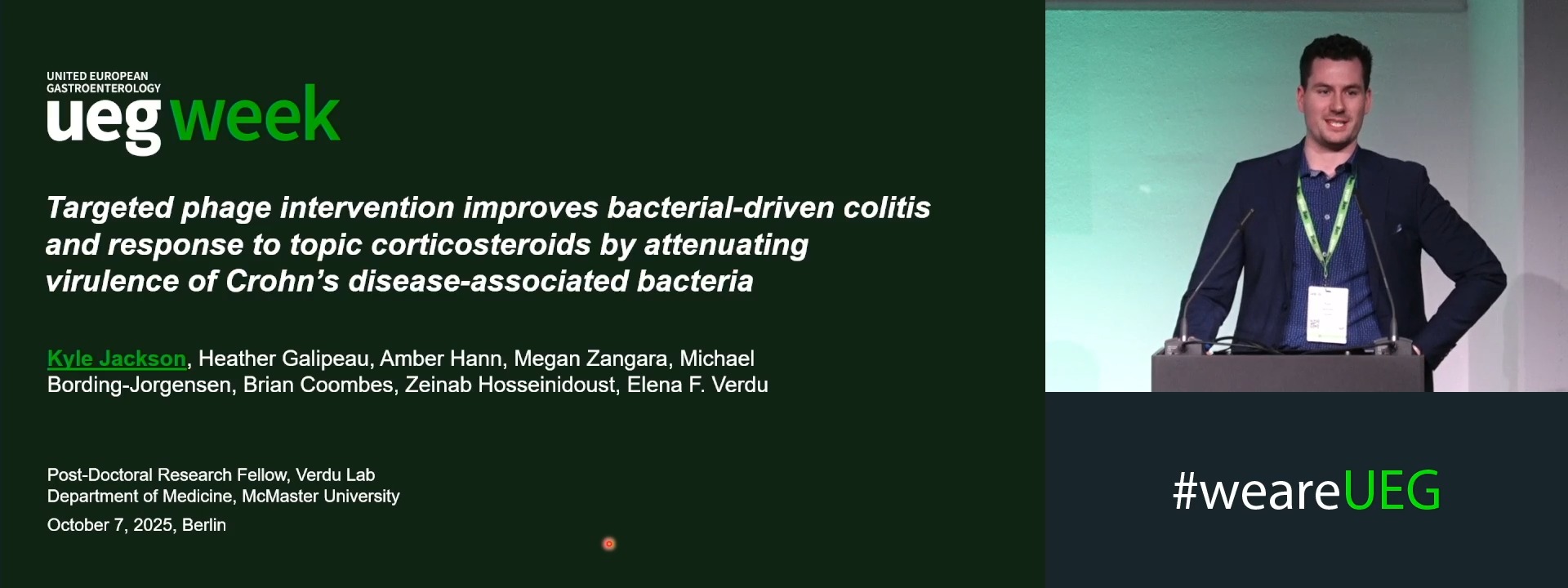
TARGETED PHAGE INTERVENTION IMPROVES BACTERIAL-DRIVEN COLITIS AND RESPONSE TO TOPICAL CORTICOSTEROIDS BY ATTENUATING VIRULENCE OF CROHN’S DISEASE-ASSOCIATED BACTERIA
Kyle Jackson 1, Heather Galipeau 2, Amber Hann 2, Marco Constante 2, Megan Zangara 3, Alexandra Fuentas 2, Chiko Shimbori 2, Premysl Bercik 2, Brian Coombes 3, Zeinab Hosseinidoust 1, Elena Verdu 2
1 McMaster University, Hamilton, Canada|||Farncombe Family Digestive Health Research Institute, Hamilton, Canada
2 Farncombe Family Digestive Health Research Institute, Hamilton, Canada
3 McMaster University, Hamilton, Canada
Event
Topics
Submission format
Citation
Published
Log in to access this content.
Free for all myUEG account holders. Your access level is set automatically based on your occupation. Medical professionals get full access to all content. If you are a non-medical user, you can only access UEG Week content from congresses you attended.
Not sure what you can access? Learn more about account types.
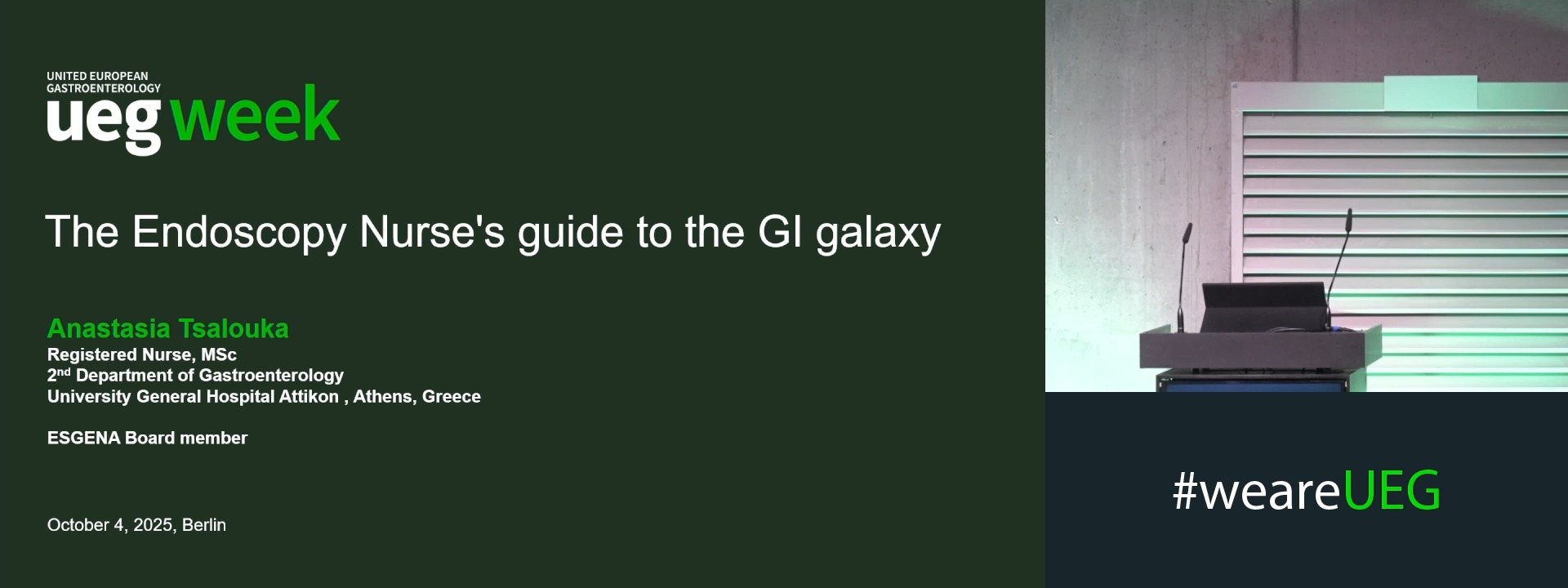
The endoscopy nurse's guide to the GI galaxy
1 University General Hospital Attikon, Athens, Greece
Event
Topics
Session
Citation
Published
Log in to access this content.
Free for all myUEG account holders. Your access level is set automatically based on your occupation. Medical professionals get full access to all content. If you are a non-medical user, you can only access UEG Week content from congresses you attended.
Not sure what you can access? Learn more about account types.
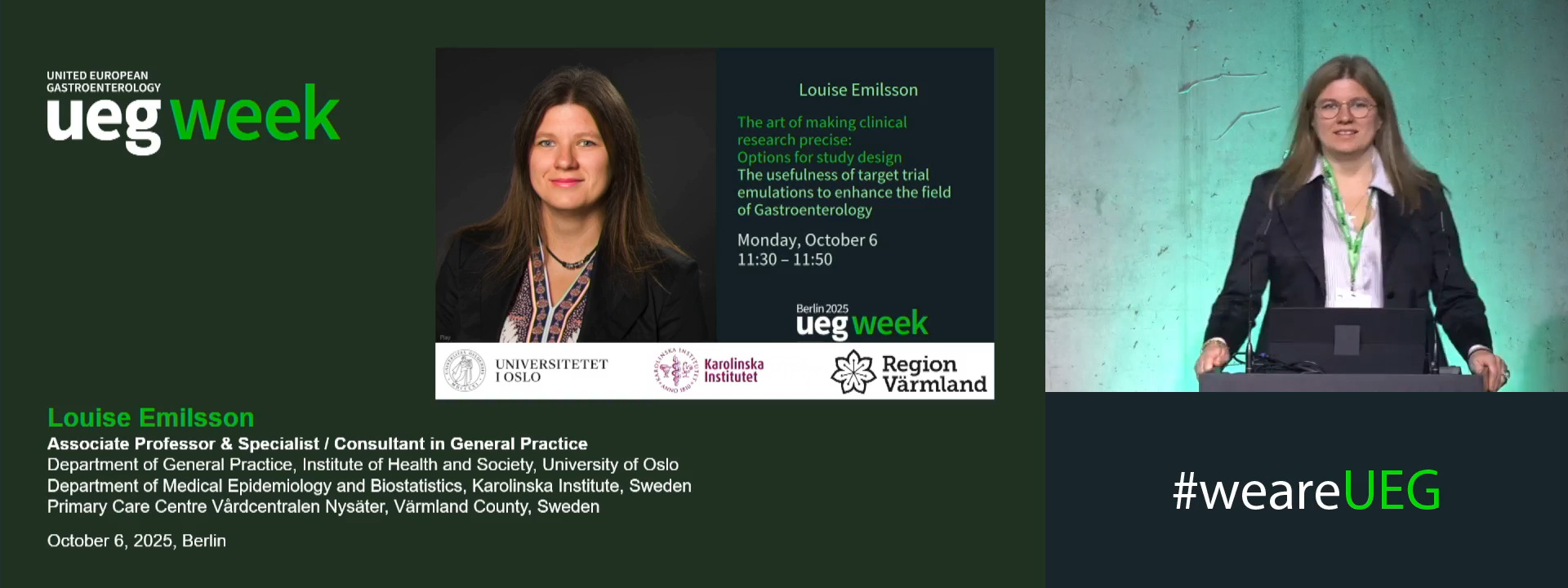
The usefulness of target trial emulations to enhance the field of Gastroenterology
1 County Council of Värmland, Värmlands, Sweden
Event
Citation
Published
Log in to access this content.
Free for all myUEG account holders. Your access level is set automatically based on your occupation. Medical professionals get full access to all content. If you are a non-medical user, you can only access UEG Week content from congresses you attended.
Not sure what you can access? Learn more about account types.
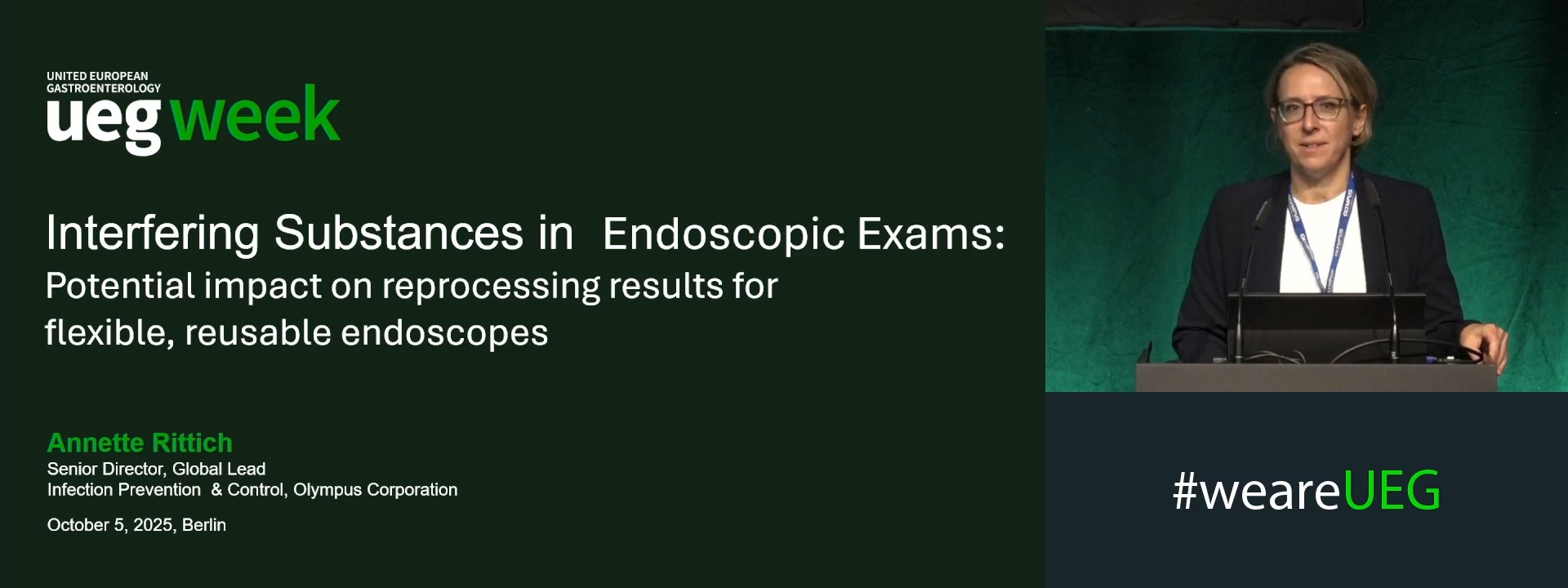
Interfering substances effect endoscope reprocessing
1 None, Hamburg, Germany
Event
Topics
Session
Citation
Published
Log in to access this content.
Free for all myUEG account holders. Your access level is set automatically based on your occupation. Medical professionals get full access to all content. If you are a non-medical user, you can only access UEG Week content from congresses you attended.
Not sure what you can access? Learn more about account types.
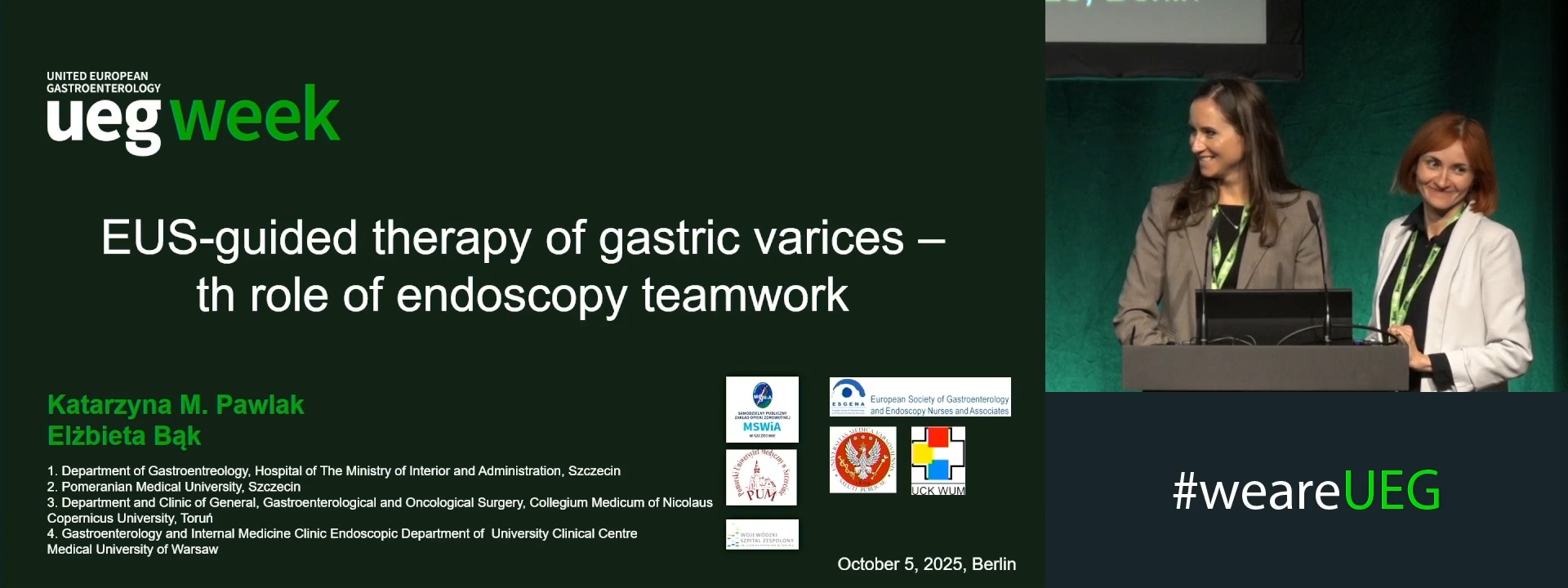
EUS-guided therapy of gastric varices: The role of endoscopic nurse-team work
1 Wojskowy Instytut Medyczny, Warsaw, Poland
2 Hospital of the Ministry of Interior and Administration, Szczecin, Poland
Event
Topics
Citation
Published
Log in to access this content.
Free for all myUEG account holders. Your access level is set automatically based on your occupation. Medical professionals get full access to all content. If you are a non-medical user, you can only access UEG Week content from congresses you attended.
Not sure what you can access? Learn more about account types.
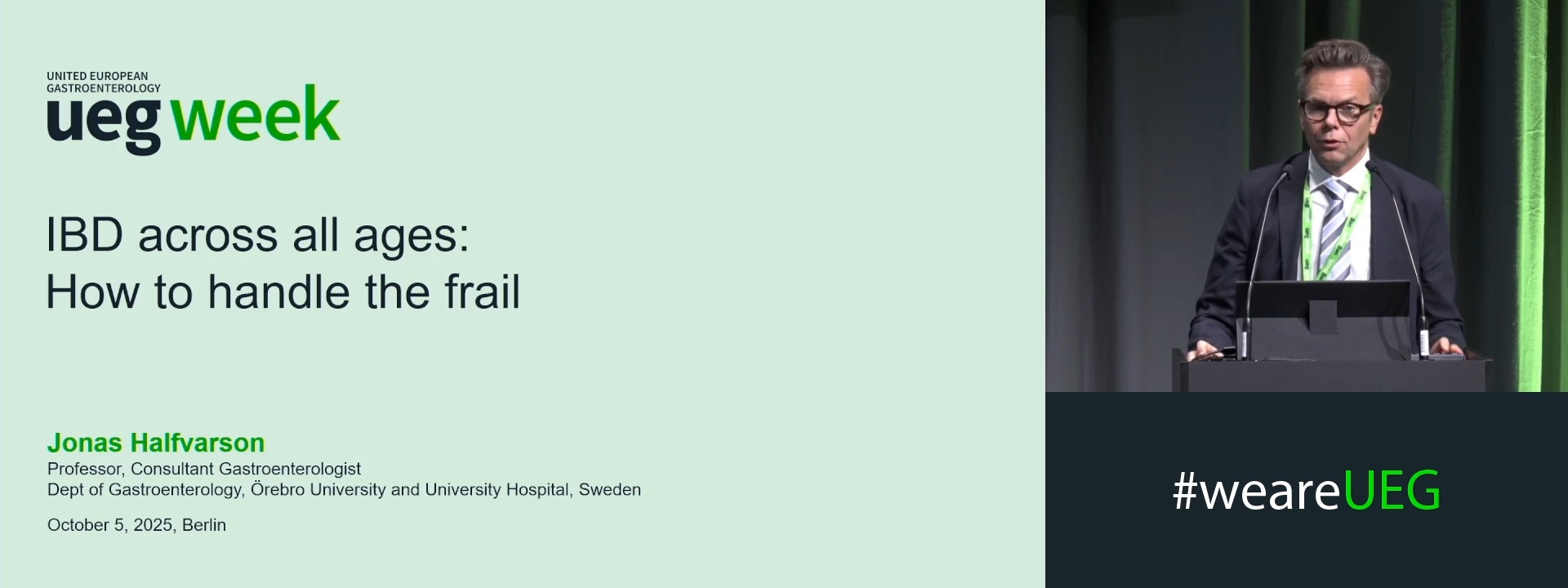
How to handle the frail
1 Örebro University, Örebro, Sweden
Event
Topics
Session