UEG's educational platform for gastroenterology education bringing recordings, courses, guidelines, and more together in one place.
Most popular content
Rate for better recommendations!
Your feedback helps us show you more of what you like and less of what you dislike!
Log in to access this content.
Free for all myUEG account holders. Your access level is set automatically based on your occupation. Medical professionals get full access to all content. If you are a non-medical user, you can only access UEG Week content from congresses you attended.
Not sure what you can access? Learn more about account types.
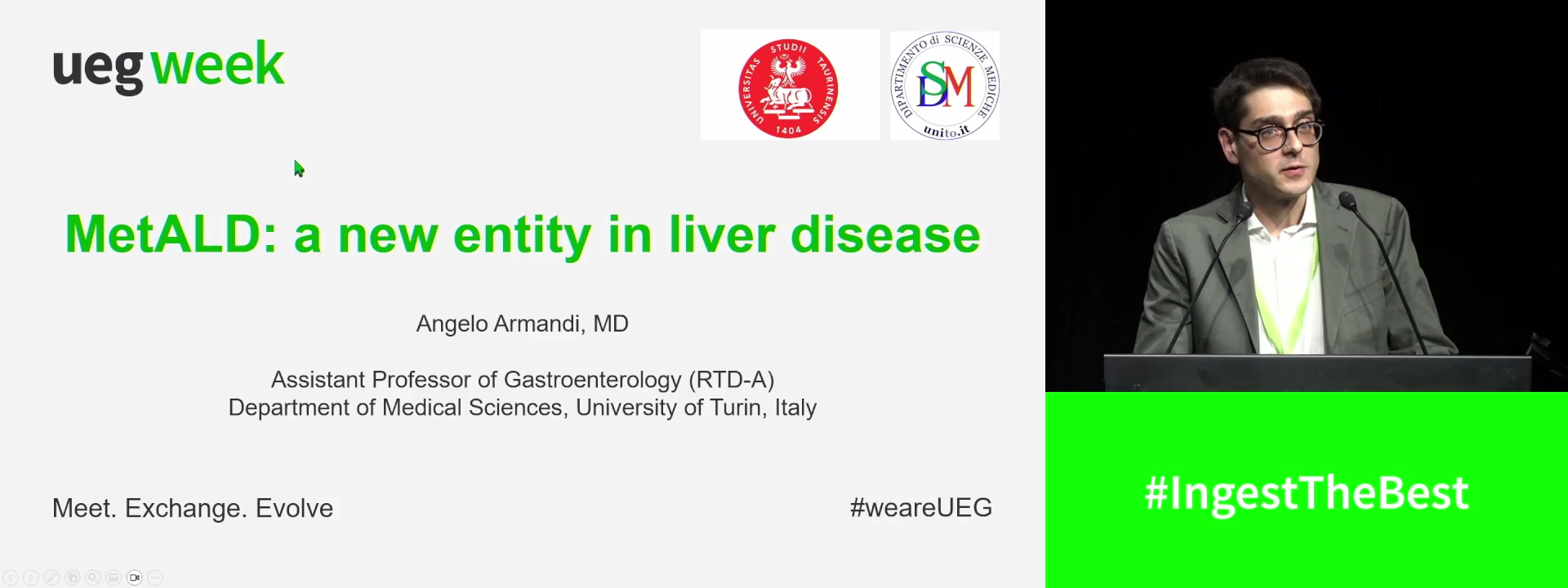
MetALD: A new entity in liver disease
1 University of Turin, Torino, Italy
Event
Topics
Citation
Published
Log in to access this content.
Free for all myUEG account holders. Your access level is set automatically based on your occupation. Medical professionals get full access to all content. If you are a non-medical user, you can only access UEG Week content from congresses you attended.
Not sure what you can access? Learn more about account types.
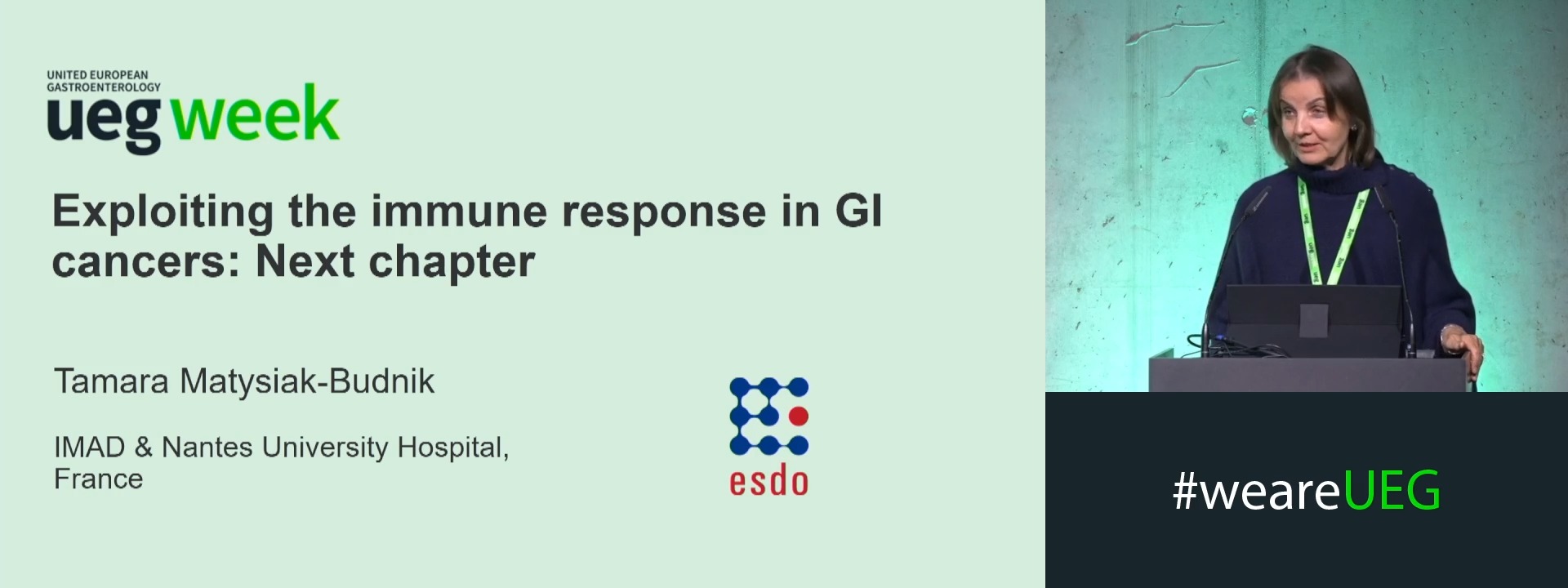
Exploiting the immune response in GI cancer: Next chapter
1 CHU de Nantes IMAD, Nantes, France
Event
Topics
Citation
Published
Log in to access this content.
Free for all myUEG account holders. Your access level is set automatically based on your occupation. Medical professionals get full access to all content. If you are a non-medical user, you can only access UEG Week content from congresses you attended.
Not sure what you can access? Learn more about account types.
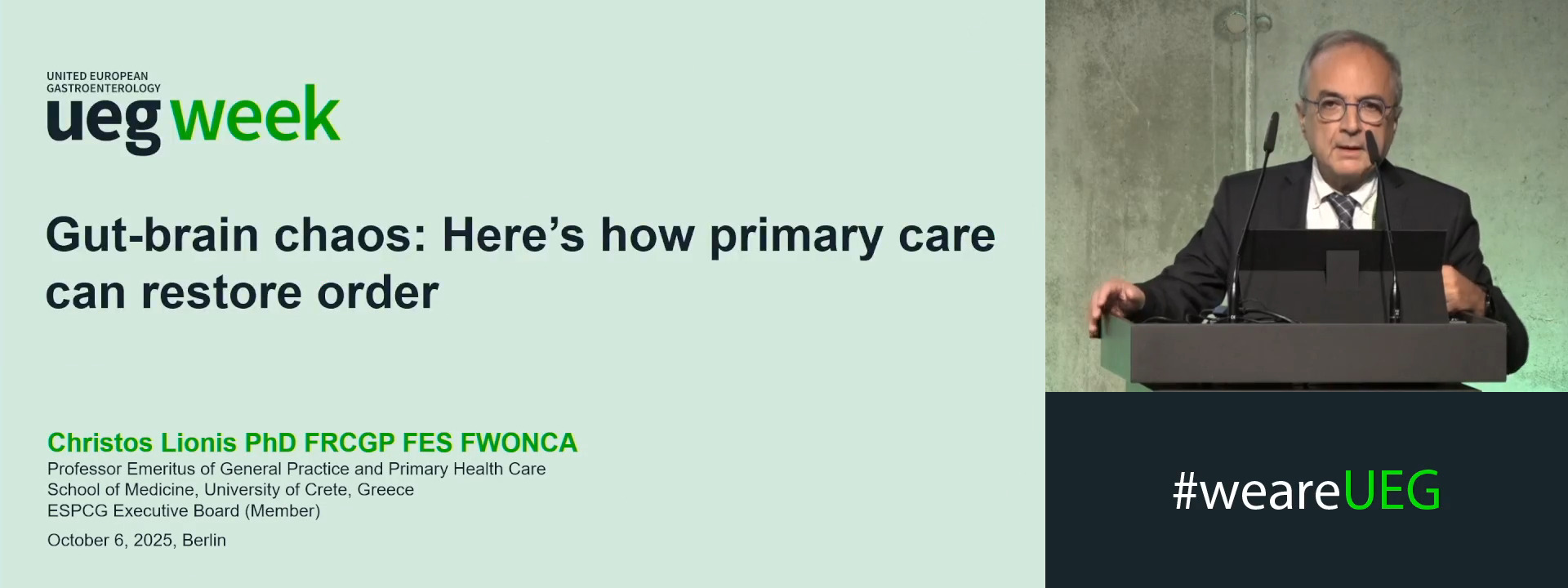
Gut-brain chaos: Here’s how primary care can restore order
1 University of Crete, Heraklion, Greece
Event
Citation
Published
Log in to access this content.
Free for all myUEG account holders. Your access level is set automatically based on your occupation. Medical professionals get full access to all content. If you are a non-medical user, you can only access UEG Week content from congresses you attended.
Not sure what you can access? Learn more about account types.
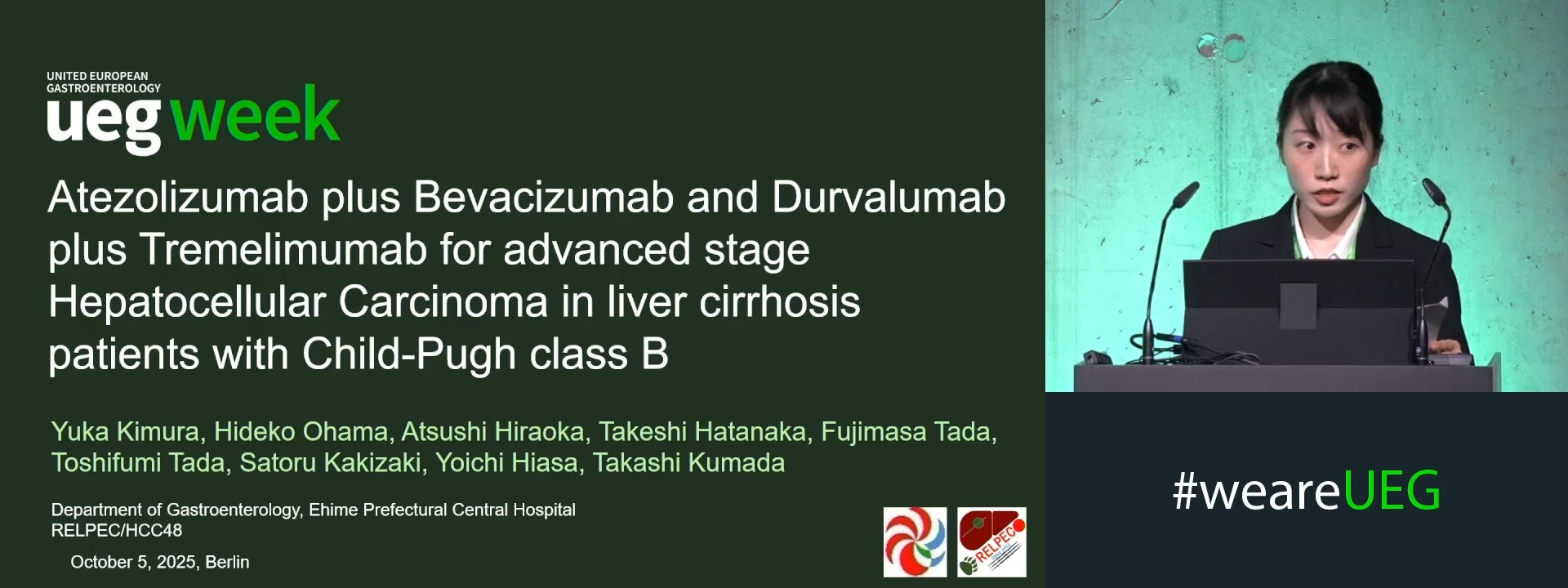
COMPARISON OF ATEZOLIZUMAB PLUS BEVACIZUMAB AND DURVALUMAB PLUS TREMELIMUMAB TREATMENTS FOR ADVANCED STAGE HEPATOCELLULAR CARCINOMA IN LIVER CIRRHOSIS PATIENTS WITH CHILD-PUGH CLASS B
Yuka Kimura 1, Hideko Ohama 1, Atsushi Hiraoka 1, Fujimasa Tada 1, Takeshi Hatanaka 2, Toshifumi Tada 3, Satoru Kakizaki 4, Yoichi Hiasa 5, Takashi Kumada 6
1 Ehime Prefectural Central Hospital, Matsuyama, Japan
2 Gunma Saiseikai Maebashi Hospital, Maebashi, Japan
3 Kobe University, Kobe, Japan
4 NHO Takasaki General Medical Center, Takasaki, Japan
5 Ehime University Graduate School of Medicine, Toon, Japan
6 Gifu Kyoritsu University, Gifu, Japan
Event
Submission format
Citation
Published
Log in to access this content.
Free for all myUEG account holders. Your access level is set automatically based on your occupation. Medical professionals get full access to all content. If you are a non-medical user, you can only access UEG Week content from congresses you attended.
Not sure what you can access? Learn more about account types.
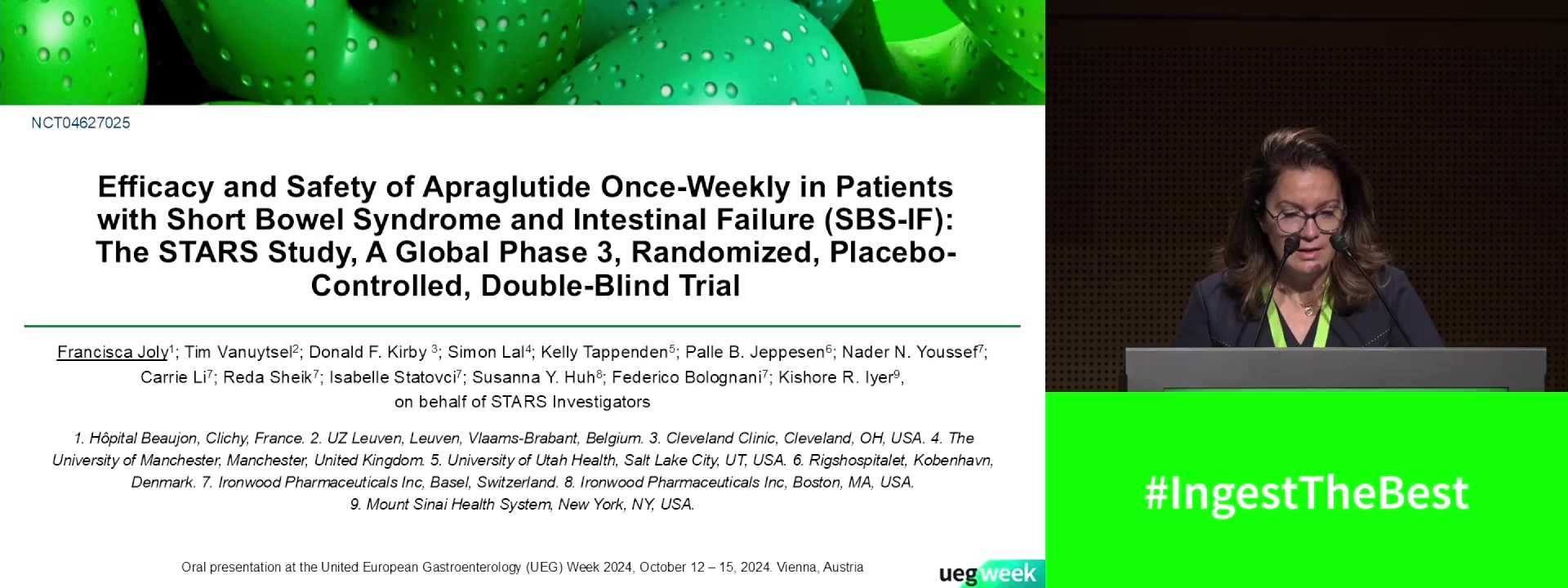
EFFICACY AND SAFETY OF APRAGLUTIDE ONCE-WEEKLY IN PATIENTS WITH SHORT BOWEL SYNDROME AND INTESTINAL FAILURE (SBS-IF): RESULTS FROM THE STARS STUDY – A GLOBAL PHASE 3 DOUBLE-BLIND, RANDOMIZED, PLACEBO-CONTROLLED TRIAL
Francisca Joly 1, Tim Vanuytsel 2, Donald Kirby 3, Simon Lal 4, Kelly Tappenden 5, Palle Bekker Jeppesen 6, Nader N. Youssef 7, Carrie Li 7, Reda Sheik 7, Isabelle Statovci 7, Susanna Huh 8, Federico Bolognani 7, Kishore Iyer 9
1 Beaujon Hospital Service de Gastroenterologie, Clichy, France
2 KU Leuven, Leuven, Belgium
3 Cleveland Clinic, Cleveland, United States
4 University of Manchester, Manchester, United Kingdom
5 The University of Utah, Salt Lake City, United States
6 Rigshospitalet, Copenhagen, Denmark
7 Ironwood Pharmaceuticals, Basel, Switzerland
8 Ironwood Pharmaceuticals, Boston, United States
9 Mount Sinai Medical Center, New York, United States
Event
Topics
Submission format
Session
Citation
Published
Log in to access this content.
Free for all myUEG account holders. Your access level is set automatically based on your occupation. Medical professionals get full access to all content. If you are a non-medical user, you can only access UEG Week content from congresses you attended.
Not sure what you can access? Learn more about account types.
What the gastroenterologist can offer
1 University of Naples 'Federico II', Pozzuoli NA, Italy
Event
Session
Citation
Published
Log in to access this content.
Free for all myUEG account holders. Your access level is set automatically based on your occupation. Medical professionals get full access to all content. If you are a non-medical user, you can only access UEG Week content from congresses you attended.
Not sure what you can access? Learn more about account types.

IMPACT OF SARCOPENIA ON HEPATOCELLULAR CARCINOMA OUTCOMES: A RETROSPECTIVE MONOCENTRIC STUDY
Nadine Ghithia 1, Myriam Ayari 1, Naradine Douggaz 1, Sarra Ben Azouz 1, Mohamed Hedi Douggui 2, Jomni Mohamed Taieb 3
1 Internal Security Forces Hospital La Marsa, Tunis, Tunisia
2 Service de Gastroenterologie, Tunis, Tunisia
3 Fsi Hospital, Tunis, Tunisia
Conference
Topics
Submission format
Session