UEG's content platform for gastroenterology education bringing recordings, courses, guidelines, and more together in one place.
Trending on Gutflix
Rate for better recommendations!
Your feedback helps us show you more of what you like and less of what you dislike!
Log in to continue.
This content is part of Gutflix. Log in with your myUEG account, or create one free, to watch it.
Not sure what you can access? Learn more about account types.
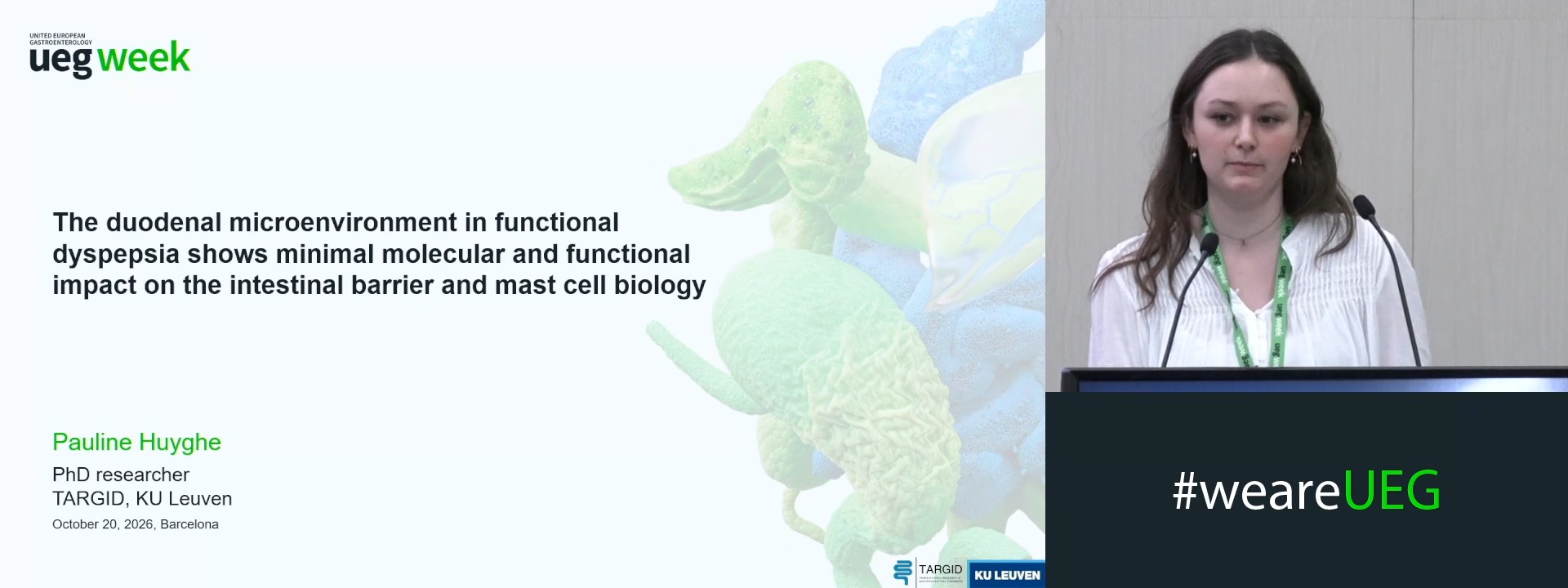
THE DUODENAL MICROENVIRONMENT IN FUNCTIONAL DYSPEPSIA SHOWS MINIMAL MOLECULAR AND FUNCTIONAL IMPACT ON THE INTESTINAL BARRIER AND MAST CELL BIOLOGY
Pauline Huyghe 1, Matthias Ceulemans 2, Theo Thijs 1, Joran Toth 1, Mona Farhadipour 3, Lorenzo Giorio 1, Kaline Arnauts 1, Åsa V. Keita 4, Bram Verstockt 5, Lucas Wauters 5, Inge Depoortere 1, Jan Tack 5, Tim Vanuytsel 5
Affiliations
1 KU Leuven, Translational Research Center for Gastrointestinal Disorders (TARGID), Leuven, Belgium
2 Precision Immunology Institute, Icahn School of Medicine at Mount Sinai, New York, United States
3 Division of Gastroenterology and Hepatology, Mayo Clinic, Rochester, United States
4 Linköping University Clinical and Exper. Medicine Faculty of Health Sciences, Linköping, Sweden
5 University Hospitals Leuven and KU Leuven, Translational Research in Gastrointestinal Disorders, Leuven, Belgium
Log in to continue.
This content is part of Gutflix. Log in with your myUEG account, or create one free, to watch it.
Not sure what you can access? Learn more about account types.
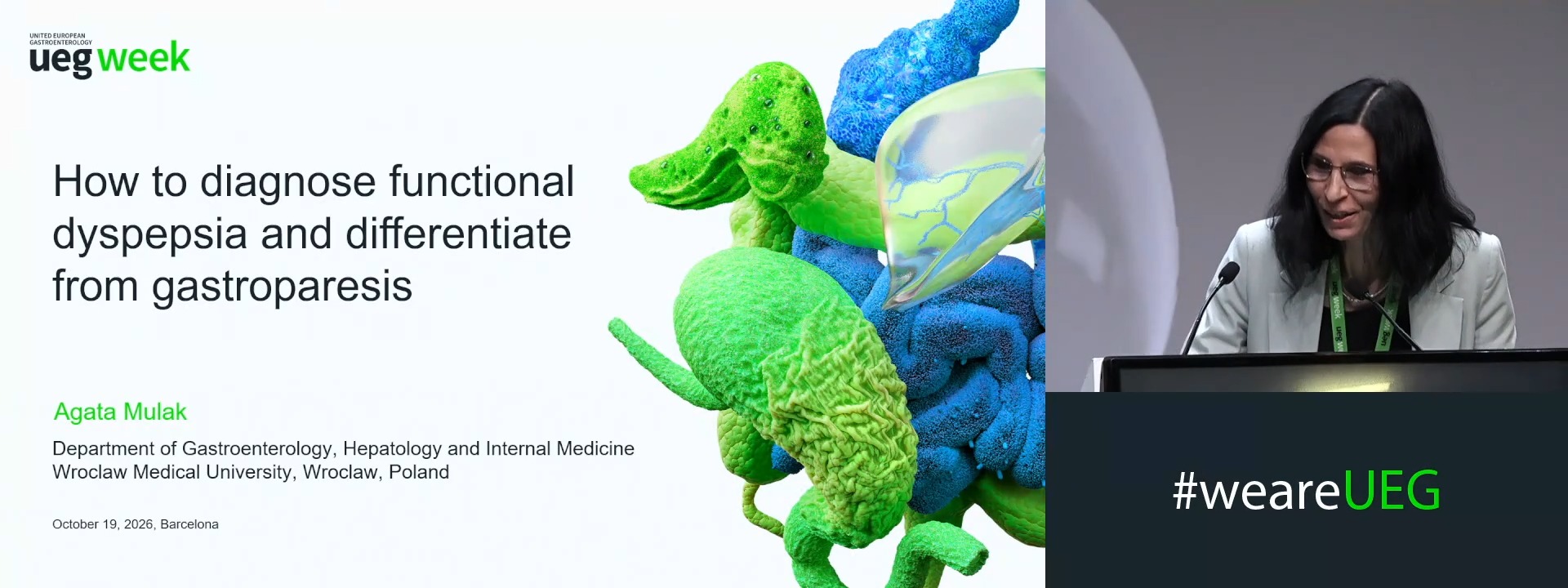
How to diagnose functional dyspepsia and differentiate from gastroparesis
Affiliations
1 Wroclaw Medical University, Wroclaw, Poland
Log in to continue.
This content is part of Gutflix. Log in with your myUEG account, or create one free, to watch it.
Not sure what you can access? Learn more about account types.
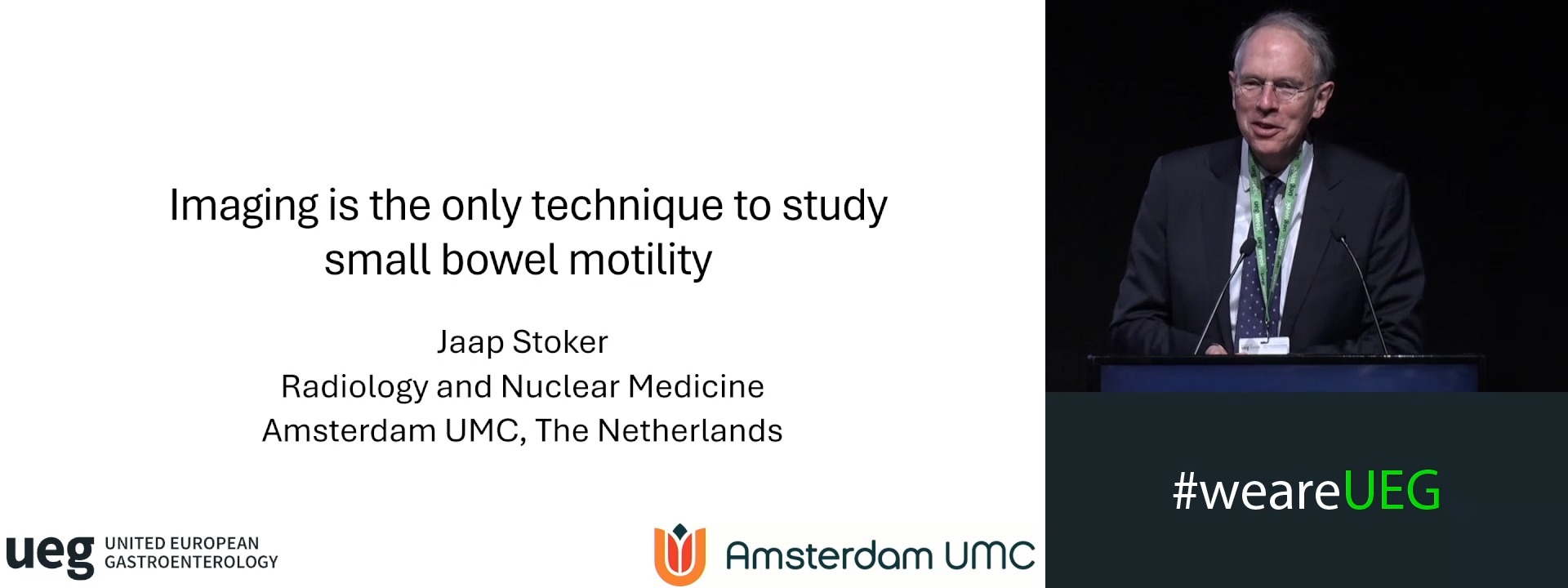
Imaging is the only technique to study small bowel motility
Affiliations
1 Amsterdam UMC, Amsterdam, Netherlands
Log in to continue.
This content is part of Gutflix. Log in with your myUEG account, or create one free, to watch it.
Not sure what you can access? Learn more about account types.
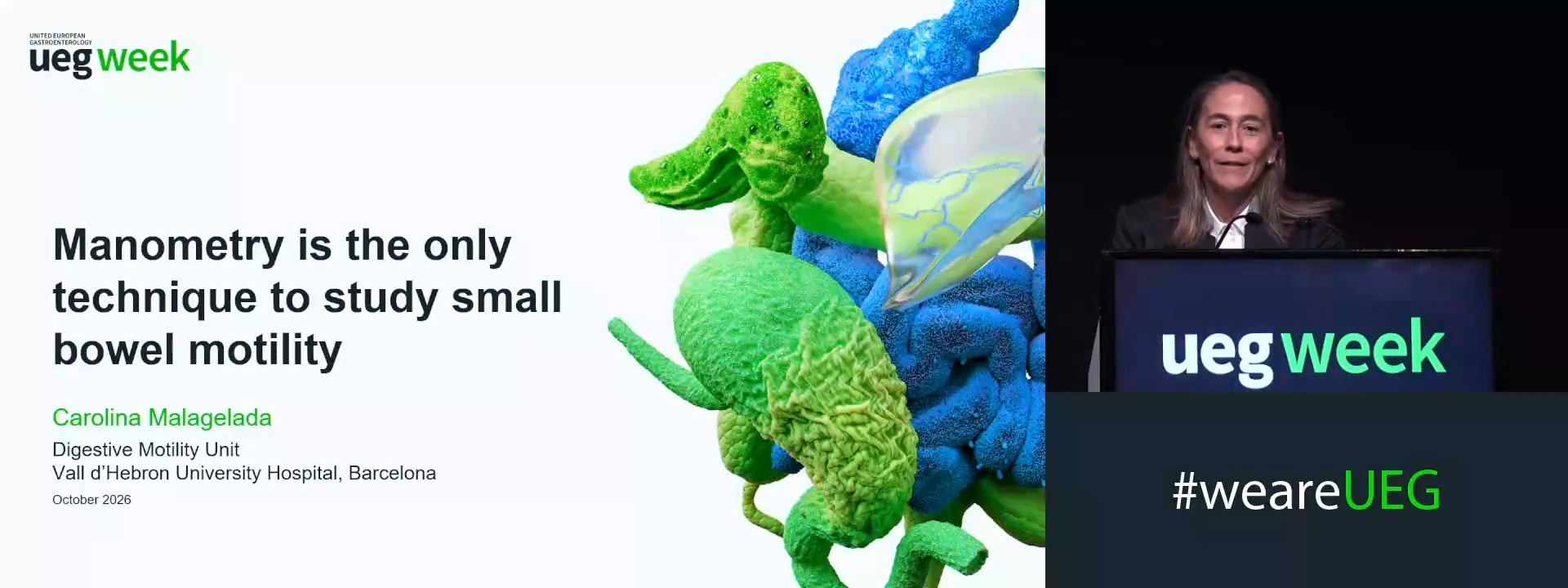
Manometry is the only technique to study small bowel motility
Affiliations
1 Hospital Universitari Vall d`Hebron, Barcelona, Spain
Log in to continue.
This content is part of Gutflix. Log in with your myUEG account, or create one free, to watch it.
Not sure what you can access? Learn more about account types.
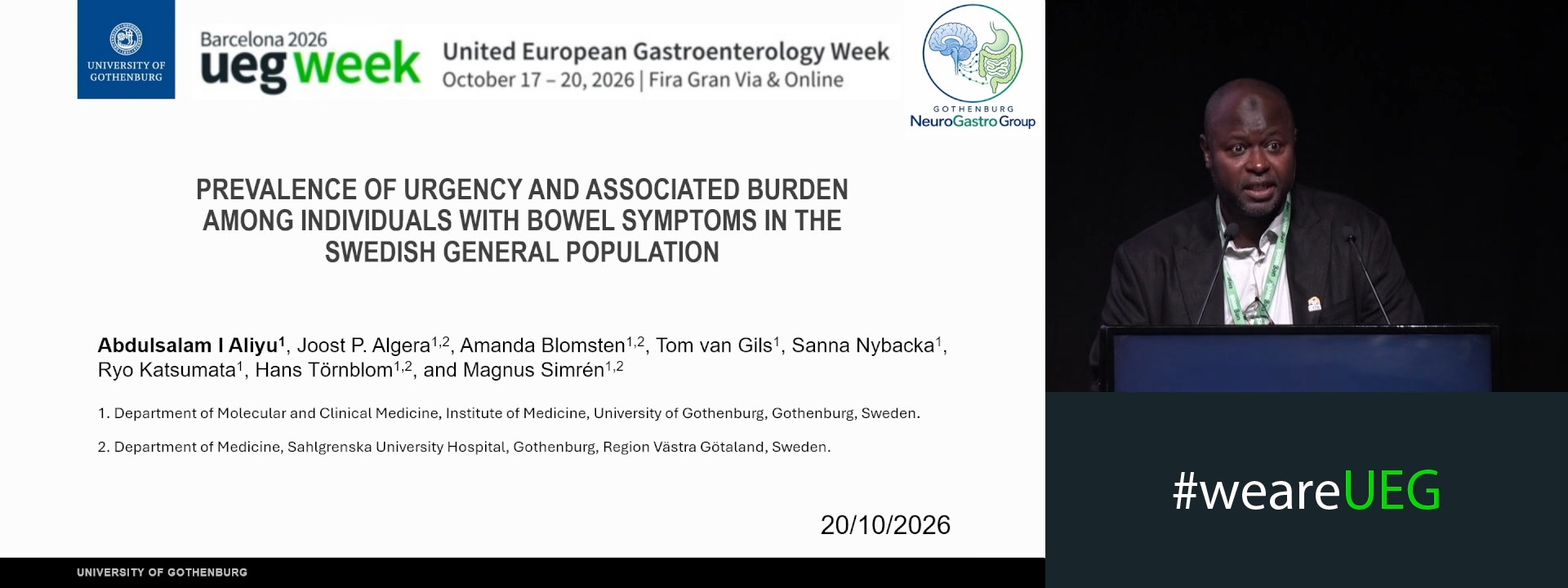
PREVALENCE OF URGENCY AND ASSOCIATED BURDEN AMONG INDIVIDUALS WITH BOWEL SYMPTOMS IN THE SWEDISH GENERAL POPULATION
Abdulsalam Aliyu 1, Joost Algera 2,1, Amanda Blomsten 1,2, Tom van Gils 1, Sanna Nybacka 1, Ryo Katsumata 1, Hans Törnblom 2,1, Magnus Simrén 1,2
Affiliations
1 University of Gothenburg, Institute of Medicine, Gothenburg, Sweden
2 Sahlgrenska University Hospital, Göteborg, Sweden
Log in to continue.
This content is part of Gutflix. Log in with your myUEG account, or create one free, to watch it.
Not sure what you can access? Learn more about account types.
Panel discussion: Cross-cutting: Diagnostic - invasive or not invasive