UEG's content platform for gastroenterology education bringing recordings, courses, guidelines, and more together in one place.
Trending on Gutflix
Rate for better recommendations!
Your feedback helps us show you more of what you like and less of what you dislike!
Log in to continue.
This content is part of Gutflix. Log in with your myUEG account, or create one free, to watch it.
Not sure what you can access? Learn more about account types.
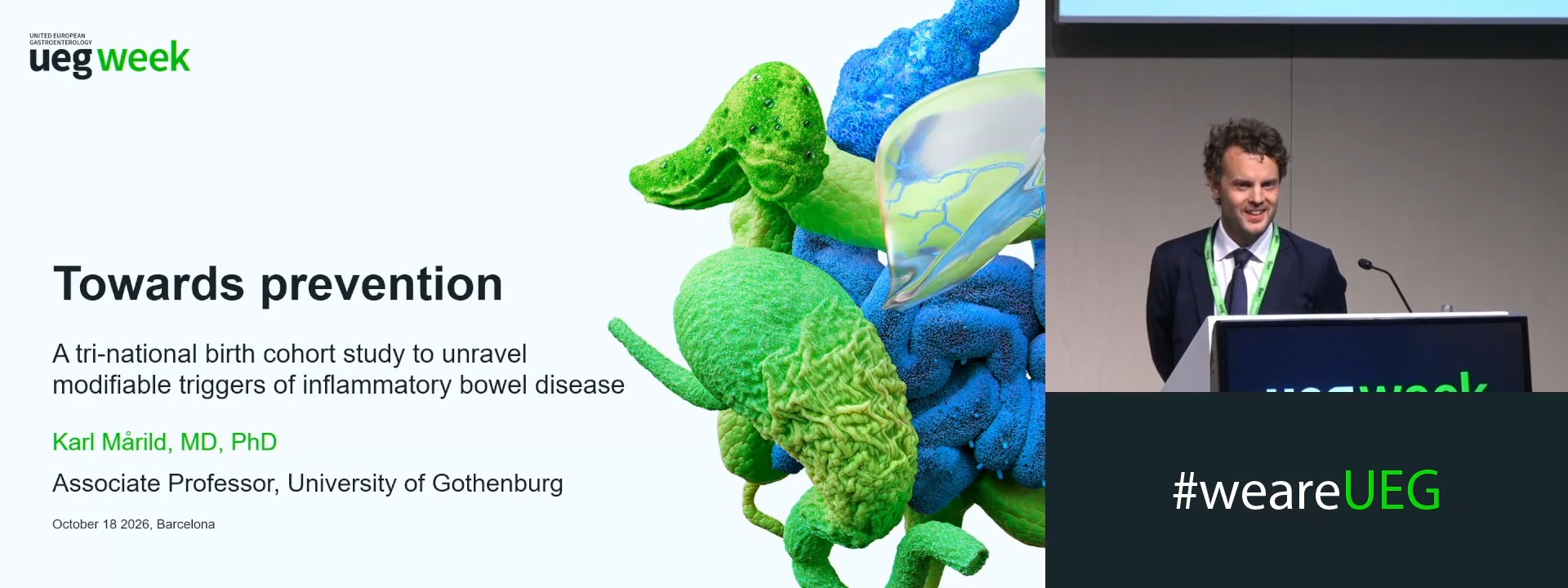
Towards prevention: A trinational birth cohort study to unravel modifiable triggers of inflammatory bowel disease
Affiliations
1 University of Gothenburg, Gothenburg, Sweden
Log in to continue.
This content is part of Gutflix. Log in with your myUEG account, or create one free, to watch it.
Not sure what you can access? Learn more about account types.
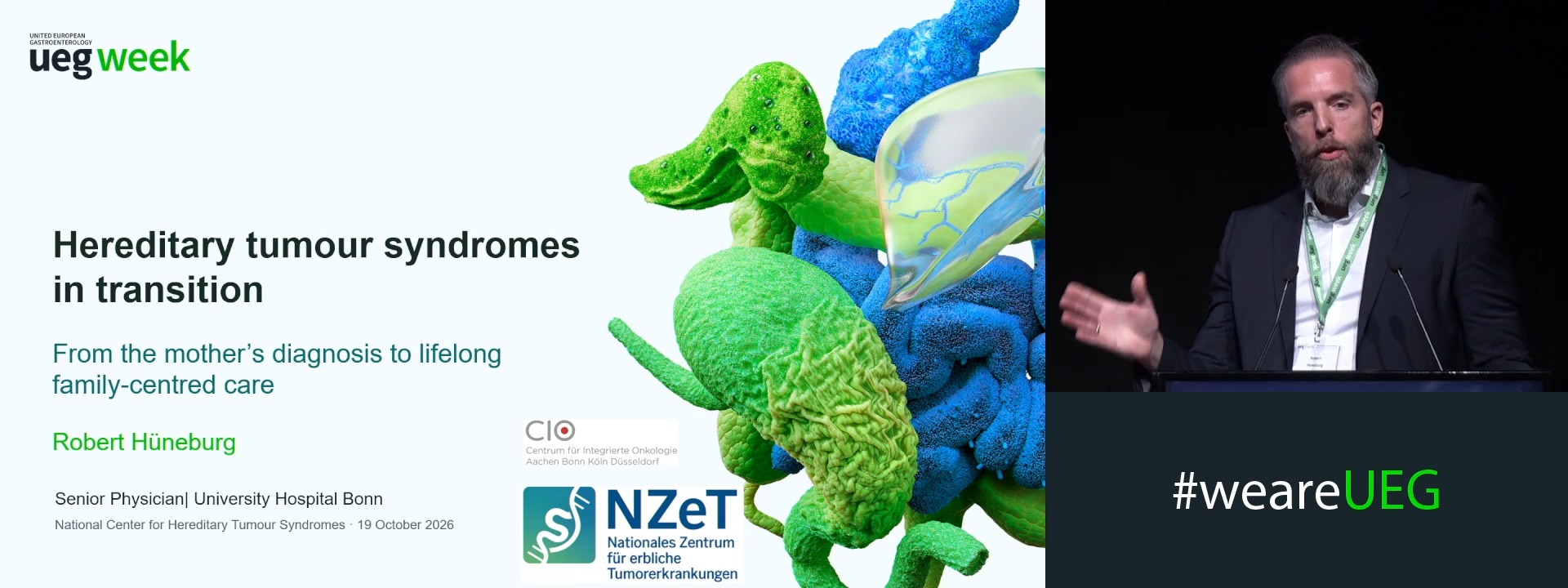
Hereditary tumour syndromes in transition
Affiliations
1 University Hospital Bonn, Bonn, Germany

Log in to continue.
This content is part of Gutflix. Log in with your myUEG account, or create one free, to watch it.
Not sure what you can access? Learn more about account types.
Panel discussion: Advancing endoscopic resections in the colon
Log in to continue.
This content is part of Gutflix. Log in with your myUEG account, or create one free, to watch it.
Not sure what you can access? Learn more about account types.
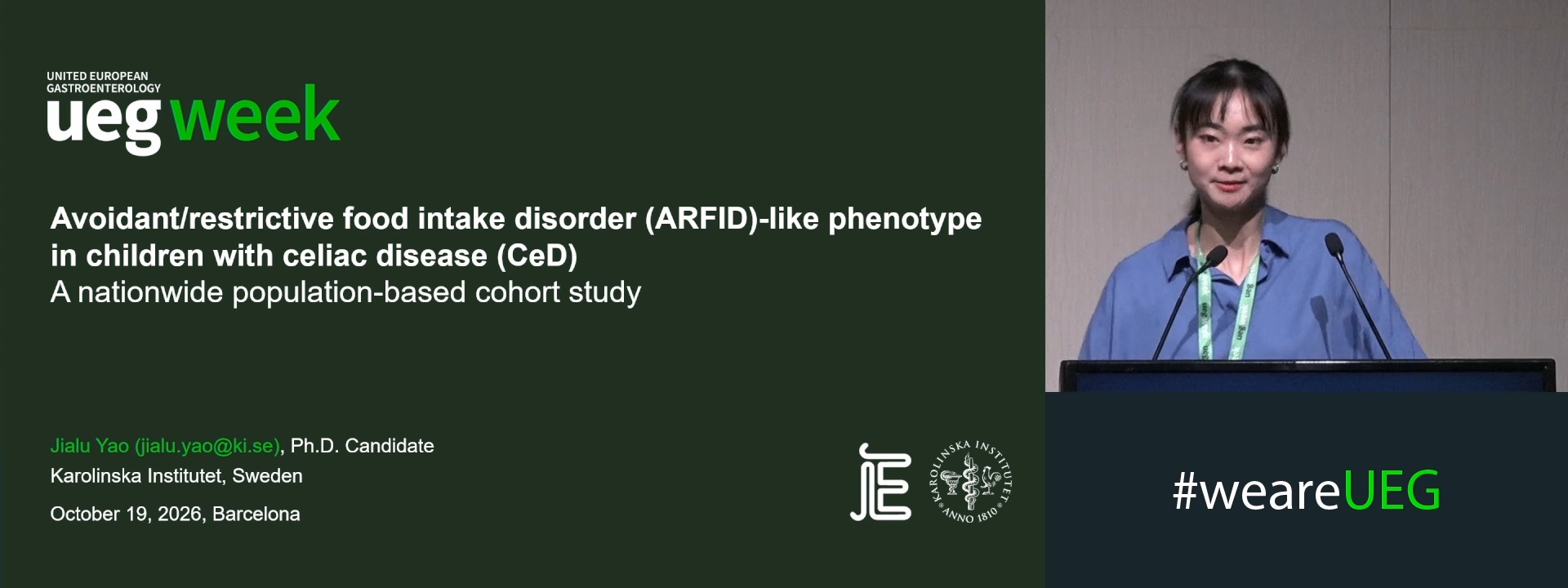
RISK OF AVOIDANT/RESTRICTIVE FOOD INTAKE DISORDER-LIKE PHENOTYPE IN CHILDREN WITH CELIAC DISEASE: A NATIONWIDE POPULATION-BASED COHORT STUDY
Jialu Yao 1, Lisa Dinkler 1, Jiangwei Sun 2,1, David Bergman 1, Peter HR Green 3, Elisabet Wentz 4,5, Mariel Arvizu 6, Benjamin Lebwohl 3,7, Jonas F Ludvigsson 1,3,8
Affiliations
1 Karolinska Institutet, Solna, Sweden
2 Sun Yat-sen University, Shenzhen, China
3 Columbia University College of Physicians and Surgeons, New York, United States
4 University of Gothenburg, Gothenburg, Sweden
5 Sahlgrenska University Hospital, Gothenburg, Sweden
6 Takeda, Cambridge, United States
7 Columbia University, New York, United States
8 Örebro University Hospital, Örebro, Sweden
Log in to continue.
This content is part of Gutflix. Log in with your myUEG account, or create one free, to watch it.
Not sure what you can access? Learn more about account types.
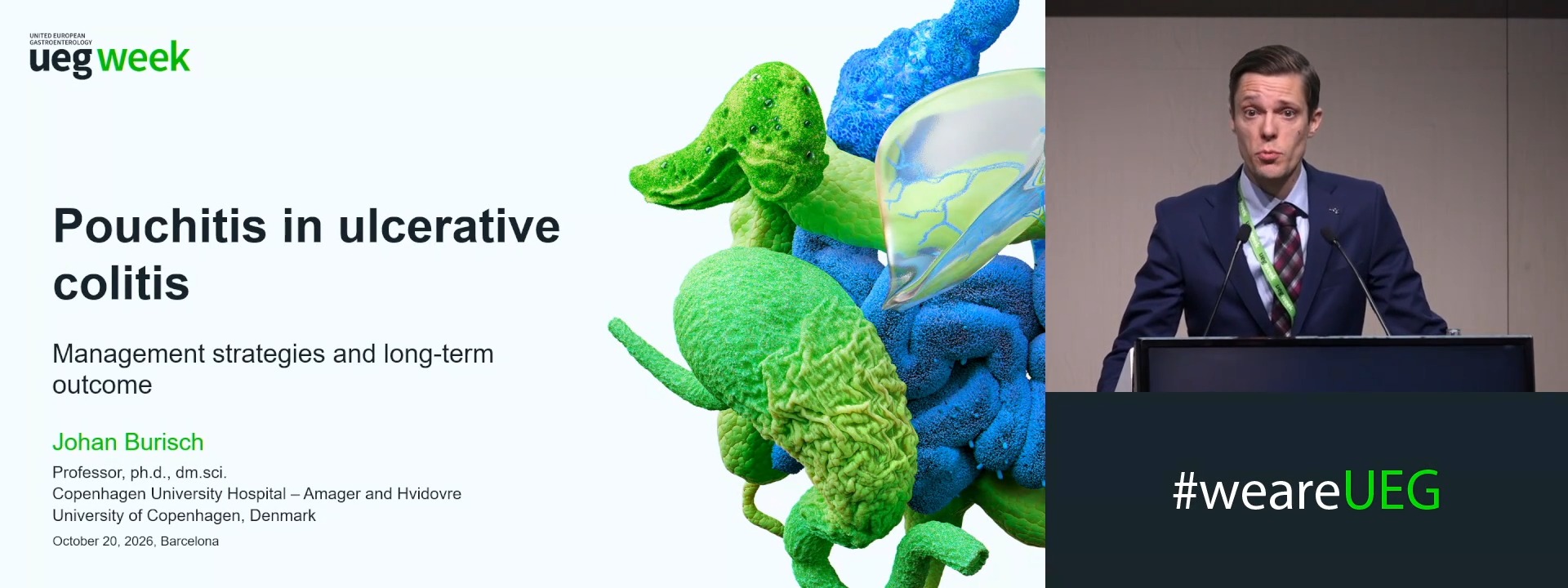
Pouchitis in ulcerative colitis - management strategies and long-term outcome
Affiliations
1 Hvidovre University Hospital, Virum, Denmark
Log in to continue.
This content is part of Gutflix. Log in with your myUEG account, or create one free, to watch it.
Not sure what you can access? Learn more about account types.
Introduction: Hot topics in European Gastroenterology
Affiliations
1 Universitätsklinikum Göttingen, Göttingen, Germany