UEG's educational platform for gastroenterology education bringing recordings, courses, guidelines, and more together in one place.
Most popular content
Rate for better recommendations!
Your feedback helps us show you more of what you like and less of what you dislike!
Log in to access this content.
Free for all myUEG account holders. Your access level is set automatically based on your occupation. Medical professionals get full access to all content. If you are a non-medical user, you can only access UEG Week content from congresses you attended.
Not sure what you can access? Learn more about account types.

PANCREATIC SPHINCTEROTOMY IN RECURRENT PANCREATITIS ASSOCIATED WITH BRANCH-DUCT INTRADUCTAL PAPILLARY MUCINOUS NEOPLASMS: A SINGLE-CENTER RETROSPECTIVE STUDY
Salvatore Crucillà 1, Irene Gasparini 1, Antonio Amodio 2, Nicolò de Pretis 3, Federico Caldart 1, Giulia De Marchi 2, Pietro Campagnola 2, Annalisa Tortora 2, Matilde Visintainer 1, Laura Bernardoni 4, Armando Gabbrielli 4, Maria Cristina Conti Bellocchi 3, Stefano Francesco Crinò 3, Luca Frulloni 3
1 University of Verona, Verona, Italy
2 Gastroenterology B Unit, Pancreas Center, University of Verona, Italy, Verona, Italy
3 University of Verona, Verona, Italy|||Gastroenterology B Unit, Pancreas Center, University of Verona, Italy, Verona, Italy
4 Santa Chiara Hospital, Trento, Italy
Conference
Topics
Submission format
Citation
Published
Log in to access this content.
Free for all myUEG account holders. Your access level is set automatically based on your occupation. Medical professionals get full access to all content. If you are a non-medical user, you can only access UEG Week content from congresses you attended.
Not sure what you can access? Learn more about account types.
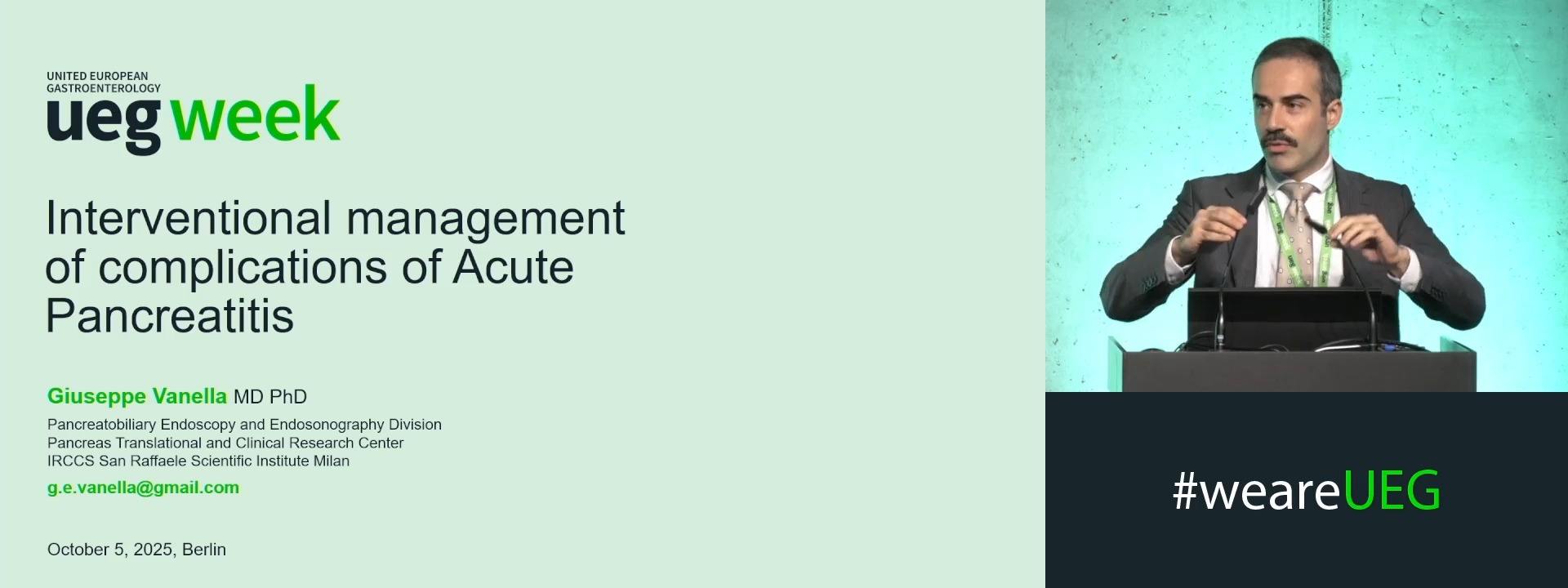
Interventional management of complications
1 IRCCS San Raffaele Institute, Milan, Italy
Event
Topics
Session
Citation
Published
Log in to access this content.
Free for all myUEG account holders. Your access level is set automatically based on your occupation. Medical professionals get full access to all content. If you are a non-medical user, you can only access UEG Week content from congresses you attended.
Not sure what you can access? Learn more about account types.
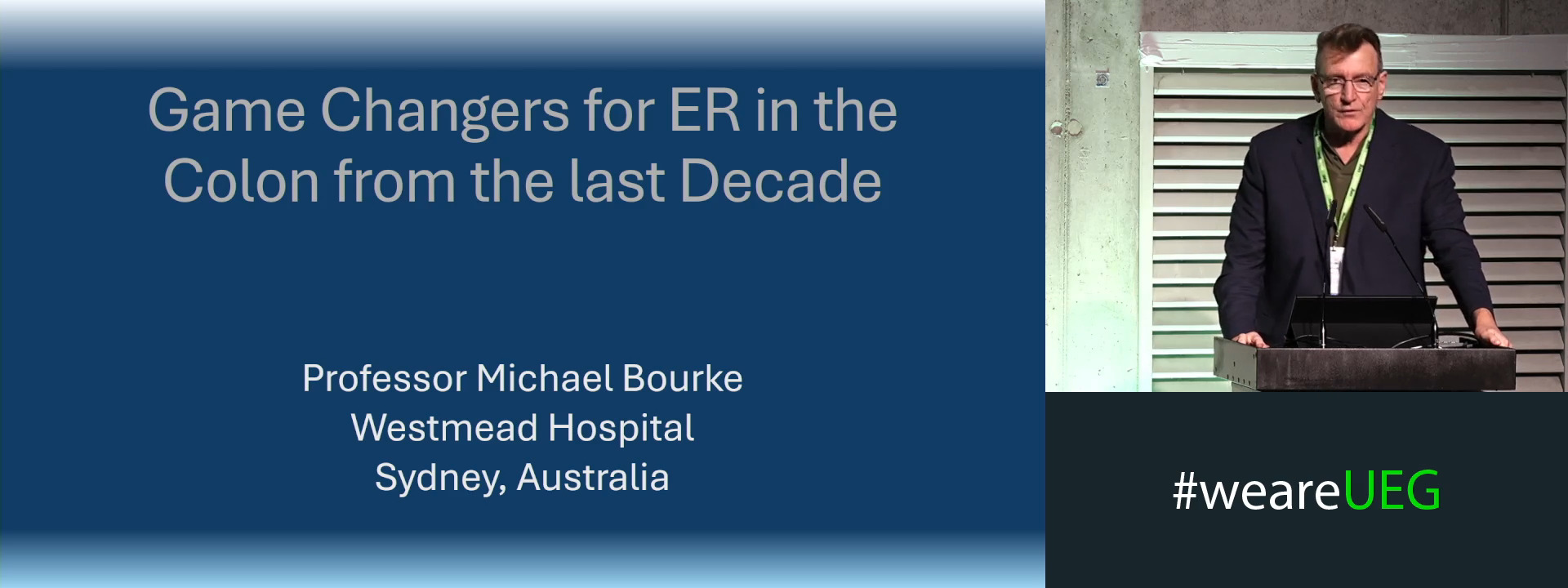
For the endoscopist
1 Westmead Hospital Sydney, Westmead, Australia
Event
Topics
Citation
Published
Log in to access this content.
Free for all myUEG account holders. Your access level is set automatically based on your occupation. Medical professionals get full access to all content. If you are a non-medical user, you can only access UEG Week content from congresses you attended.
Not sure what you can access? Learn more about account types.
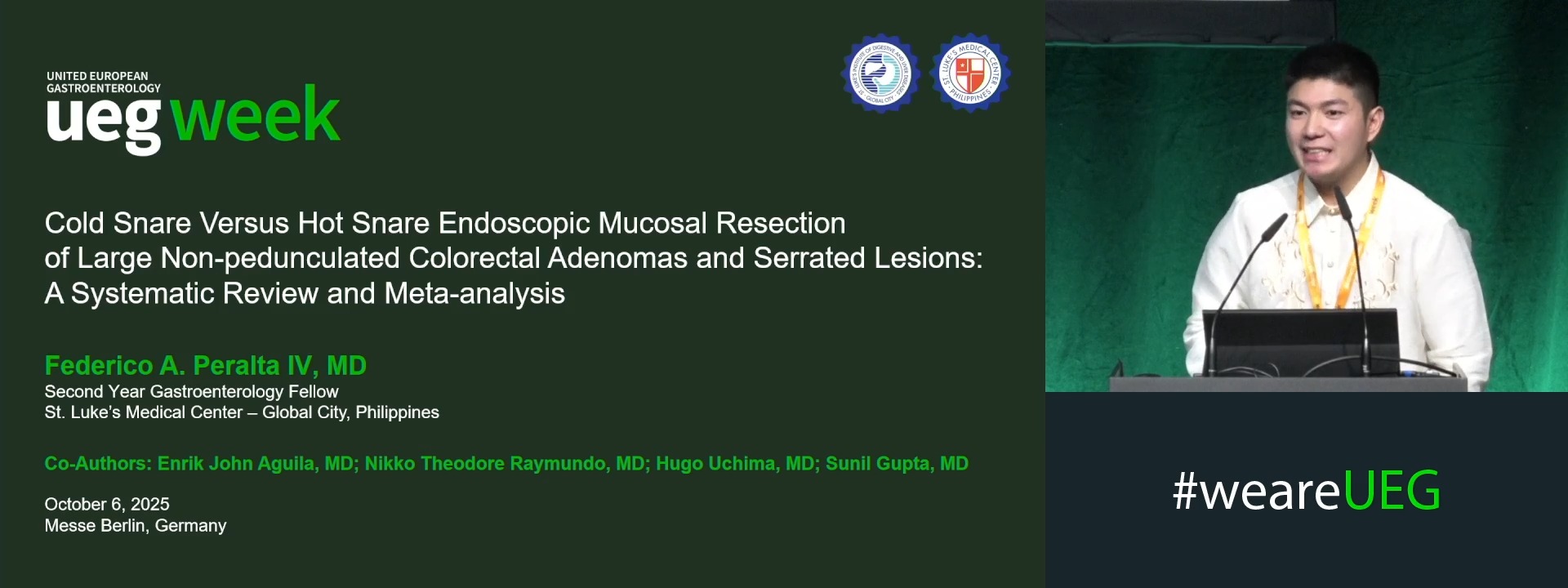
COLD SNARE VERSUS HOT SNARE ENDOSCOPIC MUCOSAL RESECTION OF LARGE NON-PEDUNCULATED COLORECTAL ADENOMAS AND SERRATED LESIONS: A SYSTEMATIC REVIEW AND META-ANALYSIS
1 St. Luke's Medical Center - Global City, Taguig, Philippines
2 St. Luke's Medical Center - Global City, Taguig, Philippines|||Ospital ng Maynila Medical Center, Manila, Philippines
3 Hospital Germans Trias i Pujol, Barcelona, Spain|||Teknon Medical Center, Barcelona, Spain
4 Westmead Hospital, Sydney, Australia, Ermington, Australia
Event
Submission format
Citation
Published
Log in to access this content.
Free for all myUEG account holders. Your access level is set automatically based on your occupation. Medical professionals get full access to all content. If you are a non-medical user, you can only access UEG Week content from congresses you attended.
Not sure what you can access? Learn more about account types.
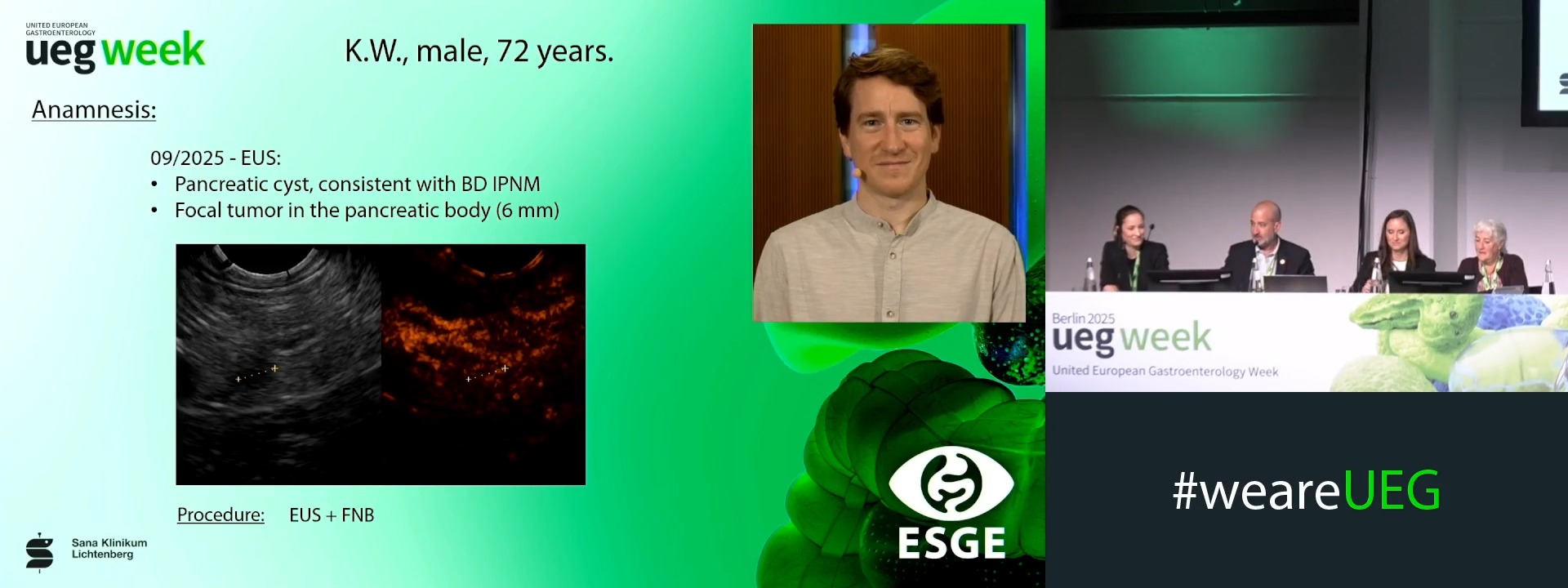
ESGE Live Endoscopy II (Complete Session)
Event
Session
Citation
Published
Log in to access this content.
Free for all myUEG account holders. Your access level is set automatically based on your occupation. Medical professionals get full access to all content. If you are a non-medical user, you can only access UEG Week content from congresses you attended.
Not sure what you can access? Learn more about account types.
CRYPTOSPORIDIOSIS IN A PATIENT WITH CROHN’S DISEASE
Blanca Eimil Monterroso 1, Irene González Díaz 2, CRISTINA JULIA SUAREZ FERRER 1, Mariana Tavecchia Castro 1, Jose Luis Rueda García 2, Joaquin Poza Cordón 2, Maria Sanchez-Azofra 2, Eduardo Martín Arranz 2, Irene Hidalgo Ruperti 2, Wilma Pamela Villamayor Gallardo 2, María Dolores Martín-Arranz 2
1 Hospital Universitario La Paz, Madrid, Spain
2 Hospital La Paz, Madrid, Spain
Conference
Topics
Submission format
Session
Published
Log in to access this content.
Free for all myUEG account holders. Your access level is set automatically based on your occupation. Medical professionals get full access to all content. If you are a non-medical user, you can only access UEG Week content from congresses you attended.
Not sure what you can access? Learn more about account types.
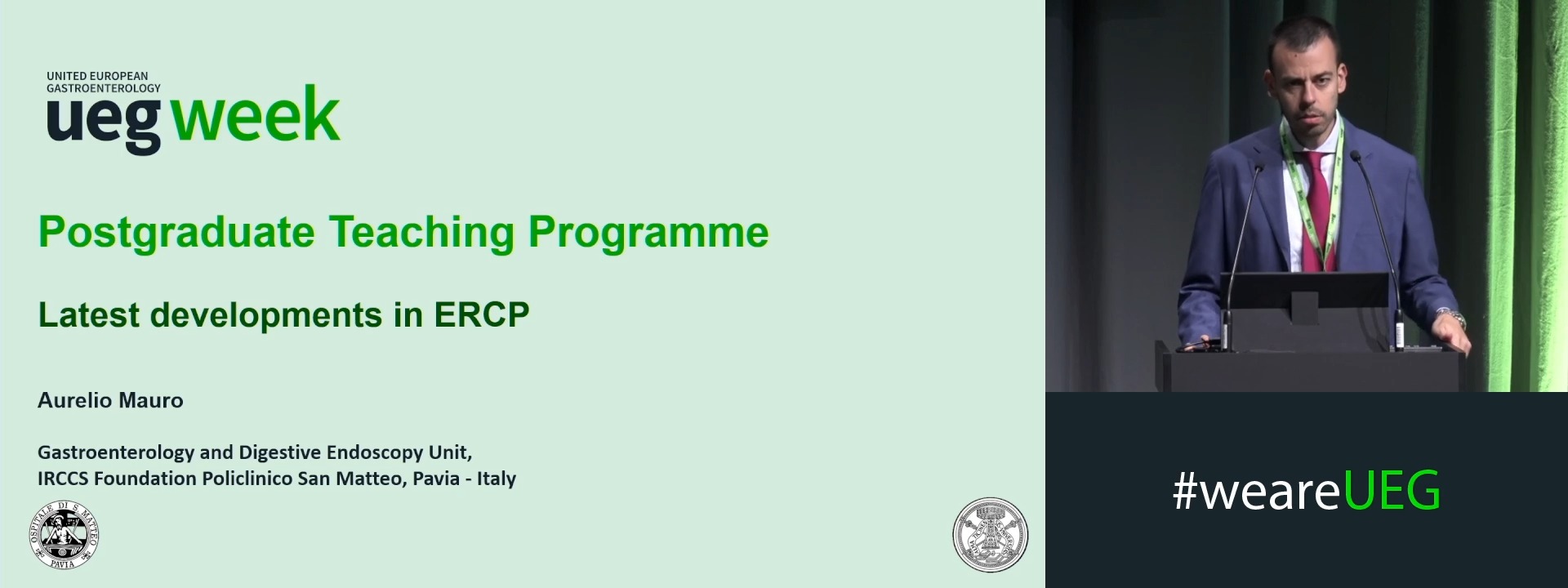
Latest developments in ERCP
1 IRCCS Foundation San Matteo Hospital, Pavia, Italy