UEG's content platform for gastroenterology education bringing recordings, courses, guidelines, and more together in one place.
Trending on Gutflix
Rate for better recommendations!
Your feedback helps us show you more of what you like and less of what you dislike!
Log in to continue.
This content is part of Gutflix. Log in with your myUEG account, or create one free, to watch it.
Not sure what you can access? Learn more about account types.
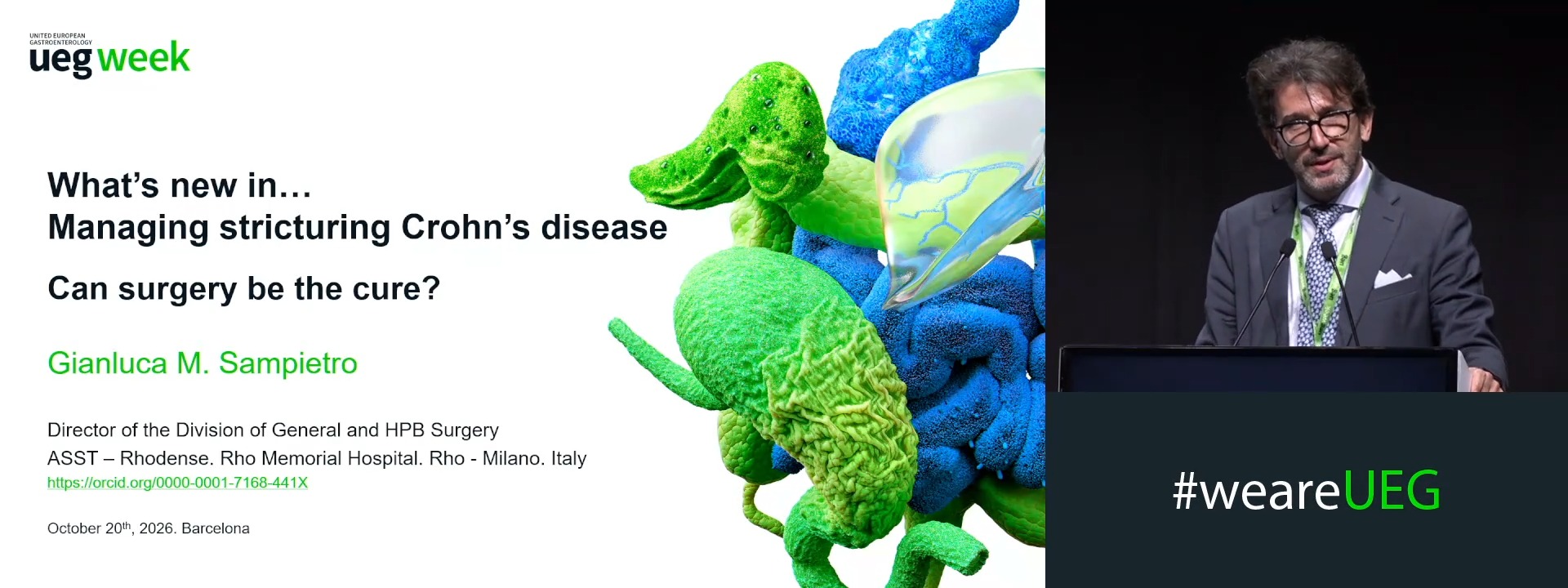
Can surgery be the cure?
Affiliations
1 ASST Fatebenefratelli Sacco - Ospedale Luigi Sacco Polo Universitario, Milano, Italy
Log in to continue.
This content is part of Gutflix. Log in with your myUEG account, or create one free, to watch it.
Not sure what you can access? Learn more about account types.
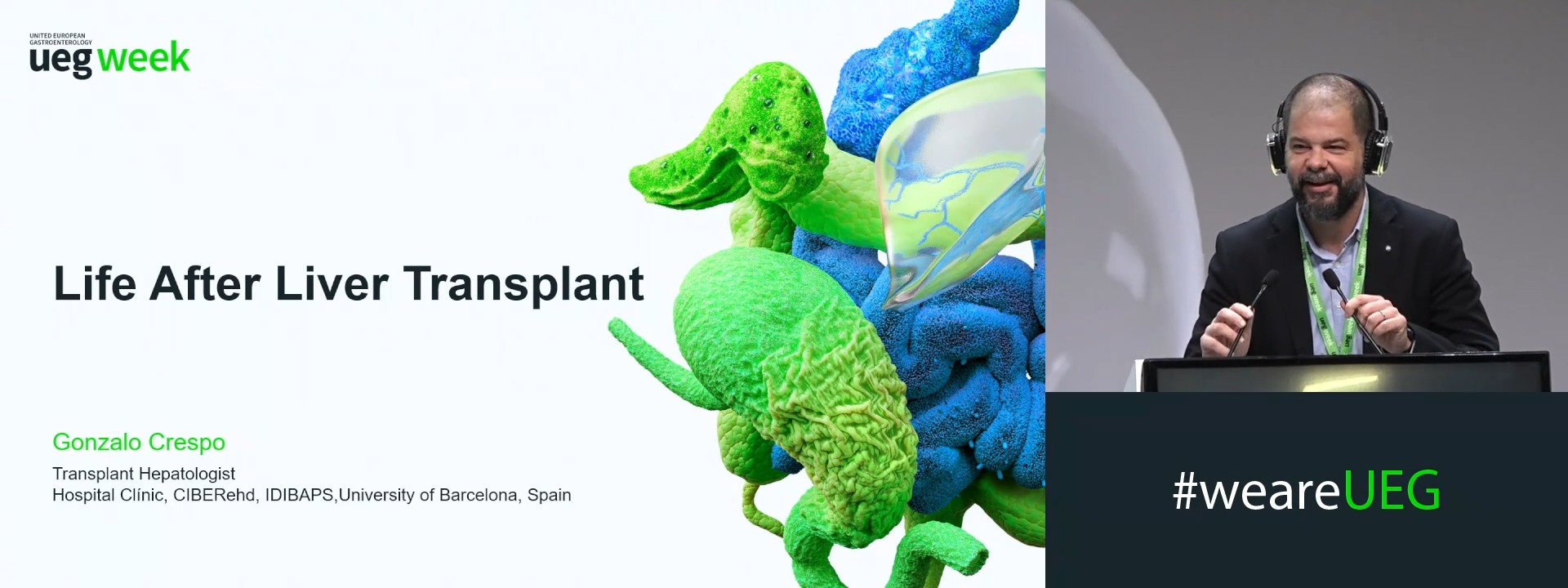
Life after liver transplant
Affiliations
1 Hospital Clínic de Barcelona, Barcelona, Spain
Log in to continue.
This content is part of Gutflix. Log in with your myUEG account, or create one free, to watch it.
Not sure what you can access? Learn more about account types.
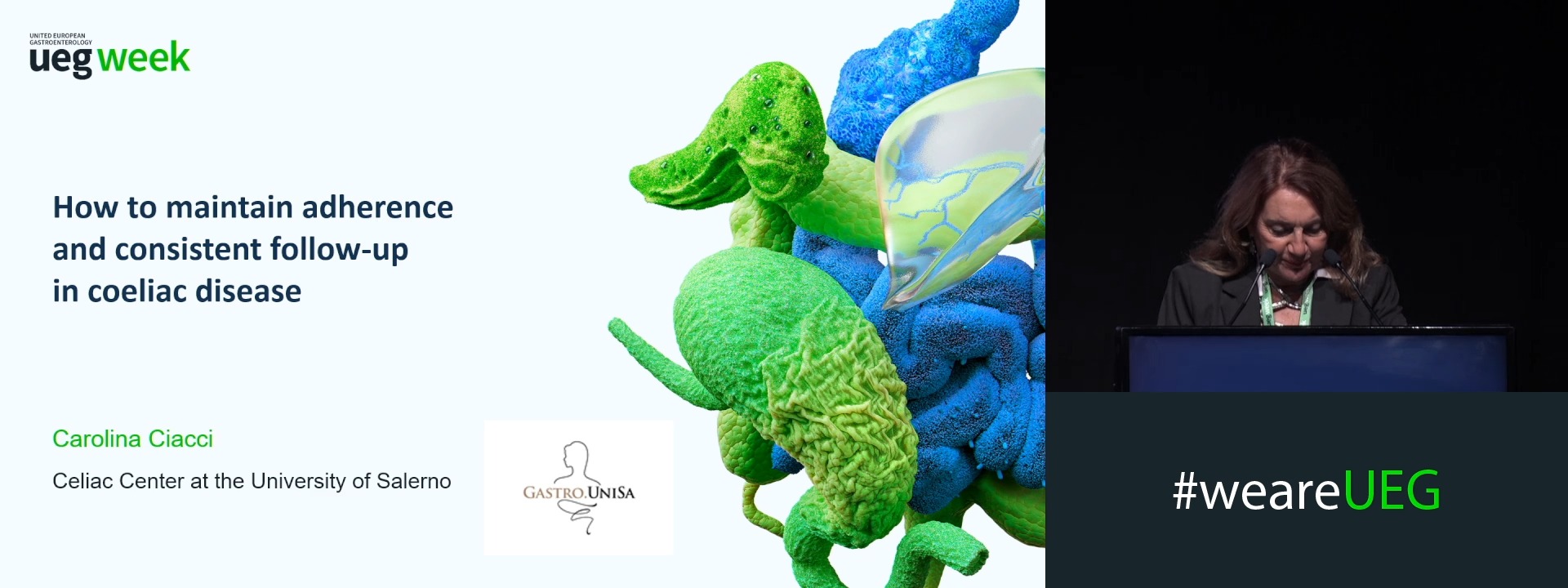
How to maintain adherence and consistent follow-up in coeliac disease
Affiliations
1 University of Salerno, Salerno, Italy
Log in to continue.
This content is part of Gutflix. Log in with your myUEG account, or create one free, to watch it.
Not sure what you can access? Learn more about account types.
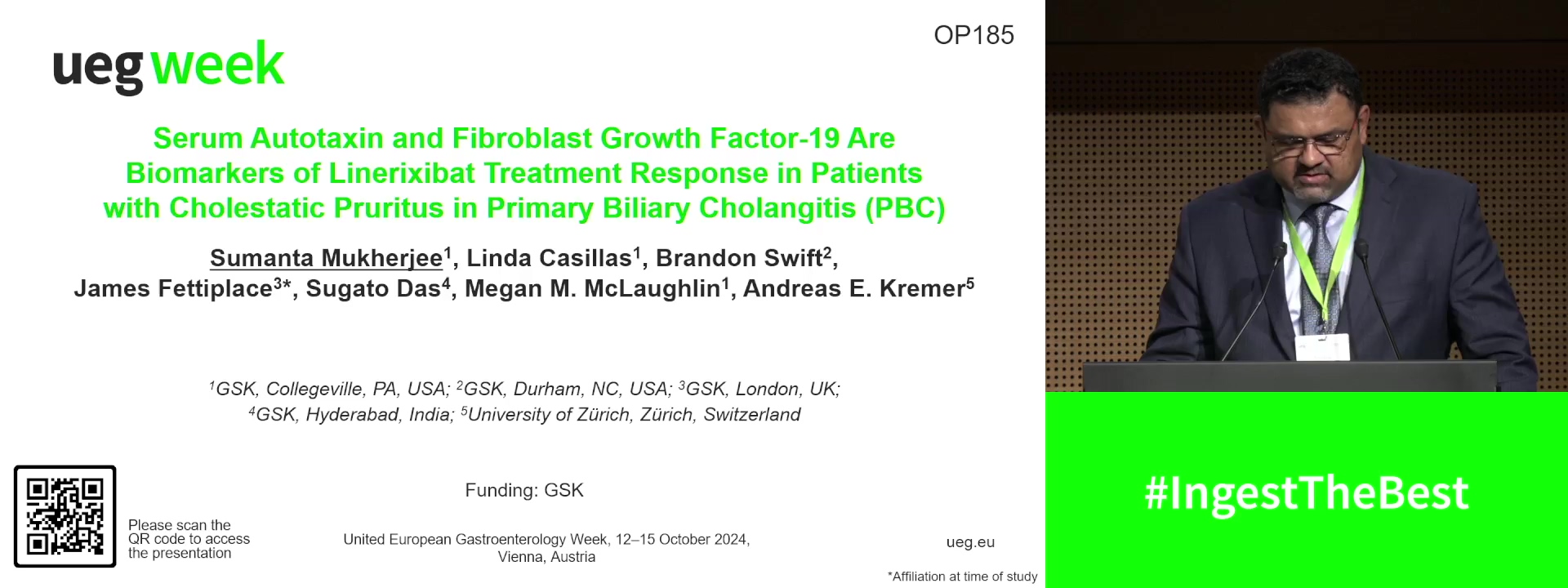
SERUM AUTOTAXIN AND FIBROBLAST GROWTH FACTOR-19 ARE BIOMARKERS OF LINERIXIBAT TREATMENT RESPONSE IN PATIENTS WITH CHOLESTATIC PRURITUS ASSOCIATED WITH PRIMARY BILIARY CHOLANGITIS
Sumanta Mukherjee 1, Linda Casillas 1, Brandon Swift 2, James Fettiplace 3, Sugato Das 4, Megan M. McLaughlin 1, Andreas E. Kremer 5
Affiliations
1 GSK, Collegeville, PA, United States
2 GSK, Durham, NC, United States
3 GSK, London, United Kingdom
4 GSK, Hyderabad, India
5 University of Zurich, Zurich, Switzerland