UEG's educational platform for gastroenterology education bringing recordings, courses, guidelines, and more together in one place.
Most popular content
Rate for better recommendations!
Your feedback helps us show you more of what you like and less of what you dislike!
Log in to access this content.
Free for all myUEG account holders. Your access level is set automatically based on your occupation. Medical professionals get full access to all content. If you are a non-medical user, you can only access UEG Week content from congresses you attended.
Not sure what you can access? Learn more about account types.

SARCOPENIA AND IBD: MOLECULAR AND MICROBIAL PATHWAYS AND POTENTIAL PHARMACOLOGICAL MODULATORS IN EXPERIMENTAL MODELS OF CHRONIC INFLAMMATORY BOWEL DISEASE
Valentina Petito 1, Sara Troisi 1, Letizia Masi 1, Valeria Emoli 2, Loris Riccardo Lopetuso 1, Federica Di Vincenzo 2, Pierluigi Puca 2, Ivan Capobianco 2, Antonio Gasbarrini 3, Franco Scaldaferri 4
1 Department of Medical and Surgical Sciences, IBD unit, Center for Diseases of Digestive System (CeMAD), Fondazione Policlinico Universitario "A. Gemelli" IRCCS, Rome, Italy
2 Department of Translational Medicine and Surgery, Catholic University of the Sacred Heart, Rome, Italy
3 Department of Translational Medicine and Surgery, Catholic University of the Sacred Heart, Rome, Italy|||Department of Medical and Surgical Sciences, IBD unit, Center for Diseases of Digestive System (CeMAD), Fondazione Policlinico Universitario "A. Gem
4 Department of Medical and Surgical Sciences, IBD unit, Center for Diseases of Digestive System (CeMAD), Fondazione Policlinico Universitario "A. Gemelli" IRCCS, Rome, Italy|||Department of Translational Medicine and Surgery, Catholic University of the S
Conference
Topics
Submission format
Session
Citation
Published
Log in to access this content.
Free for all myUEG account holders. Your access level is set automatically based on your occupation. Medical professionals get full access to all content. If you are a non-medical user, you can only access UEG Week content from congresses you attended.
Not sure what you can access? Learn more about account types.
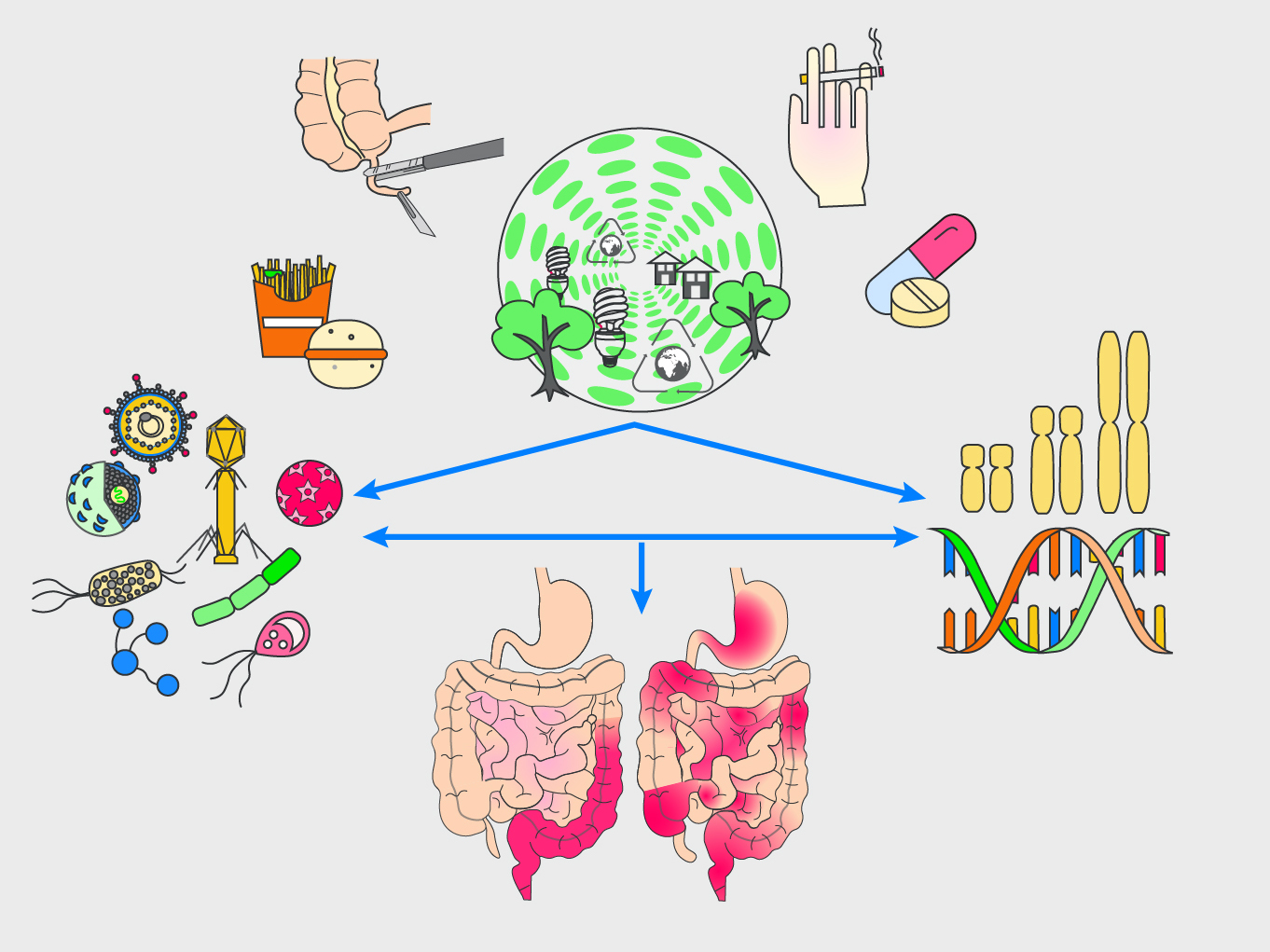
IBD epidemiology & aetiology
Event
Accreditation status
Duration
Published
Log in to access this content.
Free for all myUEG account holders. Your access level is set automatically based on your occupation. Medical professionals get full access to all content. If you are a non-medical user, you can only access UEG Week content from congresses you attended.
Not sure what you can access? Learn more about account types.
GUT MICROBIOTA AND AUTOIMMUNE ATROPHIC GASTRITIS
Michela Palo 1, Filippo Pelizzaro 2, Giorgia Corrà 2, Sonia Facchin 3, Edoardo Vincenzo Savarino 4, Fabiana Zingone 2
1 University of Padua, Potenza, Italy
2 University of Padua, Padua, Italy
3 University of Padua, Padova, Italy
4 University of Padua, Division of Gastroenterology, Padua, Italy
Conference
Topics
Submission format
Citation
Published
Log in to access this content.
Free for all myUEG account holders. Your access level is set automatically based on your occupation. Medical professionals get full access to all content. If you are a non-medical user, you can only access UEG Week content from congresses you attended.
Not sure what you can access? Learn more about account types.
IMPACT OF USTEKINUMAB ON EXTRAINTESTINAL MANIFESTATIONS AND IMMUNOMEDIATED DISEASES IN A COHORT OF PATIENTS WITH ULCERATIVE COLITIS IN REAL LIFE: THE ULISES STUDY
María Chaparro 1, Sandra Hermida 1, Diana Acosta 1, Agnès Fernández-Clotet 2, Manuel Barreiro de Acosta 3, Alvaro Hernández Martínez 4, Teresa Arroyo Villarino 5, Luis Menchén 6, Carmen Muñoz Villafranca 7, Monica Sierra 8, SABINO RIESTRA MENENDEZ 9, Irene García de la filia Molina 10, Enrique Montil Miguel 11, Patricia Ramírez de la Piscina Urraca 12, María Dolores Martín-Arranz 13, Alexandra Ruiz-Cerulla 14, José Fernando Muñoz 15, Ramón Pajares Villarroya 16, Beatriz Sicilia Aladrén 17, Ángel Ponferrada-Díaz 18, Elena Gomez 19, Horacio Alonso-Galán 20, Maria Jose Cabello Tapia 21, Pilar Varela Trastoy 22, Mª Teresa Diz-Lois Palomares 23, Leticia Gimeno 24, Lucía Márquez-Mosquera 25, Cynthia Ramírez 26, Carmen Dueñas Sadornil 27, Belén Herreros 28, Oscar Nantes Castillejo 29, Montserrat Rivero 30, Belen Botella 31, Pedro Genaro Delgado-Guillena 32, María Pilar López-Serrano 33, Iago González Lama 34, Jose Luis Fernandez Forcelledo 35, Teresa de Jesús Martínez-Pérez 36, David Monfort Miquel 37, MAría del Carmen Rodríguez Grau 38, Jose Maria Huguet 39, Rosa Eva Madrigal Dominguez 40, Pau Sendra Rumbeu 41, Sandra Torra Alsina 42, Manuel Van Domselar 43, Yolanda Ber Nieto 44, Santiago Frago-Larramona 45, Carmen López 46, Javier Gisbert 1
1 Hospital Universitario de La Princesa, IIS-Princesa, Universidad Autónoma de Madrid (UAM) and CIBEREHD, Madrid, Spain
2 Hospital Clinic of Barcelona, Institut d´Investigacions Biomèdiques August Pi i Sunyer (IDIBAPS) and CIBERehd, Barcelona, Spain
3 Complejo Hospitalario Universitario de Santiago, Santiago de Compostela, Spain
4 Hospital Universitario Torrecárdenas, Almeria, Spain
5 Hospital Clínico Universitario Lozano Blesa, IIS Aragón and CIBEREHD, Zaragoza, Spain
6 Hospital General Universitario Gregorio Marañón, Madrid, Spain
7 Hospital Universitario de Basurto, Bilbao, Spain
8 Complejo Asistencial Universitario de León, León, Spain
9 Hospital Universitario Central de Asturias and ISPA, Oviedo, Spain
10 Hospital Universitario Ramón y Cajal, Madrid, Spain
11 Hospital Universitario Miguel Servet, Zaragoza, Spain
12 Hospital Universitario de Araba, Araba, Spain
13 Hospital Universitario la Paz, Madrid, Spain
14 Hospital Universitario de Bellvitge, L' Hospitalet de Llobregat, Spain
15 Hospital Universitario de Salamanca, Salamanca, Spain
16 Hospital Universitario Infanta Sofía, Madrid, Spain
17 Hospital Universitario de Burgos, Burgos, Spain
18 Hospital Universitario Infanta Leonor, Madrid, Spain
19 Hospital Universitario Juan Ramón Jiménez, Huelva, Spain
20 Hospital Universitario Donostia and Instituto Biodonostia, San Sebastián, Spain
21 Hospital Universitario Virgen de las Nieves, Granada, Spain
22 Hospital Universitario de Cabueñes, Gijón, Spain
23 Complejo Hospitalario Universitario A Coruña, A Coruña, Spain
24 Hospital General Universitario de Castellón, Castellón, Spain
25 Hospital del Mar, Barcelona and IMIM, Barcelona, Spain
26 Hospital Universitario Galdakao-Usansolo, Galdakao, Spain
27 Hospital Universitario de Cáceres, Cáceres, Spain
28 Hospital Marina Baixa, Alicante, Spain
29 Hospital Universitario de Navarra (HUN) and IdiSNA, Pamplona, Spain
30 Hospital Universitario de Valdecilla and IDIVAL, Santander, Spain
31 Hospital Universitario Infanta Cristina, Madrid, Spain
32 Hospital de Mérida, Mérida, Spain
33 Hospital Universitario Fundación Alcorcón, Alcorcón, Spain
34 Hospital Universitario Puerta de Hierro, Majadahonda, Spain
35 Hospital Sierrallana, Torrelavega, Spain
36 Hospital Virgen de la Luz, Cuenca, Spain
37 Consorci Sanitari de Terrassa, Terrassa, Spain
38 Hospital Universitario del Henares, Coslada, Spain
39 Hospital General Universitario de Valencia, Valencia, Spain
40 Hospital Clínico Universitario de Valladolid, Valladolid, Spain
41 Hospital Comarcal de Inca, Inca, Spain
42 Parc Sanitari Sant Joan de Déu, Sant Boi de Llobregat, Spain
43 Hospital Universitario de Torrejón, Torrejón, Spain
44 Hospital San Jorge, Huesca, Spain
45 Hospital Santa Barbara, Soria, Spain
46 Hospital Virgen de la Concha, Zamora, Spain
Conference
Topics
Submission format
Citation
Published
Log in to access this content.
Free for all myUEG account holders. Your access level is set automatically based on your occupation. Medical professionals get full access to all content. If you are a non-medical user, you can only access UEG Week content from congresses you attended.
Not sure what you can access? Learn more about account types.
A PROSPECTIVE, PILOT, REAL-WORLD STUDY TO ASSESS THE PRESENCE AND SEVERITY OF URGENCY IN PATIENTS WITH CROHN’S ILEITIS
1 White Cross Hospital, The Athens Clinic, Athens, Greece
Conference
Topics
Submission format
Session
Citation
Published
Log in to access this content.
Free for all myUEG account holders. Your access level is set automatically based on your occupation. Medical professionals get full access to all content. If you are a non-medical user, you can only access UEG Week content from congresses you attended.
Not sure what you can access? Learn more about account types.
A WOMAN WITH SERUM ALPHA-FETOPROTEIN GRADUAL RISING FOR ONE YEAR WAS FINALLY DIAGNOSED WITH SMALL HEPATOCELLULAR CARCINOMA:A CASE REPORT
1 West China Hospital, Sichuan University, Chengdu, China
Conference
Topics
Submission format
Session
Published
Log in to access this content.
Free for all myUEG account holders. Your access level is set automatically based on your occupation. Medical professionals get full access to all content. If you are a non-medical user, you can only access UEG Week content from congresses you attended.
Not sure what you can access? Learn more about account types.
ANTI-INFLAMMATORY EFFECT OF LMT503, A MODULATOR OF CELL METABOLISM, AMELIORATES MURINE ADOPTIVE T CELL TRANSFER-INDUCED COLITIS
1 Graduate School of Medical Science, Brain Korea 21 Project, Yonsei University College of Medicine, Seoul, Korea, Republic of
2 Graduate School of Medical Science, Brain Korea 21 Project, Yonsei University College of Medicine, Seoul, Korea, Republic of|||Severance Biomedical Science Institute, Yonsei University College of Medicine, Seoul, Korea, Republic of
Conference
Topics
Submission format
Session