UEG's educational platform for gastroenterology education bringing recordings, courses, guidelines, and more together in one place.
Most popular content
Rate for better recommendations!
Your feedback helps us show you more of what you like and less of what you dislike!
Log in to access this content.
Free for all myUEG account holders. Your access level is set automatically based on your occupation. Medical professionals get full access to all content. If you are a non-medical user, you can only access UEG Week content from congresses you attended.
Not sure what you can access? Learn more about account types.
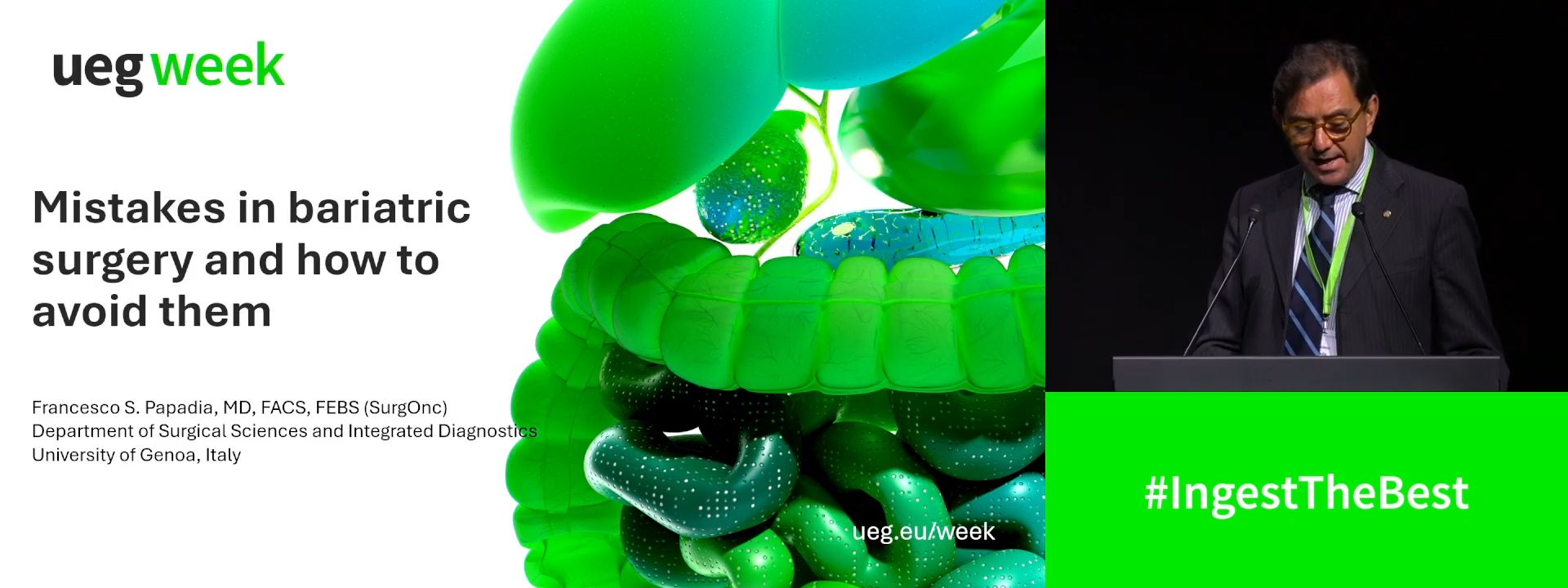
Bariatric surgery
1 University of Genoa, Genoa, Italy
Event
Session
Citation
Published
Log in to access this content.
Free for all myUEG account holders. Your access level is set automatically based on your occupation. Medical professionals get full access to all content. If you are a non-medical user, you can only access UEG Week content from congresses you attended.
Not sure what you can access? Learn more about account types.

THE MIST1–UFM1–STK38 AXIS REGULATES YAP1 ACTIVITY TO ENABLE PROGENITOR-LIKE REPROGRAMMING OF GASTRIC CHIEF CELLS DURING PALIGENOSIS
1 Baylor College of Medicine, Houston, United States
2 Baylor College of Medicine, Houston, United States|||Baylor College of Medicine, Houston, United States
Conference
Topics
Submission format
Citation
Published
Log in to access this content.
Free for all myUEG account holders. Your access level is set automatically based on your occupation. Medical professionals get full access to all content. If you are a non-medical user, you can only access UEG Week content from congresses you attended.
Not sure what you can access? Learn more about account types.
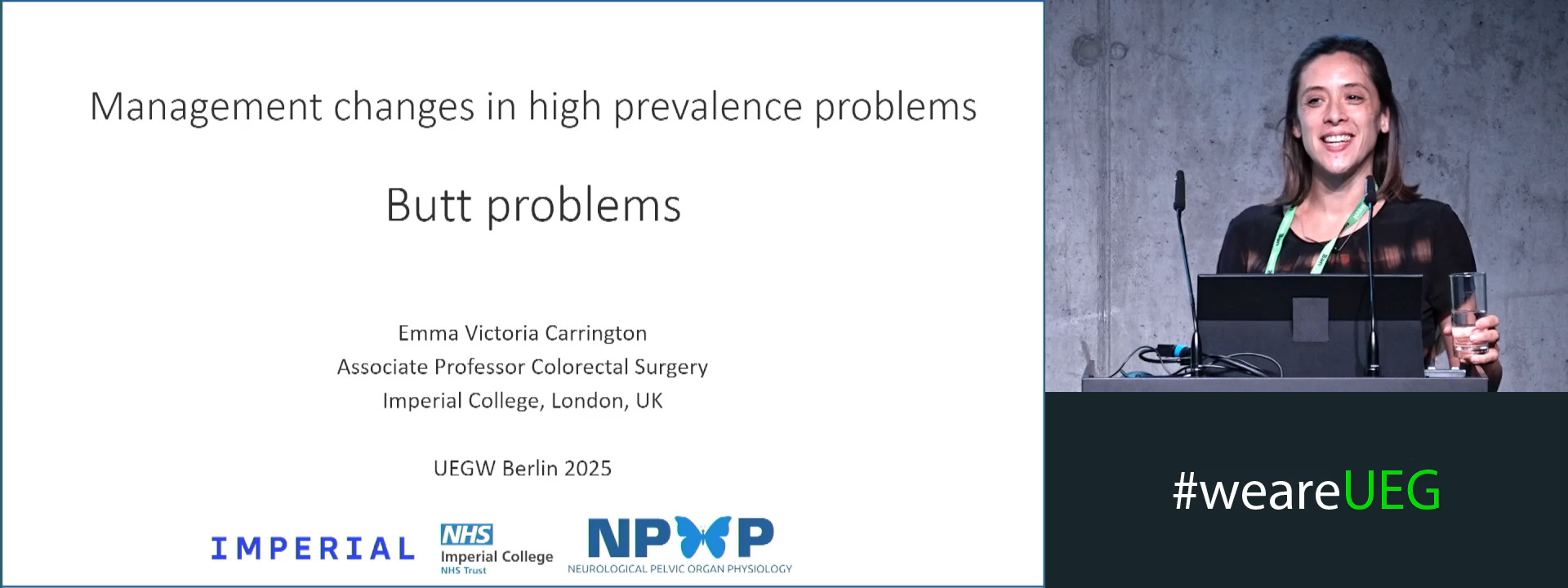
Butt problems
1 University of North Carolina / NCRBSI, London, United Kingdom
Event
Topics
Citation
Published
Log in to access this content.
Free for all myUEG account holders. Your access level is set automatically based on your occupation. Medical professionals get full access to all content. If you are a non-medical user, you can only access UEG Week content from congresses you attended.
Not sure what you can access? Learn more about account types.
PHARMACOLOGICAL AND DIETARY INTERVENTIONS FOR THE MANAGEMENT OF UPPER GASTROINTESTINAL CROHN’S DISEASE: A SYSTEMATIC REVIEW
1 Western University, London, Canada|||Makati Medical Center, Manila, Philippines
2 Western University, London, Canada
Conference
Topics
Submission format
Session
Citation
Published
Log in to access this content.
Free for all myUEG account holders. Your access level is set automatically based on your occupation. Medical professionals get full access to all content. If you are a non-medical user, you can only access UEG Week content from congresses you attended.
Not sure what you can access? Learn more about account types.
VASCULAR INVASION WITHIN THE CRITERIA FOR ONCOLOGICAL RESECTABILITY OF HEPATOCELLULAR CARCINOMA IS A CRITICAL PREDICTOR OF SURVIVAL IN PATIENTS TREATED WITH ATEZOLIZUMAB AND BEVACIZUMAB
Toshifumi Tada 1, Takashi Kumada 2, Atsushi Hiraoka 3, Kazuya Kariyama 4, Takeshi Hatanaka 5, Kazuhiro Nouso 4, Satoru Kakizaki 6, Hideko Ohama 3, Emi Tanaka 7, Kaho Aoe 7, HANA OTA 7, Mayumi Ehara 8, Hidenori Toyoda 9
1 Kobe University Graduate School of Medicine, Kobe, Japan|||Japanese Red Cross Society Himeji Hospital, Himeji, Japan
2 Gifu Kyoritsu University, Ogaki, Japan
3 Ehime Prefectural Central Hospital, Matsuyama, Japan
4 Okayama City Hospital, Okayama, Japan
5 Gunma Saiseikai Maebashi Hospital, Maebashi, Japan
6 NHO Takasaki General Medical Center, Takasaki, Japan
7 Japanese Red Cross Society Himeji Hospital, Himeji, Japan
8 Kobe University Graduate School of Medicine, Kobe, Japan
9 Ogaki Municipal Hospital, Ogaki, Japan
Conference
Topics
Submission format
Session
Citation
Published
Log in to access this content.
Free for all myUEG account holders. Your access level is set automatically based on your occupation. Medical professionals get full access to all content. If you are a non-medical user, you can only access UEG Week content from congresses you attended.
Not sure what you can access? Learn more about account types.
Summary: UEG Journal Session
1 Marmara University, School of Medicine, Division of Gastroenterology&Hepatology, Istanbul, Turkey
2 University of Rome Tor Vergata, Rome, Italy
3 Mater Dei Hospital, Mosta, Malta
Event
Topics
Session
Citation
Published
Log in to access this content.
Free for all myUEG account holders. Your access level is set automatically based on your occupation. Medical professionals get full access to all content. If you are a non-medical user, you can only access UEG Week content from congresses you attended.
Not sure what you can access? Learn more about account types.
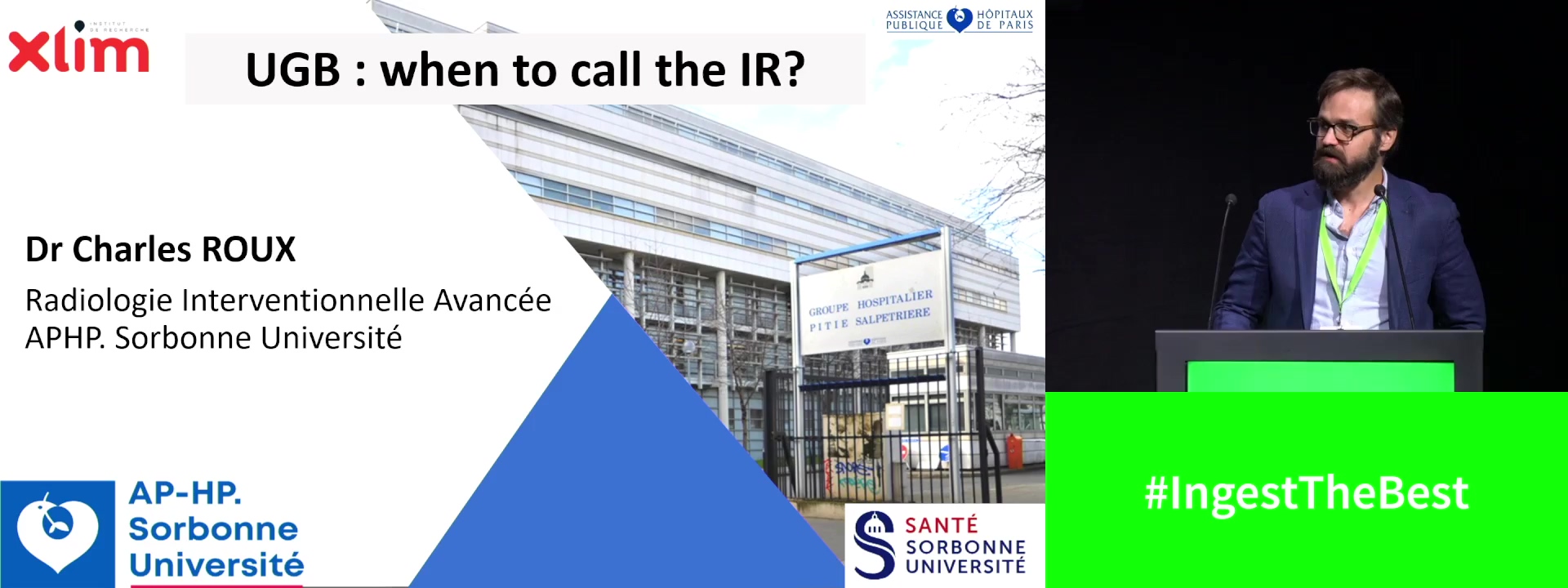
When to call the interventional radiologist for UGIB: Embolisation and TIPS
1 None, None, France