UEG's educational platform for gastroenterology education bringing recordings, courses, guidelines, and more together in one place.
Most popular content
Rate for better recommendations!
Your feedback helps us show you more of what you like and less of what you dislike!
Log in to access this content.
Free for all myUEG account holders. Your access level is set automatically based on your occupation. Medical professionals get full access to all content. If you are a non-medical user, you can only access UEG Week content from congresses you attended.
Not sure what you can access? Learn more about account types.
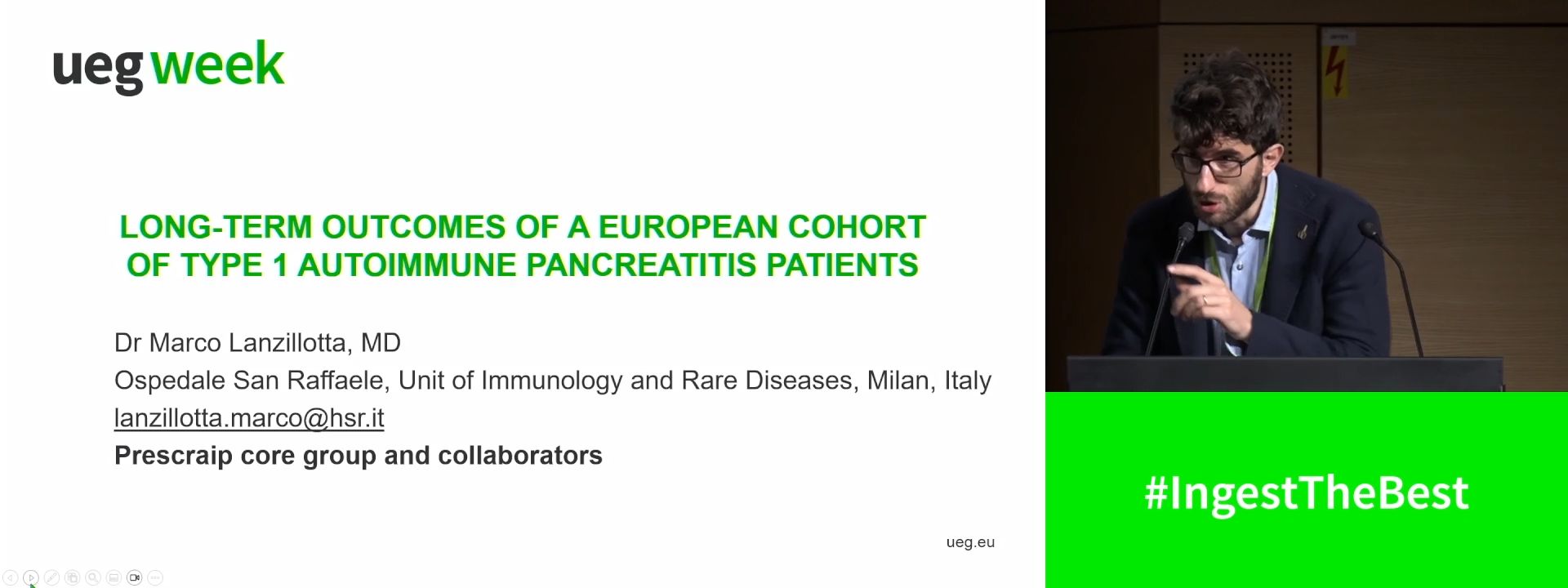
LONG TERM OUTCOMES OF A EUROPEAN COHORT OF AUTOIMMUNE PANCREATITIS PATIENTS
Marco Lanzillotta 1, Kasper Overbeek 2, Jakob Lykke Poulsen 3, Peter Macinga 4, Olof Vinge Holmquist 5, Matthias Löhr 6, Jonas Rosendahl 7
1 San Raffaele Hospital: IRCCS Ospedale San Raffaele, Milan, Italy
2 Erasmus MC University Medical Center, Rotterdam, Rotterdam, Netherlands
3 Aalborg, Aalborg, Denmark
4 Institute For Clinical And Experimental Medicine, Prague, Czechia
5 4Department of Digestive Surgery, St. Olavs Hospital, Trondheim University Hospital, Trondheim, Norway, Trondheim, Norway
6 Karolinska Institutet, Stockholm, Sweden
7 University Clinic Halle (Saale) - Department of Internal Medicine I, University Clinic Halle (Saale), Halle (Saale), Germany
Event
Topics
Submission format
Session
Citation
Published
Log in to access this content.
Free for all myUEG account holders. Your access level is set automatically based on your occupation. Medical professionals get full access to all content. If you are a non-medical user, you can only access UEG Week content from congresses you attended.
Not sure what you can access? Learn more about account types.
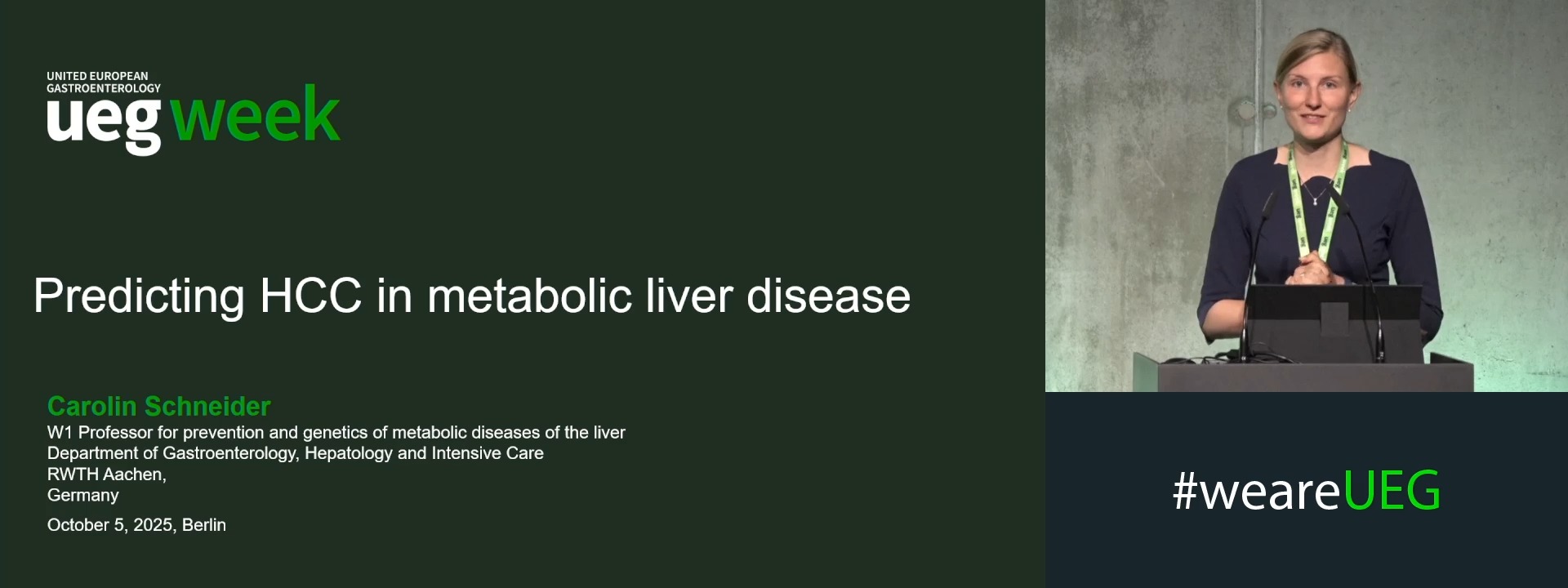
Predicting HCC in metabolic liver disease
1 Rwth Aachen, Med III, Aachen, Germany
Event
Topics
Citation
Published
Log in to access this content.
Free for all myUEG account holders. Your access level is set automatically based on your occupation. Medical professionals get full access to all content. If you are a non-medical user, you can only access UEG Week content from congresses you attended.
Not sure what you can access? Learn more about account types.
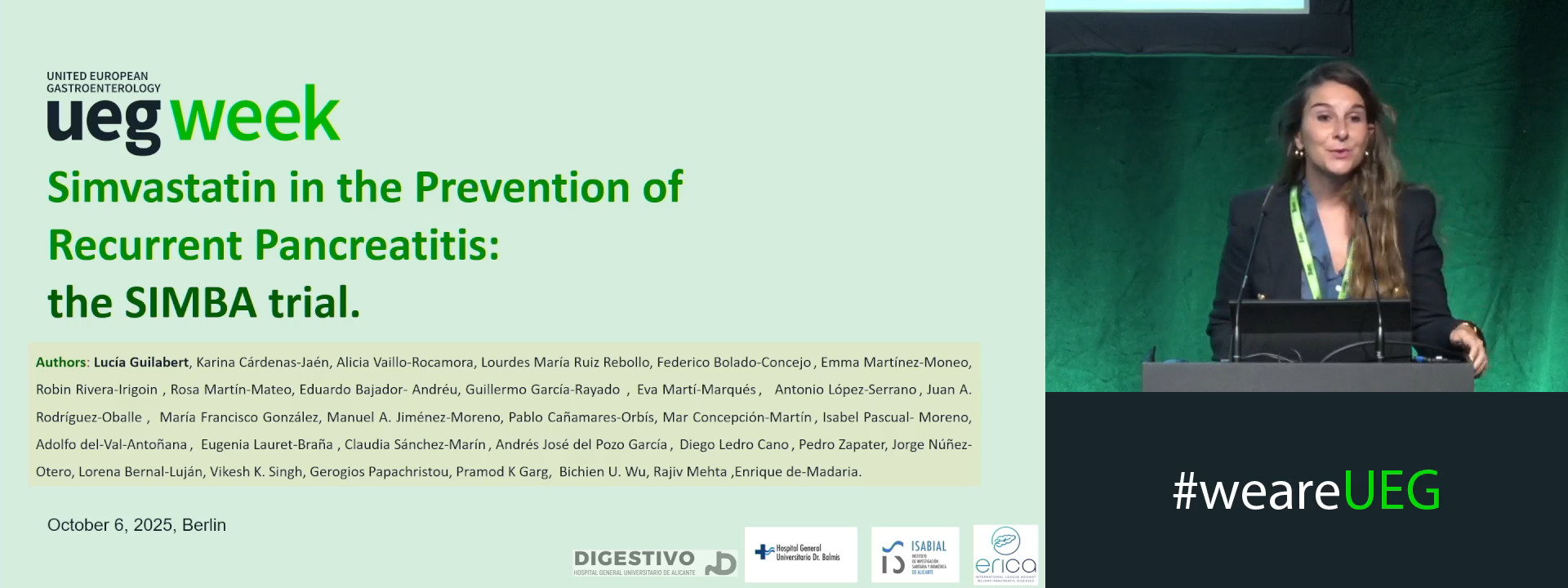
SIMVASTATIN IN THE PREVENTION OF RECURRENT PANCREATITIS: THE SIMBA TRIAL
Lucía Guilabert 1, Karina Cárdenas-Jaén 1, Laura Sempere Robles 1, Alicia Vaillo-Rocamora 1, Maria Lourdes Ruiz Rebollo 2, Rajiv Mehta 3, Federico Bolado Concejo 4, Rosa Martin Mateos 5, Emma Martínez-Moneo 6, Robin Rivera Irigoin 7, Eduardo Bajador-Andréu 8, Guillermo García-Rayado 9, Eva Martí-Marqués 10, Antonio López-Serrano 11, Jesús Leal Téllez 12, BLANCA BELLOC 13, María Francisco González 14, Juan Armando Rodríguez Oballe 15, Mar Concepción Martín 16, Isabel Pascual-Moreno 17, Adolfo del Val Antonana 18, Eugenia Lauret-Braña 19, Claudia Sánchez-Marin 20, Manuel Jiménez-Moreno 21, Andrés José del Pozo García 22, Diego Ledro-Cano 23, JORGE NUÑEZ OTERO 24, Juan Enrique Dominguez-Munoz 25, Bechien U. Wu 26, Enrique de-Madaria 27
1 Dr. Balmis General University Hospital, ISABIAL, Alicante, Spain
2 Valladolid Clinic Univeristy Hospital, Valladolid, Spain
3 Surat Institute of Digestive Science (SIDS) Hospital and Research Centre, Surat, India
4 University Hospital of Navarre, Pamplona, Spain
5 Hospital Universitario Ramon y Cajal. Instituto Ramon y Cajal de Investigación Sanitaria (IRYCIS)., Madrid, Spain
6 Hospital Universitario Cruces, Getxo (Bizkaia), Spain
7 Costa del Sol Hospital, Marbella, Spain
8 Hospital Miguel Servet, Zaragoza, Spain
9 University Clinic Hospital, Aragón Health Research Institute (IIS Aragón), Zaragoza, Spain, Zaragoza, Spain, Spain
10 Lucus Augusti University Hospital, Lugo, Spain
11 Dr. Peset University Hospital, Valencia, Spain
12 Hospital Universitario Puerta del Mar, San Pedro Alcántara (Málaga), Spain
13 San Jorge University Hospital, Huesca, Spain
14 Orense Univsersity Hospital, Orense, Spain
15 Hospital Santa María, Lleida, Spain
16 Santa Creu i Sant Pau Hospital, Barcelona, Spain
17 Hospital Clinico Universitario, Valencia, Spain
18 La Fe University Hospital, Valencia, Spain
19 Central de Asturias University Hospital,Institute of Health Research of the Principality of Asturias ISPA, Oviedo, Spain
20 Marqués de Valdecilla University Hospital, Santander, Spain
21 Hospital Universitario de Burgos, Burgos, Spain
22 12 Octubre University Hospital, Madrid, Spain
23 Hospital La Merced. Area Sanitaria de Osuna., Osuna, Spain
24 Suereste University Hospital, Madrid, Spain
25 University Hospital of Santiago de Compostela, Santiago de Compostela, Spain
26 Southern California Permanente Medical Group, Pasadena, United States|||Kaiser Permanente Los Angeles Medical Center, Los Angeles, United States
27 Miguel Hernández University, Elche, Spain|||Dr. Balmis General University Hospital, ISABIAL, Alicante, Spain
Event
Topics
Submission format
Citation
Published
Log in to access this content.
Free for all myUEG account holders. Your access level is set automatically based on your occupation. Medical professionals get full access to all content. If you are a non-medical user, you can only access UEG Week content from congresses you attended.
Not sure what you can access? Learn more about account types.
Panel Discussion: Diabetes in GI disorders
Event
Session
Citation
Published
Log in to access this content.
Free for all myUEG account holders. Your access level is set automatically based on your occupation. Medical professionals get full access to all content. If you are a non-medical user, you can only access UEG Week content from congresses you attended.
Not sure what you can access? Learn more about account types.
Summary: Liver and pregnancy - Beware of dangerous liaisons
1 Hôpital Erasme (gastro) - Hôpital Erasme (gastro); Maransart/BE, Brussels, Belgium
Event
Topics
Citation
Published
Log in to access this content.
Free for all myUEG account holders. Your access level is set automatically based on your occupation. Medical professionals get full access to all content. If you are a non-medical user, you can only access UEG Week content from congresses you attended.
Not sure what you can access? Learn more about account types.
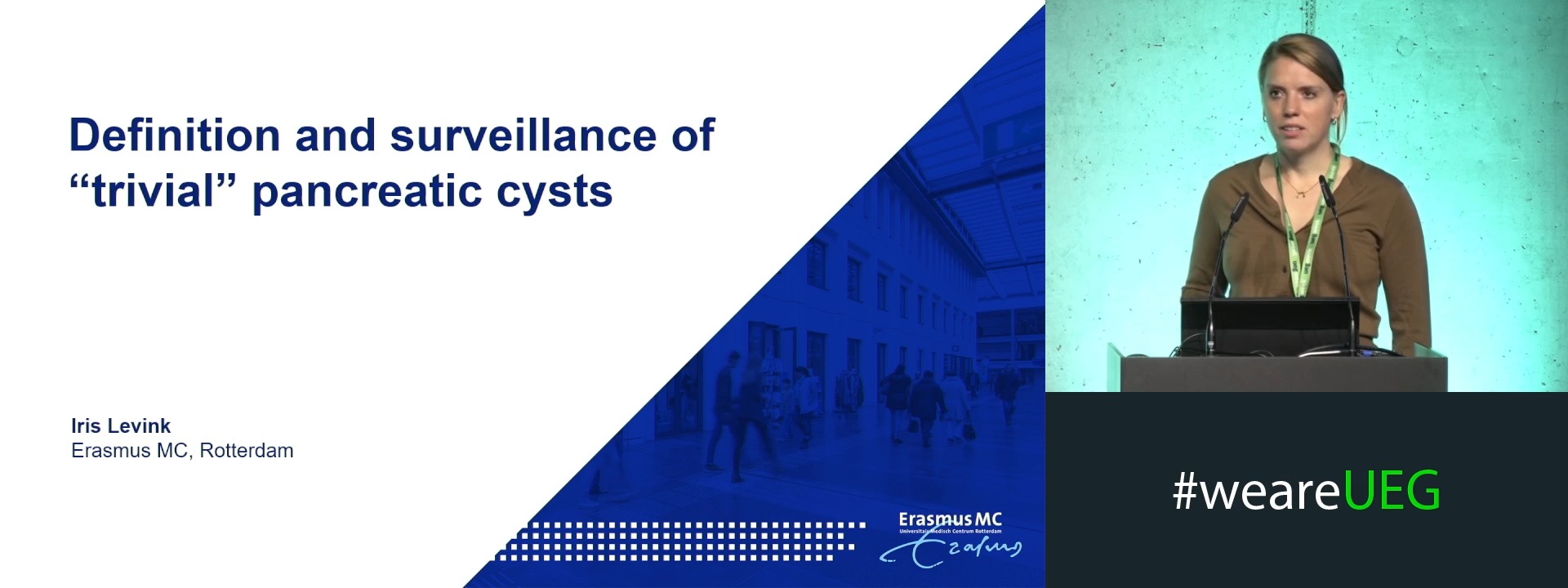
Definition and surveillance of "trivial" pancreatic cysts
1 Erasmus University Medical Center, Rotterdam, Netherlands
Event
Session
Citation
Published
Log in to access this content.
Free for all myUEG account holders. Your access level is set automatically based on your occupation. Medical professionals get full access to all content. If you are a non-medical user, you can only access UEG Week content from congresses you attended.
Not sure what you can access? Learn more about account types.
Panel discussion: Cystic pancreatic lesions
Event
Topics
Session