UEG's educational platform for gastroenterology education bringing recordings, courses, guidelines, and more together in one place.
Most popular content
Rate for better recommendations!
Your feedback helps us show you more of what you like and less of what you dislike!
Log in to access this content.
Free for all myUEG account holders. Your access level is set automatically based on your occupation. Medical professionals get full access to all content. If you are a non-medical user, you can only access UEG Week content from congresses you attended.
Not sure what you can access? Learn more about account types.
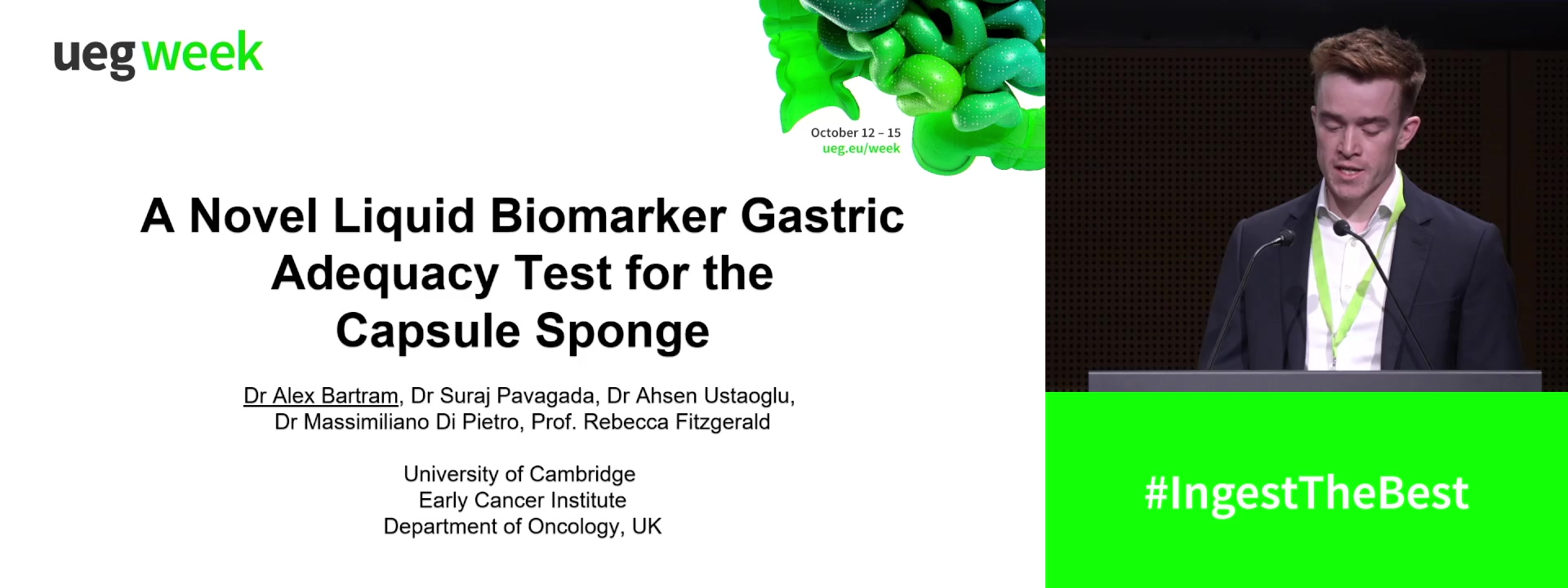
A NOVEL LIQUID BIOMARKER GASTRIC ADEQUACY TEST FOR THE CAPSULE SPONGE
Alexander Bartram 1, Suraj Pavagada 1, Ahsen Ustaoglu 1, Massimiliano di Pietro 1, Rebecca Fitzgerald 1
1 University of Cambridge, Cambridge, United Kingdom
Event
Submission format
Citation
Published
Log in to access this content.
Free for all myUEG account holders. Your access level is set automatically based on your occupation. Medical professionals get full access to all content. If you are a non-medical user, you can only access UEG Week content from congresses you attended.
Not sure what you can access? Learn more about account types.
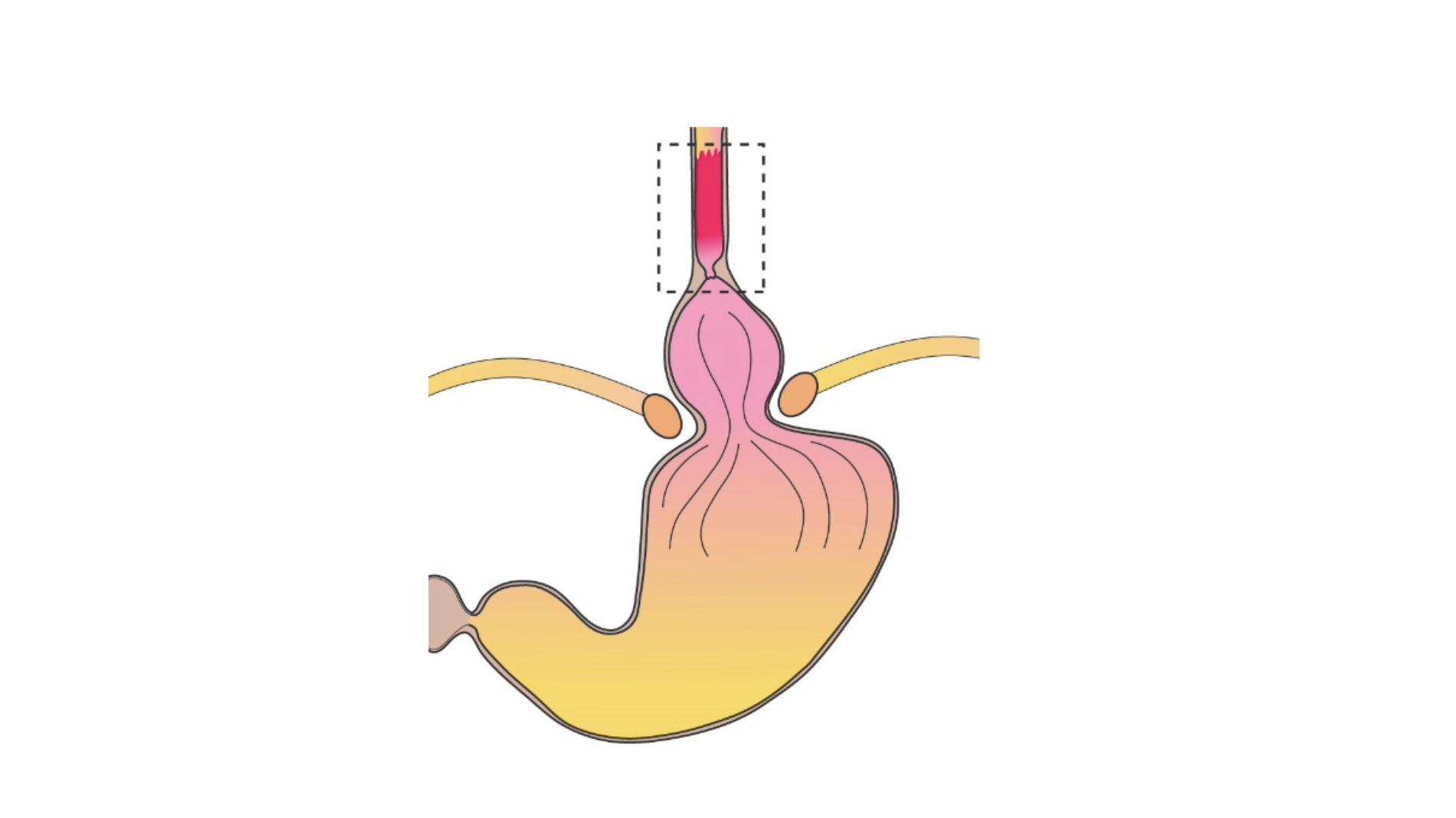
Barrett Oesophagus - pathophysiology, diagnosis, surveillance and treatment
Event
Topics
Accreditation status
Duration
Published
Log in to access this content.
Free for all myUEG account holders. Your access level is set automatically based on your occupation. Medical professionals get full access to all content. If you are a non-medical user, you can only access UEG Week content from congresses you attended.
Not sure what you can access? Learn more about account types.

MANAGEMENT OF A DISLOCATED METAL BILIARY STENT USING ARGON PLASMA COAGULATION: A CASE REPORT
Styliani Michailidou 1, Xenofon Tsamakidis 1, Eleni Michalopoulou 1, Athanasios Kontos 1, Vasileios Giannakopoulos 1, Filippos Papakonstantinou 1, Ippokratis Patakos 1, Georgios Sachtouris 1, Nikolaos Sarimpegioglou 1, Eleni Manthopoulou 1, Ioannis Marakis 1, Stavros Stavrinidis 1, IOANNIS TZIORTZIOTIS 1, Musa Al-Odat 1, Dimitrios Dimitroulopoulos 1, Dimitrios Kypraios 1
1 Saint Savvas Oncology Hospital of Athens, Athens, Greece
Conference
Topics
Submission format
Session
Published
Log in to access this content.
Free for all myUEG account holders. Your access level is set automatically based on your occupation. Medical professionals get full access to all content. If you are a non-medical user, you can only access UEG Week content from congresses you attended.
Not sure what you can access? Learn more about account types.
NUTRITIONAL STATUS, MUSCLE QUALITY, SARCOPENIA AND QUALITY OF LIFE IN LIVER CIRRHOSIS
1 Royal College of Surgeons in Ireland (RCSI), Dublin, Ireland|||Beaumont Hospital, Dublin, Ireland
2 Beaumont Hospital, Dublin, Ireland|||Royal College of Surgeons in Ireland (RCSI), Dublin, Ireland
Conference
Topics
Submission format
Session
Citation
Published
Log in to access this content.
Free for all myUEG account holders. Your access level is set automatically based on your occupation. Medical professionals get full access to all content. If you are a non-medical user, you can only access UEG Week content from congresses you attended.
Not sure what you can access? Learn more about account types.
ENDOSCOPIC RETROGRADE CHOLANGIOPANCREATOGRAPHY BY CONVENTIONAL DUODENOSCOPE WITH COLONOSCOPY-ASSISTED PRE-PLACEMENT OF A LONG GUIDE TUBE IN PATIENTS WITH COMPLEX SURGICALLY ALTERED ANATOMY
1 Affiliated Hangzhou First People's Hospital, Zhejiang University School of Medicine, Hangzhou, China
Conference
Topics
Submission format
Session
Citation
Published
Log in to access this content.
Free for all myUEG account holders. Your access level is set automatically based on your occupation. Medical professionals get full access to all content. If you are a non-medical user, you can only access UEG Week content from congresses you attended.
Not sure what you can access? Learn more about account types.
RISK ASSESSMENT OF HEPATOCELLULAR CARCINOMA BY ELASTOGRAPHYHY: A SYSTEMIC REVIEW
1 Sohag Faculty of Medicine-Sohag University-Egypt, Sohag, Egypt|||Specialized Medical Center, Riyadh, Saudi Arabia
2 Sohag Faculty of Medicine-Sohag University-Egypt, Sohag, Egypt
Conference
Topics
Submission format
Session
Citation
Published
Log in to access this content.
Free for all myUEG account holders. Your access level is set automatically based on your occupation. Medical professionals get full access to all content. If you are a non-medical user, you can only access UEG Week content from congresses you attended.
Not sure what you can access? Learn more about account types.
BULLOUS CELLULITIS CAUSED BY ESCHERICHIA COLI IN A PATIENT WITH HEPATORENAL SYNDROME
Gilberto Herrera Quiñones 1, Diego Alberto Garcia Casillas 2, Maria Fernanda Contreras Chong 2, Cecilia Fernanda Peña Puga 2, Gildardo Herrera Quiñones 3, Brenda R Dominguez-Quezada 4
1 Instituto Mexicano del Seguro Social (IMSS) HGZ 30, Mexicali, Mexico|||Universidad Autonoma de Baja California, Mexicali, Mexico
2 Universidad Autonoma de Baja California, Mexicali, Mexico
3 Centro de Estudios Universitarios Xochicalco, Mexicali, Mexico
4 Instituto Mexicano del Seguro Social HGZ 30, Mexicali, Mexico
Conference
Topics
Submission format
Session