UEG's educational platform for gastroenterology education bringing recordings, courses, guidelines, and more together in one place.
Most popular content
Rate for better recommendations!
Your feedback helps us show you more of what you like and less of what you dislike!
Log in to access this content.
Free for all myUEG account holders. Your access level is set automatically based on your occupation. Medical professionals get full access to all content. If you are a non-medical user, you can only access UEG Week content from congresses you attended.
Not sure what you can access? Learn more about account types.
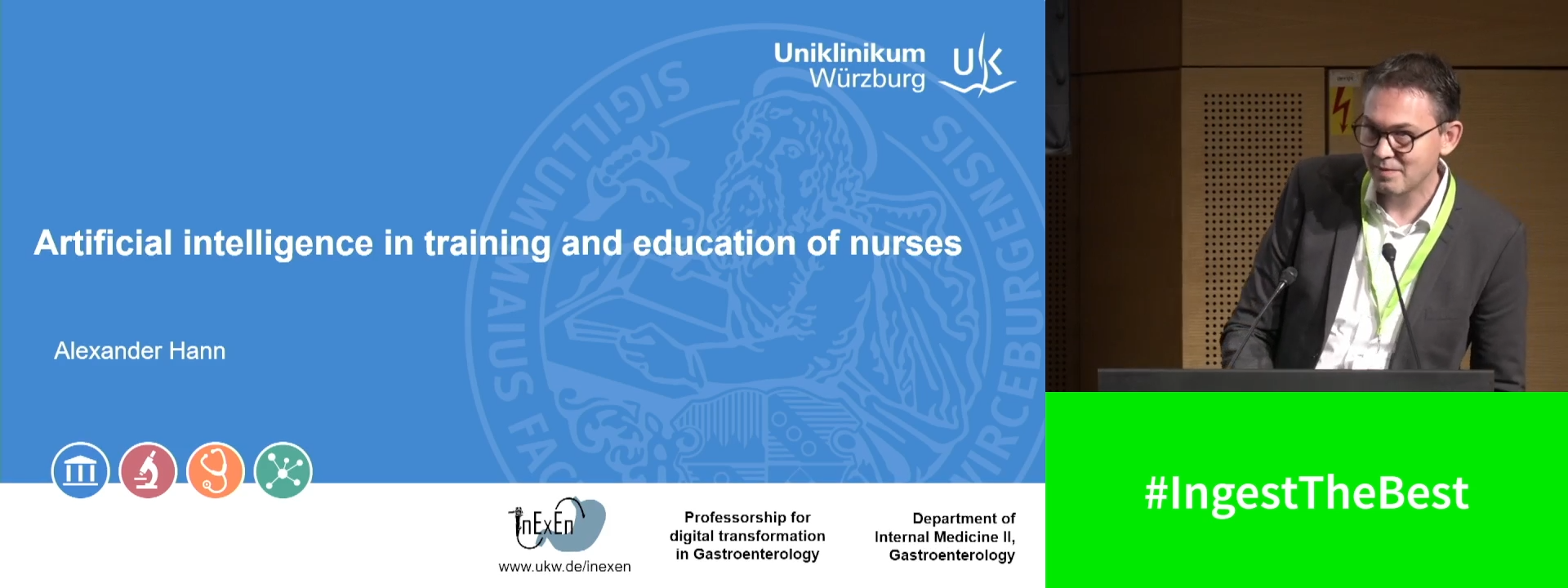
Artificial intelligence in training and education of nurses
1 University Hospital Wuerzburg, Wuerzburg, Germany
Event
Topics
Citation
Published
Log in to access this content.
Free for all myUEG account holders. Your access level is set automatically based on your occupation. Medical professionals get full access to all content. If you are a non-medical user, you can only access UEG Week content from congresses you attended.
Not sure what you can access? Learn more about account types.
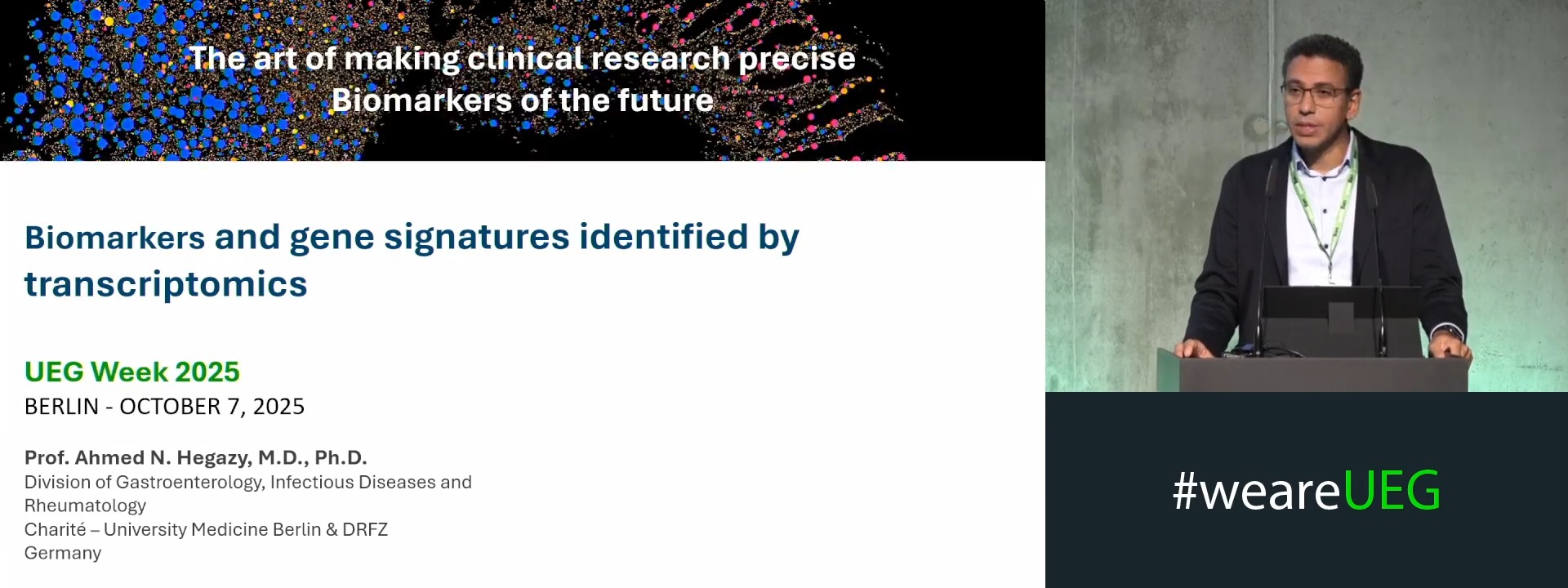
Biomarkers and gene signatures identified by transcriptomics
1 Charité – Universitätsmedizin Berlin, Berlin, Germany
Event
Citation
Published
Log in to access this content.
Free for all myUEG account holders. Your access level is set automatically based on your occupation. Medical professionals get full access to all content. If you are a non-medical user, you can only access UEG Week content from congresses you attended.
Not sure what you can access? Learn more about account types.
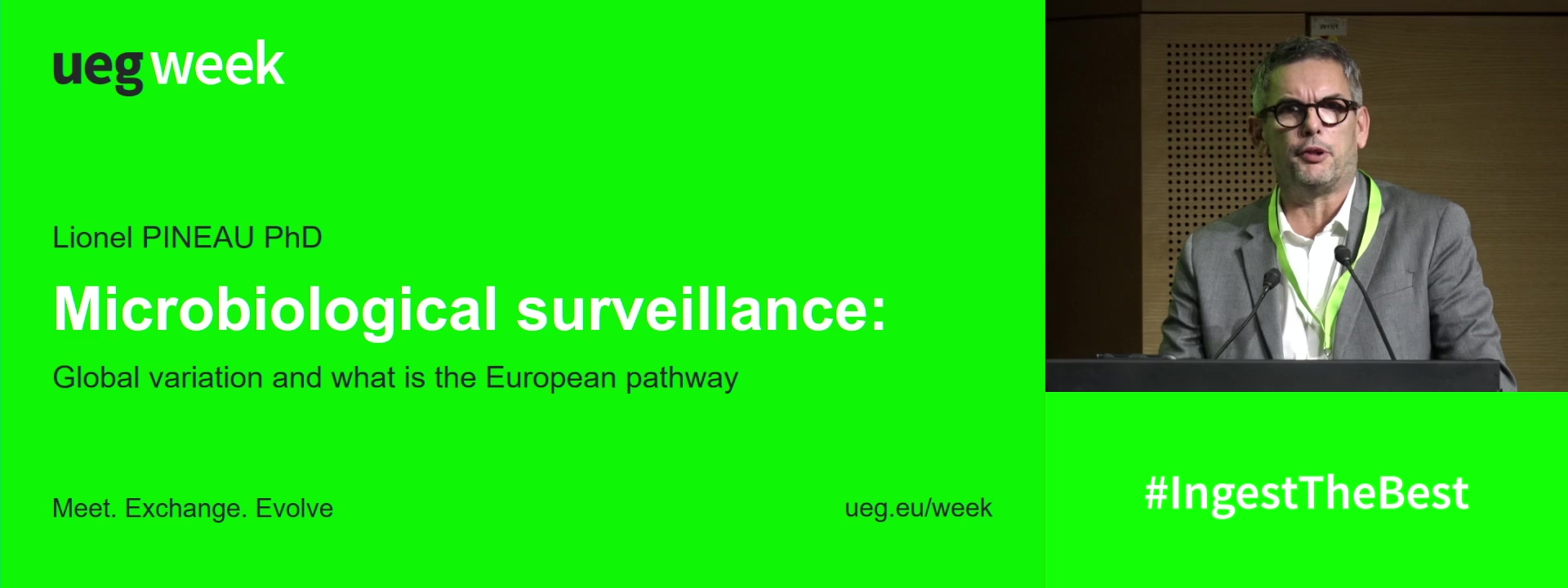
Microbiological surveillance: Global variation and what is the European pathway
1 Biotech-Germande, Marseille, France
Event
Topics
Citation
Published
Log in to access this content.
Free for all myUEG account holders. Your access level is set automatically based on your occupation. Medical professionals get full access to all content. If you are a non-medical user, you can only access UEG Week content from congresses you attended.
Not sure what you can access? Learn more about account types.
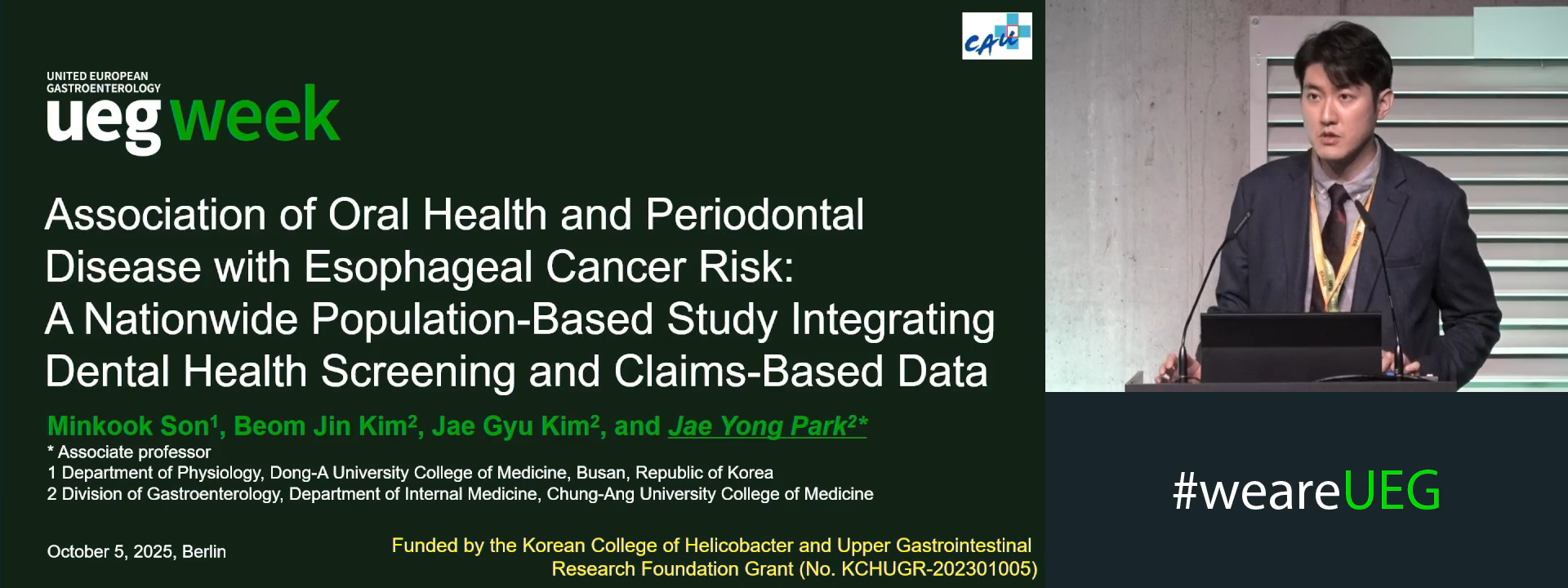
ASSOCIATION OF ORAL HEALTH AND PERIODONTAL DISEASE WITH ESOPHAGEAL CANCER RISK: A NATIONWIDE POPULATION-BASED STUDY INTEGRATING DENTAL HEALTH SCREENING AND CLAIMS-BASED DATA
1 Dong-A University College of Medicine, Busan, Korea, Republic of
2 Chung-Ang University College of Medicine, Seoul, Korea, Republic of
Event
Topics
Submission format
Citation
Published
Log in to access this content.
Free for all myUEG account holders. Your access level is set automatically based on your occupation. Medical professionals get full access to all content. If you are a non-medical user, you can only access UEG Week content from congresses you attended.
Not sure what you can access? Learn more about account types.
Does SIBO exist? Yes or no
1 Beth Israel Deaconess Medical Center, Boston, United States of America
2 Sahlgrenska University Hospital - Dept of Internal Medicine, Sahlgrenska University Hospital ; Gothe, Gothenburg, Sweden
Event
Topics
Citation
Published
Log in to access this content.
Free for all myUEG account holders. Your access level is set automatically based on your occupation. Medical professionals get full access to all content. If you are a non-medical user, you can only access UEG Week content from congresses you attended.
Not sure what you can access? Learn more about account types.

PERCUTANEOUS ENDOSCOPIC GASTROSTOMY IN GREECE: A NATIONWIDE ASSESSMENT OF CURRENT PRACTICE
Stamatina Vogli 1, Apostolis Papaefthymiou 2, Adonis Protopapas 3, Dimitrios Kapetanos 4, AIKATERINI MANTAKA 5, Filippos Papakonstantinou 6, Artemis Trikola 7, Maria Fragaki 8, Kostantinos Mimidis 9, Georgios Tziatzios 10, Konstantina D. Paraskeva 11, Paraskevas Gkolfakis 12
1 Metaxa Oncologic Hospital of Piraeus, Athens, Greece
2 404 Military Hospital of Larissa, Larissa, Greece
3 Aristotle University of Thessaloniki, AHEPA University Hospital, Thessaloniki, Greece
4 General Hospital of Thessaloniki "G. Papanikolaou", Thessaloniki, Greece
5 General Hospital of Chania, Chania, Greece
6 “Agios Savvas” Cancer Hospital, Athens, Greece
7 Naval Hospital of Athens, Athens, Greece
8 Venizeleio Hospital, Heraklion, Greece
9 Democritus University of Thrace, University General Hospital of Alexandroupolis, Alexandroupolis, Greece
10 General Hospital of Nea Ionia “Konstantopoulio Patision”, Athens, Greece
11 General Hospital of Nea Ionia "Konstantopoulio-Patision", Athens, Greece
12 Medical School, National and Kapodistrian University of Athens, Attikon University General Hospital, Athens, Greece
Conference
Topics
Submission format
Session
Citation
Published
Log in to access this content.
Free for all myUEG account holders. Your access level is set automatically based on your occupation. Medical professionals get full access to all content. If you are a non-medical user, you can only access UEG Week content from congresses you attended.
Not sure what you can access? Learn more about account types.
IMPROVEMENT IN INTESTINAL IMMUNE ACTIVATION, PERMEABILITY AND SENSITIVITY WITH LOCAL BUDESONIDE IN A VALIDATED MODEL FOR DISORDERS OF GUT-BRAIN INTERACTION
Pauline Huyghe 1, Alison Accarie 1, Mathieu Meleine 1, Karen Van den Houte 1, Joran Toth 1, Lucas Wauters 2, Jan Tack 2, Ricard Farré 1, Tim Vanuytsel 2
1 KU Leuven, Leuven, Belgium
2 University of Leuven, University Hospital Gasthuisberg, Leuven, Belgium|||KU Leuven, Leuven, Belgium
Event
Topics