UEG's educational platform for gastroenterology education bringing recordings, courses, guidelines, and more together in one place.
Most popular content
Rate for better recommendations!
Your feedback helps us show you more of what you like and less of what you dislike!
Log in to access this content.
Free for all myUEG account holders. Your access level is set automatically based on your occupation. Medical professionals get full access to all content. If you are a non-medical user, you can only access UEG Week content from congresses you attended.
Not sure what you can access? Learn more about account types.

EFFECTIVENESS AND SAFETY OF SELECTIVE IL-12/23P40 ANTAGONISTS IN MODERATE TO SEVERE ULCERATIVE COLITIS: A SYSTEMATIC REVIEW, META-ANALYSIS AND TRIAL SEQUENTIAL ANALYSIS
1 Federal University of Campina Grande, Cajazeiras, Brazil
2 Federal University of the State of Rio de Janeiro, Rio de Janeiro, Brazil
3 University of Oxford, Oxford, United Kingdom
Conference
Topics
Submission format
Citation
Published
Log in to access this content.
Free for all myUEG account holders. Your access level is set automatically based on your occupation. Medical professionals get full access to all content. If you are a non-medical user, you can only access UEG Week content from congresses you attended.
Not sure what you can access? Learn more about account types.
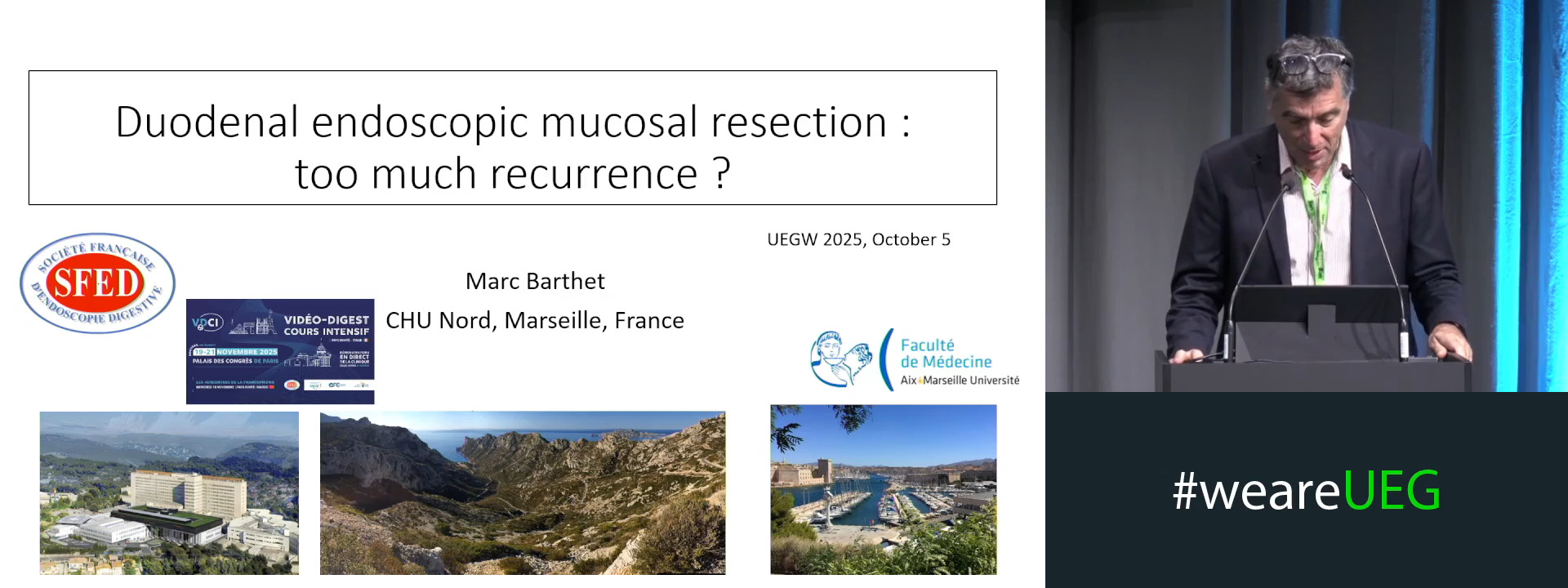
EMR or ESD for duodenal adenoma: Too much recurrence and too much risk?
1 Hopital Nord, Marseille, France
2 Keio University Cancer Center - Cancer Center, Keio University Cancer Center; Tokyo/JP, Tokyo, Japan
Event
Session
Citation
Published
Log in to access this content.
Free for all myUEG account holders. Your access level is set automatically based on your occupation. Medical professionals get full access to all content. If you are a non-medical user, you can only access UEG Week content from congresses you attended.
Not sure what you can access? Learn more about account types.
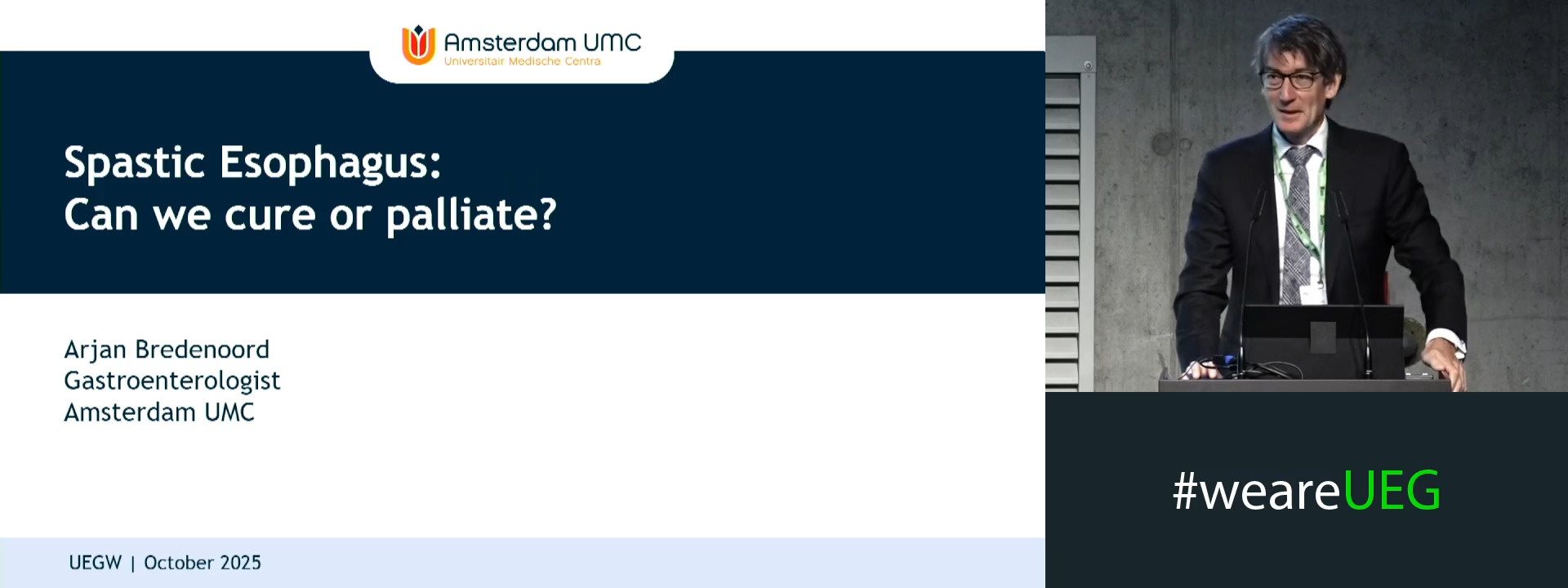
Can we cure or palliate?
1 Amsterdam UMC, Amsterdam, Netherlands
Event
Topics
Citation
Published
Log in to access this content.
Free for all myUEG account holders. Your access level is set automatically based on your occupation. Medical professionals get full access to all content. If you are a non-medical user, you can only access UEG Week content from congresses you attended.
Not sure what you can access? Learn more about account types.
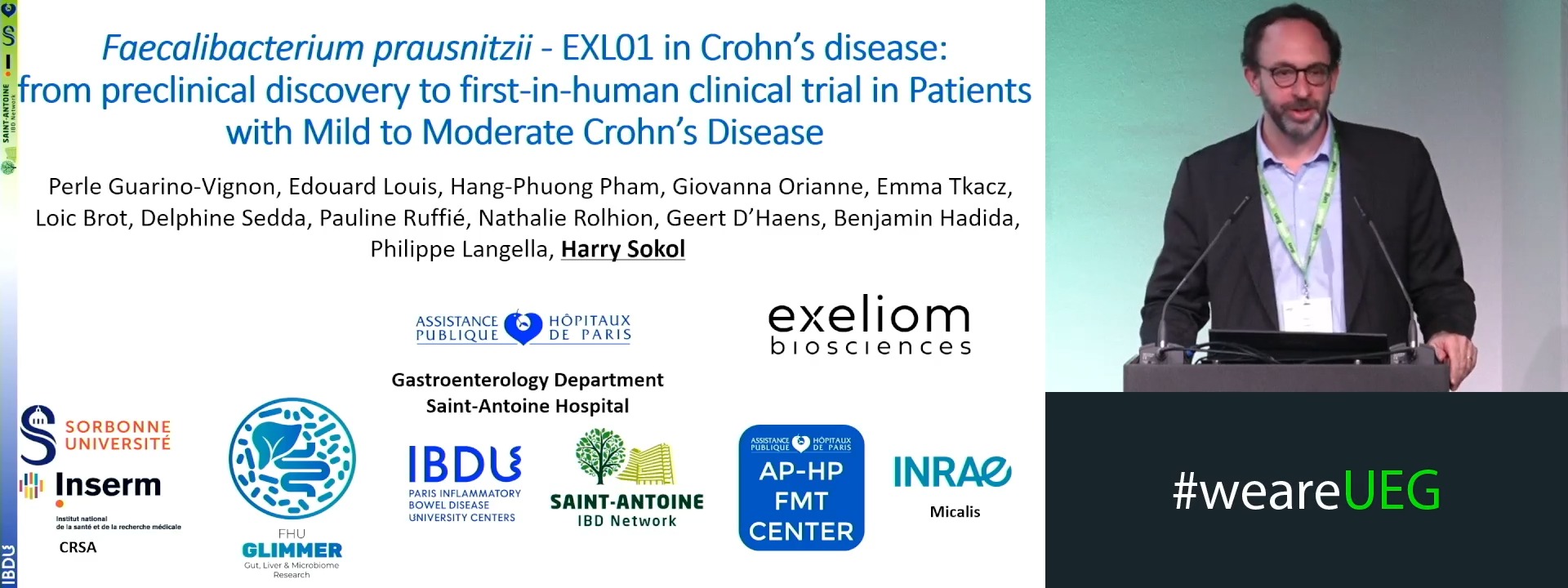
FAECALIBACTERIUM PRAUSNITZII - EXL01 IN CROHN’S DISEASE: FROM PRECLINICAL DISCOVERY TO FIRST-IN-HUMAN CLINICAL TRIAL IN PATIENTS WITH MILD TO MODERATE CROHN’S DISEASE
Perle Guarino-Vignon 1, Edouard Louis 2, Hang Phuong Pham 3, Giovanna Orianne 4, Emma Tkacz 1, Loic Brot 1, Delphiine Sedda 5, Pauline Ruffié 5, nathalie Rolhion 6, Geert D’Haens 7, Benjamin Hadida 5, philippe Langella (INRA, MICALIS) 8, Harry Sokol 9
1 Sorbonne Université, Paris, France
2 CHU Liège and Liège University, Liège, Belgium
3 Parean Biotechnologies, Saint-Malo, France
4 INRAE, Jouy en Josas, France
5 Exeliom Biosciences, Paris, France
6 INSERM, Paris, France
7 Amsterdam University Medical Centers, Amsterdam, Netherlands
8 INRA MICALIS, Jouy-en-Josas, France
9 Saint-Antoine Hospital, Paris, France
Event
Topics
Submission format
Citation
Published
Log in to access this content.
Free for all myUEG account holders. Your access level is set automatically based on your occupation. Medical professionals get full access to all content. If you are a non-medical user, you can only access UEG Week content from congresses you attended.
Not sure what you can access? Learn more about account types.
LONG TERM EFFICACY ANALYSIS OF FECAL MICROBIOTA TRANSPLANTATION IN 15000 CASES OF INTESTINAL MICROBIOTA DYSBIOSIS RELATED DISEASES IN CHINA
1 Tongji University School of Medicine, Shanghai, China
Conference
Topics
Submission format
Citation
Published
Log in to access this content.
Free for all myUEG account holders. Your access level is set automatically based on your occupation. Medical professionals get full access to all content. If you are a non-medical user, you can only access UEG Week content from congresses you attended.
Not sure what you can access? Learn more about account types.
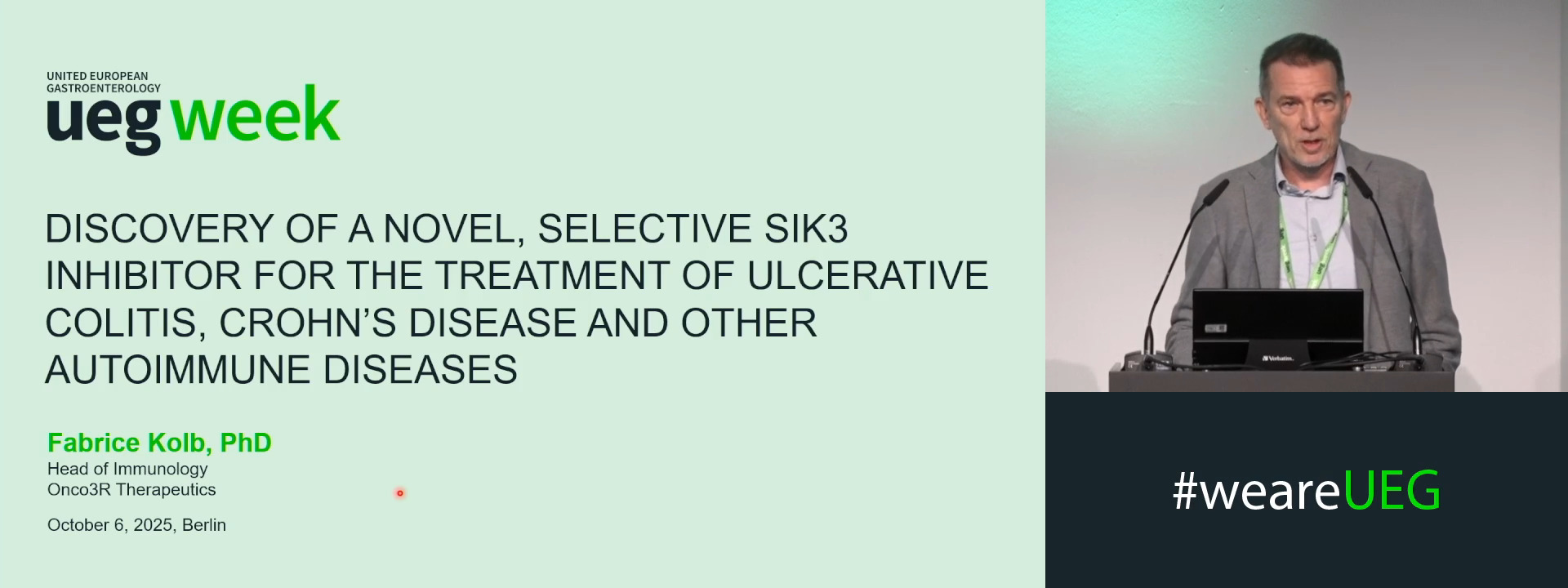
DISCOVERY OF A NOVEL, SELECTIVE SIK3 INHIBITOR FOR THE TREATMENT OF ULCERATIVE COLITIS, CROHN'S DISEASES AND OTHER AUTOIMMUNE DISEASES
Fabrice KOLB 1, John-Paul Gallivan 1, Steve De Vos 2, Nicolas Desroy 2, David Moreno 2, Michael Torok 2, Anouk Blauw 2, Christian Seemayer 2, Emmanuel Karouzakis 2, Chantal Tasset 2, Christophe Peixoto 3, Didier Merciris 3, Catherine Jagerschmidt 3, Adrien Cosson 3, Stéphanie Lavazais 3, Wulf-Otto Boucher 2, Pierre Raboisson 1
1 Onco3R Therapeutics, Leuven, Belgium
2 Galapagos NV, Mechelen, Belgium
3 Novalix, Romainville, France
Event
Submission format
Session
Citation
Published
Log in to access this content.
Free for all myUEG account holders. Your access level is set automatically based on your occupation. Medical professionals get full access to all content. If you are a non-medical user, you can only access UEG Week content from congresses you attended.
Not sure what you can access? Learn more about account types.
EFFICACY AND SAFETY OF OZANIMOD AS FIRST-LINE ADVANCED TREATMENT FOR CROHN'S COLITIS IN A PATIENT WITH MULTIPLE SCLEROSIS
Michele Campigotto 1, Alessia Padoin 2, Marta Ascolani 1, Antonino Caruso 1, Stefano Benvenuti 1, Anna Ghazaryan 1, Marcello Rattazzi 3, Carla Felice 3
1 ULSS 2 Marca Trevigiana, Treviso, Italy
2 University of Padova, Padova, Italy
3 University of Padova, Treviso, Italy
Conference
Topics
Submission format
Session