UEG's content platform for gastroenterology education bringing recordings, courses, guidelines, and more together in one place.
Trending on Gutflix
Rate for better recommendations!
Your feedback helps us show you more of what you like and less of what you dislike!
Log in to continue.
This content is part of Gutflix. Log in with your myUEG account, or create one free, to watch it.
Not sure what you can access? Learn more about account types.
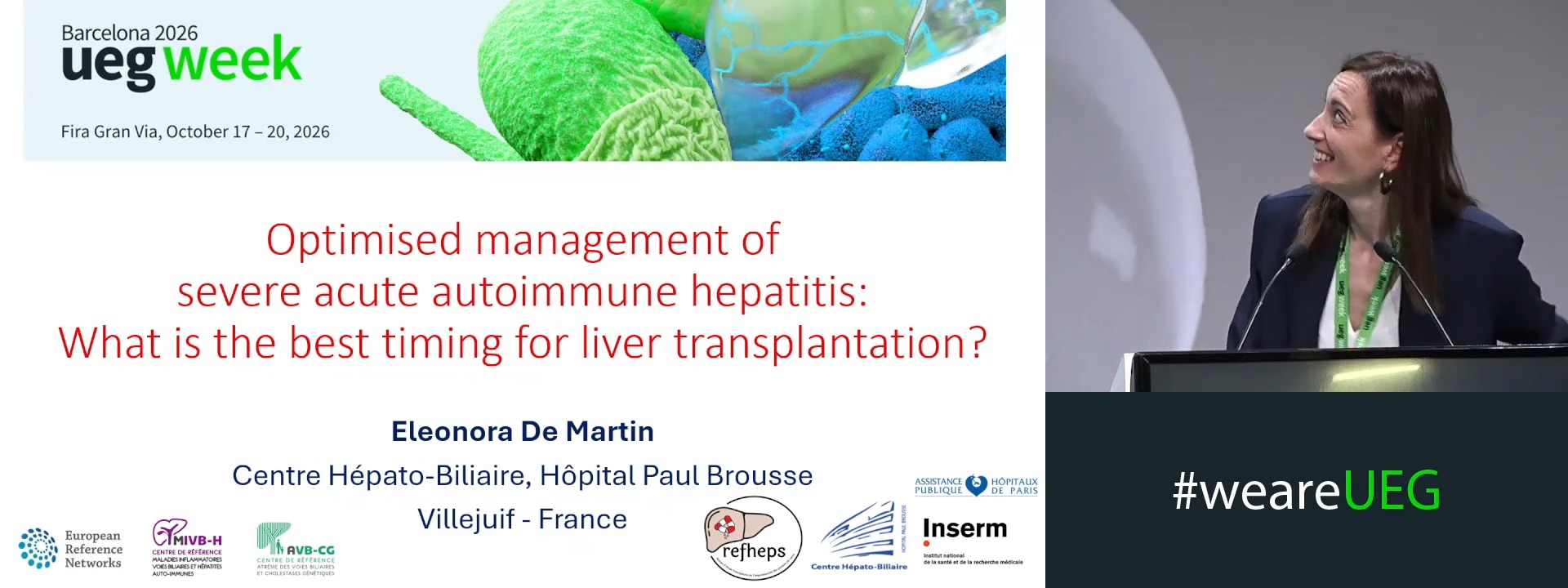
Optimised management of severe acute autoimmune hepatitis: What is the best timing for liver transplantation?
Affiliations
1 Centre Hépato-Biliaire Paul Brousse, Villejuif, France
Log in to continue.
This content is part of Gutflix. Log in with your myUEG account, or create one free, to watch it.
Not sure what you can access? Learn more about account types.
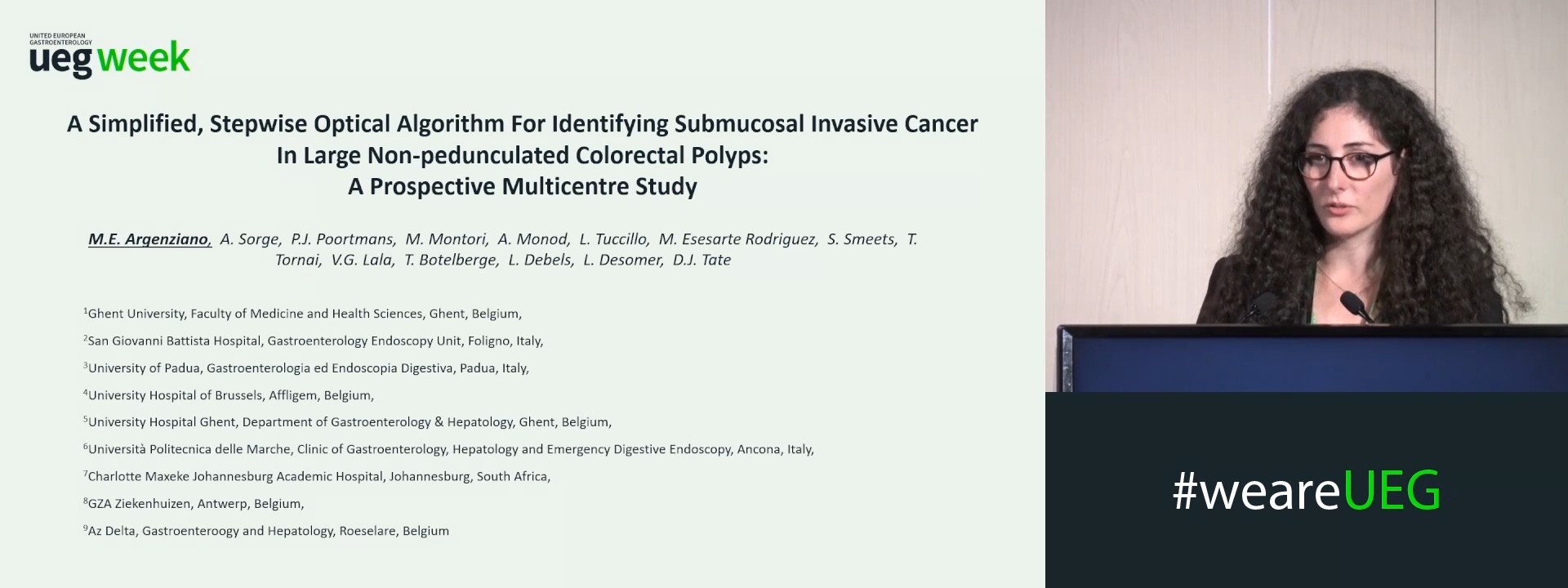
A SIMPLIFIED, STEPWISE OPTICAL ALGORITHM FOR IDENTIFYING SUBMUCOSAL INVASIVE CANCER IN LARGE NON-PEDUNCULATED COLORECTAL POLYPS: A PROSPECTIVE MULTICENTRE STUDY
Maria Eva Argenziano 1,2, Andrea Sorge 3, Pieter Jan Poortmans 1,4,5, Michele Montori 6, Adam Monod 5, Luigi Tuccillo 5, Marisol Esesarte Rodriguez 5, Sander Smeets 5, Tamás Tornai 5, Vikash Goolab Lala 7, Thomas Botelberge 8, Lynn Debels 1,4, Lobke Desomer 1,9, David James Tate 1,5
Affiliations
1 Ghent University, Ghent, Belgium
2 San Giovanni Battista Hospital, Foligno, Italy
3 University of Padua, Padua, Italy
4 University Hospital of Brussels, Affligem, Belgium
5 University Hospital Ghent, Ghent, Belgium
6 Università Politecnica delle Marche, Ancona, Italy
7 Charlotte Maxeke Johannesburg Academic Hospital, Johannesburg, South Africa
8 GZA Ziekenhuizen, Antwerp, Belgium
9 Az Delta, Roeselare, Belgium

Log in to continue.
This content is part of Gutflix. Log in with your myUEG account, or create one free, to watch it.
Not sure what you can access? Learn more about account types.
Panel discussion: Does SLD matter to you in your practice?
Log in to continue.
This content is part of Gutflix. Log in with your myUEG account, or create one free, to watch it.
Not sure what you can access? Learn more about account types.
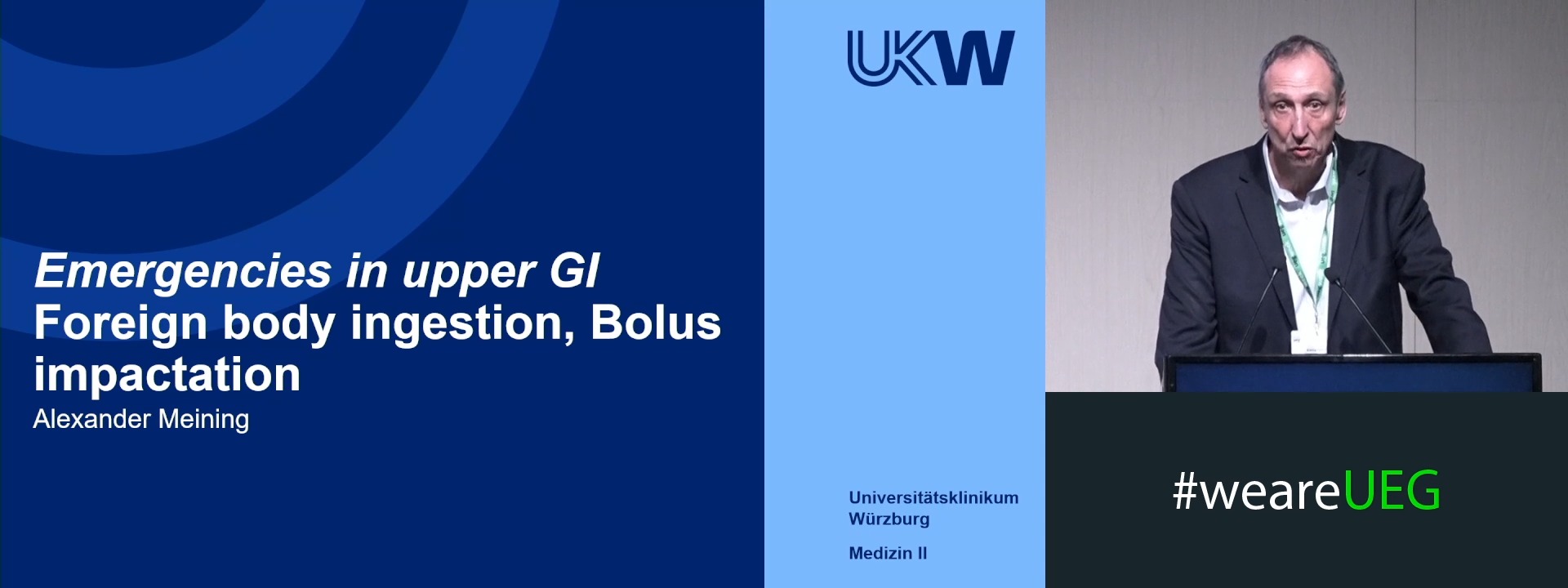
Emergencies in upper GI (Complete Session)
Log in to continue.
This content is part of Gutflix. Log in with your myUEG account, or create one free, to watch it.
Not sure what you can access? Learn more about account types.
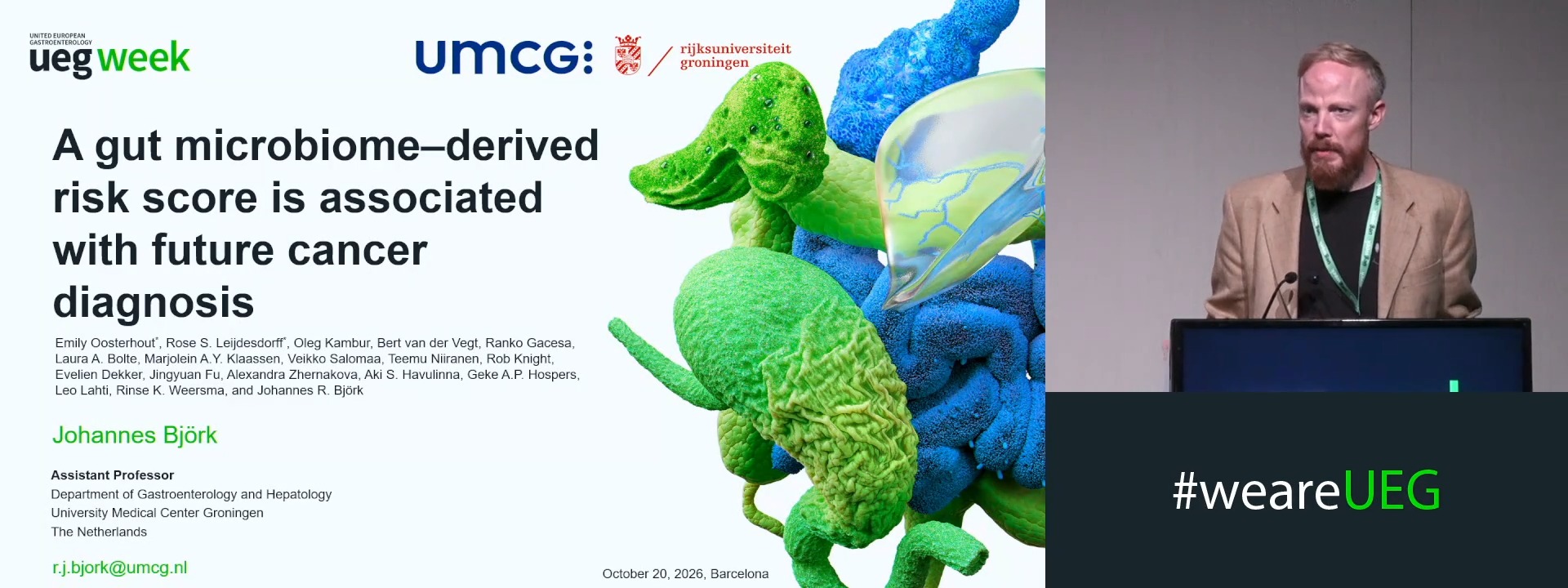
A GUT MICROBIOME-DERIVED RISK SCORE IS ASSOCIATED WITH FUTURE CANCER DIAGNOSIS IN A DUTCH POPULATION-BASED COHORT
Johannes R. Björk 1, Emily Oosterhout 1, Rose Leijdesdorff 1,2, Ranko Gacesa 1, Laura A. Bolte 1, Marjolein Anthonia Ymkje Klaassen 1, Geke A. P. Hospers 1, Rinse K. Weersma 1
Affiliations
1 University Medical Center Groningen, Groningen, Netherlands
2 Amsterdam University Medical Center, Amsterdam, Netherlands