UEG's content platform for gastroenterology education bringing recordings, courses, guidelines, and more together in one place.
Trending on Gutflix
Rate for better recommendations!
Your feedback helps us show you more of what you like and less of what you dislike!
Log in to continue.
This content is part of Gutflix. Log in with your myUEG account, or create one free, to watch it.
Not sure what you can access? Learn more about account types.
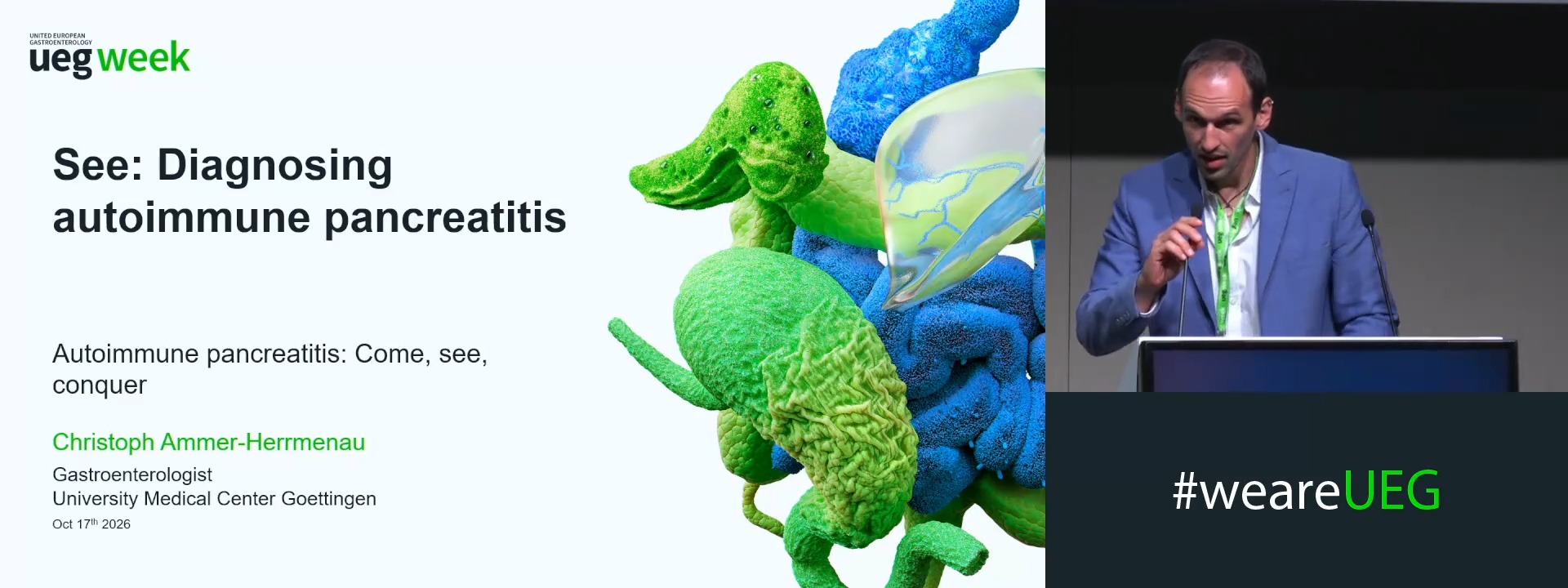
See: Diagnosing autoimmune pancreatitis
Affiliations
1 University Medical Centre Goettingen, Goettingen, Germany
Log in to continue.
This content is part of Gutflix. Log in with your myUEG account, or create one free, to watch it.
Not sure what you can access? Learn more about account types.
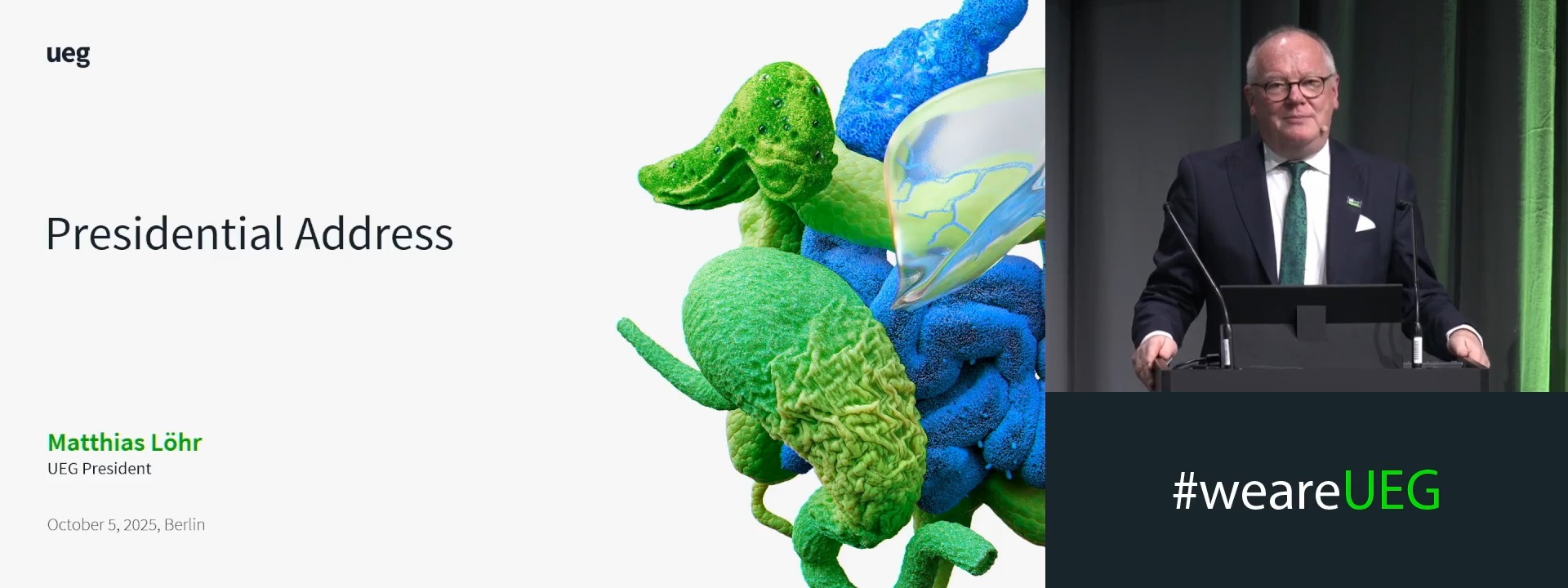
Presidential address
Affiliations
1 Karolinska Institutet, Stockholm, Sweden
Log in to continue.
This content is part of Gutflix. Log in with your myUEG account, or create one free, to watch it.
Not sure what you can access? Learn more about account types.
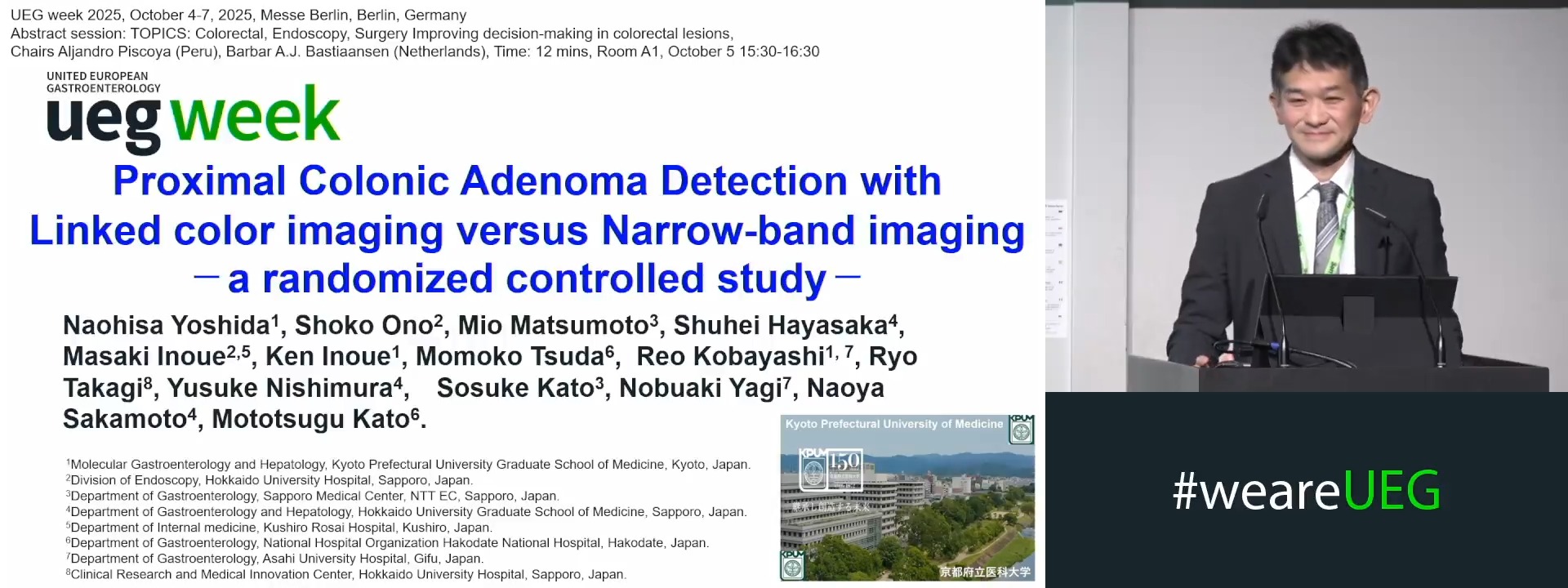
PROXIMAL COLONIC ADENOMA DETECTION WITH LINKED COLOR IMAGING VERSUS NARROW-BAND IMAGING-A RANDOMIZED CONTROLLED STUDY
Naohisa Yoshida 1, SHOKO ONO 2, Mio Matsumoto 3, Shuhei Hayasaka 4, Masaki Inoue 2, Ken Inoue 1, Momoko Tsuda 5, Reo Kobayashi 1, Ryo Takagi 2, Yusuke Nishimura 6, Sosuke Kato 3, Nobuaki Yagi 7, Naoya Sakamoto 8, Mototsugu Kato 5
Affiliations
1 Kyoto Prefectural University of Medicine, Kyoto, Japan
2 Hokkaido University Hospital, Sapporo, Japan
3 Sapporo Medical Center, NTT EC, Sapporo, Sapporo, Japan
4 Hokkaido University Graduate School of Medicine, Sapporo, Japan
5 National Hospital Organization Hakodate National Hospital, Hakodate, Japan
6 Kushiro Rosai Hospital, Kushiro, Japan
7 Asahi University Hospital, Gifu, Japan
8 Hokkaido University Graduate School of Medicine, Hokkaido, Japan
Log in to continue.
This content is part of Gutflix. Log in with your myUEG account, or create one free, to watch it.
Not sure what you can access? Learn more about account types.
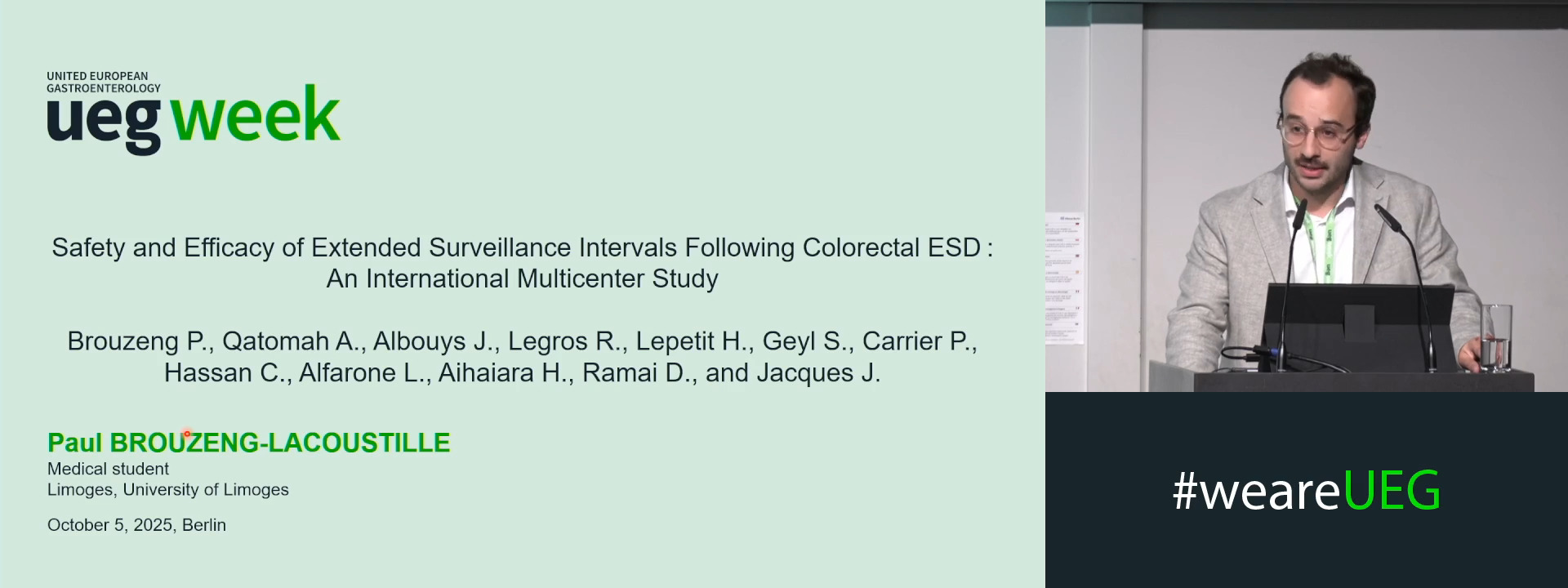
SAFETY AND EFFICACY OF EXTENDED SURVEILLANCE INTERVALS FOLLOWING COLORECTAL ESD: AN INTERNATIONAL MULTICENTER STUDY
Paul Brouzeng 1, Jérémie Jacques 2, Jeremie Albouys 3, Paul Carrier 2, Romain Legros 1, Hugo Lepetit 4, Sophie GEYL 1, Ludovico Alfarone 5, Abdulraman Qatomah 6, Cesare Hassan 7, Daryl Ramai 6, Hiroyki Aihaiara 6
Affiliations
1 CHU Limoges, Limoges, France
2 CHU Limoges - Hepato-Gastro-Enterology, CHU Limoges; Limoges/FR, Limoges, France
3 CHU Limoges / University of Limoges, Limoges, France
4 CHU Limoges France, Limoges, France
5 Milan, Milan, Italy
6 Brigham and Women's Hospital, Boston, United States
7 Humanitas University, Pieve Emanuele MI, Italy