UEG's educational platform for gastroenterology education bringing recordings, courses, guidelines, and more together in one place.
Most popular content
Rate for better recommendations!
Your feedback helps us show you more of what you like and less of what you dislike!
Log in to access this content.
Free for all myUEG account holders. Your access level is set automatically based on your occupation. Medical professionals get full access to all content. If you are a non-medical user, you can only access UEG Week content from congresses you attended.
Not sure what you can access? Learn more about account types.
ALL-IN-ONE NOVEL DIAGNOSTIC SYSTEM FOR PELVIC FLOOR DISORDERS – RESULTS FROM FIRST IN HUMAN STUDY
1 Meir Medical Center, Kefar Sava, Israel
2 Meir Medical Center, Tel Aviv University, Tel Aviv, Israel
Conference
Topics
Submission format
Session
Citation
Published
Log in to access this content.
Free for all myUEG account holders. Your access level is set automatically based on your occupation. Medical professionals get full access to all content. If you are a non-medical user, you can only access UEG Week content from congresses you attended.
Not sure what you can access? Learn more about account types.
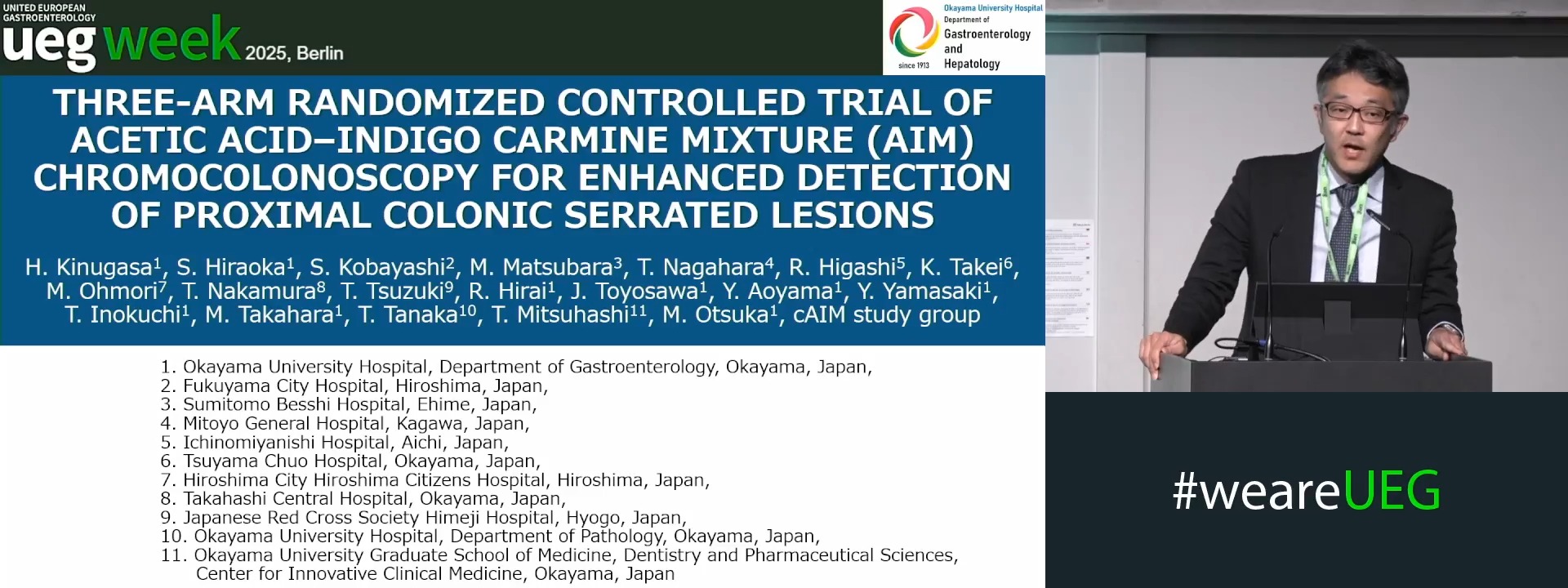
THREE-ARM RANDOMIZED CONTROLLED TRIAL OF ACETIC ACID–INDIGO CARMINE MIXTURE (AIM) CHROMOCOLONOSCOPY FOR ENHANCED DETECTION OF PROXIMAL COLONIC SERRATED LESIONS
Hideaki Kinugasa 1, Sakiko Hiraoka 1, Sayo Kobayashi 2, Minoru Matsubara 3, Teruya Nagahara 4, Reiji Higashi 5, Kensuke Takei 6, Masayasu Ohmori 7, Takashi Nakamura 8, Takao Tsuzuki 9, Ryosuke Hirai 1, Junki Toyosawa 1, Yuki Aoyama 1, Yasushi Yamasaki 1, Toshihiro Inokuchi 1, Masahiro Takahara 1, Takehiro Tanaka 1, Toshiharu Mitsuhashi 10, Motoyuki Otsuka 1
1 Okayama University Hospital, Okayama, Japan
2 Fukuyama City Hospital, Hiroshima, Japan
3 Sumitomo Besshi Hospital, Ehime, Japan
4 Mitoyo General Hospital, Kagawa, Japan
5 Ichinomiyanishi Hospital, Aichi, Japan
6 Tsuyama Chuo Hospital, Okayama, Japan
7 Hiroshima City Hiroshima Citizens Hospital, Hiroshima, Japan
8 Takahashi Central Hospital, Okayama, Japan
9 Japanese Red Cross Society Himeji Hospital, Hyogo, Japan
10 Okayama University Graduate School of Medicine, Dentistry and Pharmaceutical Sciences, Okayama, Japan
Event
Submission format
Citation
Published
Log in to access this content.
Free for all myUEG account holders. Your access level is set automatically based on your occupation. Medical professionals get full access to all content. If you are a non-medical user, you can only access UEG Week content from congresses you attended.
Not sure what you can access? Learn more about account types.
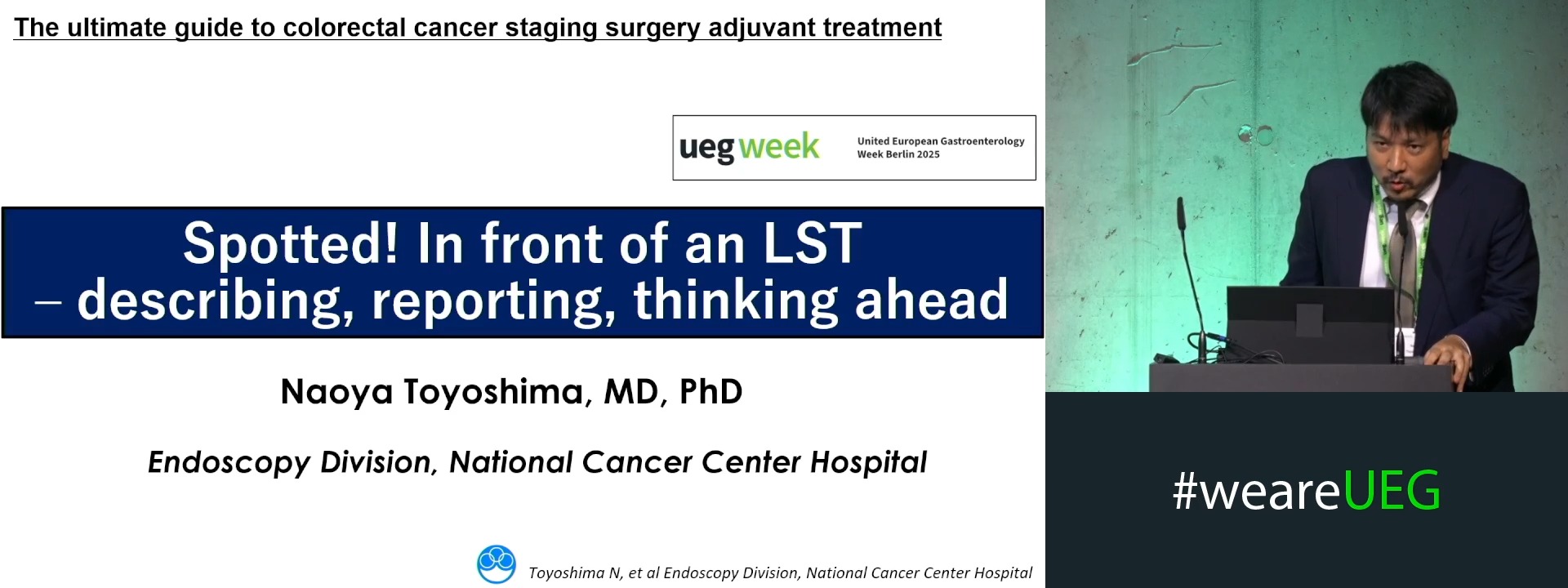
Spotted! In front of an LST– describing, reporting, thinking ahead
1 Showa University Nothern Yokohama Hospital Digestive Disease Center, Yokohama, Japan
Event
Topics
Citation
Published
Log in to access this content.
Free for all myUEG account holders. Your access level is set automatically based on your occupation. Medical professionals get full access to all content. If you are a non-medical user, you can only access UEG Week content from congresses you attended.
Not sure what you can access? Learn more about account types.
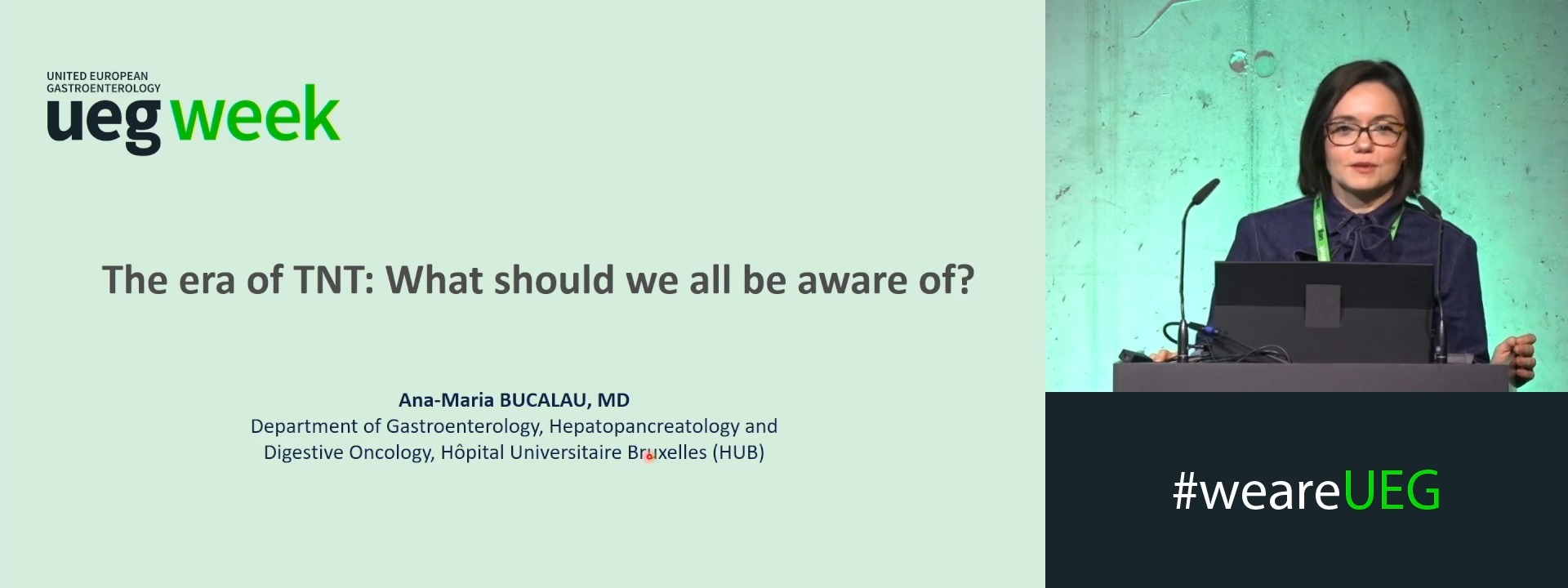
The era of TNT: What should we all be aware of?
1 Erasme University Hospital, Brussels, Belgium
Event
Topics
Citation
Published
Log in to access this content.
Free for all myUEG account holders. Your access level is set automatically based on your occupation. Medical professionals get full access to all content. If you are a non-medical user, you can only access UEG Week content from congresses you attended.
Not sure what you can access? Learn more about account types.
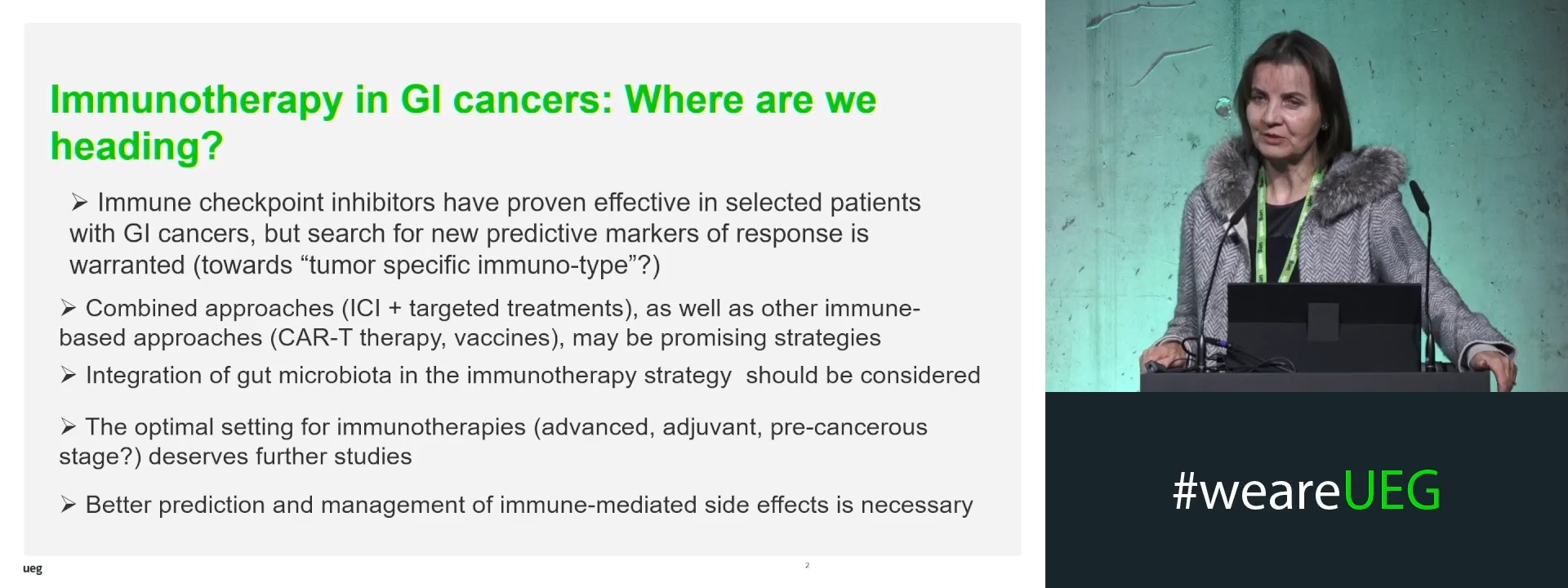
Summary: Immunotherapy in digestive cancers - Where are we heading?
1 CHU de Nantes IMAD, Nantes, France
Event
Citation
Published
Log in to access this content.
Free for all myUEG account holders. Your access level is set automatically based on your occupation. Medical professionals get full access to all content. If you are a non-medical user, you can only access UEG Week content from congresses you attended.
Not sure what you can access? Learn more about account types.
Panel discussion: Hereditary GI cancer syndromes - Surveillance strategies
Event
Citation
Published
Log in to access this content.
Free for all myUEG account holders. Your access level is set automatically based on your occupation. Medical professionals get full access to all content. If you are a non-medical user, you can only access UEG Week content from congresses you attended.
Not sure what you can access? Learn more about account types.
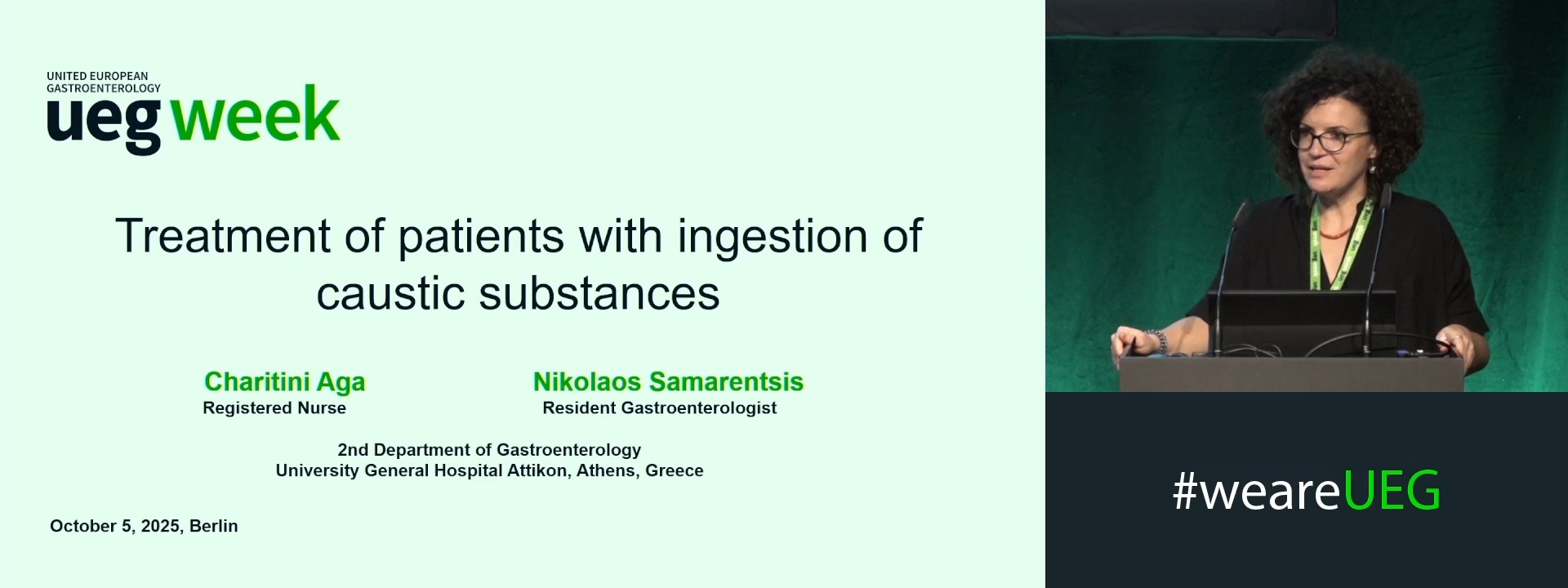
Treatment of patients with ingestion of caustic substances
1 None, None, Greece
Event
Topics