UEG's educational platform for gastroenterology education bringing recordings, courses, guidelines, and more together in one place.
Trending on Gutflix
Rate for better recommendations!
Your feedback helps us show you more of what you like and less of what you dislike!
Log in to continue.
This content is part of Gutflix. Log in with your myUEG account, or create one free, to watch it.
Not sure what you can access? Learn more about account types.
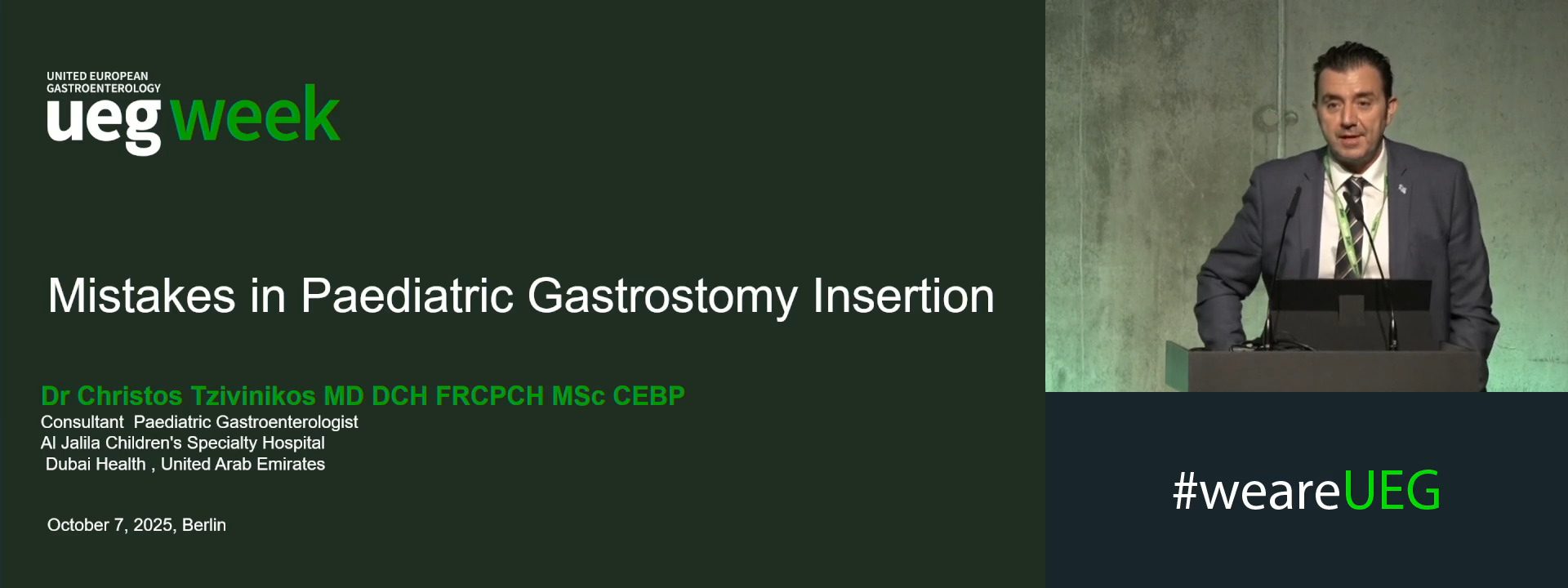
Paediatric gastrostomy insertion
Affiliations
1 Al Jalila Children's Specialty Hospital, DUBAI, United Arab Emirates
Log in to continue.
This content is part of Gutflix. Log in with your myUEG account, or create one free, to watch it.
Not sure what you can access? Learn more about account types.
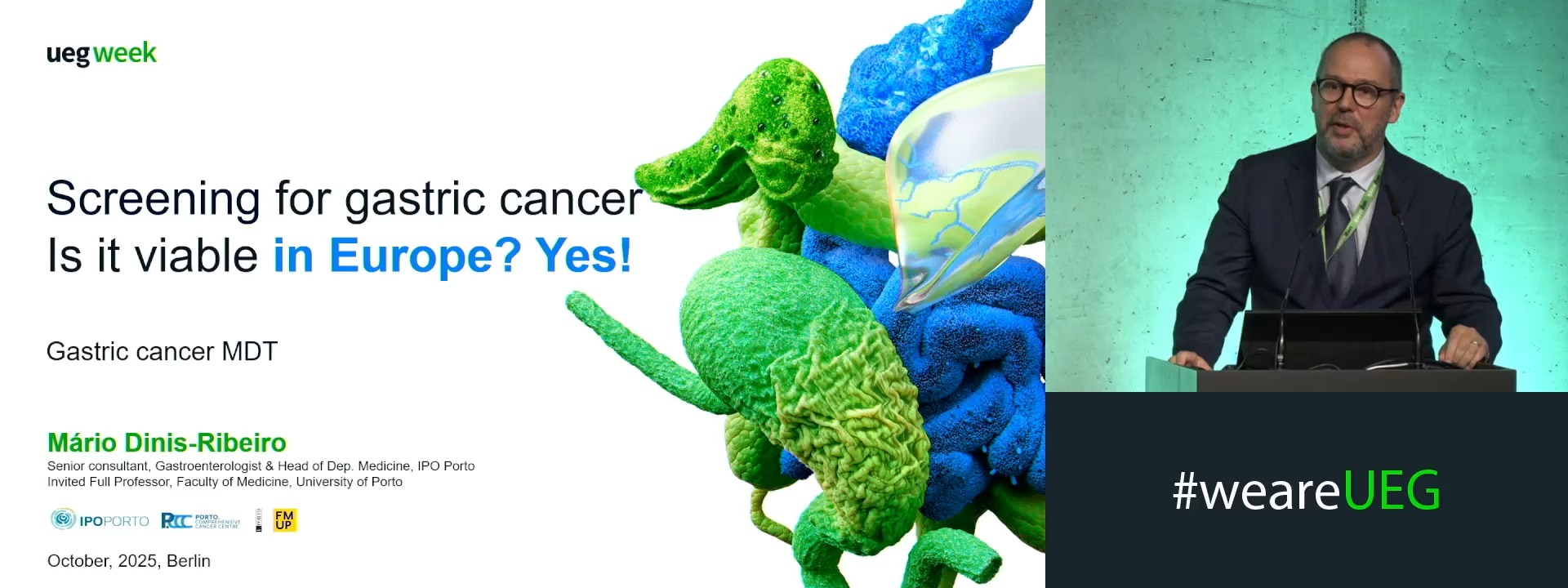
Screening for gastric cancer: Is it viable?
Affiliations
1 IPO Porto, Porto, Portugal
Log in to continue.
This content is part of Gutflix. Log in with your myUEG account, or create one free, to watch it.
Not sure what you can access? Learn more about account types.
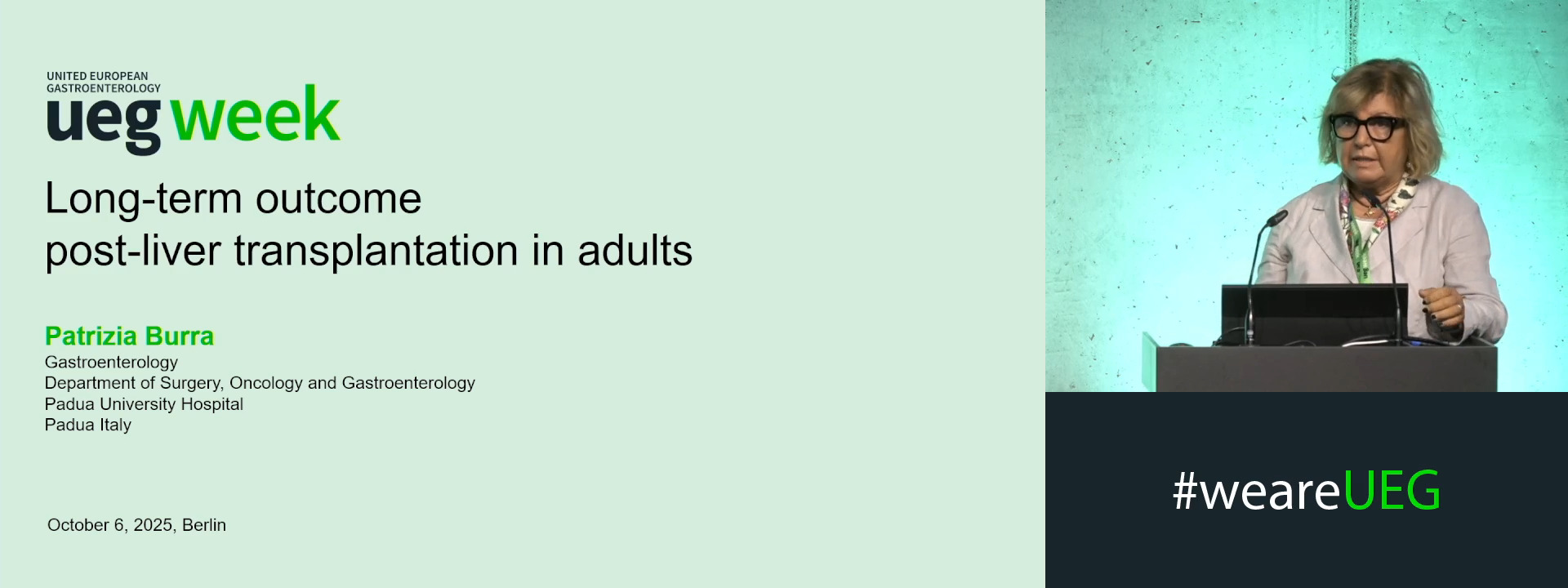
Long-term outcome post-LTx in adults
Affiliations
1 University of Padua-Multivisceral Transplant Unit- Gastroenterology, Padova, Italy
Log in to continue.
This content is part of Gutflix. Log in with your myUEG account, or create one free, to watch it.
Not sure what you can access? Learn more about account types.
Early onset life-long impact: Caustic injury/atresia (Complete Session)
Log in to continue.
This content is part of Gutflix. Log in with your myUEG account, or create one free, to watch it.
Not sure what you can access? Learn more about account types.
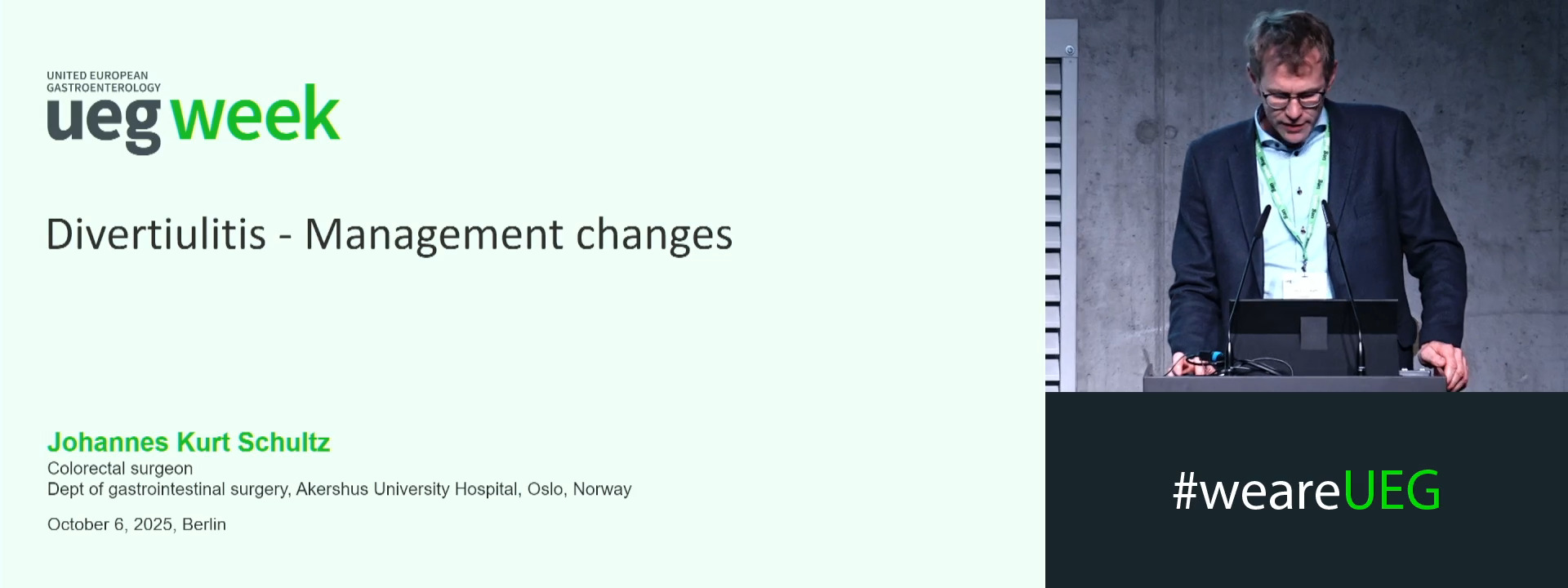
Diverticulitis
Affiliations
1 Univertsity of Oslo, Oslo, Norway
Log in to continue.
This content is part of Gutflix. Log in with your myUEG account, or create one free, to watch it.
Not sure what you can access? Learn more about account types.
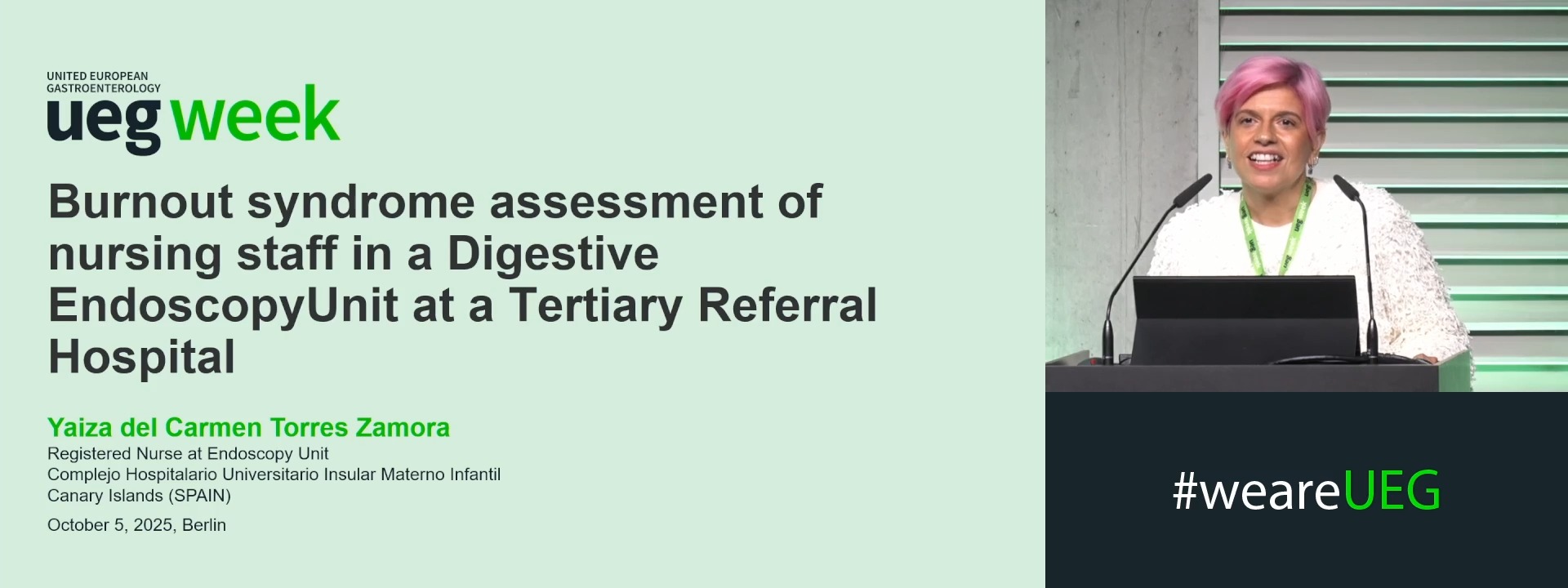
BURNOUT SYNDROME ASSESSMENT OF NURSING STAFF IN A DIGESTIVE ENDOSCOPY UNIT AT A TERTIARY REFERRAL HOSPITAL
Affiliations
1 Complejo Hospitalario Insular Materno Infantil, Las Palmas de Gran Canaria, Spain
Log in to continue.
This content is part of Gutflix. Log in with your myUEG account, or create one free, to watch it.
Not sure what you can access? Learn more about account types.
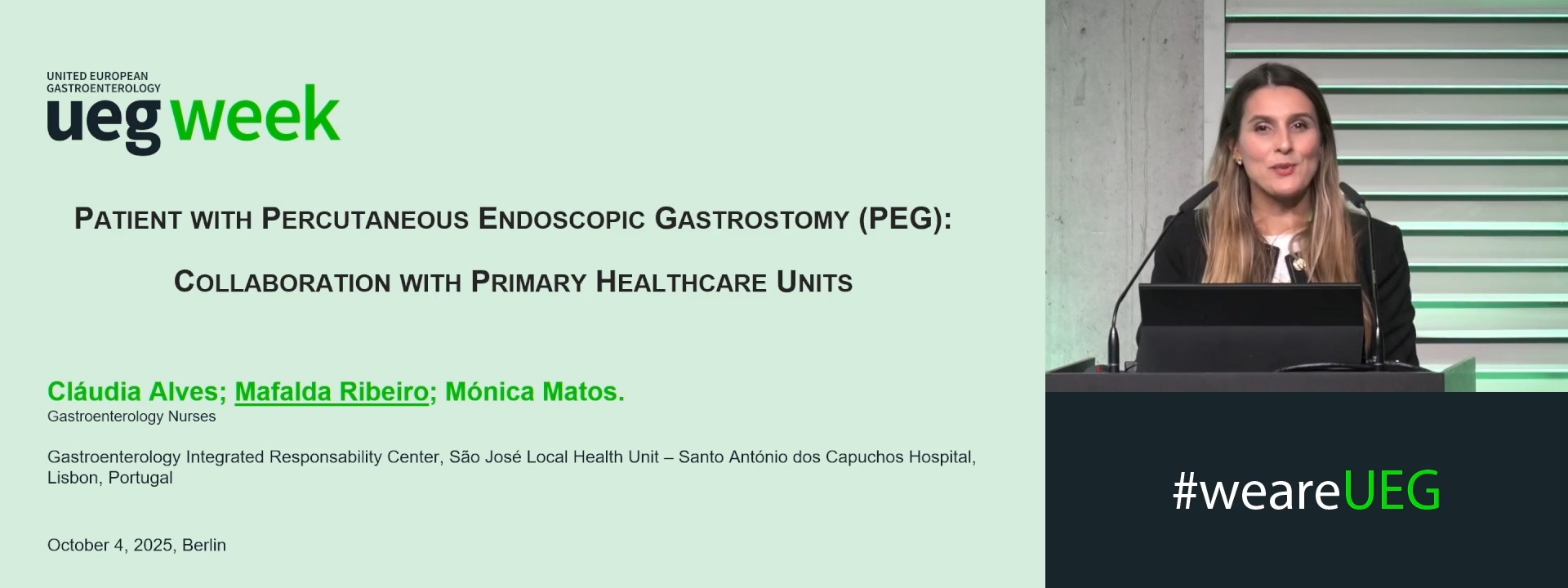
PATIENT WITH PERCUTANEOUS ENDOSCOPIC GASTROSTOMY: COLLABORATION WITH PRIMARY HEALTH CARE
Affiliations
1 Unidade Local de Saúde de São José, Lisbon, Portugal