UEG's educational platform for gastroenterology education bringing recordings, courses, guidelines, and more together in one place.
Most popular content
Rate for better recommendations!
Your feedback helps us show you more of what you like and less of what you dislike!
Log in to access this content.
Free for all myUEG account holders. Your access level is set automatically based on your occupation. Medical professionals get full access to all content. If you are a non-medical user, you can only access UEG Week content from congresses you attended.
Not sure what you can access? Learn more about account types.

PATIENT REPORTED ATTITUDES TO INTRAVENOUS AND SUBCUTANEOUS ADMINISTERED THERAPIES FOR INFLAMMATORY BOWEL DISEASE
1 Kettering General Hospital, Kettering, United Kingdom
Conference
Topics
Submission format
Session
Citation
Published
Log in to access this content.
Free for all myUEG account holders. Your access level is set automatically based on your occupation. Medical professionals get full access to all content. If you are a non-medical user, you can only access UEG Week content from congresses you attended.
Not sure what you can access? Learn more about account types.
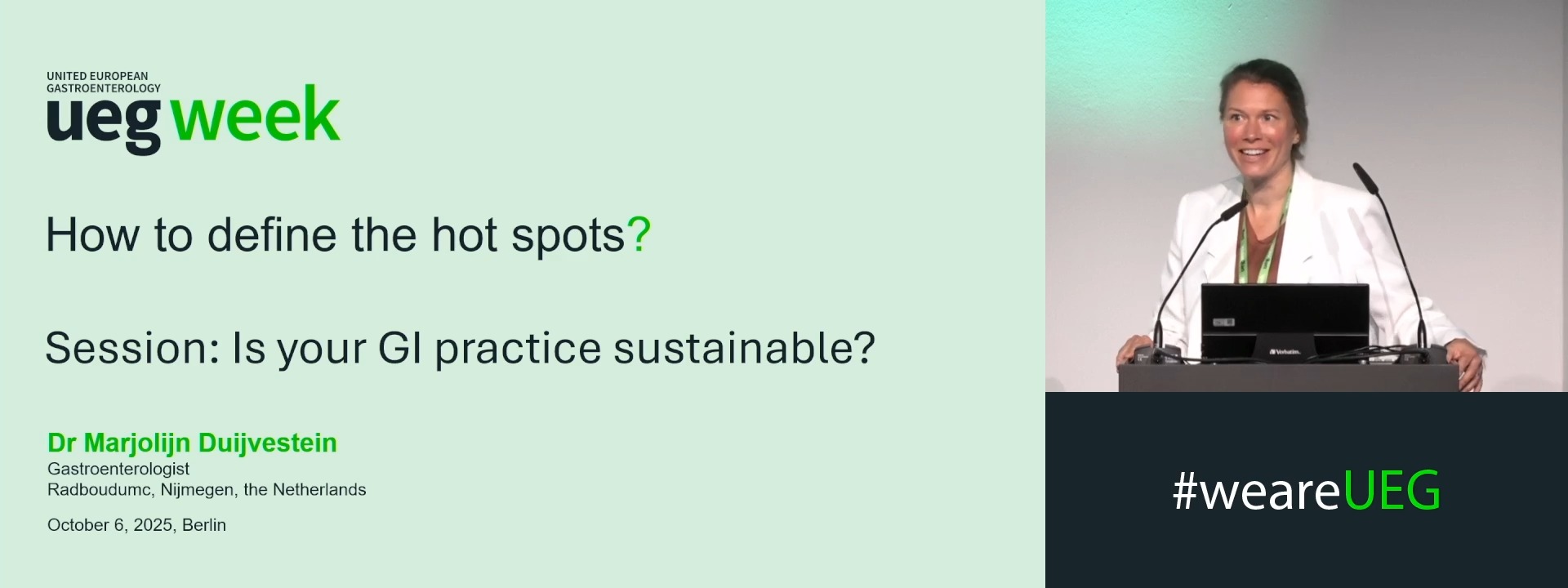
How to define the hot spots?
1 Radboudumc, Nijmegen, Netherlands
Event
Session
Citation
Published
Log in to access this content.
Free for all myUEG account holders. Your access level is set automatically based on your occupation. Medical professionals get full access to all content. If you are a non-medical user, you can only access UEG Week content from congresses you attended.
Not sure what you can access? Learn more about account types.
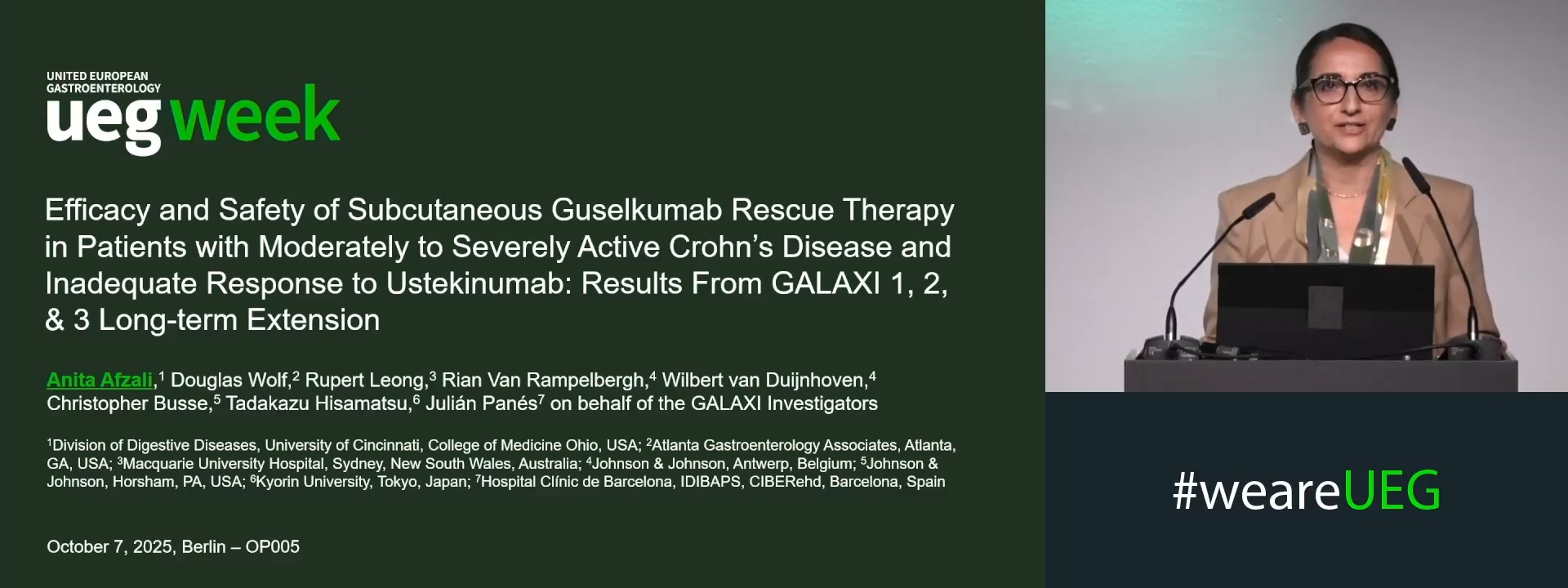
EFFICACY AND SAFETY OF SUBCUTANEOUS GUSELKUMAB RESCUE THERAPY IN PATIENTS WITH MODERATELY TO SEVERELY ACTIVE CROHN’S DISEASE AND INADEQUATE RESPONSE TO USTEKINUMAB: RESULTS FROM GALAXI 1, 2, & 3 LONG-TERM EXTENSION
Anita Afzali 1, Doug Wolf 2, Rupert W Leong 3, Rian Van Rampelbergh 4, Wilbert van Duijnhoven 4, Christopher Busse 5, Tadakazu Hisamatsu 6, Julian Panés 7
1 University of Cincinnati College of Medicine, Cincinnati, United States
2 Atlanta Gastroenterology Associates, Atlanta, United States
3 Macquarie University Hospital, Sydney, Australia
4 Johnson & Johnson, Antwerp, Belgium
5 Johnson & Johnson, Horsham, United States
6 Kyorin University School of Medicine, Tokyo, Japan
7 Hospital Clínic Barcelona, Barcelona, Spain
Event
Submission format
Session
Citation
Published
Log in to access this content.
Free for all myUEG account holders. Your access level is set automatically based on your occupation. Medical professionals get full access to all content. If you are a non-medical user, you can only access UEG Week content from congresses you attended.
Not sure what you can access? Learn more about account types.
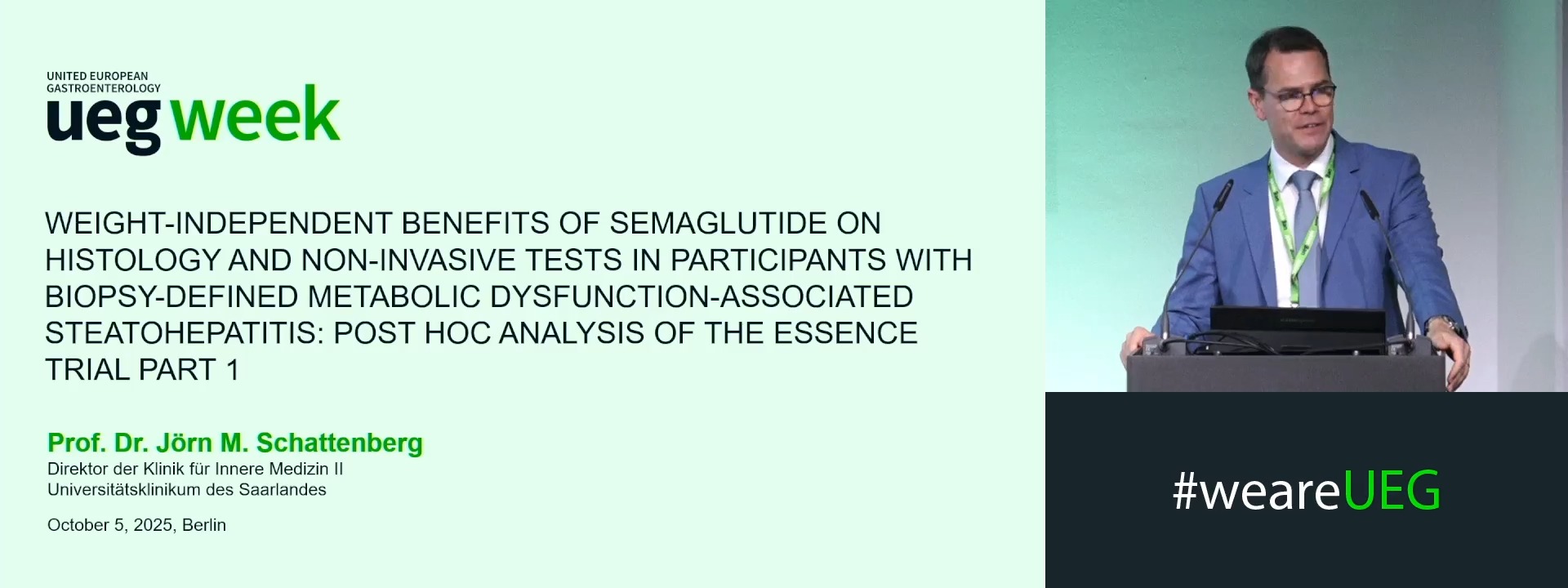
WEIGHT-INDEPENDENT BENEFITS OF SEMAGLUTIDE ON HISTOLOGY AND NON-INVASIVE TESTS IN PARTICIPANTS WITH BIOPSY-DEFINED METABOLIC DYSFUNCTION-ASSOCIATED STEATOHEPATITIS: POST HOC ANALYSIS OF THE ESSENCE TRIAL PART 1
Philip Newsome 1, Matthew Armstrong 2, Igor Bakulin 3, Adel Belloum 4, Anna M.G. Cali 4, Unknown Unknown 5, Jacob George 6, Unknown Unknown 7, Niels Krarup 4, Chun-Jen Liu 8, Håvard Midgard 9, Vlad Ratziu 10, Mary Rinella 11, Michael Roden 12, Arun Sanyal 13, Jörn Schattenberg 14, Mohamed Tawfik 4, Thea Cæcilie Vestergaard 4, Elisabetta Bugianesi 15
1 Roger Williams Institute of Liver Studies, Faculty of Life Sciences and Medicine, King’s College London, Foundation for Liver Research and King’s College Hospital, London, United Kingdom|||College of Medical and Health, University of Birmingham, Birmingha
2 Liver Unit, Queen Elizabeth Hospital Birmingham and NIHR Biomedical Research Centre, University of Birmingham, Birmingham, United Kingdom
3 Mechnikov North-Western State Medical University, Saint Petersburg, Russian Federation
4 Novo Nordisk A/S, Bagsværd, Denmark
5 Department of Gastroenterology & Hepatology, University Hospital Ghent, Ghent, Belgium|||Faculty of Medicine and Health Sciences, University of Ghent, Ghent, Belgium
6 Storr Liver Centre, The Westmead Institute for Medical Research, Westmead Hospital, New South Wales, Australia
7 Hepatology Outpatient Clinic, ID Clinic, Mysłowice, Poland
8 Department of Internal Medicine, National Taiwan University College of Medicine, Taipei, Taiwan, Province of China|||Hepatitis Research Center and Clinical Trial Center, National Taiwan University Hospital, Taipei, Taiwan, Province of China
9 Department of Gastroenterology, Oslo University Hospital, Oslo, Norway
10 Institute of Cardiometabolism and Nutrition, INSERM UMRS 1138 CRC, Hospital Pitié Salpêtrière (ICAN), Sorbonne Université, Paris, France
11 Division of Gastroenterology, Hepatology and Nutrition, University of Chicago, Chicago, United States
12 Department of Endocrinology and Diabetology, Medical Faculty and University Hospital of Düsseldorf, Heinrich Heine University Düsseldorf, Düsseldorf, Germany|||Institute for Clinical Diabetology, German Diabetes Center, Leibniz Center for Diabetes Researc
13 Stravitz-Sanyal Institute for Liver Disease and Metabolic Health, Virginia Commonwealth University School of Medicine, Richmond, United States
14 Department of Internal Medicine II, Saarland University Medical Center, Homburg, Germany
15 Department of Medical Sciences, University of Turin, Torino, Italy
Event
Topics
Submission format
Citation
Published
Log in to access this content.
Free for all myUEG account holders. Your access level is set automatically based on your occupation. Medical professionals get full access to all content. If you are a non-medical user, you can only access UEG Week content from congresses you attended.
Not sure what you can access? Learn more about account types.
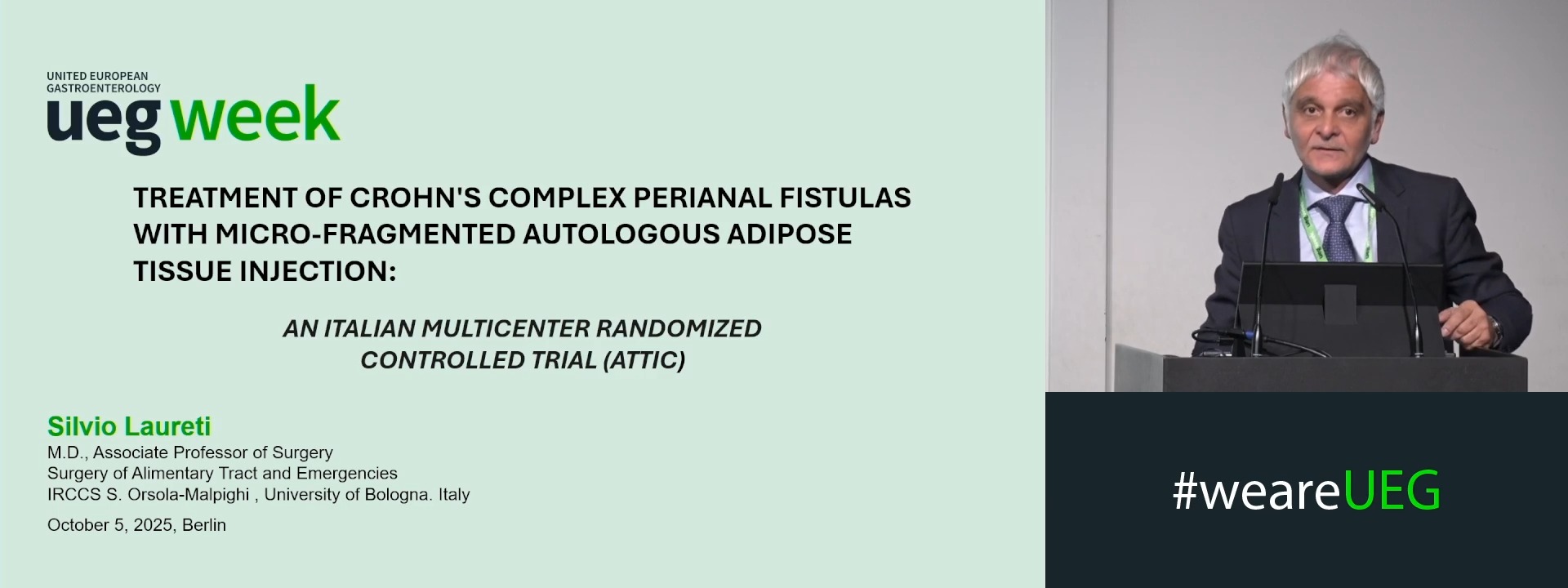
TREATMENT OF CROHN'S COMPLEX PERIANAL FISTULAS WITH MICRO-FRAGMENTED AUTOLOGOUS ADIPOSE TISSUE INJECTION: AN ITALIAN MULTICENTER RANDOMIZED CONTROLLED TRIAL (ATTIC)
Silvio Laureti 1, Luigi Sofo 2, Alberta Cappelli 1, Francesco Colombo 3, Gaetano Luglio 4, Stefano Scaringi 5, Claudio Isopi 1, Franco Sacchetti 2, Giuseppe Clerico 6, Pier Giorgio Danelli 7, Michele Cricrì 4, Ferdinando Ficari 5, Lorenzo Gentilini 1, Alessandra Menon 8, Paolo Gionchetti 1, Gilberto Poggioli 1, Antonino Spinelli 9
1 IRCCS Azienda Ospedaliero-Universitaria di Bologna, Bologna, Italy
2 Policlinico Universitario Fondazione Agostino Gemelli IRCCS, Roma, Italy
3 L.Sacco University Hospital General Surgery II, Milano, Italy
4 Università Federico II, Napoli, Italy
5 Azienda Ospedaliero-Universitaria Careggi, Firenze, Italy
6 IRCCS Humanitas Research Hospital, Rozzano, Italy
7 Università degli studi La Statale, Milano, Italy
8 Università degli Studi di Milano, Milan, Italy
9 Humanitas University, Rozzano Milano, Italy
Event
Topics
Submission format
Citation
Published
Log in to access this content.
Free for all myUEG account holders. Your access level is set automatically based on your occupation. Medical professionals get full access to all content. If you are a non-medical user, you can only access UEG Week content from congresses you attended.
Not sure what you can access? Learn more about account types.
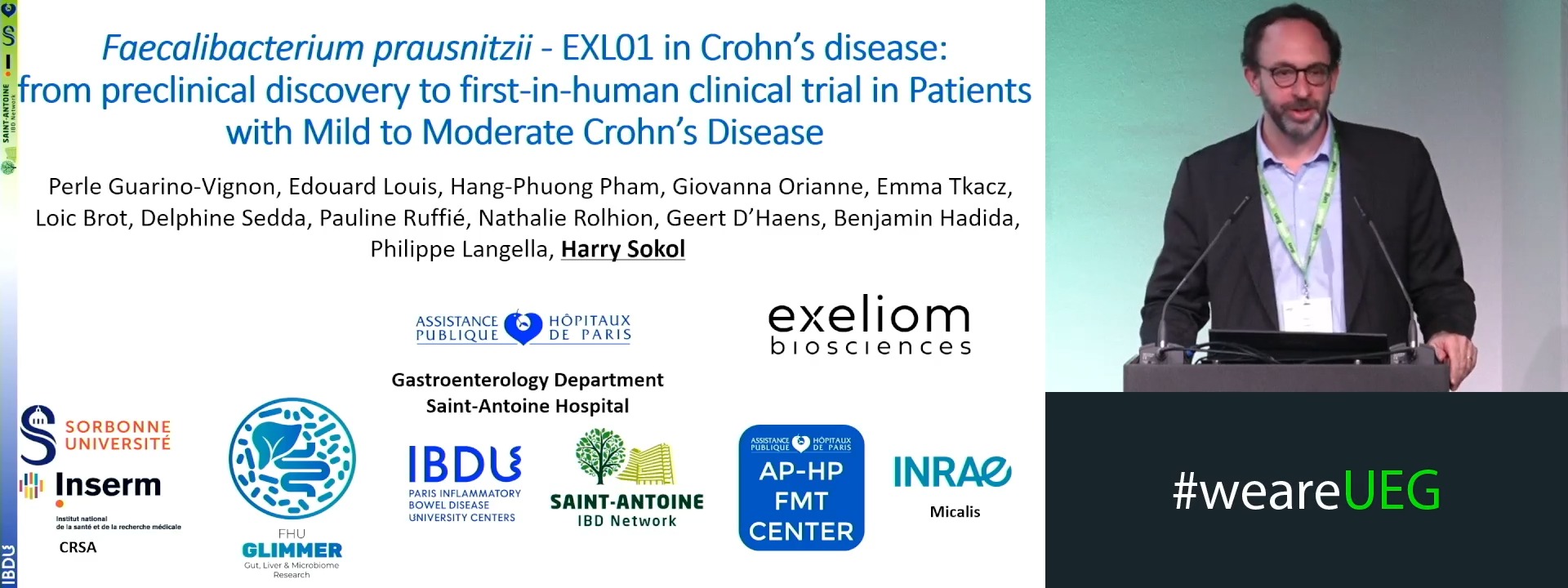
FAECALIBACTERIUM PRAUSNITZII - EXL01 IN CROHN’S DISEASE: FROM PRECLINICAL DISCOVERY TO FIRST-IN-HUMAN CLINICAL TRIAL IN PATIENTS WITH MILD TO MODERATE CROHN’S DISEASE
Perle Guarino-Vignon 1, Edouard Louis 2, Hang Phuong Pham 3, Giovanna Orianne 4, Emma Tkacz 1, Loic Brot 1, Delphiine Sedda 5, Pauline Ruffié 5, nathalie Rolhion 6, Geert D’Haens 7, Benjamin Hadida 5, philippe Langella (INRA, MICALIS) 8, Harry Sokol 9
1 Sorbonne Université, Paris, France
2 CHU Liège and Liège University, Liège, Belgium
3 Parean Biotechnologies, Saint-Malo, France
4 INRAE, Jouy en Josas, France
5 Exeliom Biosciences, Paris, France
6 INSERM, Paris, France
7 Amsterdam University Medical Centers, Amsterdam, Netherlands
8 INRA MICALIS, Jouy-en-Josas, France
9 Saint-Antoine Hospital, Paris, France
Event
Topics
Submission format
Citation
Published
Log in to access this content.
Free for all myUEG account holders. Your access level is set automatically based on your occupation. Medical professionals get full access to all content. If you are a non-medical user, you can only access UEG Week content from congresses you attended.
Not sure what you can access? Learn more about account types.
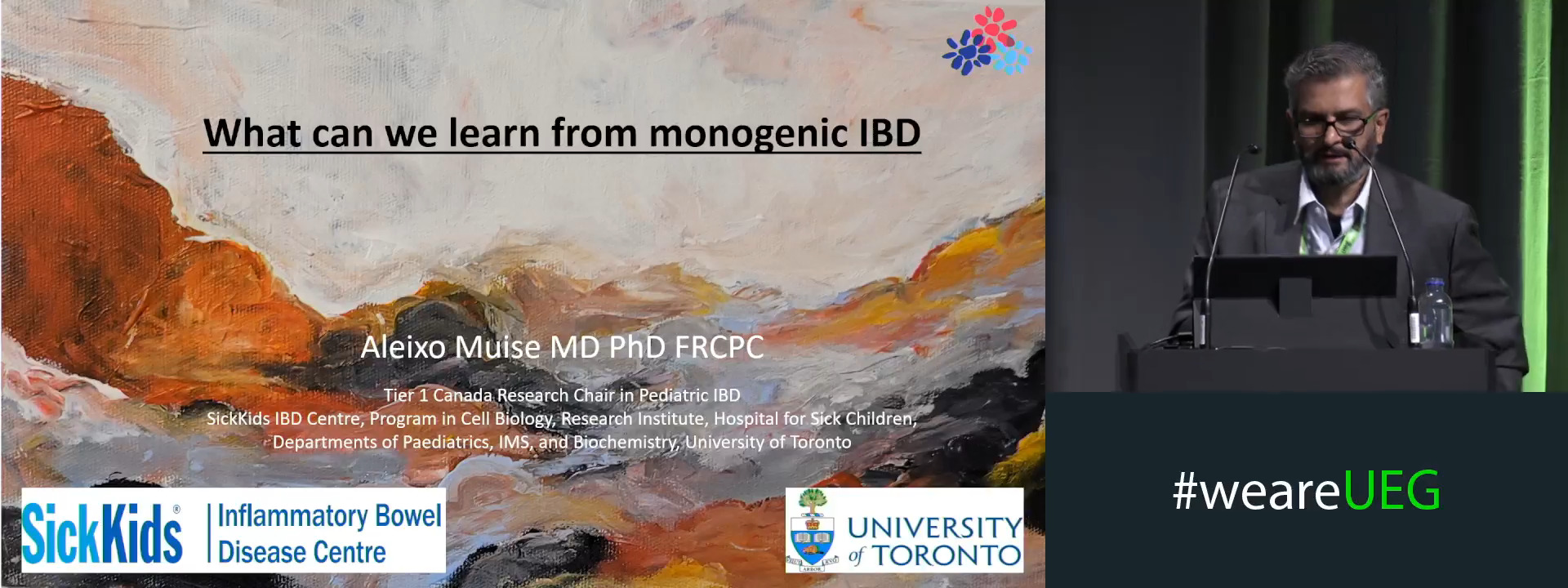
What can we learn from monogenic IBD
1 SickKids Research Institute, Toronto, Canada