UEG's educational platform for gastroenterology education bringing recordings, courses, guidelines, and more together in one place.
Most popular content
Rate for better recommendations!
Your feedback helps us show you more of what you like and less of what you dislike!
Log in to access this content.
Free for all myUEG account holders. Your access level is set automatically based on your occupation. Medical professionals get full access to all content. If you are a non-medical user, you can only access UEG Week content from congresses you attended.
Not sure what you can access? Learn more about account types.
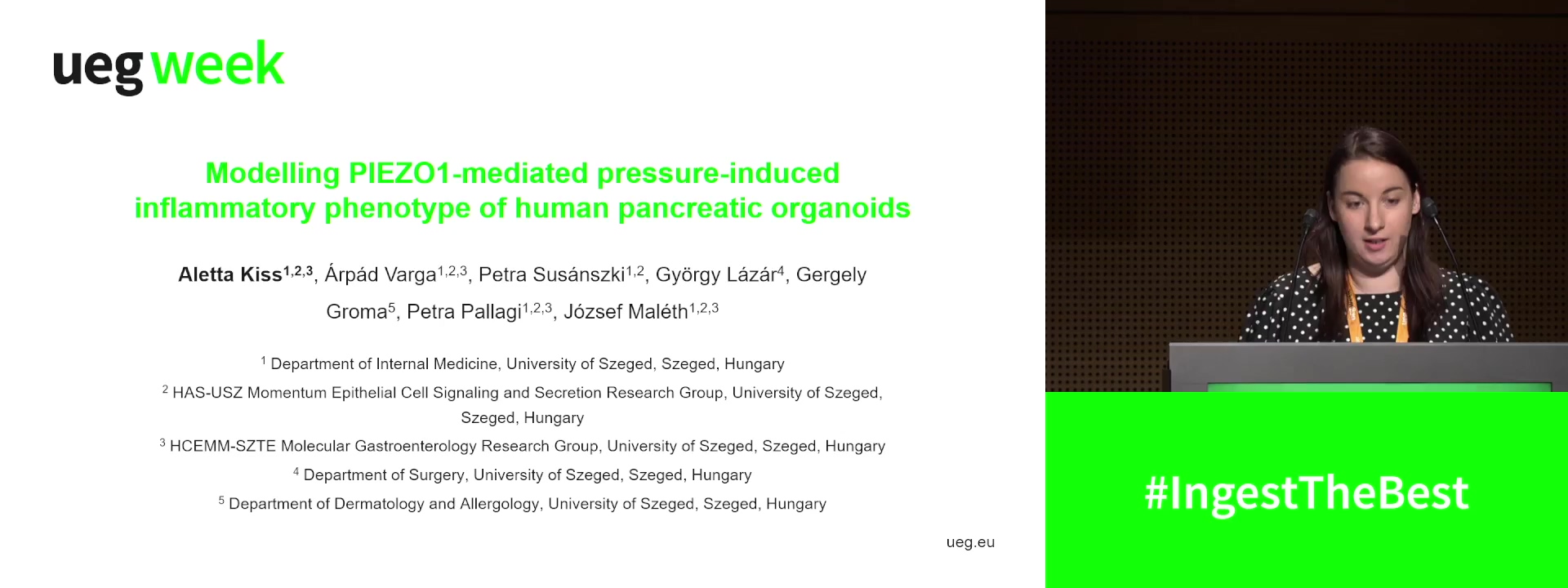
MODELLING PIEZO1-MEDIATED PRESSURE-INDUCED INFLAMMATORY PHENOTYPE OF HUMAN PANCREATIC ORGANOIDS
Aletta Kata Kiss 1, Arpad Varga 1, Petra Susánszki 2, György Lázár 3, Gergely Groma 2, Petra Pallagi 1, József Maléth 1
1 University of Szeged, Szeged, Hungary|||University of Szeged, Szeged, Hungary|||University of Szeged, Szeged, Hungary
2 University of Szeged, Szeged, Hungary|||University of Szeged, Szeged, Hungary
3 University of Szeged, Szeged, Hungary
Event
Topics
Submission format
Citation
Published
Log in to access this content.
Free for all myUEG account holders. Your access level is set automatically based on your occupation. Medical professionals get full access to all content. If you are a non-medical user, you can only access UEG Week content from congresses you attended.
Not sure what you can access? Learn more about account types.
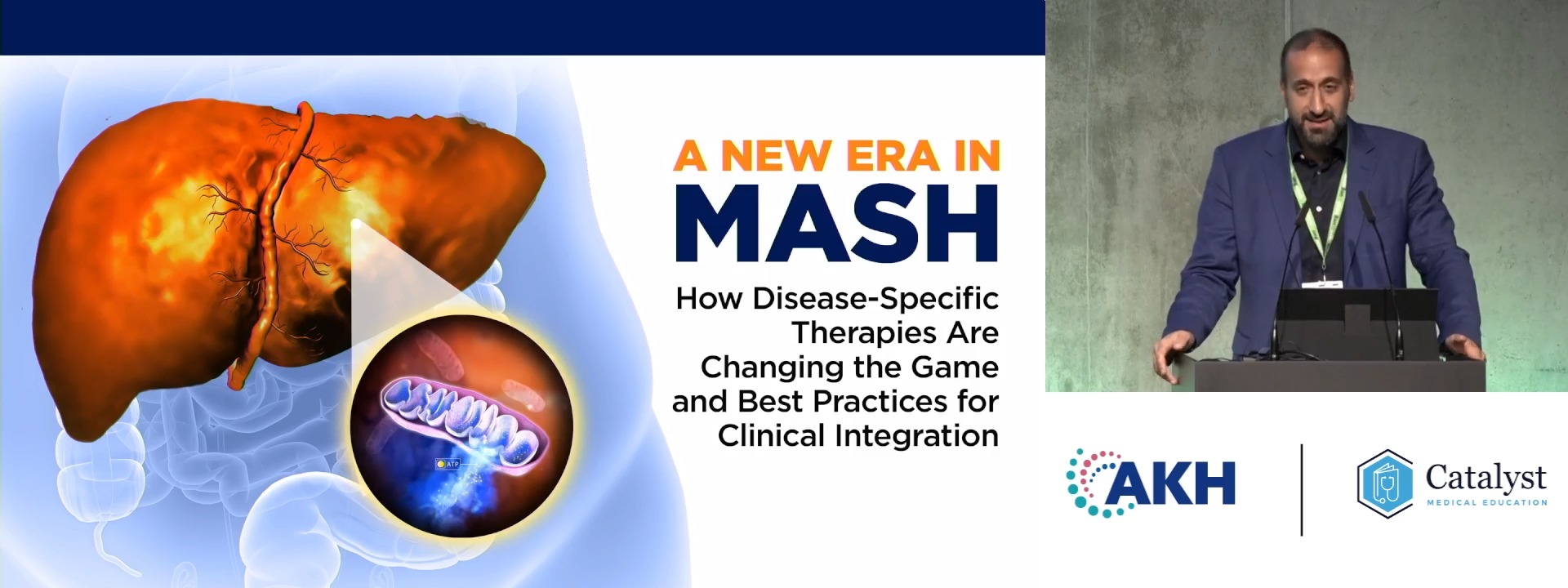
A New Era in MASH: How Disease-Specific Therapies Are Changing the Game and Best Practices for Clinical Integration (Catalyst Medical Education, LLC) (Complete Session)
1 Transplant Hepatology Arizona Liver Health Phoenix, AZ, None, United States of America
2 Department of Internal Medicine II, Saarland University Medical Center, Homburg, Germany
3 Charité Universitaetsmedizin Berlin, Dept of Hepatology & Gastroenterology, Berlin, Germany
Publisher
Event
Citation
Published
Log in to access this content.
Free for all myUEG account holders. Your access level is set automatically based on your occupation. Medical professionals get full access to all content. If you are a non-medical user, you can only access UEG Week content from congresses you attended.
Not sure what you can access? Learn more about account types.
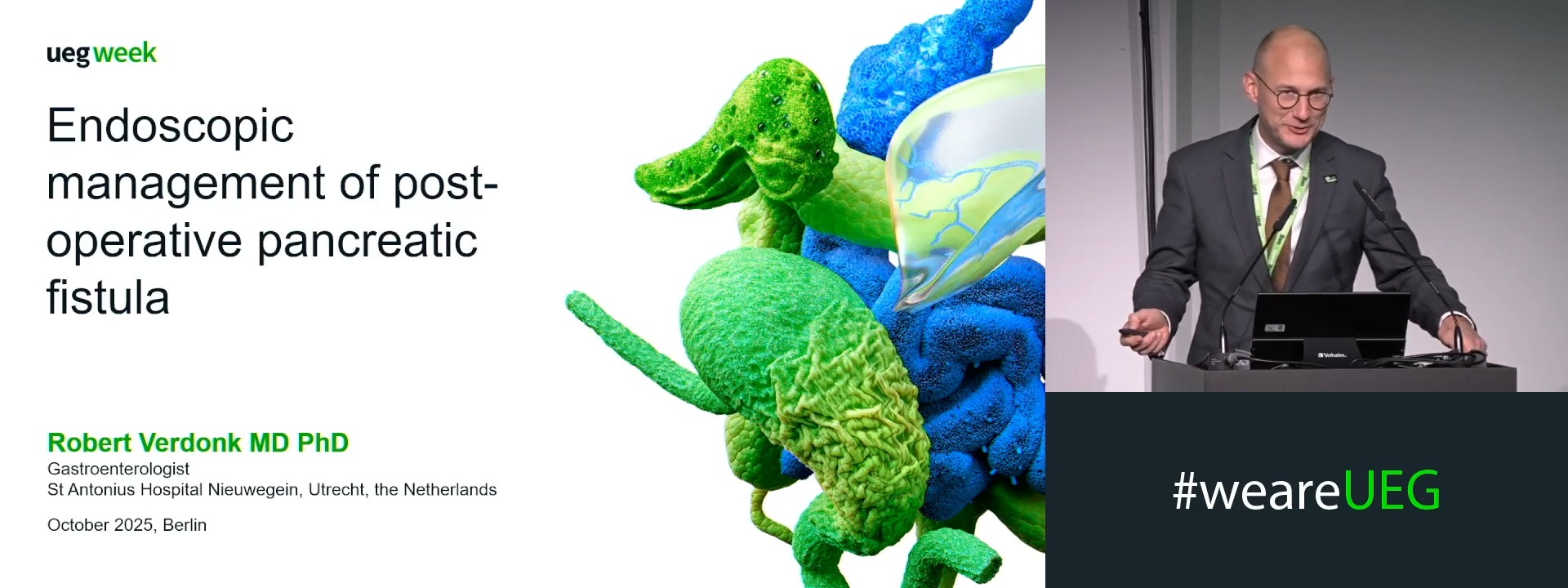
Endoscopic management of pancreatic fistulas
1 St. Antonius Ziekenhuis, Nieuwegein, Netherlands
Event
Topics
Citation
Published
Log in to access this content.
Free for all myUEG account holders. Your access level is set automatically based on your occupation. Medical professionals get full access to all content. If you are a non-medical user, you can only access UEG Week content from congresses you attended.
Not sure what you can access? Learn more about account types.
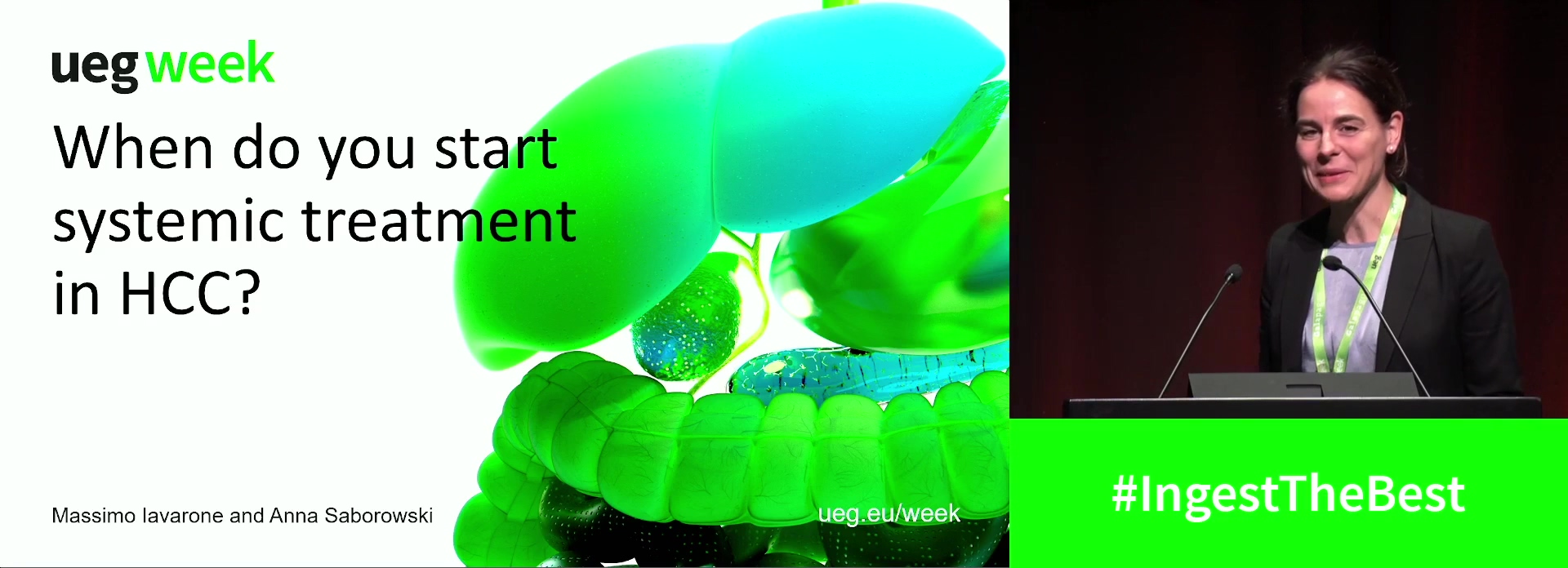
When do you start systemic treatment in HCC? Early and advanced stages of HCC
1 Ospedale Maggiore Policlinico, Milan, Italy
2 Hannover Medical School, Hannover, Germany
Event
Topics
Published
Log in to access this content.
Free for all myUEG account holders. Your access level is set automatically based on your occupation. Medical professionals get full access to all content. If you are a non-medical user, you can only access UEG Week content from congresses you attended.
Not sure what you can access? Learn more about account types.
Getting the best out of anti-TNF therapy
1 University of Tel Aviv, Sheba Medical Center, Tel-Hashomer, Israel
Event
Topics
Session
Published
Log in to access this content.
Free for all myUEG account holders. Your access level is set automatically based on your occupation. Medical professionals get full access to all content. If you are a non-medical user, you can only access UEG Week content from congresses you attended.
Not sure what you can access? Learn more about account types.
Current standard and guidelines in the diagnostic and treatment of locally advanced pancreatic cancer
1 Institut de cancérologie Gustave Roussy, Villejuif, France
Event
Topics
Citation
Published
Log in to access this content.
Free for all myUEG account holders. Your access level is set automatically based on your occupation. Medical professionals get full access to all content. If you are a non-medical user, you can only access UEG Week content from congresses you attended.
Not sure what you can access? Learn more about account types.
A RETROSPECTIVE COHORT STUDY TO COMPARE THE EFFICACY, PHARMACOKINETICS AND SAFETY OF SUBCUTANEOUS (SC) AND INTRAVENOUS (IV) INFLIXIMAB IN THE TREATMENT OF INFLAMMATORY BOWEL DISEASE
1 Barts and the London, Queen Mary University of London, London, United Kingdom
2 Digestive Disorders Clinical Academic Unit, Barts & the London School of Medicine, London, United Kingdom
Event
Topics