UEG's content platform for gastroenterology education bringing recordings, courses, guidelines, and more together in one place.
Trending on Gutflix
Rate for better recommendations!
Your feedback helps us show you more of what you like and less of what you dislike!
Log in to continue.
This content is part of Gutflix. Log in with your myUEG account, or create one free, to watch it.
Not sure what you can access? Learn more about account types.
Panel discussion: Advanced chronic liver disease: When the liver gets stiff, the complications get going
Log in to continue.
This content is part of Gutflix. Log in with your myUEG account, or create one free, to watch it.
Not sure what you can access? Learn more about account types.
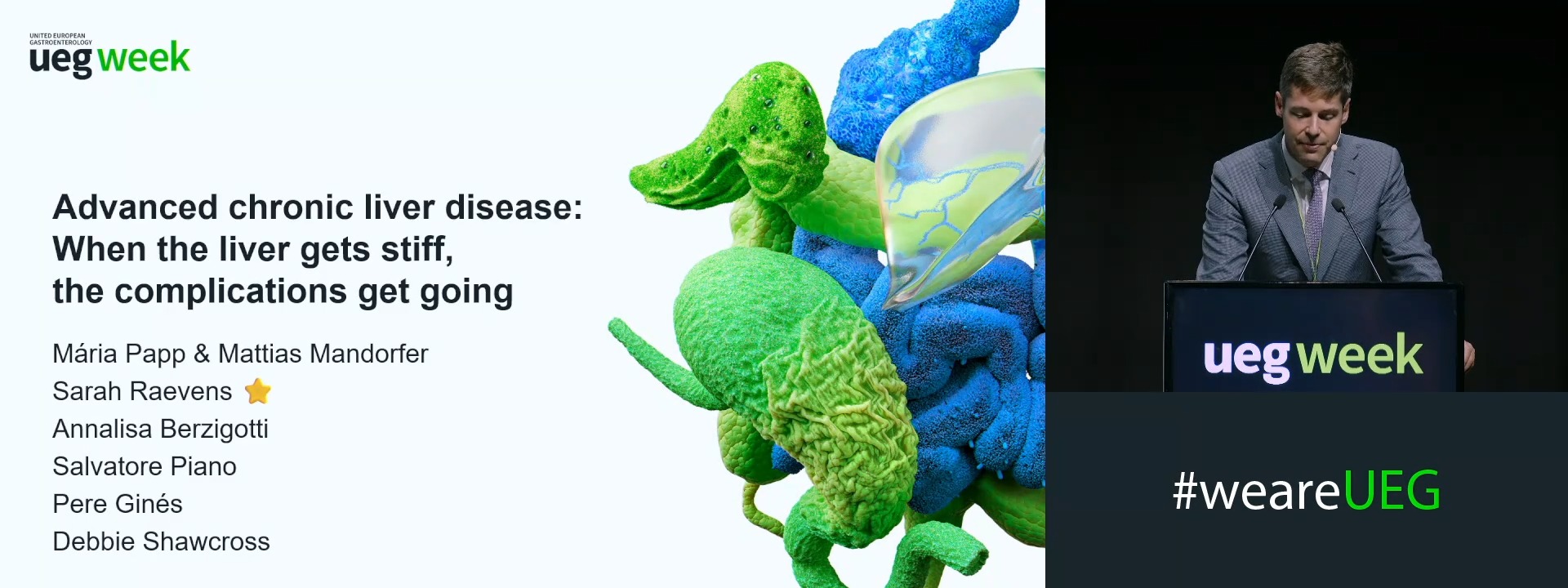
Introduction: Advanced chronic liver disease: When the liver gets stiff, the complications get going
Affiliations
1 Medical University of Vienna, Vienna, Austria
Log in to continue.
This content is part of Gutflix. Log in with your myUEG account, or create one free, to watch it.
Not sure what you can access? Learn more about account types.
Panel discussion: Are you stuck in the biliary cannulation nightmare: Wake up, here comes the sun
Log in to continue.
This content is part of Gutflix. Log in with your myUEG account, or create one free, to watch it.
Not sure what you can access? Learn more about account types.
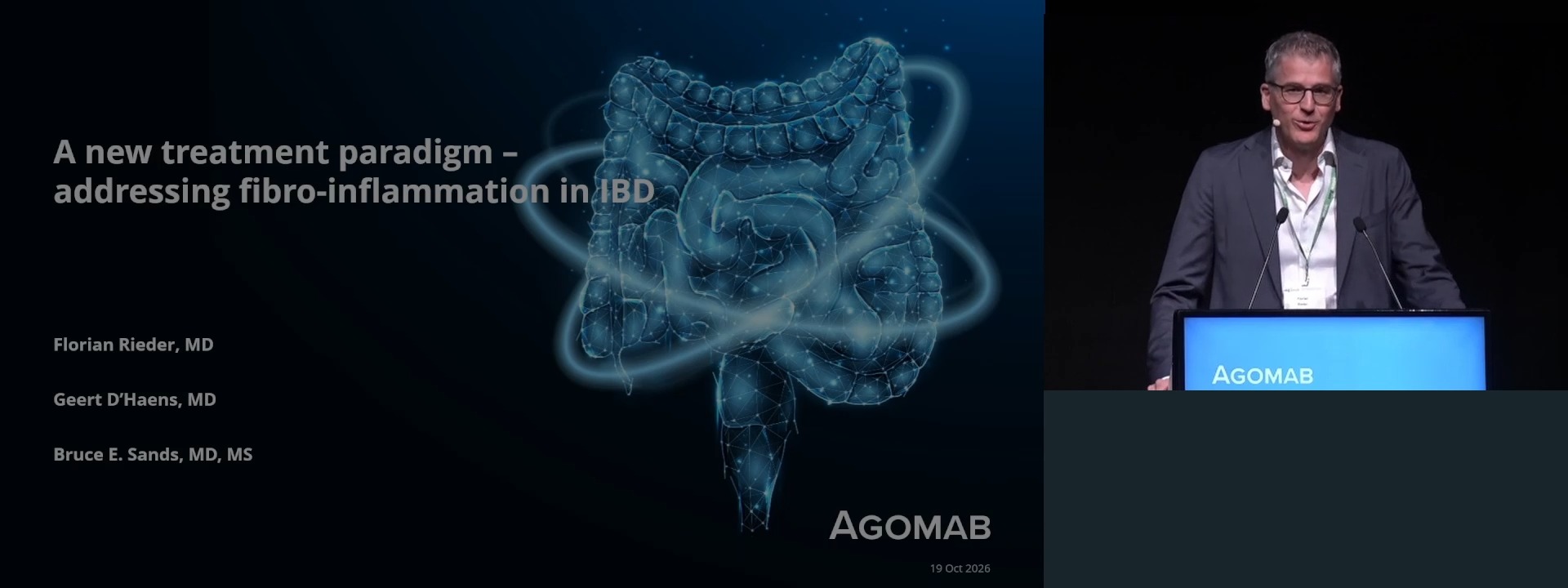
A new treatment paradigm – addressing fibro-inflammation in IBD (Agomab) (Complete Session)
Affiliations
1 Icahn School of Medicine at Mount Sinai, New York, United States of America
2 Cleveland Clinic Foundation, Cleveland, United States of America
3 AMC Amsterdam Inflammatory Bowel Disease Centre - Academic Medical Center, AMC Amsterdam Inflammator, Amsterdam, Netherlands
Log in to continue.
This content is part of Gutflix. Log in with your myUEG account, or create one free, to watch it.
Not sure what you can access? Learn more about account types.
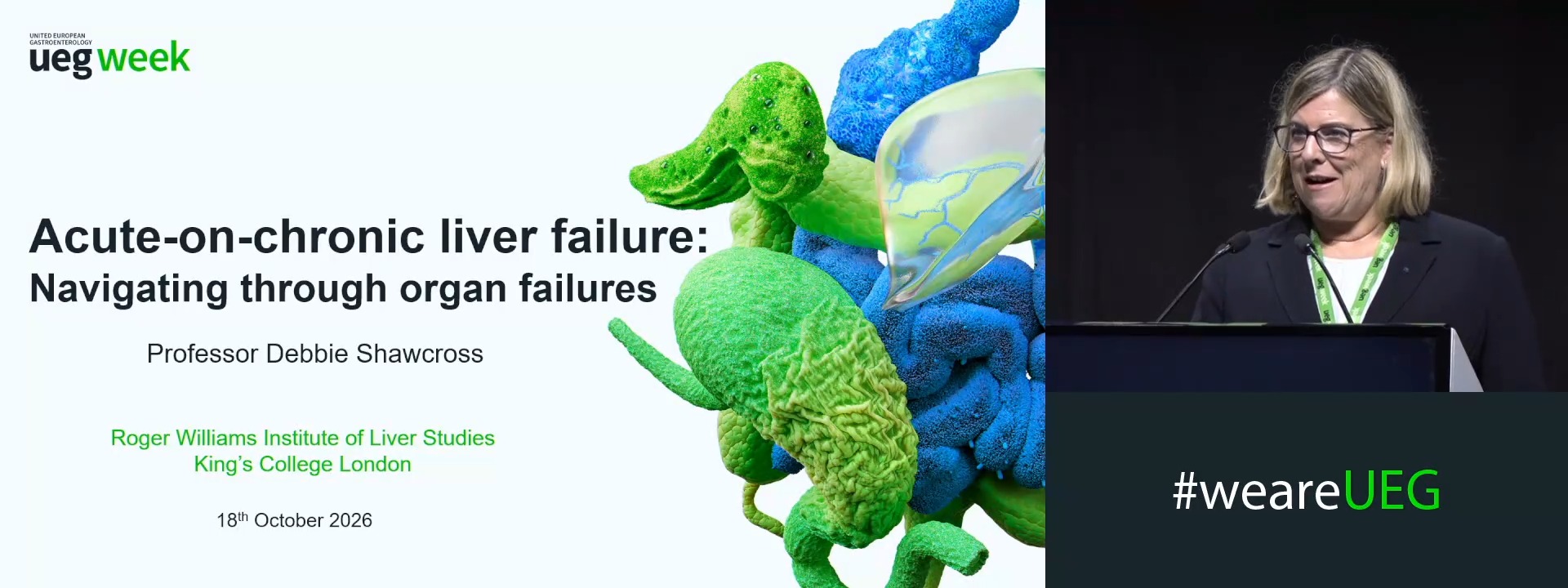
Compensated advanced chronic liver disease and clinically significant portal hypertension: From non-invasive diagnosis to treatment
Affiliations
1 Inselspital, University Hospital of Berne, Berne, Switzerland
Log in to continue.
This content is part of Gutflix. Log in with your myUEG account, or create one free, to watch it.
Not sure what you can access? Learn more about account types.
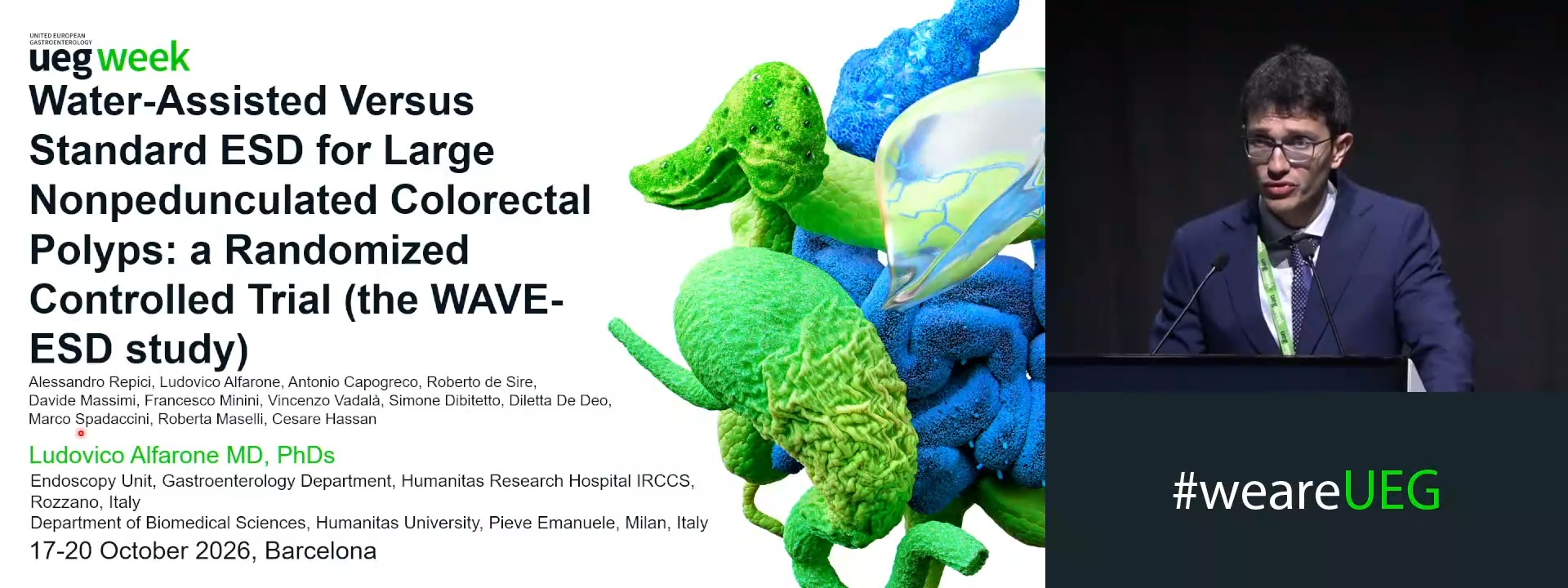
Acute-on-chronic liver failure: Navigating through organ failures
Affiliations
1 Kings College London, NHS Foundation Trust, London, United Kingdom
Log in to continue.
This content is part of Gutflix. Log in with your myUEG account, or create one free, to watch it.
Not sure what you can access? Learn more about account types.
WATER-ASSISTED VERSUS STANDARD ESD FOR LARGE NONPEDUNCULATED COLORECTAL POLYPS: A RANDOMIZED CONTROLLED TRIAL (THE WAVE-ESD STUDY)
Alessandro Repici 1,2, Ludovico Alfarone 1,2, Antonio Capogreco 1,2, Roberto de Sire 3, Davide Massimi 2,1, Francesco Minini 1,2, Vincenzo Vadala' 1,2, Simone Dibitetto 1, Diletta De Deo 1,2, Marco Spadaccini 1,2, Roberta Maselli 2,3, Cesare Hassan 1,2
Affiliations
1 Endoscopy Unit, Gastroenterology Department, Humanitas Research Hospital IRCCS, Rozzano, Italy
2 Department of Biomedical Sciences, Humanitas University, Pieve Emanuele, Milano, Italy
3 Endoscopy Unit, Gastroenterology Department, Humanitas San Pio X Hospital, Milano, Italy