UEG's educational platform for gastroenterology education bringing recordings, courses, guidelines, and more together in one place.
Most popular content
Rate for better recommendations!
Your feedback helps us show you more of what you like and less of what you dislike!
Log in to access this content.
Free for all myUEG account holders. Your access level is set automatically based on your occupation. Medical professionals get full access to all content. If you are a non-medical user, you can only access UEG Week content from congresses you attended.
Not sure what you can access? Learn more about account types.

PARTIAL RESPONSE FOLLOWING INDUCTION OF REMISSION WITH INTRAVENOUS VEDOLIZUMAB (PRIVEDO): EARLY OPTIMIZATION OR SWITCH TO SUBCUTANEOUS FORMULATION? A SN-IBD PROSPECTIVE OBSERVATIONAL STUDY
Fabio Salvatore Macaluso 1, Walter Fries 2, Anna Viola 2, Maria Cappello 3, Piera Melatti 3, Filippo Mocciaro 4, Barbara Scrivo 4, Simona Di Caro 5, Stefano Muscarella 5, Concetta Laura Ferracane 6, Emiliano Giangreco 7, maria giovanna minissale 8, Mauro Grova 9, Raffaele Li Voti 1, Giuseppe Mistretta 1, Sara Renna 1, Angelo Casà 1, Ambrogio Orlando 1
1 Inflammatory bowel disease Unit, “Villa Sofia-Cervello” Hospital, Palermo, Italy
2 Inflammatory bowel disease Unit, "G. Martino” Hospital, Messina, Italy
3 Gastroenterology & Hepatology Section, PROMISE, University of Palermo,, Palermo, Italy
4 Gastroenterology and Endoscopy Unit, Arnas Civico-Di Cristina-Benfratelli Hospital, Palermo, Italy
5 Gastroenterology and Endoscopy Unit, “S. Antonio Abate” Hospital, Trapani, Italy
6 Gastroenterology Unit, “Vittorio Emanuele” Hospital, Catania, Italy
7 Gastroenterology Unit, “Guzzardi” Hospital, Vittoria, Italy
8 Gastroenterology and Endoscopy Unit, “Buccheri La Ferla Fatebenefratelli” Hospital, Palermo, Italy
9 Endoscopy Unit, “Villa Sofia-Cervello” Hospital, Palermo, Italy
Conference
Topics
Submission format
Citation
Published
Log in to access this content.
Free for all myUEG account holders. Your access level is set automatically based on your occupation. Medical professionals get full access to all content. If you are a non-medical user, you can only access UEG Week content from congresses you attended.
Not sure what you can access? Learn more about account types.
Personalising treatment: Tailoring to precision
1 Université libre de Bruxelles, Bruxelles, Belgium
Event
Citation
Published
Log in to access this content.
Free for all myUEG account holders. Your access level is set automatically based on your occupation. Medical professionals get full access to all content. If you are a non-medical user, you can only access UEG Week content from congresses you attended.
Not sure what you can access? Learn more about account types.
PLASMA PROTEOMIC PROFILES FOR PREDICTING HEPATIC COMPLICATIONS UP TO 16 YEARS BEFORE ONSET
1 Department of Gastroenterology, Guangdong Provincial People's Hospital (Guangdong Academy of Medical Sciences), Southern Medical University, Guangzhou, China
2 Department of Organ transplantation, Guangdong Provincial People's Hospital (Guangdong Academy of Medical Sciences), Southern Medical University, Guangzhou, China
Event
Submission format
Citation
Published
Log in to access this content.
Free for all myUEG account holders. Your access level is set automatically based on your occupation. Medical professionals get full access to all content. If you are a non-medical user, you can only access UEG Week content from congresses you attended.
Not sure what you can access? Learn more about account types.
Anastomotic leakage in the gut
1 St Mark'S Hospital, London, London, United Kingdom
Event
Topics
Citation
Published
Log in to access this content.
Free for all myUEG account holders. Your access level is set automatically based on your occupation. Medical professionals get full access to all content. If you are a non-medical user, you can only access UEG Week content from congresses you attended.
Not sure what you can access? Learn more about account types.
Summary: Is there really an added value for all new EUS/ERCP techniques?
1 Leiden University Medical Center, Leiden, Netherlands
Event
Citation
Published
Log in to access this content.
Free for all myUEG account holders. Your access level is set automatically based on your occupation. Medical professionals get full access to all content. If you are a non-medical user, you can only access UEG Week content from congresses you attended.
Not sure what you can access? Learn more about account types.
MICROSCOPIC COLITIS: A COMPARATIVE STUDY OF CLINICAL SYMPTOMS AND HISTOPATHOLOGICAL FEATURES
Chaimae Haddad Hachimi 1, Mariam Konso 2, Chaimae Hiji 1, Hayat Ennoufous Krami 3, Mouna Tamzaourte 1
1 Mohamed V Military Training Hospital, Rabat, Morocco
2 Faculty of Medicine and Pharmacy of Rabat, Rabat, Morocco
3 Private Practice, Rabat, Morocco
Conference
Topics
Submission format
Session
Citation
Published
Log in to access this content.
Free for all myUEG account holders. Your access level is set automatically based on your occupation. Medical professionals get full access to all content. If you are a non-medical user, you can only access UEG Week content from congresses you attended.
Not sure what you can access? Learn more about account types.
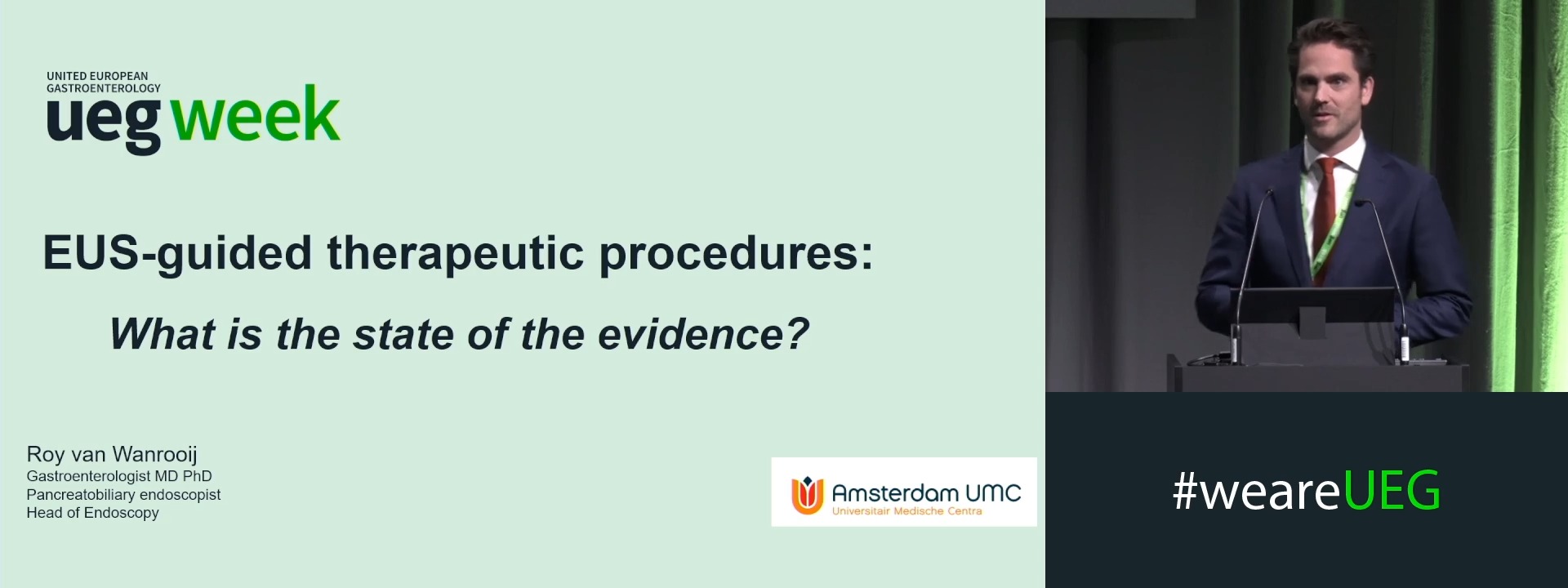
EUS guided therapeutic procedures
1 Amsterdam UMC, Amsterdam, Netherlands