UEG's content platform for gastroenterology education bringing recordings, courses, guidelines, and more together in one place.
Trending on Gutflix
Rate for better recommendations!
Your feedback helps us show you more of what you like and less of what you dislike!

Log in to continue.
This content is part of Gutflix. Log in with your myUEG account, or create one free, to watch it.
Not sure what you can access? Learn more about account types.
Tribute to Lifetime Achievement awardees
Affiliations
1 Amsterdam UMC, Amsterdam, Netherlands

Log in to continue.
This content is part of Gutflix. Log in with your myUEG account, or create one free, to watch it.
Not sure what you can access? Learn more about account types.
SUGAR- AND LOW/NON-SUGAR-SWEETENED BEVERAGES AND RISKS OF METABOLIC DYSFUNCTION–ASSOCIATED STEATOTIC LIVER DISEASE AND LIVER-RELATED MORTALITY: A PROSPECTIVE ANALYSIS OF THE UK BIOBANK
Affiliations
1 The First Affiliated Hospital of Soochow University, Suzhou, China
2 The first affiliated hospital of Soochow University, Suzhou, China
3 The First Affiliated Hospital Of Soochow University, Suzhou, China
Log in to continue.
This content is part of Gutflix. Log in with your myUEG account, or create one free, to watch it.
Not sure what you can access? Learn more about account types.
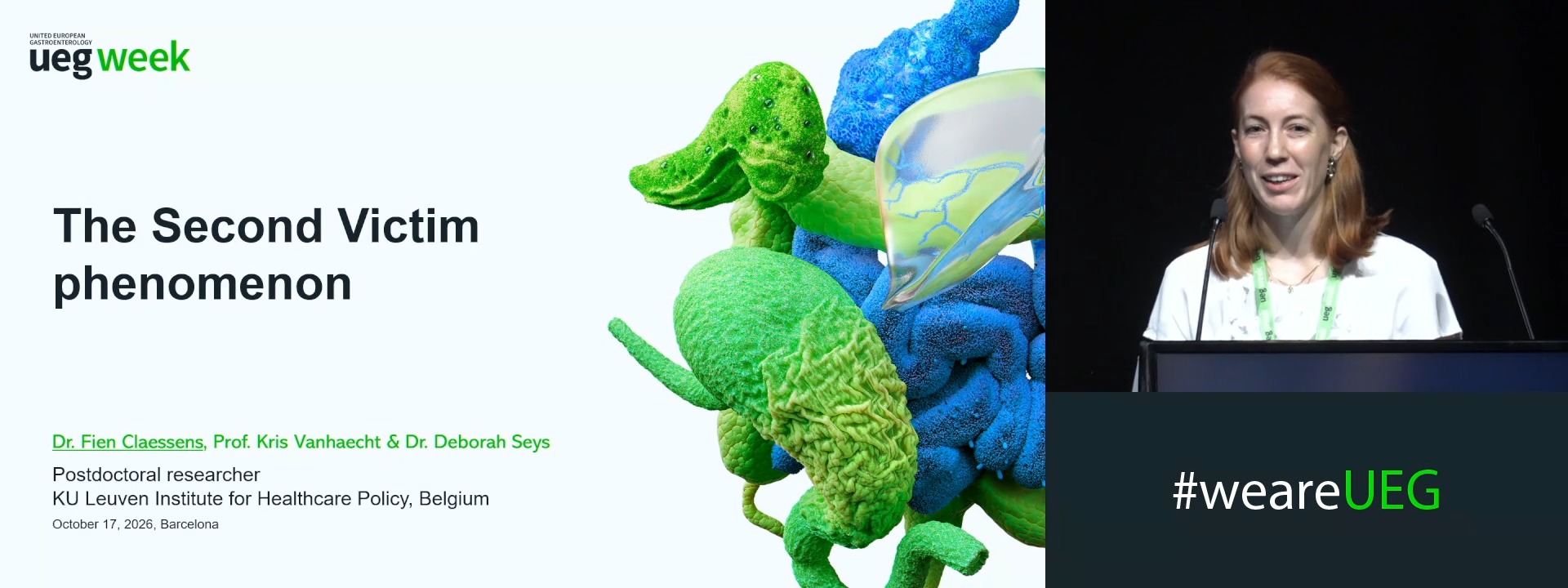
Second victim phenomenon – how can we prevent it
Affiliations
1 None, None, Belgium

Log in to continue.
This content is part of Gutflix. Log in with your myUEG account, or create one free, to watch it.
Not sure what you can access? Learn more about account types.
Constipation: Paediatric and adult gastroenterologist
Affiliations
1 Academisch Medisch Centrum Onderzoekschool Oncologie Pediatrics and Pediat. Surgery - Dep. Of Pediat, AZ Amsterdam, Netherlands
2 University of Nottingham, Nottingham, United Kingdom