UEG's content platform for gastroenterology education bringing recordings, courses, guidelines, and more together in one place.
Trending on Gutflix
Rate for better recommendations!
Your feedback helps us show you more of what you like and less of what you dislike!
Log in to continue.
This content is part of Gutflix. Log in with your myUEG account, or create one free, to watch it.
Not sure what you can access? Learn more about account types.
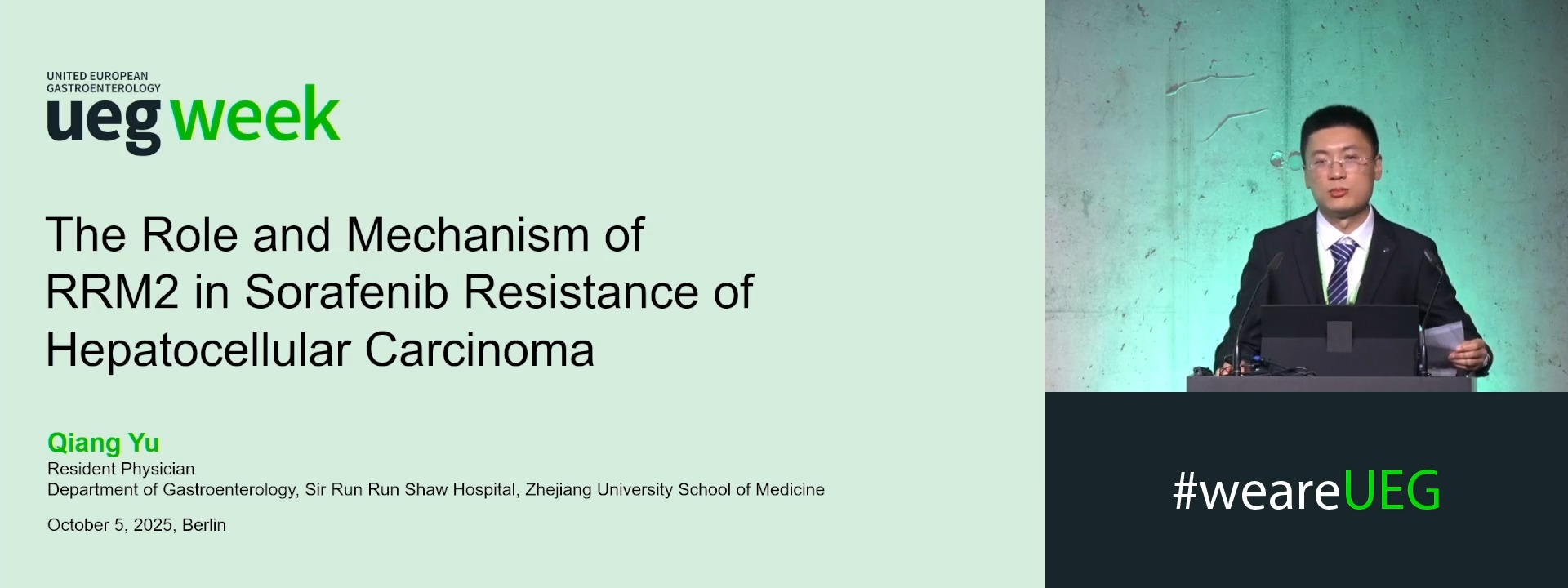
THE ROLE AND MECHANISM OF RIBONUCLEOTIDE REDUCTASE M2 (RRM2) IN SORAFENIB RESISTANCE OF HEPATOCELLULAR CARCINOMA
Affiliations
1 Sir Run Run Shaw Hospital, Zhejiang University School of Medicine, Hangzhou, China
Log in to continue.
This content is part of Gutflix. Log in with your myUEG account, or create one free, to watch it.
Not sure what you can access? Learn more about account types.
Q&A: Chronic constipation: How to diagnose and treat this frequent condition in clinical practice
Log in to continue.
This content is part of Gutflix. Log in with your myUEG account, or create one free, to watch it.
Not sure what you can access? Learn more about account types.
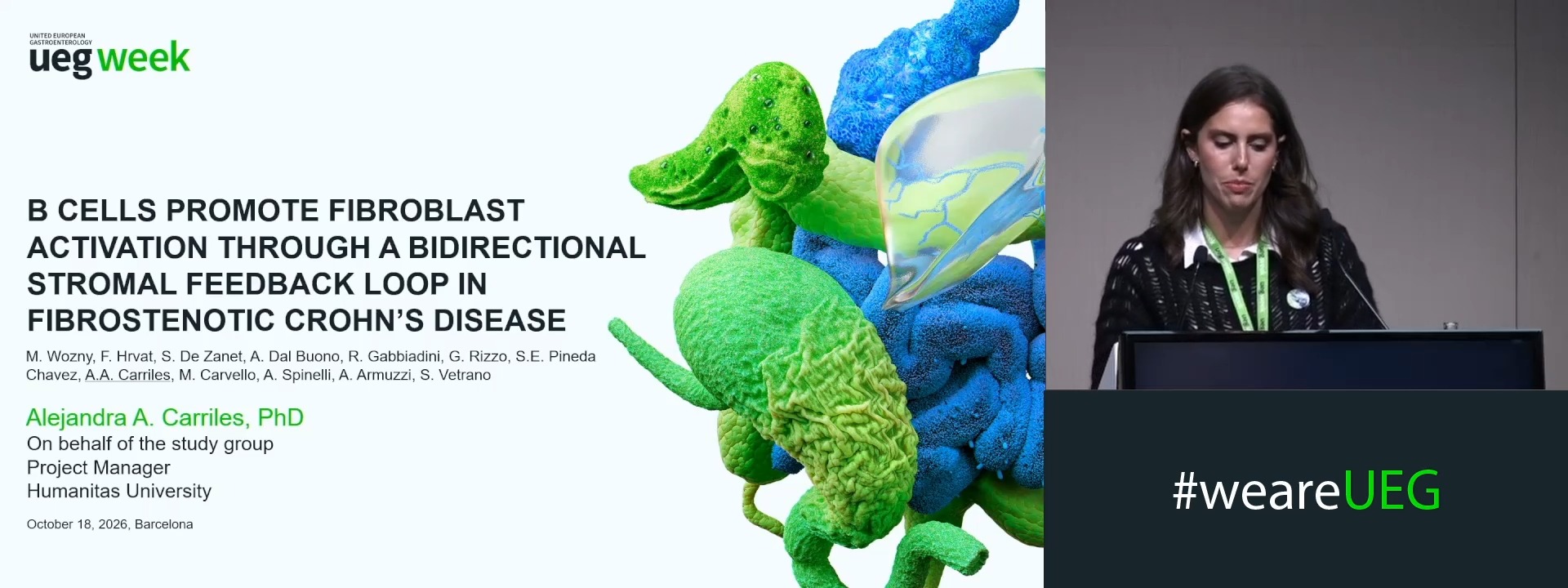
B CELLS PROMOTE FIBROBLAST ACTIVATION THROUGH A BIDIRECTIONAL STROMAL FEEDBACK LOOP IN FIBROSTENOTIC CROHN’S DISEASE
Marek Wozny 1, Faris Hrvat 1, Stefano De Zanet 2, Arianna Dal Buono 3, Roberto Gabbiadini 3, Giulia Rizzo 4, Samuel Elias Pineda Chavez 5, Alejandra Angela Carriles Linares 1, Michele Carvello 2, Antonino Spinelli 6, Alessandro Armuzzi 7, Stefania Vetrano 8
Affiliations
1 Humanitas University, Pieve Emanuele, Italy
2 IRCCS Humanitas Research Hospital, Rozzano, Italy
3 Humanitas University, Milan, Italy
4 Humanitas Research Hospital, Rozzano, Italy
5 Humanitas University, Rozzano, Italy
6 Humanitas University, Rozzano Milano, Italy
7 IBD Center, IRCCS Humanitas Research Hospital, Rozzano, Milan, Italy
8 Istituto Clinico Humanitas Dept. of Gastroenterology, Rozzano, Italy
Log in to continue.
This content is part of Gutflix. Log in with your myUEG account, or create one free, to watch it.
Not sure what you can access? Learn more about account types.
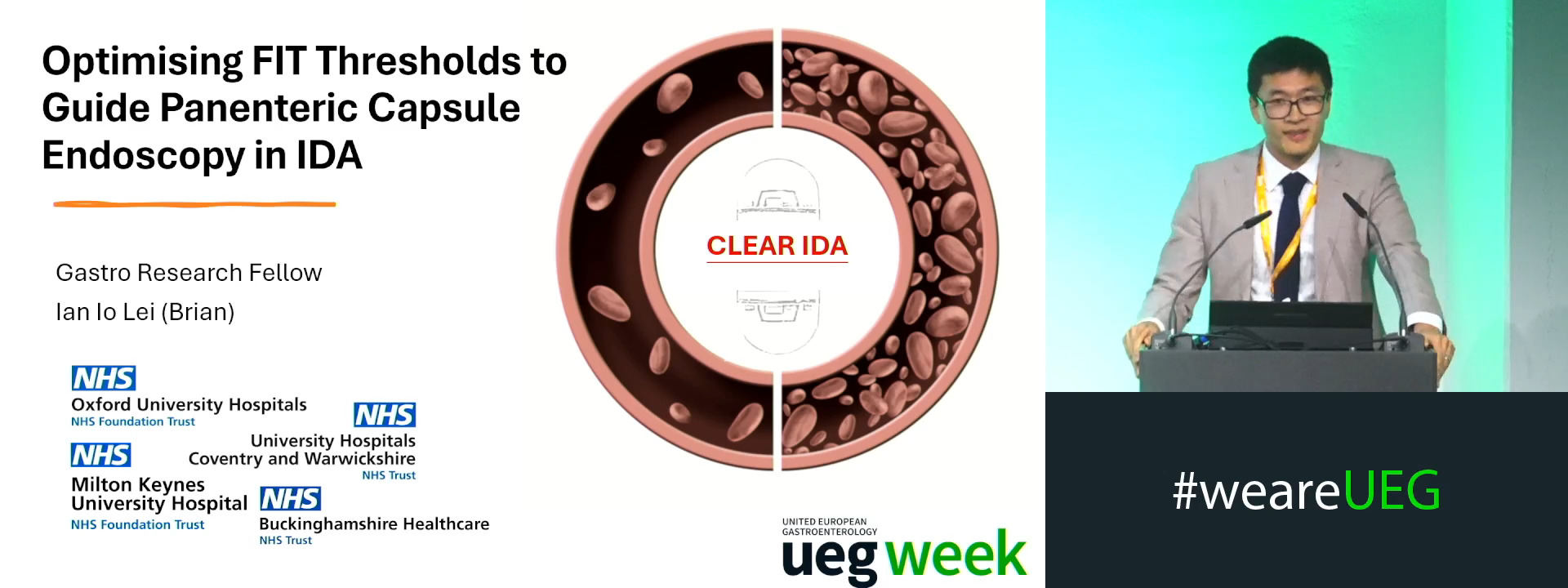
FROM STOOL TO SCOPE: OPTIMISING FIT THRESHOLDS TO GUIDE FUTURE PANENTERIC CAPSULE ENDOSCOPY AND REDUCE COLONOSCOPY BURDEN IN IRON DEFICIENCY ANAEMIA
Ian Io Lei 1, Nicola O'Connell 2, Michael Adu-Darko 3, Jessiya Parambil 4, Vishnupriya Suresh 2, Kiara McDonnell 5, Jessie Newville 5, Kirsten Chaplin 5, Deekshi Siyambalapityage 5, Asad Khan 3, Usman Muhammad 3, John Emil 3, Merali Abbas 3, Zia Kanji 3, Hamza Alam 3, Amelia Bennett 4, Hannah Soanes 4, Adrija Bhattacharyya 4, Karl Frey 4, Rosie Meakins 4, Archit Singhal 4, George Pack 4, Melike Gerrits 4, Harry Paterson 4, Vincent Cheung 6, Sue Cullen 5, Muhammad Imran Aslam 7, Ramesh P. Arasaradnam 2
Affiliations
1 University Hospital of Coventry and Warwickshire, Coventry, United Kingdom
2 University Hospital Coventry and Warwickshire, Coventry, United Kingdom
3 Milton Keynes University Hospital,, Milton Keynes, United Kingdom
4 Oxford University Hospital, Oxford, United Kingdom
5 Stoke Mandeville Hospital, Buckinghamshire Healthcare NHS Trust, Aylesbury, United Kingdom
6 John Radcliffe Hospital, Oxford, United Kingdom
7 University Hospitals of Coventry and Warwickshire, Coventry, United Kingdom
Log in to continue.
This content is part of Gutflix. Log in with your myUEG account, or create one free, to watch it.
Not sure what you can access? Learn more about account types.
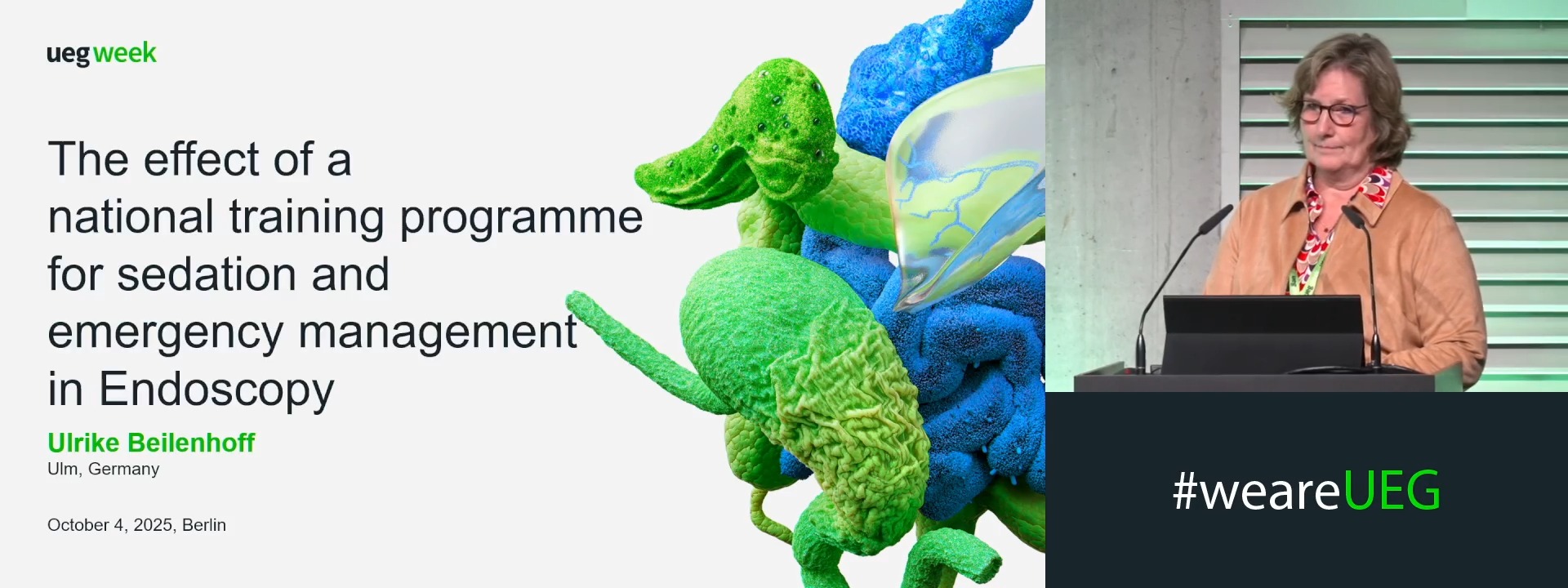
THE EFFECT OF A NATIONAL TRAINING PROGRAMME FOR SEDATION AND EMERGENCY MANAGEMENT IN ENDOSCOPY
Affiliations
1 ESGENA Scientific Secretary, Ulm, Germany
Log in to continue.
This content is part of Gutflix. Log in with your myUEG account, or create one free, to watch it.
Not sure what you can access? Learn more about account types.
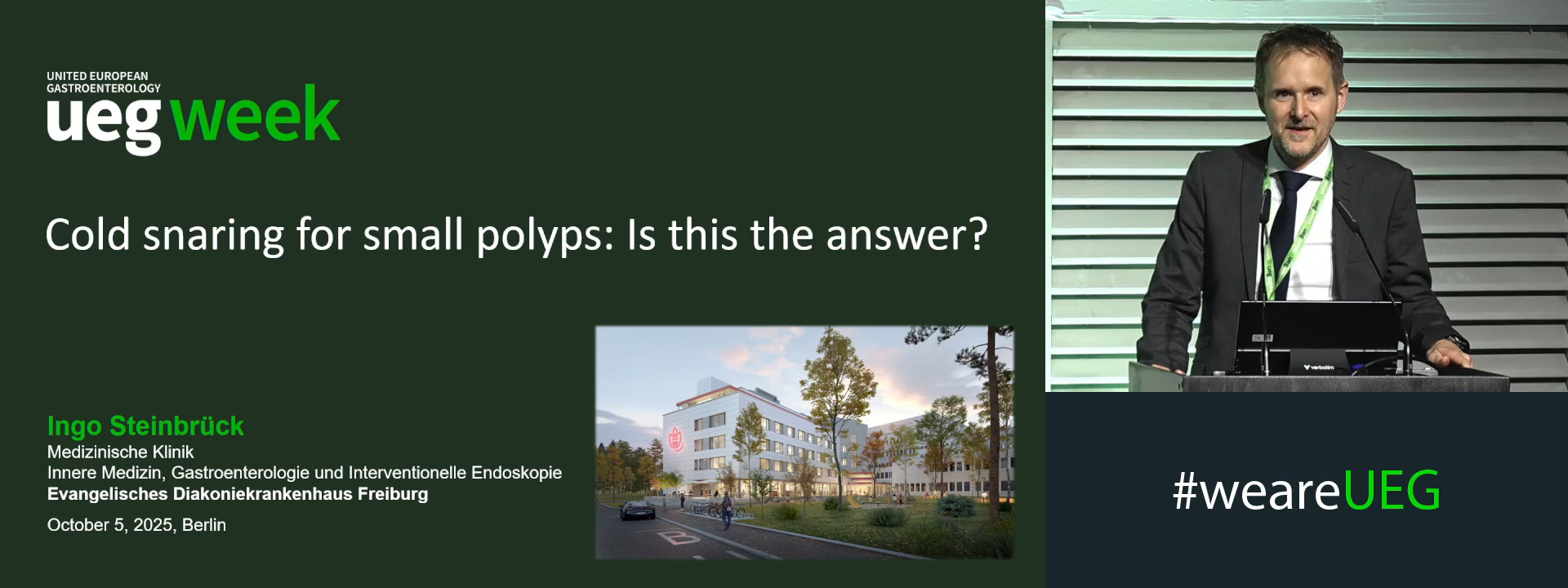
Cold snaring for small polyps or serrated polyps: Is this the answer?
Affiliations
1 AMC, Amsterdam, Netherlands
2 Evangelisches Diakoniekrankenhaus Freiburg, Freiburg, Germany
Log in to continue.
This content is part of Gutflix. Log in with your myUEG account, or create one free, to watch it.
Not sure what you can access? Learn more about account types.
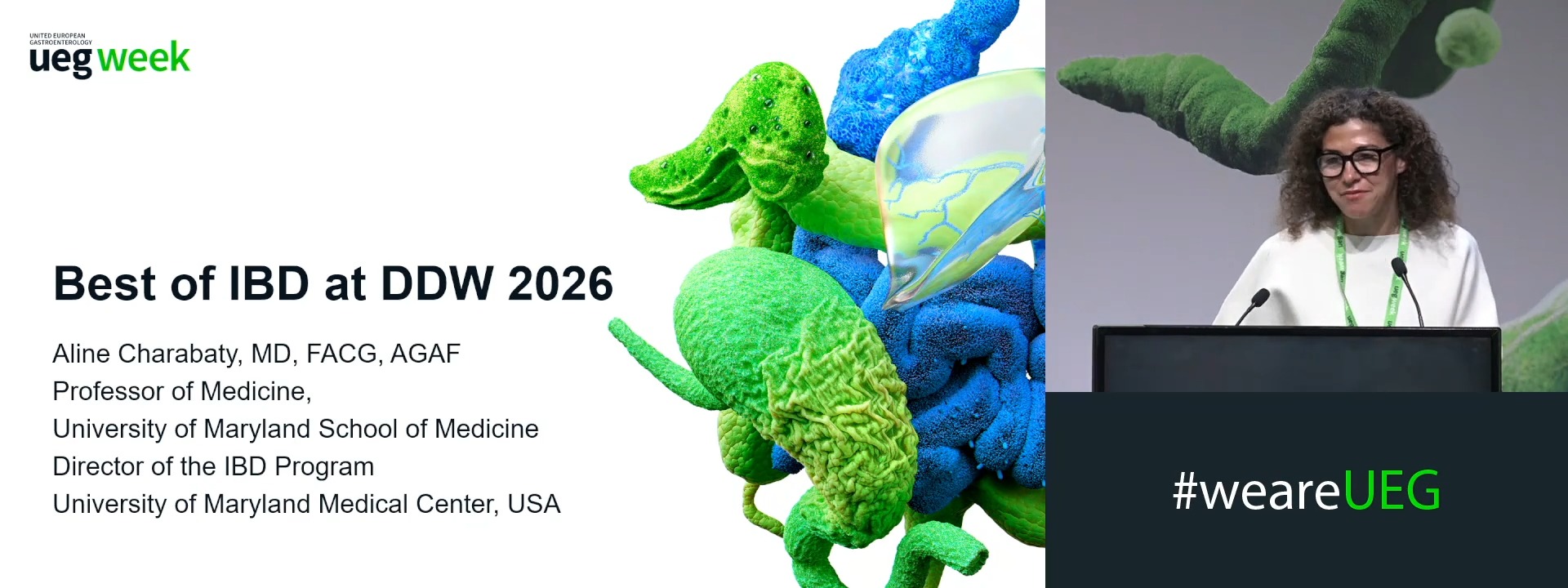
IBD
Affiliations
1 Johns Hopkins University School of Medicine, Baltimore, United States of America