UEG's content platform for gastroenterology education bringing recordings, courses, guidelines, and more together in one place.
Trending on Gutflix
Rate for better recommendations!
Your feedback helps us show you more of what you like and less of what you dislike!
Log in to continue.
This content is part of Gutflix. Log in with your myUEG account, or create one free, to watch it.
Not sure what you can access? Learn more about account types.
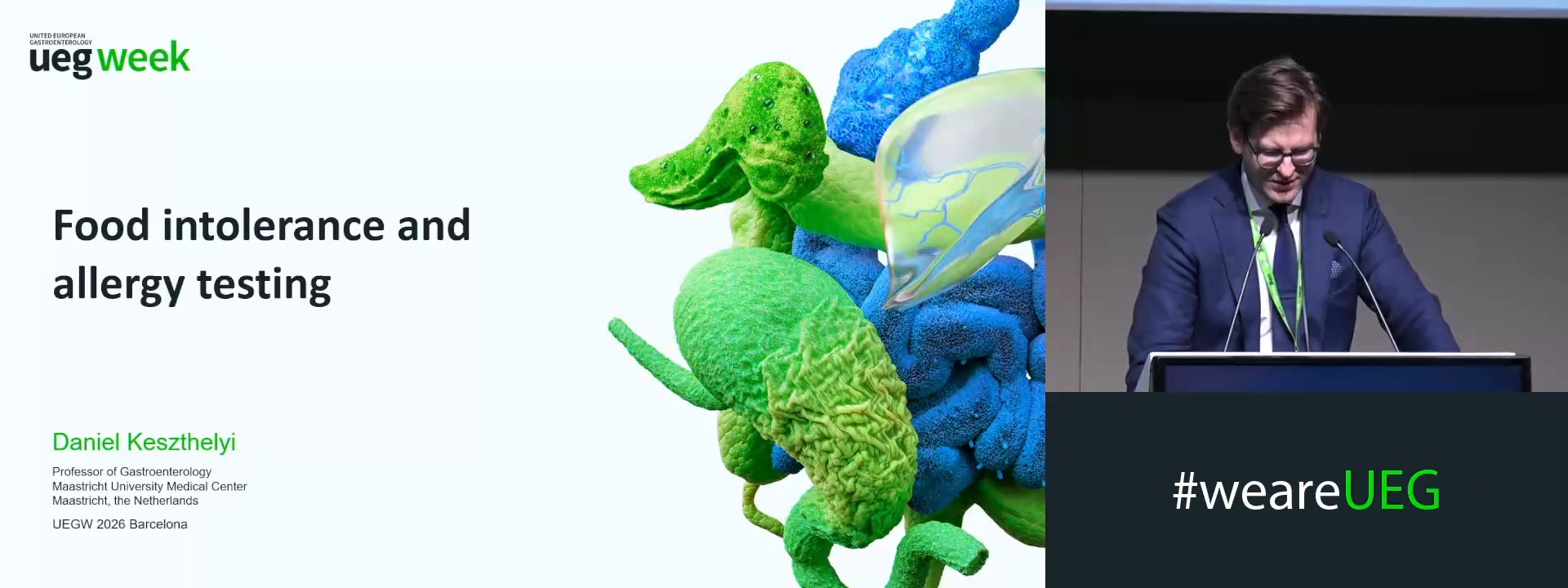
Food intolerance and allergy testing
Affiliations
1 Maastricht University Medical Center, Maastricht, Netherlands
Log in to continue.
This content is part of Gutflix. Log in with your myUEG account, or create one free, to watch it.
Not sure what you can access? Learn more about account types.
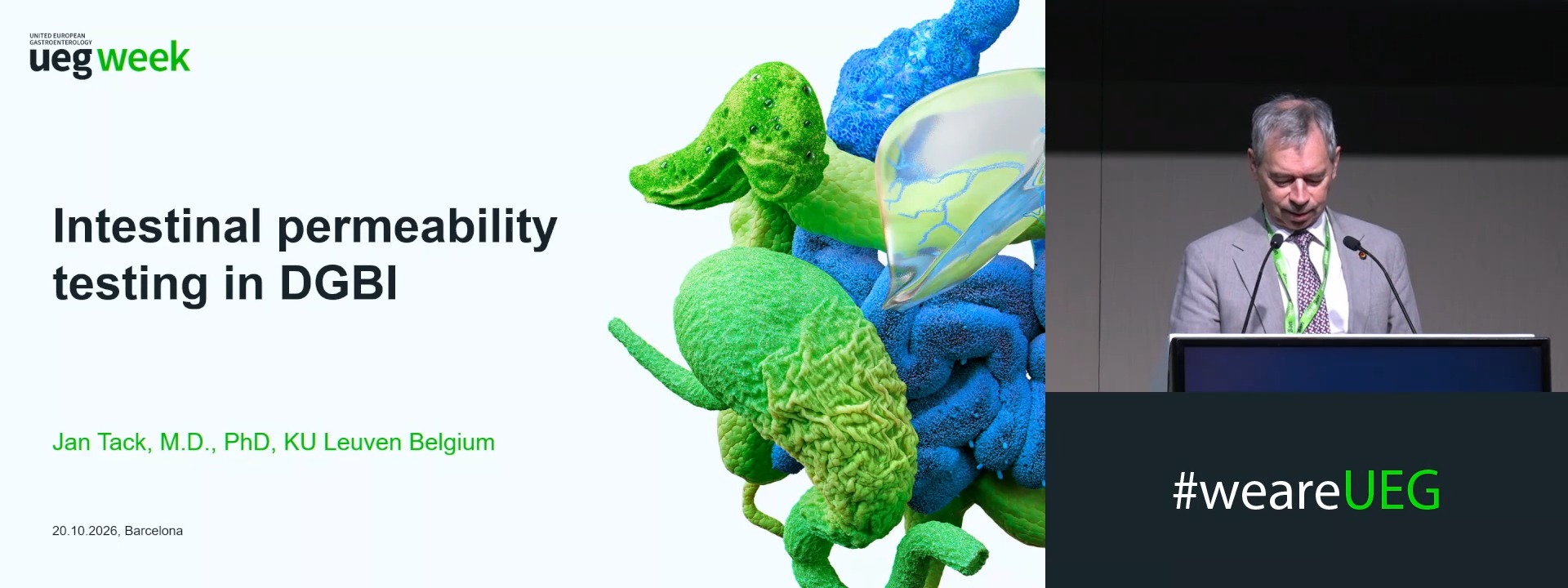
Intestinal permeability testing
Affiliations
1 UZ Leuven, KU Leuven, Leuven, Belgium
Log in to continue.
This content is part of Gutflix. Log in with your myUEG account, or create one free, to watch it.
Not sure what you can access? Learn more about account types.
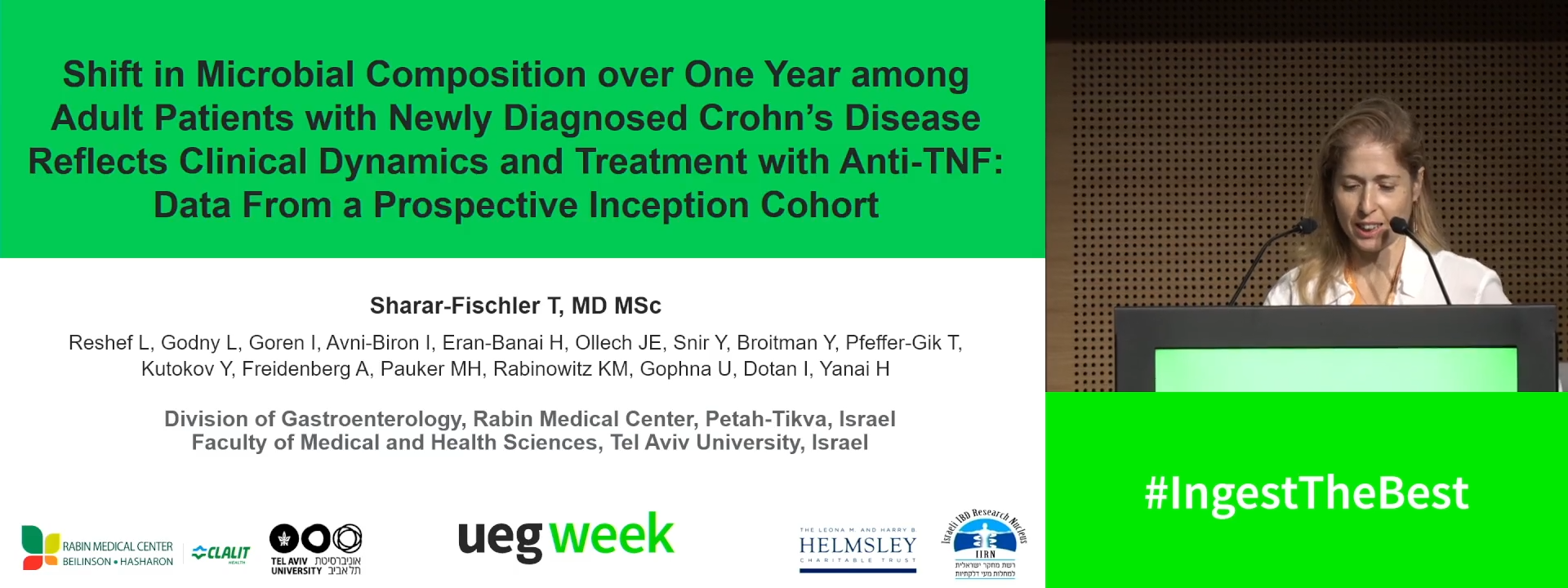
SHIFT IN MICROBIAL COMPOSITION OVER ONE-YEAR AMONG PATIENTS WITH NEWLY DIAGNOSED CROHN’S DISEASE REFLECTS CLINICAL DYNAMICS AND TREATMENT WITH ANTI-TNF: DATA FROM A PROSPECTIVE REAL-WORLD STUDY
Tali Sharar Fischler 1,2, Leah Reshef 2, Lihi Godny 1,2, Adi Friedeberg 1,2, Maor Pauker 1,2, Keren M Rabinowitz 1, Irit Avni-Biron 1,2, Uri Gophna 2, Iris Dotan 1,2, Henit Yanai 1,2
Affiliations
1 Rabin Medical Center, Petah Tikva, Israel
2 Tel Aviv University, Tel Aviv, Israel
Log in to continue.
This content is part of Gutflix. Log in with your myUEG account, or create one free, to watch it.
Not sure what you can access? Learn more about account types.
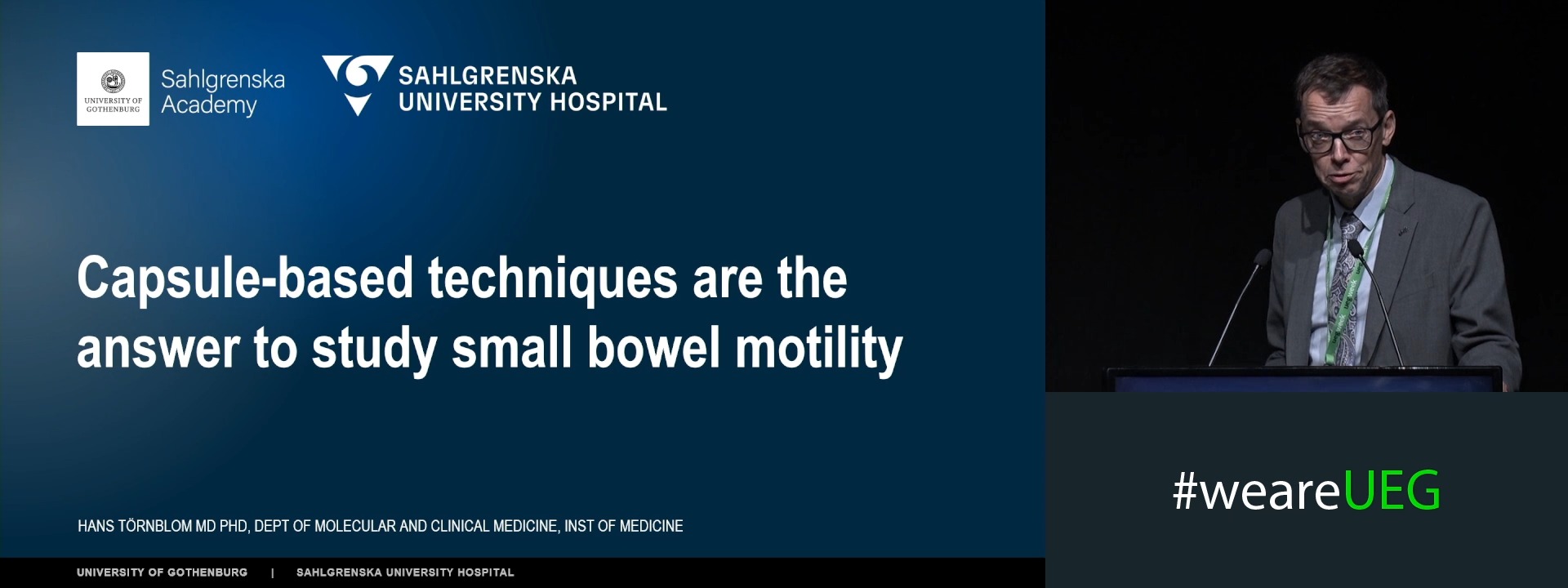
Capsule-based techniques are the answer to study small bowel motility
Affiliations
1 Inst of medicine, Gothenburg, Sweden