UEG's educational platform for gastroenterology education bringing recordings, courses, guidelines, and more together in one place.
Most popular content
Rate for better recommendations!
Your feedback helps us show you more of what you like and less of what you dislike!
Log in to access this content.
Free for all myUEG account holders. Your access level is set automatically based on your occupation. Medical professionals get full access to all content. If you are a non-medical user, you can only access UEG Week content from congresses you attended.
Not sure what you can access? Learn more about account types.
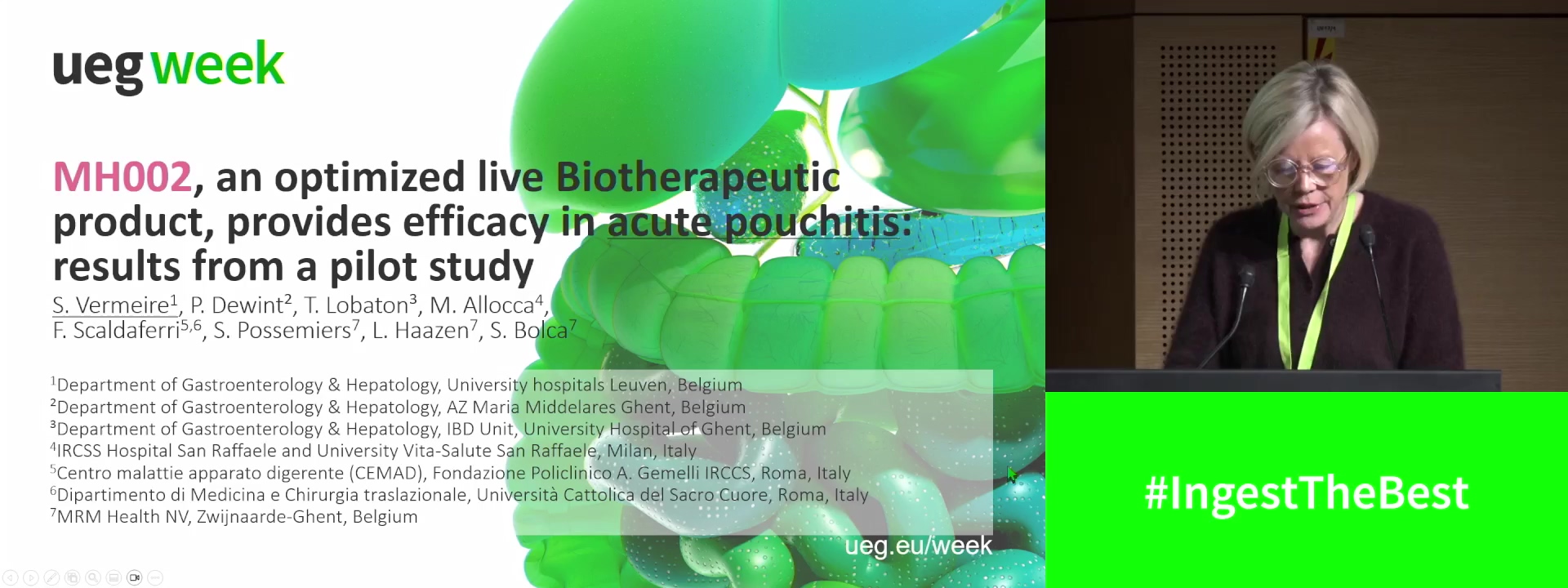
MH002, AN OPTIMIZED LIVE BIOTHERAPEUTIC PRODUCT, PROVIDES EFFICACY IN ACUTE POUCHITIS: RESULTS FROM A PILOT STUDY
Severine Vermeire 1, Pieter Dewint 2, Triana Lobaton Ortega 3, Mariangela Allocca 4, Franco Scaldaferri 5, Sam Possemiers 6, Ludo Haazen 6, Selin Bolca 6
1 University Hospital Leuven, Leuven, Belgium
2 AZ Maria Middelares, Ghent, Belgium
3 GHENT UNIVERSITY HOSPITAL, Gent, Belgium
4 IRCCS Hospital San Raffaele and University Vita-Salute San Raffaele, Milano, Italy
5 Catholic University of Rome Dept. of Internal Medicine Dept. of Gastroenterology, Roma, Italy|||Fondazione Policlinico A. Gemelli IRCCS, Italy, Rome, Italy
6 MRM Health, Ghent, Belgium
Event
Submission format
Citation
Published
Log in to access this content.
Free for all myUEG account holders. Your access level is set automatically based on your occupation. Medical professionals get full access to all content. If you are a non-medical user, you can only access UEG Week content from congresses you attended.
Not sure what you can access? Learn more about account types.
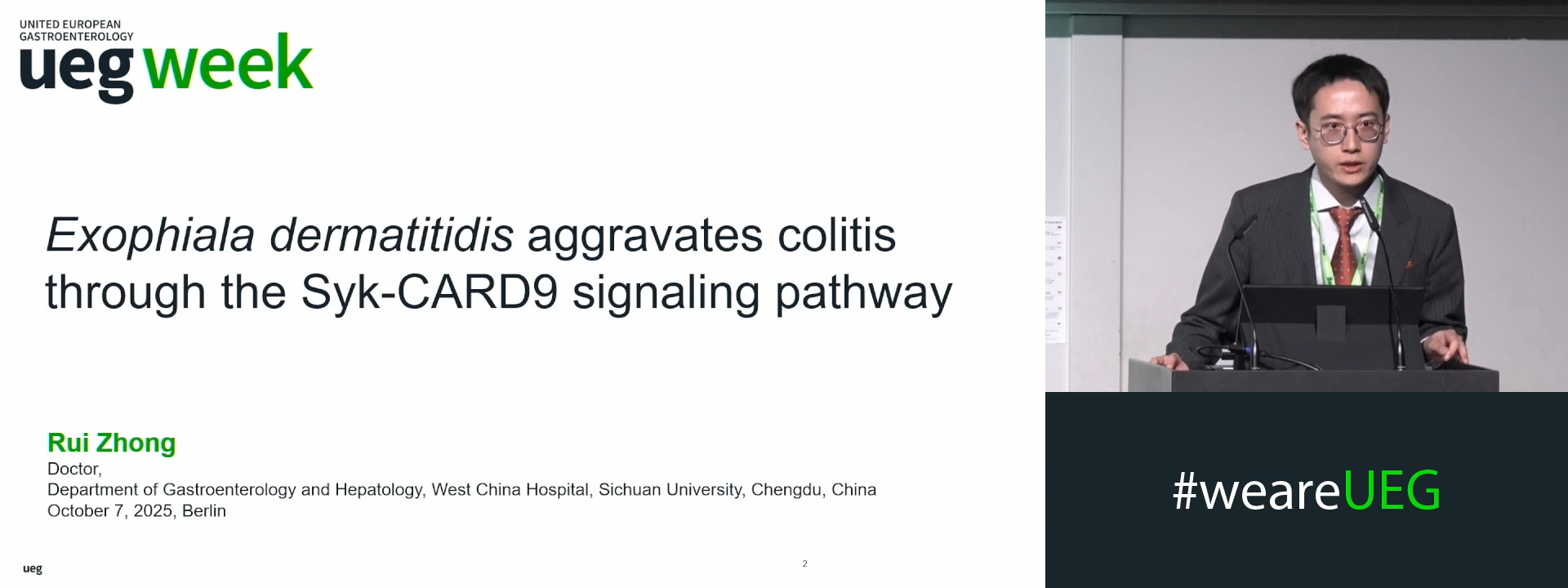
EXOPHIALA DERMATITIDIS EXACERBATES COLITIS THROUGH THE SYK-CARD9 SIGNALING PATHWAY
1 West China Hospital of Sichuan University, Chengdu, China
Event
Submission format
Citation
Published
Log in to access this content.
Free for all myUEG account holders. Your access level is set automatically based on your occupation. Medical professionals get full access to all content. If you are a non-medical user, you can only access UEG Week content from congresses you attended.
Not sure what you can access? Learn more about account types.
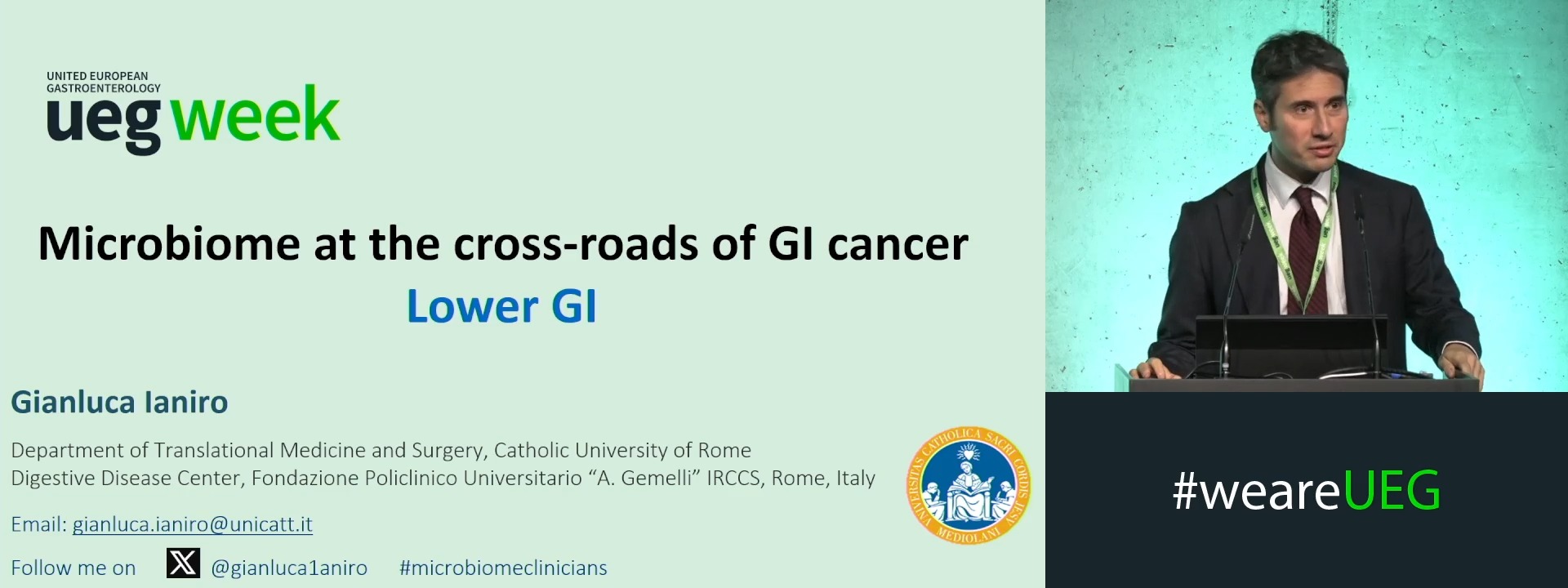
Lower-GI cancer
1 Fondazione Policlinico Universitario "A. Gemelli" IRCCS, Catholic University of Rome, Rome, Italy
Event
Citation
Published
Log in to access this content.
Free for all myUEG account holders. Your access level is set automatically based on your occupation. Medical professionals get full access to all content. If you are a non-medical user, you can only access UEG Week content from congresses you attended.
Not sure what you can access? Learn more about account types.
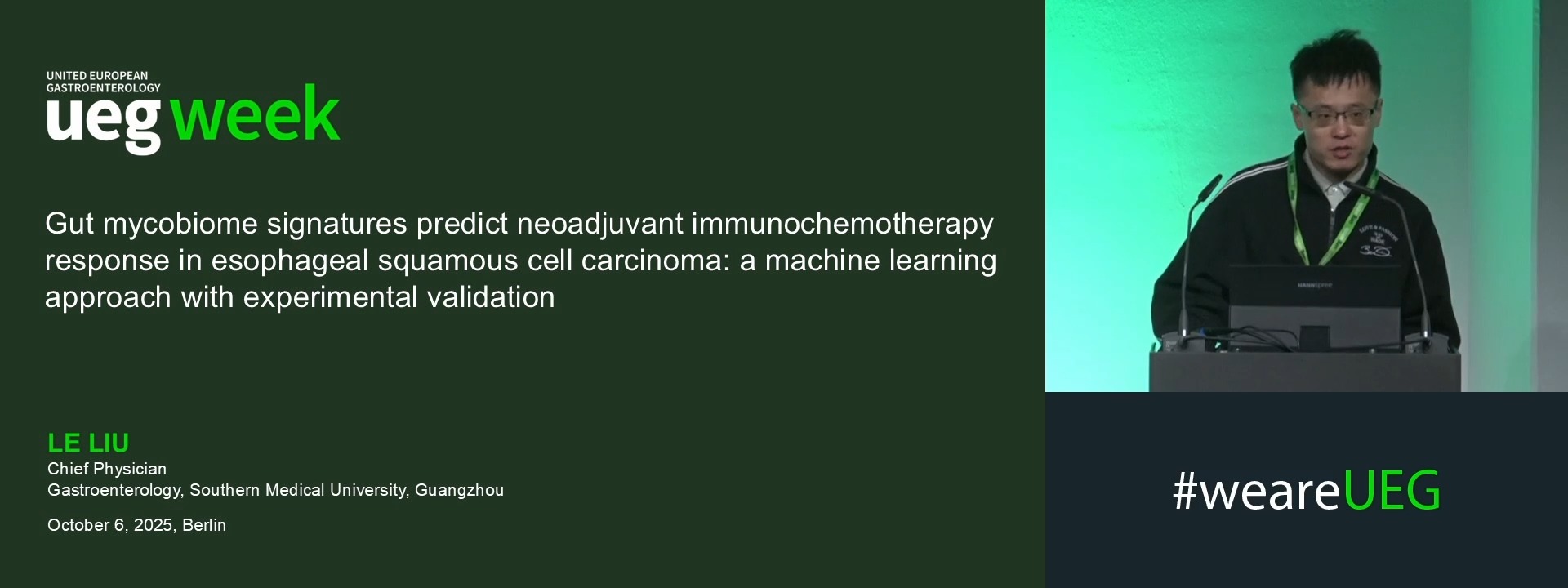
GUT MYCOBIOME SIGNATURES PREDICT NEOADJUVANT IMMUNOCHEMOTHERAPY RESPONSE IN ESOPHAGEAL SQUAMOUS CELL CARCINOMA: A MACHINE LEARNING APPROACH WITH EXPERIMENTAL VALIDATION
1 Zhujiang Hospital, Southern Medical University, Guangzhou, China
2 Guangzhou First People's Hospital, Guangzhou, China
3 Nanfang Hospital, Southern Medical University, Guangzhou, China
Event
Submission format
Session
Citation
Published
Log in to access this content.
Free for all myUEG account holders. Your access level is set automatically based on your occupation. Medical professionals get full access to all content. If you are a non-medical user, you can only access UEG Week content from congresses you attended.
Not sure what you can access? Learn more about account types.
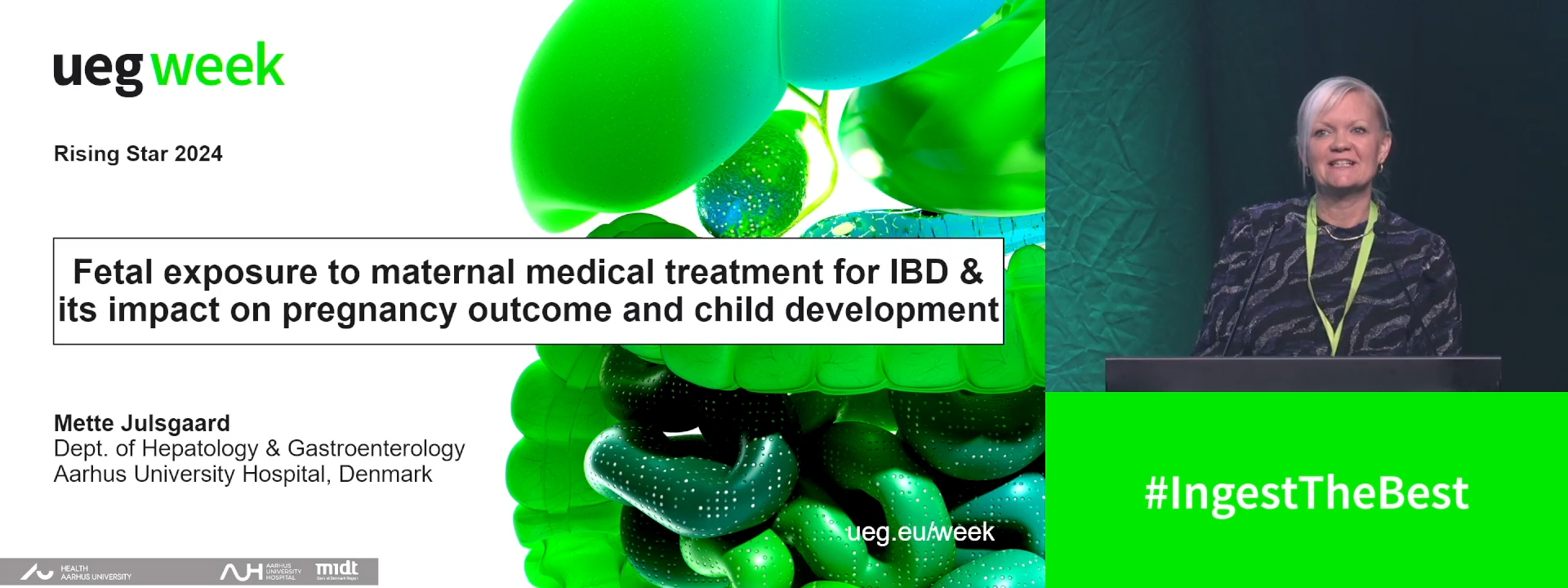
Fetal exposure to maternal medical treatment for IBD and its impact on pregnancy outcome and child development
1 Aarhus University Hospital, Aarhus, Denmark
Event
Topics
Session
Citation
Published
Log in to access this content.
Free for all myUEG account holders. Your access level is set automatically based on your occupation. Medical professionals get full access to all content. If you are a non-medical user, you can only access UEG Week content from congresses you attended.
Not sure what you can access? Learn more about account types.
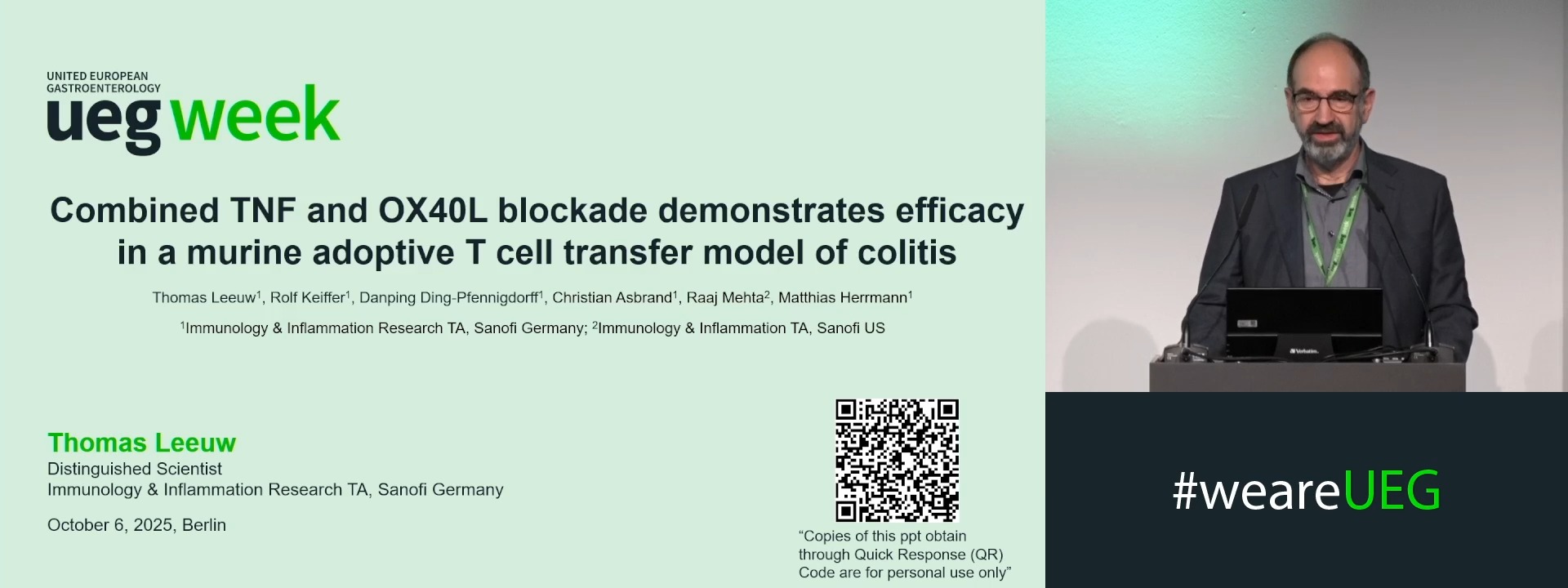
COMBINED TNF AND OX40L BLOCKADE DEMONSTRATES EFFICACY IN A MURINE ADOPTIVE T CELL TRANSFER MODEL OF COLITIS
Thomas Leeuw 1, Rolf Keiffer 1, Danping Ding-Pfennigdorff 1, Christian Asbrand 1, Raaj Mehta 2, Matthias Herrmann 1
1 Immunology & Inflammation Research TA, Sanofi Germany, Frankfurt, Germany
2 Immunology & Inflammation TA, Sanofi US, Cambridge, United States
Event
Submission format
Citation
Published
Log in to access this content.
Free for all myUEG account holders. Your access level is set automatically based on your occupation. Medical professionals get full access to all content. If you are a non-medical user, you can only access UEG Week content from congresses you attended.
Not sure what you can access? Learn more about account types.
New drugs on the horizon
1 Cambridge University Hospital NHS Foundation Trust, Cambridge, United Kingdom
Event
Topics
Session