UEG Week Recordings UEG Week Posters Online courses Guidelines Mistakes in... Podcasts Webinars
new
Gut Guide online
Visit ueg.eu Create myUEG account Log In

Filters:

UEG Mistakes In Articles
Share via Email Share on Facebook Share on X Share on LinkedIn Share on Bluesky

Log in to access this content.

Free for all myUEG account holders. Your access level is set automatically based on your occupation. Medical professionals get full access to all content. If you are a non-medical user, you can only access UEG Week content from congresses you attended.

Log In Create a free account

Not sure what you can access? Learn more about account types.
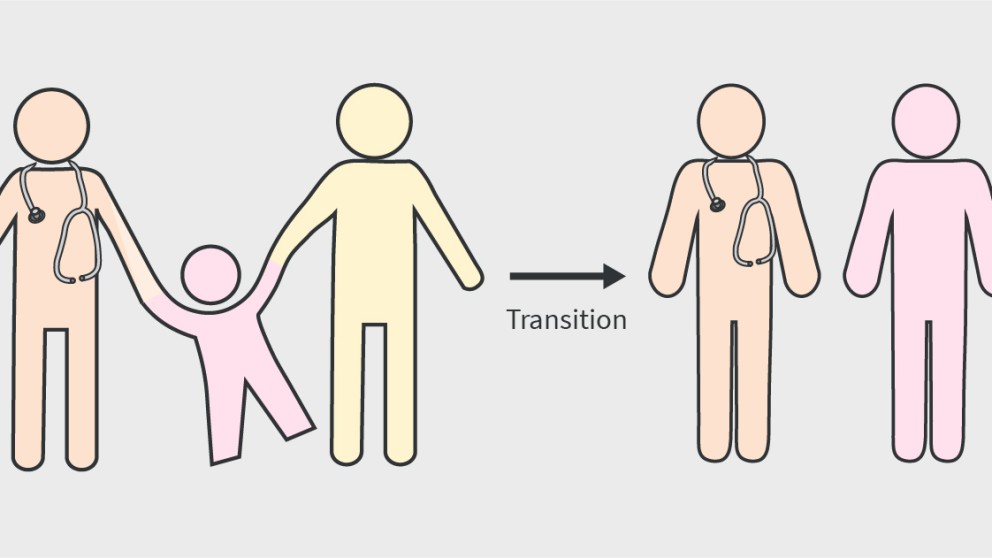
Children and adolescents with chronic diseases requiring lifelong care face unique challenges that affect their daily lives and those of their families. Initially, these patients receive specialized care in pediatric facilities, where parents play a key role in treatment decisions. However, transitioning to adult healthcare facilities is inevitable, and this process, recognized as crucial years ago, involves moving adolescents with chronic conditions from child-centered to adult-oriented care. This transition can be complicated by varying age limits for pediatric care and the scarcity of adult care centers with specific expertise. The transition often requires cooperation between different centers or even countries due to patient mobility. The transition phase is critical, as it can lead to loss of follow-up, treatment suspension, and increased risks of complications or disease relapse. Beyond medical management, various factors influence the long-term prognosis of chronic conditions, making a well-organized transition program essential. While many hospitals have implemented transition models with mixed results in satisfaction, disease control, and follow-up adherence, there are frequent shortcomings in the process. This Mistakes In article will outline eight common mistakes made during the transition from pediatric to adult care, supported by literature and professional experience.

Mistakes in transitional care for children and young adults and how  to avoid them

Mistakes in transitional care for children and young adults and how to avoid them

Patrizia Burra, Hans Törnblom, Jorge Amil Dias, Moriam Mustapha

Topics

Primary Care

Citation

Jorge Amil-Dias, Hans Törnblom, Moriam Mustapha and Patrizia Burra. Mistakes in transitional care for children and young adults and how to avoid them. UEG Education 2023; 23: 22-25.

Published

2023
UEG Mistakes In Articles
Share via Email Share on Facebook Share on X Share on LinkedIn Share on Bluesky

Log in to access this content.

Free for all myUEG account holders. Your access level is set automatically based on your occupation. Medical professionals get full access to all content. If you are a non-medical user, you can only access UEG Week content from congresses you attended.

Log In Create a free account

Not sure what you can access? Learn more about account types.
Mistakes in rumination syndrome and how to avoid them

Alberto Ezquerra-Durán, Elizabeth Barba Orozco

Topics

Neurogastroenterology & Motility

Citation

Ezquerra-Durán A and Barba-Orozco E. Mistakes in rumination syndrome and how to avoid them. UEG Education 2025; 25: 10-13.

Published

2025
UEG Mistakes In Articles
Share via Email Share on Facebook Share on X Share on LinkedIn Share on Bluesky

Log in to access this content.

Free for all myUEG account holders. Your access level is set automatically based on your occupation. Medical professionals get full access to all content. If you are a non-medical user, you can only access UEG Week content from congresses you attended.

Log In Create a free account

Not sure what you can access? Learn more about account types.
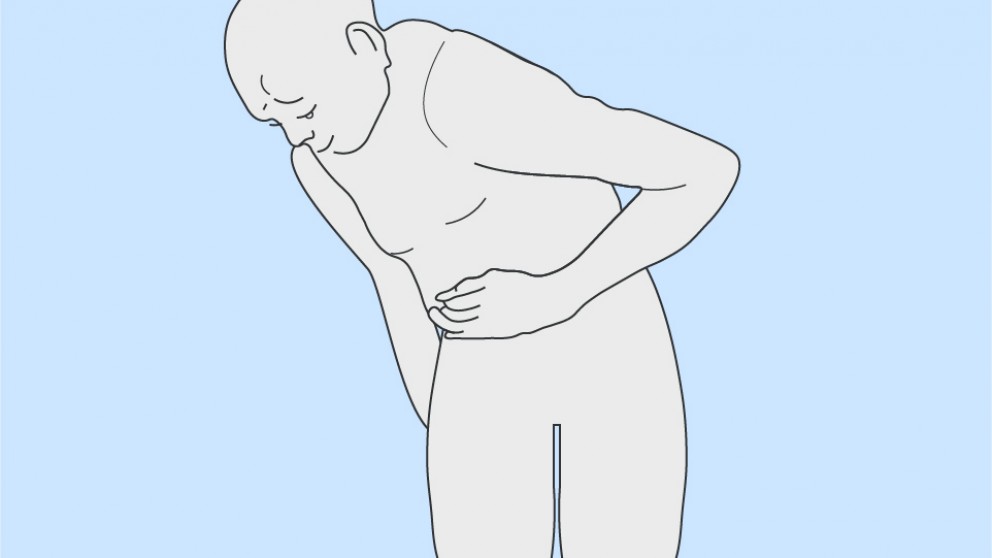
The relationship between nutrition and inflammatory bowel disease (IBD) has been an area of substantial interest and research for many decades now. Evidence-based nutritional strategies are being utilised as a key part of the therapeutic armamentarium in Crohn’s disease for both induction and maintenance, as primary and adjuvant treatment methods. Exclusive enteral nutrition, for instance, is well established in the treatment of paediatric IBD and adult centres are increasingly incorporating it into treatment models as an effective, drug-free alternative.  The role for partial enteral nutrition and Crohn’s disease specific diets are also being more clearly elucidated. Used appropriately, and through engagement with dietetic support services, nutritional therapies can not only achieve the IBD treatment ‘targets’ but serve to optimise other vital aspects of care, such as growth, bone health, body composition and overall patient well-being. Here we discuss some of the mistakes that are frequently made in the area of nutritional management of IBD. The discussion is evidence based, with key references incorporated for further analysis beyond the scope of this article, and combines several decades of leading clinical and research experience in the area of nutrition and IBD from the authors. 


Mistakes in nutrition in IBD and how to avoid them

Mistakes in nutrition in IBD and how to avoid them

Richard K Russell, Konstantinos Gerasimidis

Topics

Small Intestine & Nutrition

Citation

Meredith J, Russell RK and Gerasimidis K. Mistakes in nutrition in IBD and how to avoid them. UEG Education 2020; 20: 25–30.

Published

2020
UEG Mistakes In Articles
Share via Email Share on Facebook Share on X Share on LinkedIn Share on Bluesky

Log in to access this content.

Free for all myUEG account holders. Your access level is set automatically based on your occupation. Medical professionals get full access to all content. If you are a non-medical user, you can only access UEG Week content from congresses you attended.

Log In Create a free account

Not sure what you can access? Learn more about account types.

Diarrhoea, acute or chronic, is a common gastrointestinal symptom in healthcare. In most cases, acute diarrhoea in healthy individuals requires limited diagnostic and therapeutic efforts, except for the replacement of fluid electrolytes, and stool culture in severe occurrences. Acute diarrhoea is often self-limiting due to short-lived reactions to food intake and bacterial or viral infections. However, diarrhoea can persist and fulfil definitions of chronicity when a month or more has passed since the onset. Here we discuss some basic mistakes that should be avoided when managing unexplained non-bloody diarrhoea that persists beyond the acute setting. In this context, the term 'unexplained' refers to a patient without apparent alarm features and where initial consultations have failed at making a diagnosis. We used an evidence-based approach and included aspects predominantly based on clinical experience when appropriate.


Mistakes in the management of unexplained diarrhoea and how to avoid them

Mistakes in the management of unexplained diarrhoea and how to avoid them

Magnus Simrén, Hans Törnblom

Topics

Neurogastroenterology & Motility

Citation

Törnblom H and Simrén M. Mistakes in the management of unexplained diarrhoea and how to avoid them. UEG Education 2022; 22: 16–19.

Published

2022
UEG Podcast Episode
UEG Podcast
Share via Email Share on Facebook Share on X Share on LinkedIn Share on Bluesky

Log in to access this content.

Free for all myUEG account holders. Your access level is set automatically based on your occupation. Medical professionals get full access to all content. If you are a non-medical user, you can only access UEG Week content from congresses you attended.

Log In Create a free account

Not sure what you can access? Learn more about account types.

Management of gastric preneoplastic lesions (MAPS 3) - what’s new? With Mario Dinis-Ribeiro (Part 2)

Mario Dinis-Ribeiro, Pradeep Mundre

Topics

Stomach & H. Pylori

Published

2025
UEG Podcast Episode
UEG Podcast
Share via Email Share on Facebook Share on X Share on LinkedIn Share on Bluesky

Log in to access this content.

Free for all myUEG account holders. Your access level is set automatically based on your occupation. Medical professionals get full access to all content. If you are a non-medical user, you can only access UEG Week content from congresses you attended.

Log In Create a free account

Not sure what you can access? Learn more about account types.

Coeliac disease with David Sanders

David S. Sanders, Pradeep Mundre

Topics

Small Intestine & Nutrition

Published

2026
UEG Standards and Guidelines
Clinical Practice Guideline
Share via Email Share on Facebook Share on X Share on LinkedIn Share on Bluesky

Log in to access this content.

Free for all myUEG account holders. Your access level is set automatically based on your occupation. Medical professionals get full access to all content. If you are a non-medical user, you can only access UEG Week content from congresses you attended.

Log In Create a free account

Not sure what you can access? Learn more about account types.

Abstract

This Technical and Technology Review from the European Society of Gastrointestinal Endoscopy (ESGE) represents an update of the previous document on the technical aspects of endoscopic ultrasound (EUS)-guided sampling in gastroenterology, including the available types of needle, technical aspects of tissue sampling, new devices, and specimen handling and processing. Among the most important new recommendations are:

ESGE recommends end-cutting fine-needle biopsy (FNB) needles over reverse-bevel FNB or fine-needle aspiration (FNA) needles for tissue sampling of solid pancreatic lesions; FNA may still have a role when rapid on-site evaluation (ROSE) is available.

ESGE recommends EUS-FNB or mucosal incision-assisted biopsy (MIAB) equally for tissue sampling of subepithelial lesions ≥20 mm in size. MIAB could represent the first choice for smaller lesions (<20 mm) if proper expertise is available.

ESGE does not recommend the use of antibiotic prophylaxis before EUS-guided tissue sampling of solid masses and EUS-FNA of pancreatic cystic lesions.

Endoscopic ultrasound-guided tissue sampling: European Society of Gastrointestinal Endoscopy (ESGE) Technical and Technology Review

Endoscopic ultrasound-guided tissue sampling: European Society of Gastrointestinal Endoscopy (ESGE) Technical and Technology Review

Antonio Facciorusso

Publisher

European Society of Gastrointestinal Endoscopy logo
European Society of Gastrointestinal Endoscopy

Guideline

Clinical Practice Guideline

Topics

Endoscopy

Citation

Endoscopy 2025; 57(04): 390-418

Published

2025
Login to access

The global reference point for the digestive health community

Platform Publisher

United European Gastroenterology

Wickenburggasse 1 1080 Vienna, Austria

Contact us

support@ueg.eu

ueg.eu

T: +43 1 997 1639

Legal

Terms & Conditions

Imprint

Privacy Policy

Explore

My Bookmarks

My recommendations

My fields of interest

© 2026 United European Gastroenterology

Change fields of interest

These fields are selected based on the interests in your myUEG profile.
Click the item to unselect it. You can select multiple items.