UEG's content platform for gastroenterology education bringing recordings, courses, guidelines, and more together in one place.
Trending on Gutflix
Rate for better recommendations!
Your feedback helps us show you more of what you like and less of what you dislike!
Log in to continue.
This content is part of Gutflix. Log in with your myUEG account, or create one free, to watch it.
Not sure what you can access? Learn more about account types.
Food intolerance and allergy testing
Affiliations
1 Maastricht University Medical Center, Maastricht, Netherlands
Log in to continue.
This content is part of Gutflix. Log in with your myUEG account, or create one free, to watch it.
Not sure what you can access? Learn more about account types.
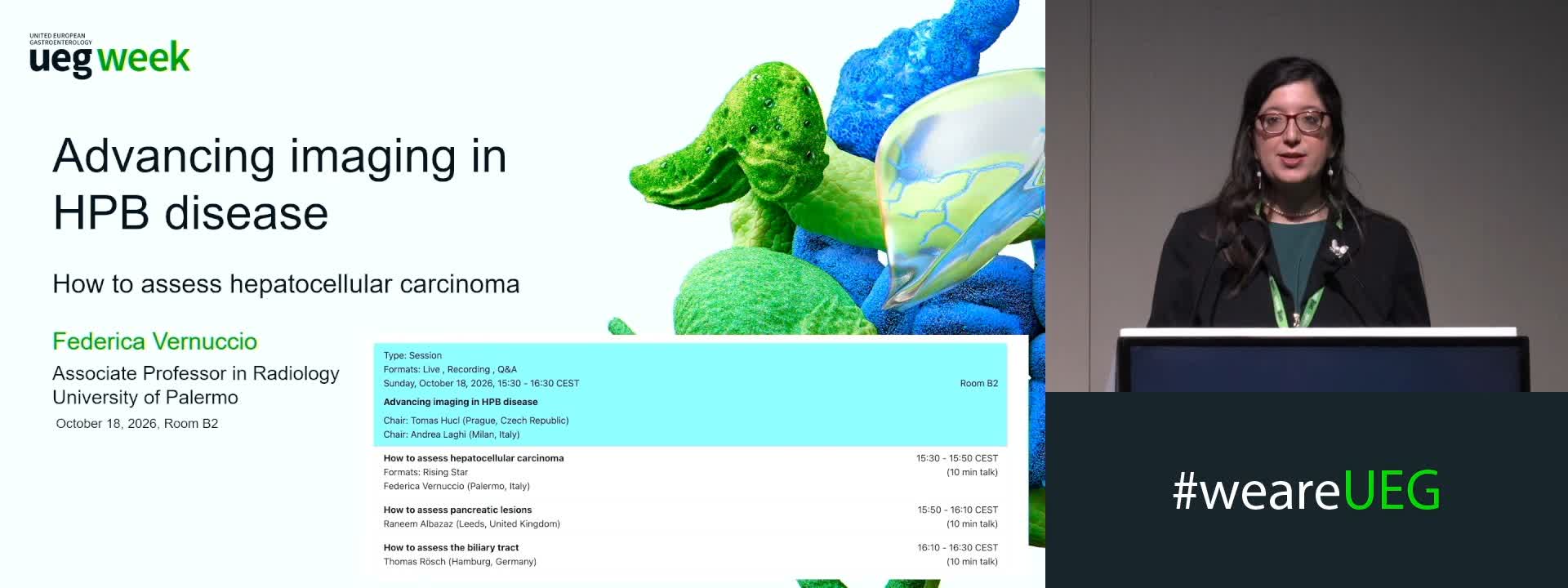
How to assess hepatocellular carcinoma
Affiliations
1 University of Palermo, Palermo, Italy
Log in to continue.
This content is part of Gutflix. Log in with your myUEG account, or create one free, to watch it.
Not sure what you can access? Learn more about account types.
Dysbiosis vs microbiome testing
Affiliations
1 Università Cattolica del Sacro Cuore, Rome, Italy
Log in to continue.
This content is part of Gutflix. Log in with your myUEG account, or create one free, to watch it.
Not sure what you can access? Learn more about account types.
Similarities and differences in the epidemiology and natural history of autoimmune hepatitis vs alcohol-related liver disease
Affiliations
1 King's College Hospital, London, United Kingdom
Log in to continue.
This content is part of Gutflix. Log in with your myUEG account, or create one free, to watch it.
Not sure what you can access? Learn more about account types.
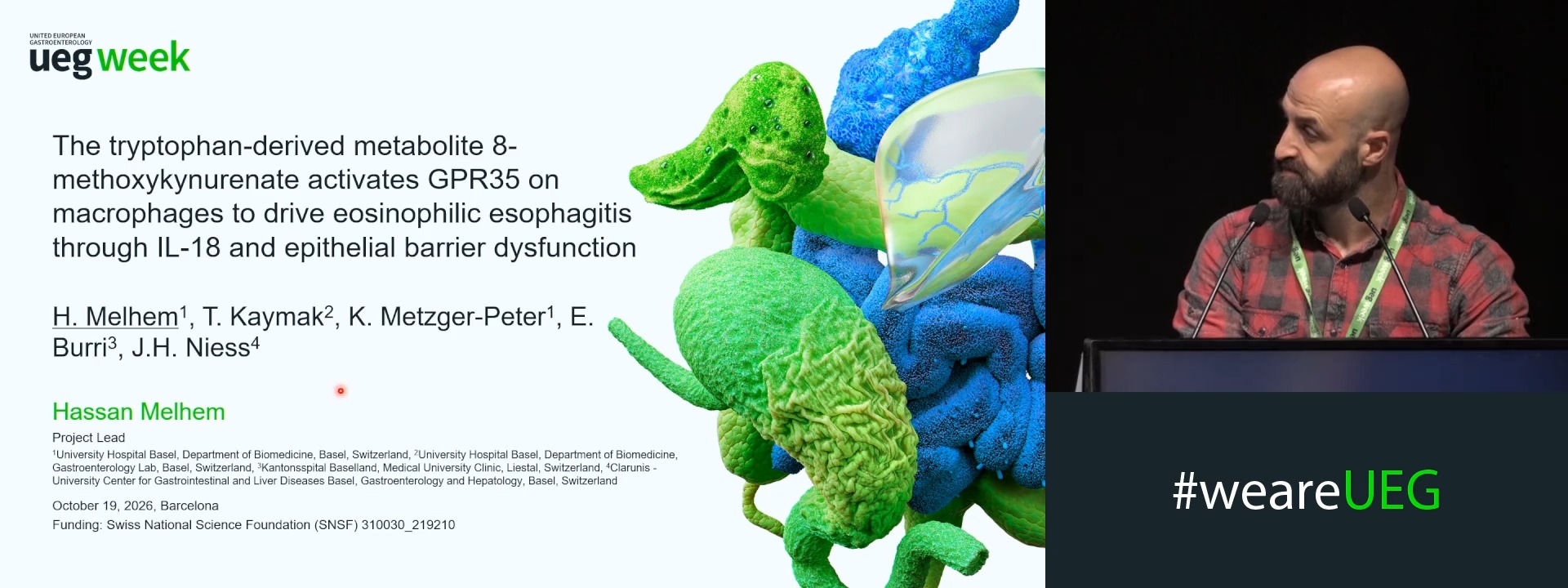
THE TRYPTOPHAN-DERIVED METABOLITE 8-METHOXYKYNURENATE ACTIVATES GPR35 ON MACROPHAGES TO DRIVE EOSINOPHILIC ESOPHAGITIS THROUGH IL-18 AND EPITHELIAL BARRIER DYSFUNCTION
Affiliations
1 University Hospital Basel, Basel, Switzerland
2 Kantonsspital Baselland, Liestal, Switzerland
3 Clarunis - University Center for Gastrointestinal and Liver Diseases Basel, Basel, Switzerland
Log in to continue.
This content is part of Gutflix. Log in with your myUEG account, or create one free, to watch it.
Not sure what you can access? Learn more about account types.
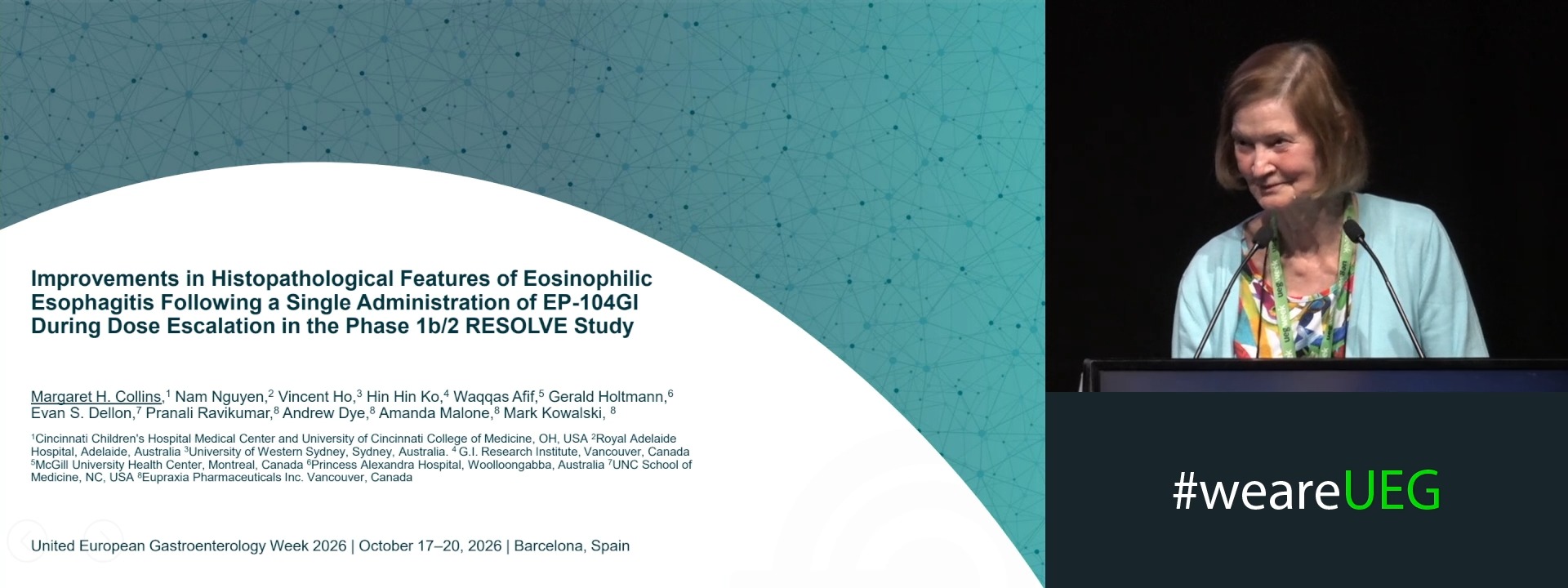
IMPROVEMENTS IN HISTOPATHOLOGICAL FEATURES OF EOSINOPHILIC ESOPHAGITIS FOLLOWING A SINGLE ADMINISTRATION OF EP-104GI DURING DOSE ESCALATION IN THE PHASE 1B/2 RESOLVE STUDY
Margaret H. Collins 1, Nam Quoc Nguyen 2, Vincent Ho 3, Waqqas Afif 4, Gerald J. Holtmann 5, Evan S. Dellon 6, Pranali Ravikumar 7, Andrew Dye 7, Amanda Malone 7, Mark Kowalski 7
Affiliations
1 Cincinnati Children’s Hospital Medical Center and University of Cincinnati College of Medicine, Cincinnati, United States
2 Royal Adelaide Hospital, Adelaide, Australia
3 University of Western Sydney, Brisbane Queensland, Australia
4 McGill University Health Center, Montreal, Canada
5 University of Queensland, Brisbane, Australia
6 University of North Carolina School of Medicine, Chapel Hill, NC, United States
7 Eupraxia Pharmaceuticals, Vancouver, Canada
Log in to continue.
This content is part of Gutflix. Log in with your myUEG account, or create one free, to watch it.
Not sure what you can access? Learn more about account types.
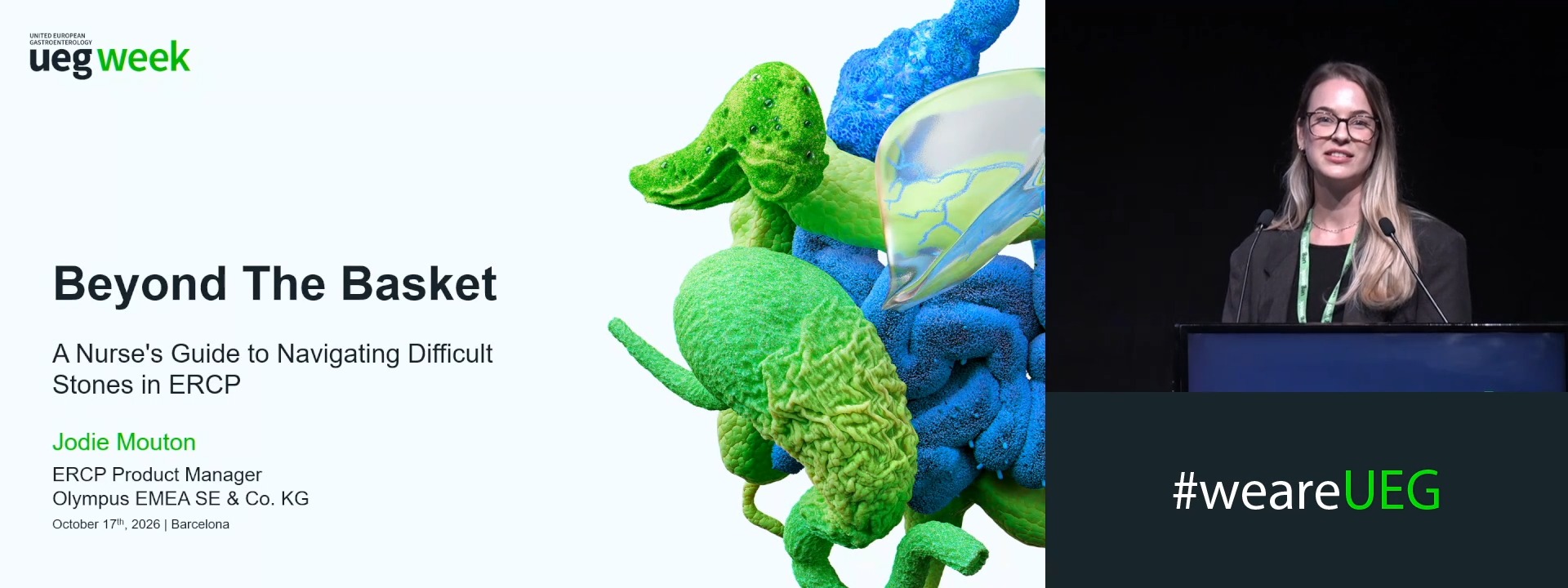
Beyond the basket: A nurse's guide to navigating difficult stones in ERCP (OLYMPUS EUROPA SE & CO. KG )