UEG's content platform for gastroenterology education bringing recordings, courses, guidelines, and more together in one place.
Trending on Gutflix
Rate for better recommendations!
Your feedback helps us show you more of what you like and less of what you dislike!
Log in to continue.
This content is part of Gutflix. Log in with your myUEG account, or create one free, to watch it.
Not sure what you can access? Learn more about account types.
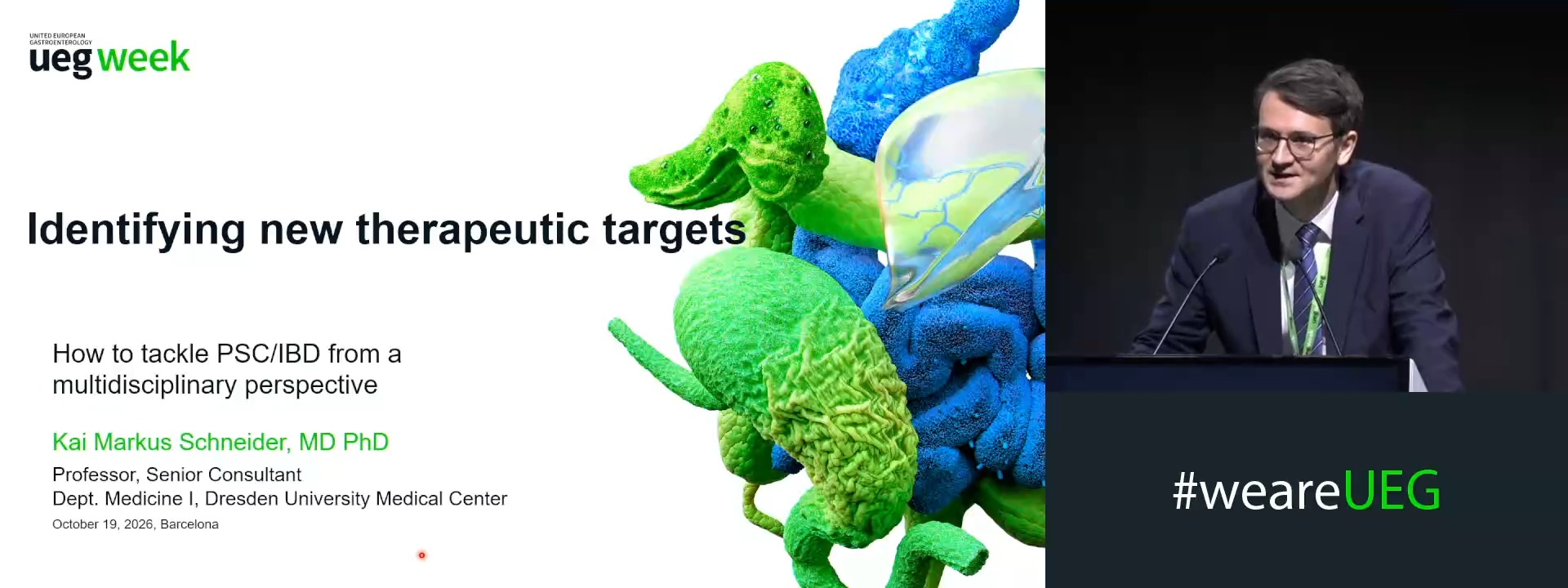
Identifying new therapeutic targets
Affiliations
1 Dresden University Medical Center, Dresden, Germany
Log in to continue.
This content is part of Gutflix. Log in with your myUEG account, or create one free, to watch it.
Not sure what you can access? Learn more about account types.
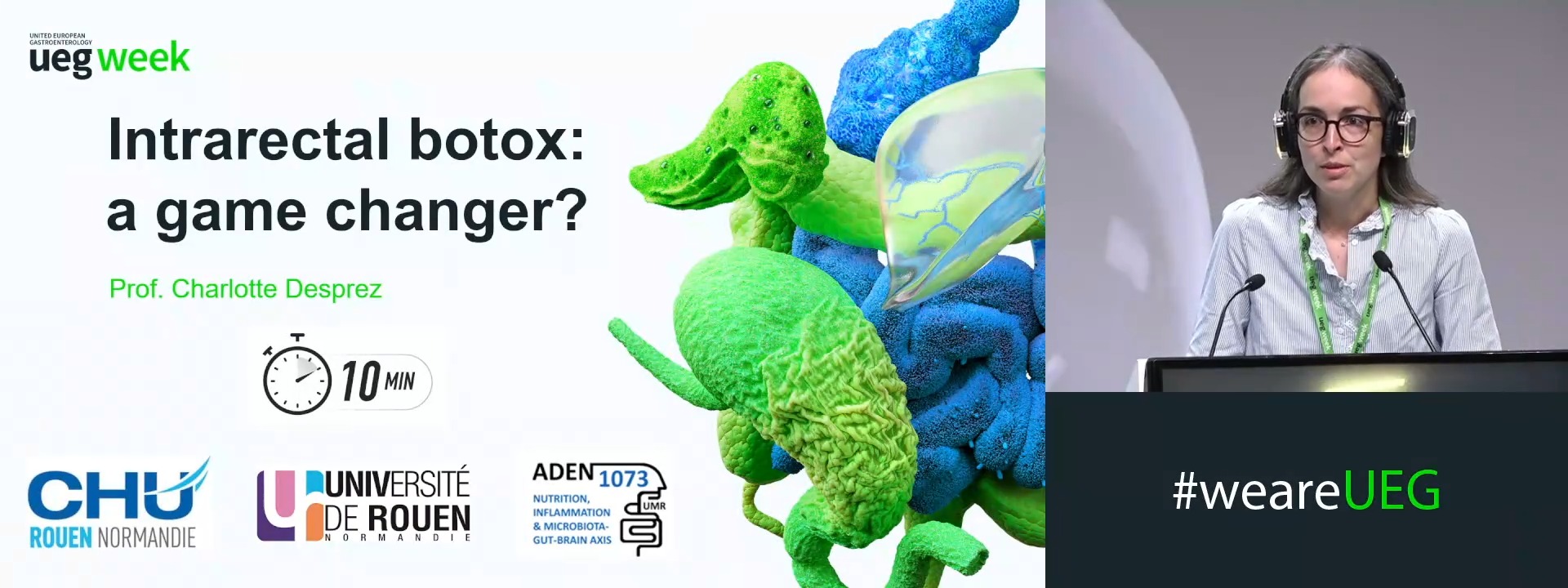
Intrarectal botox: A game changer?
Affiliations
1 Rouen University Hospital, Rouen, France
Log in to continue.
This content is part of Gutflix. Log in with your myUEG account, or create one free, to watch it.
Not sure what you can access? Learn more about account types.
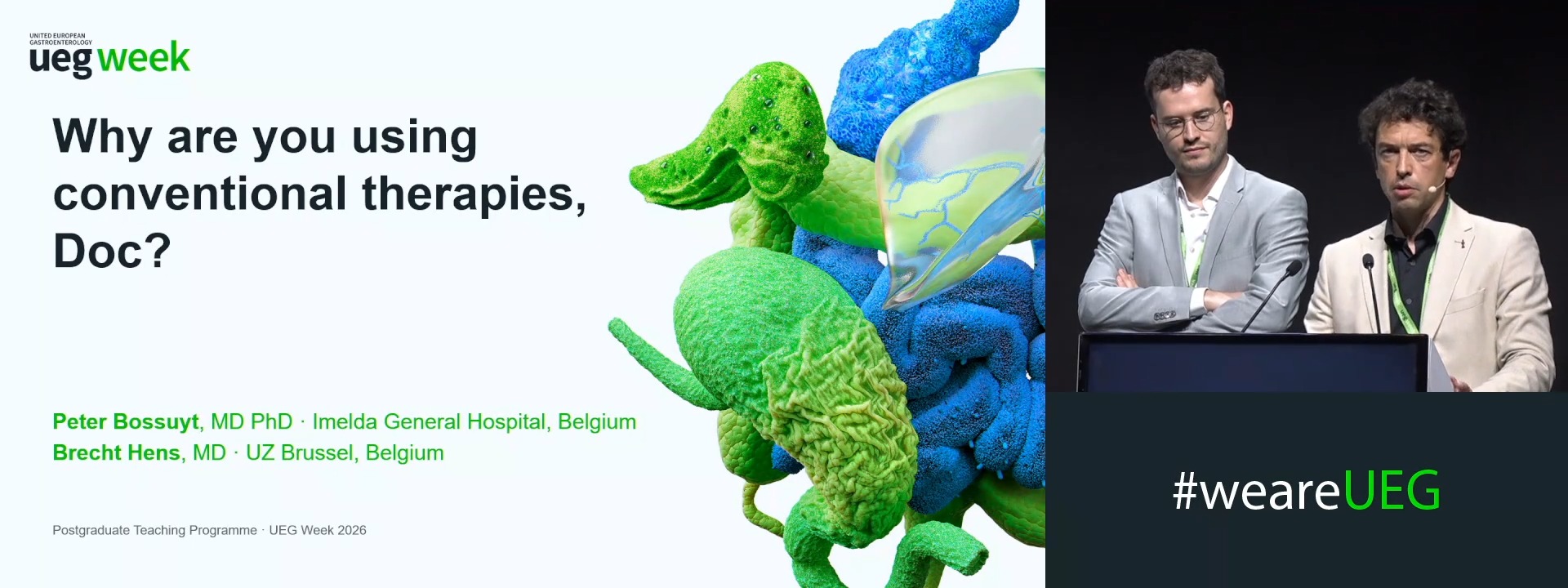
Why are you using conventional therapies, doc? A case-based perspective and state-of-the-art overview
Affiliations
1 Imelda General Hospital, Bonheiden, Belgium
2 UZ Brussel, Brussels, Belgium
Log in to continue.
This content is part of Gutflix. Log in with your myUEG account, or create one free, to watch it.
Not sure what you can access? Learn more about account types.
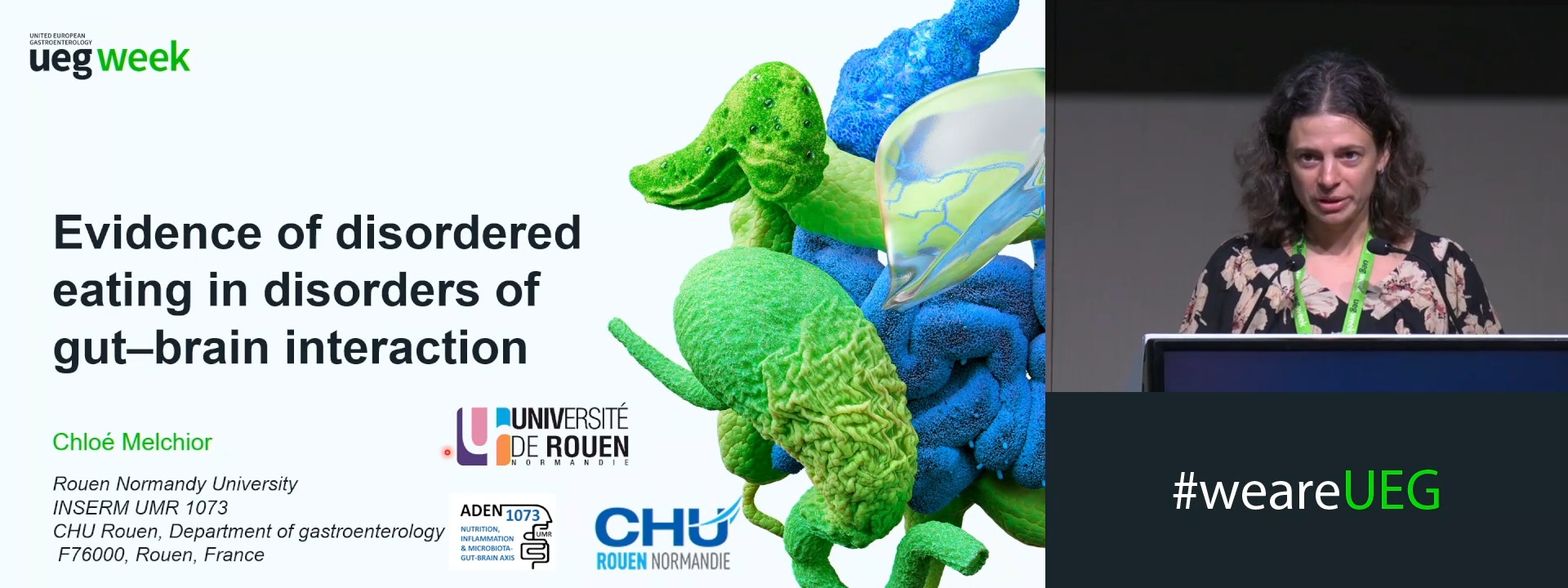
Evidence of disordered eating in disorders of gut–brain interaction
Affiliations
1 Rouen University Hospital, INSERM U1073, CIC-CRB-1404, Rouen, France
Log in to continue.
This content is part of Gutflix. Log in with your myUEG account, or create one free, to watch it.
Not sure what you can access? Learn more about account types.
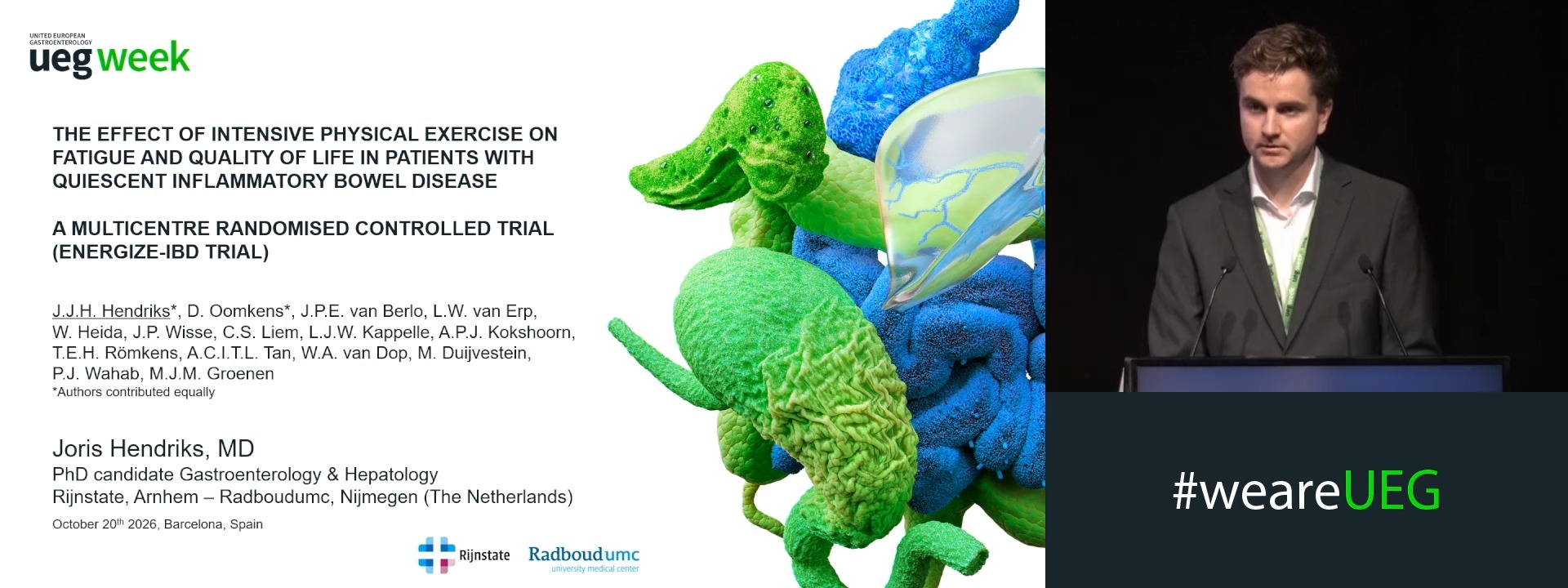
THE EFFECT OF INTENSIVE PHYSICAL EXERCISE ON FATIGUE AND QUALITY OF LIFE IN PATIENTS WITH QUIESCENT INFLAMMATORY BOWEL DISEASE: FOLLOW-UP RESULTS OF A MULTICENTRE RANDOMISED CONTROLLED TRIAL (ENERGIZE-IBD TRIAL)
Joris J H Hendriks 1,2, Dorien Oomkens 1,2, Jole P. E. van Berlo 1, Liselot van Erp 1, Wendy Heida 1, Jolien P. Wisse 1, Camilo S. Liem 3, Laurens J. W. Kappelle 4, Robert E. H. van Cingel 4,2, Arjan P. J. Kokshoorn 5, Tessa E.H. Römkens 5, Adriaan Tan 6, Willemijn Van Dop 2, Marjolijn Duijvestein 2, Peter J Wahab 1, Marcel J.M. Groenen 1
Affiliations
1 Rijnstate, Arnhem, Netherlands
2 Radboud University Medical Centre, Nijmegen, Netherlands
3 Formupgrade Sports Centre, Arnhem, Netherlands
4 Sport Medisch Centrum Papendal, Arnhem, Netherlands
5 Jeroen Bosch Hospital, 's-Hertogenbosch, Netherlands
6 Canisius Wilhelmina Hospital, Nijmegen, Netherlands
Log in to continue.
This content is part of Gutflix. Log in with your myUEG account, or create one free, to watch it.
Not sure what you can access? Learn more about account types.
What’s new in nutritional induction therapy?
Affiliations
1 Edith Wolfson Medical Center, Holon, Israel