UEG's content platform for gastroenterology education bringing recordings, courses, guidelines, and more together in one place.
Trending on Gutflix
Rate for better recommendations!
Your feedback helps us show you more of what you like and less of what you dislike!
Log in to continue.
This content is part of Gutflix. Log in with your myUEG account, or create one free, to watch it.
Not sure what you can access? Learn more about account types.
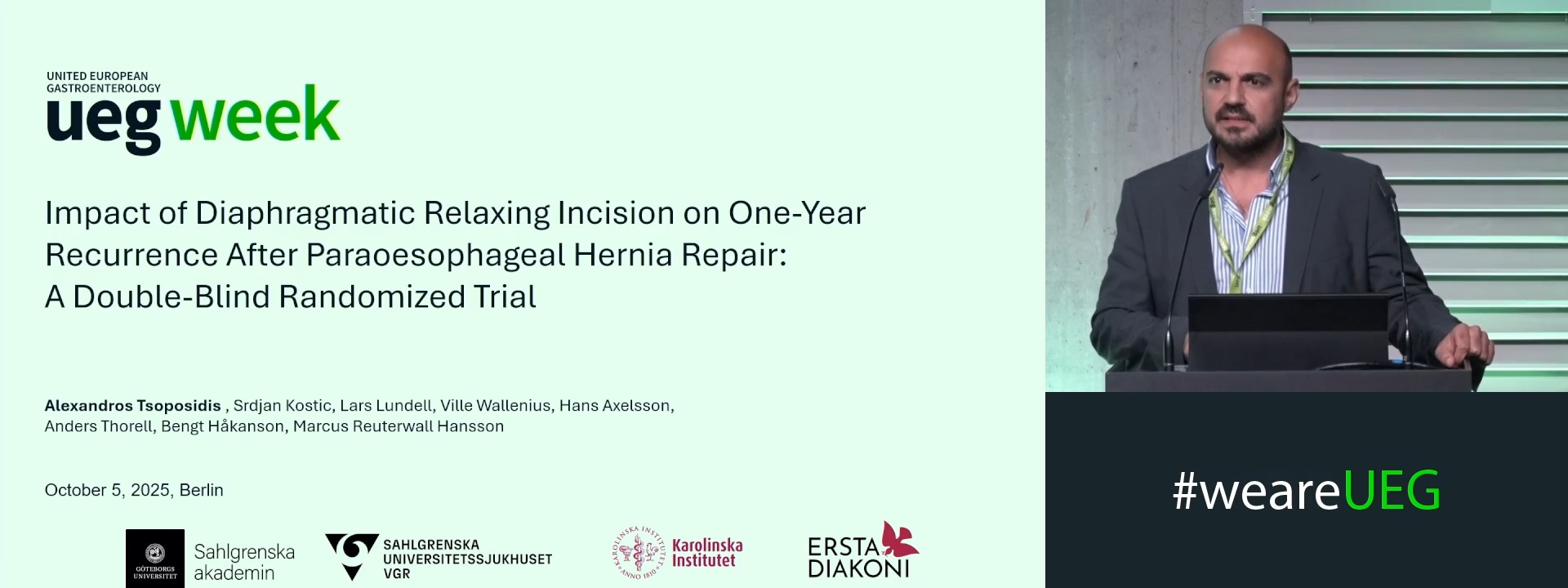
IMPACT OF DIAPHRAGMATIC RELAXING INCISION ON RECURRENCE RATE AFTER PARAESOPHAGEAL HERNIA REPAIR; 1 YEAR RESULTS OF A DOUBLE-BLIND, RANDOMIZED CLINICAL TRIAL
Alexandros Tsoposidis 1, Srdjan Kostic 1, Lars Lundell 2, Ville Wallenius 1, Hans Axelsson 1, Anders Thorell 3, Bengt Håkanson 3, Marcus Reuterwall Hansson 3
Affiliations
1 University of Gothenburg, Gothenburg, Sweden
2 Karolinska Institutet, Stockholm, Sweden
3 Karolinska Institutet, Stockholm, Sweden|||Ersta Hospital, Stockholm, Sweden
Log in to continue.
This content is part of Gutflix. Log in with your myUEG account, or create one free, to watch it.
Not sure what you can access? Learn more about account types.
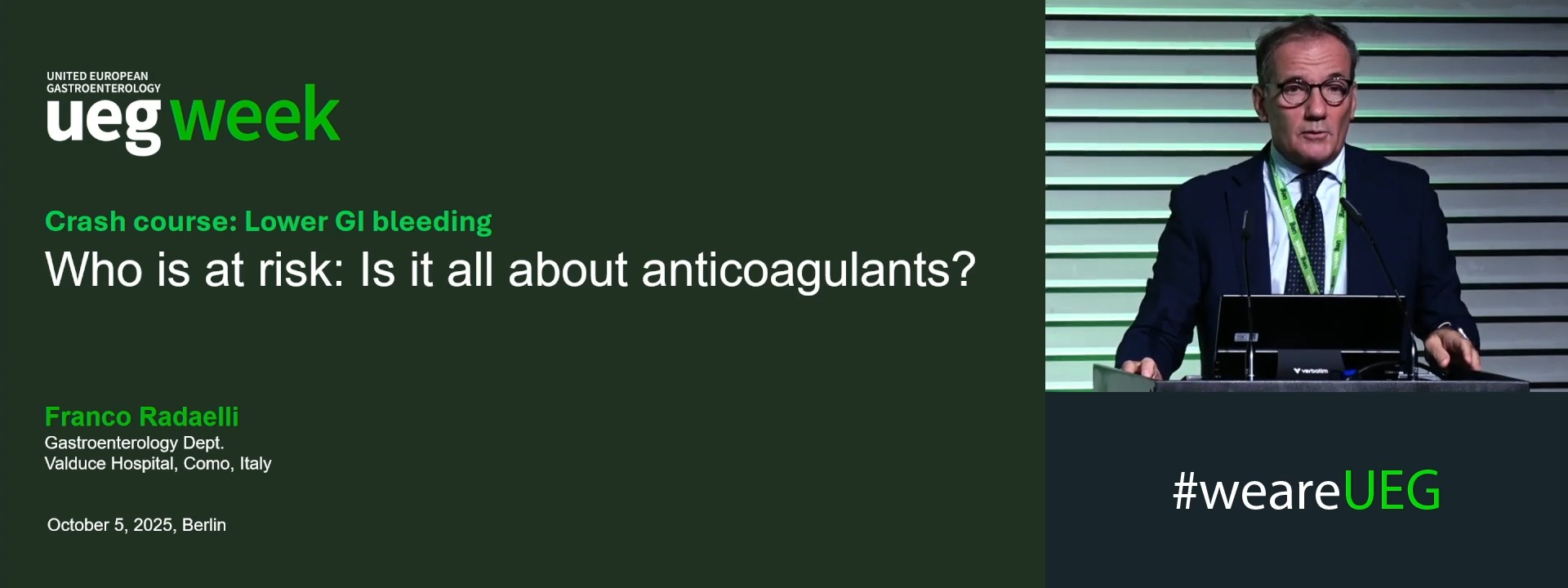
Who is at risk: Is it all about anticoagulants?
Affiliations
1 Valduce Hospital, Como, Italy
Log in to continue.
This content is part of Gutflix. Log in with your myUEG account, or create one free, to watch it.
Not sure what you can access? Learn more about account types.
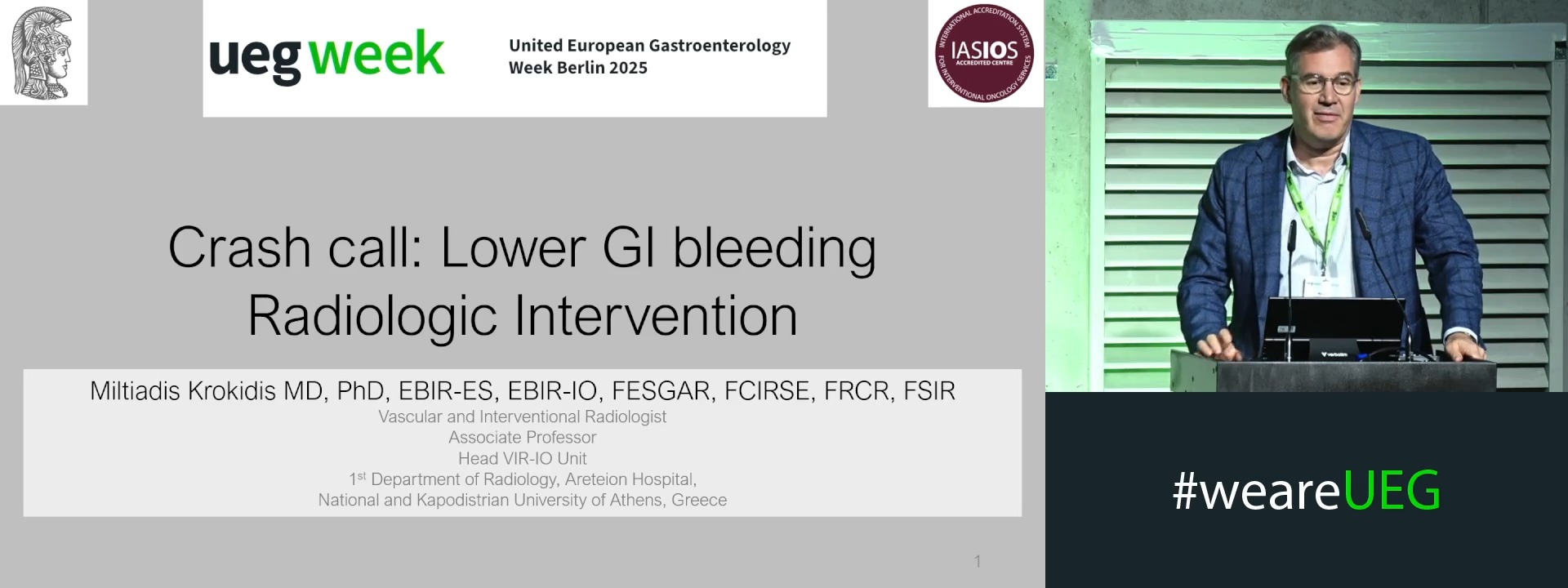
Radiologic intervention
Affiliations
1 National and Kapodistrian University of Athens, Athens, Greece
Log in to continue.
This content is part of Gutflix. Log in with your myUEG account, or create one free, to watch it.
Not sure what you can access? Learn more about account types.
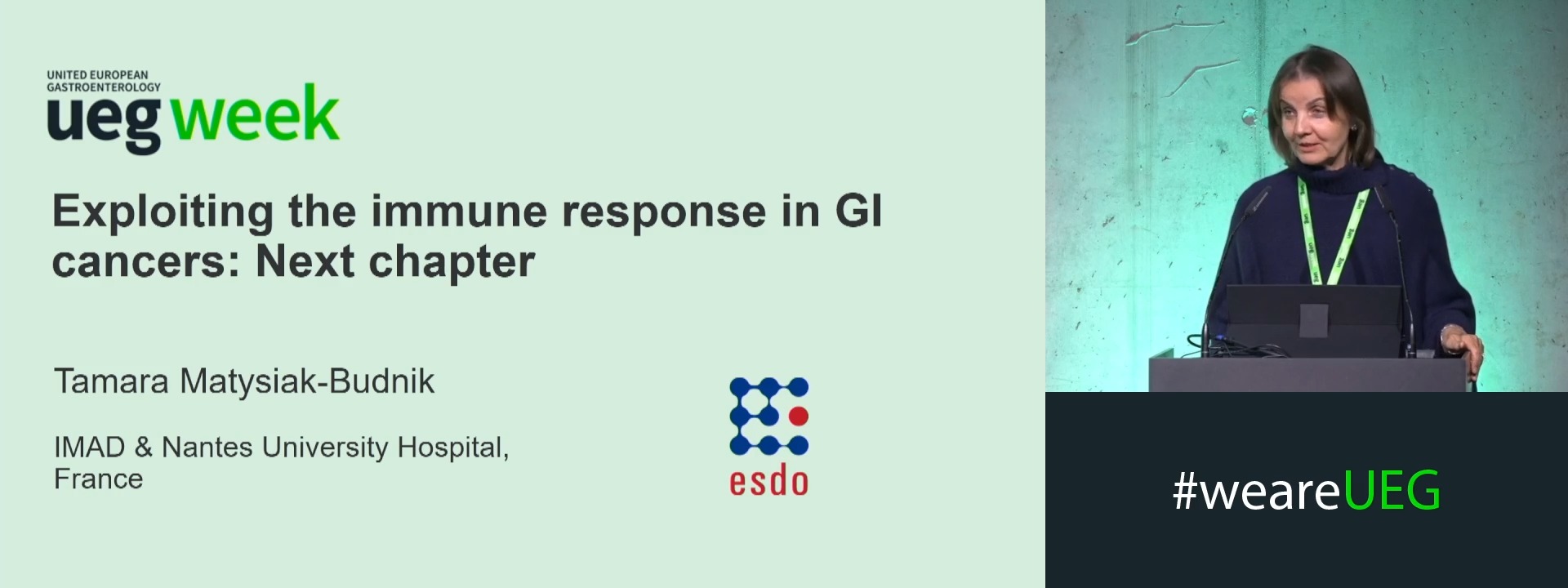
Exploiting the immune response in GI cancer: Next chapter
Affiliations
1 CHU de Nantes IMAD, Nantes, France
Log in to continue.
This content is part of Gutflix. Log in with your myUEG account, or create one free, to watch it.
Not sure what you can access? Learn more about account types.
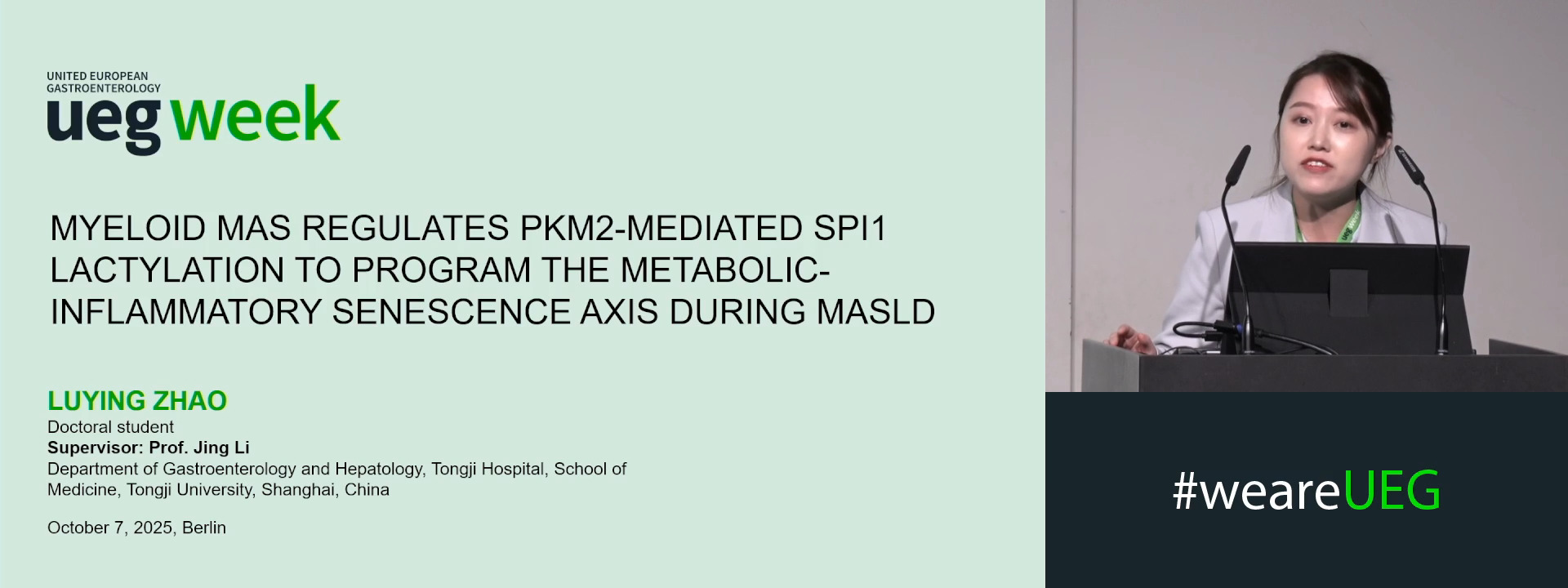
MYELOID MAS REGULATES PKM2-MEDIATED SPI1 LACTYLATION TO PROGRAM THE METABOLIC-INFLAMMATORY SENESCENCE AXIS OF MONONUCLEAR PHAGOCYTE SYSTEM DURING THE METABOLIC DYSFUNCTION-ASSOCIATED STEATOTIC LIVER DISEASE (MASLD)
Affiliations
1 Tongji Hospital, Tongji University School of Medicine, Shanghai, China

Log in to continue.
This content is part of Gutflix. Log in with your myUEG account, or create one free, to watch it.
Not sure what you can access? Learn more about account types.
Metabolic dysfunction-associated fatty liver disease (MASLD)
Affiliations
1 University of Birmingham, Birmingham, United Kingdom

Log in to continue.
This content is part of Gutflix. Log in with your myUEG account, or create one free, to watch it.
Not sure what you can access? Learn more about account types.