UEG's content platform for gastroenterology education bringing recordings, courses, guidelines, and more together in one place.
Trending on Gutflix
Rate for better recommendations!
Your feedback helps us show you more of what you like and less of what you dislike!
Log in to continue.
This content is part of Gutflix. Log in with your myUEG account, or create one free, to watch it.
Not sure what you can access? Learn more about account types.
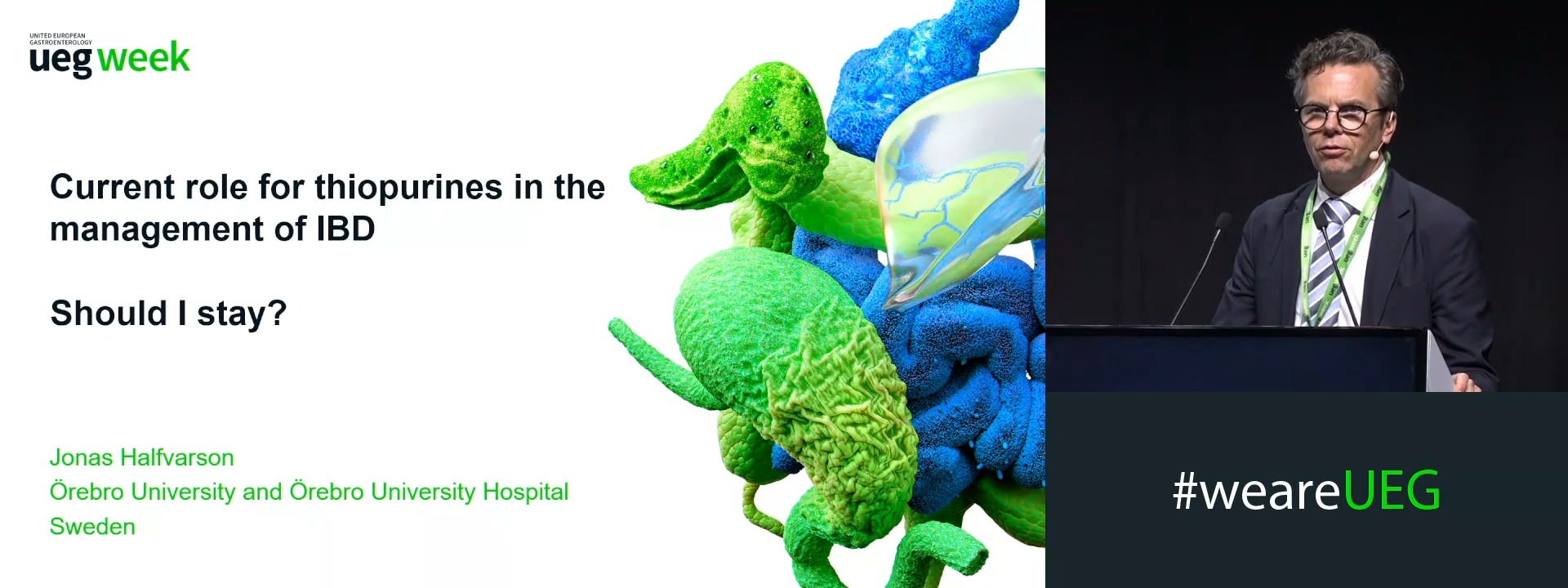
Current role for thiopurines in the management of IBD: Should I stay?
Affiliations
1 Örebro University, Örebro, Sweden
Log in to continue.
This content is part of Gutflix. Log in with your myUEG account, or create one free, to watch it.
Not sure what you can access? Learn more about account types.
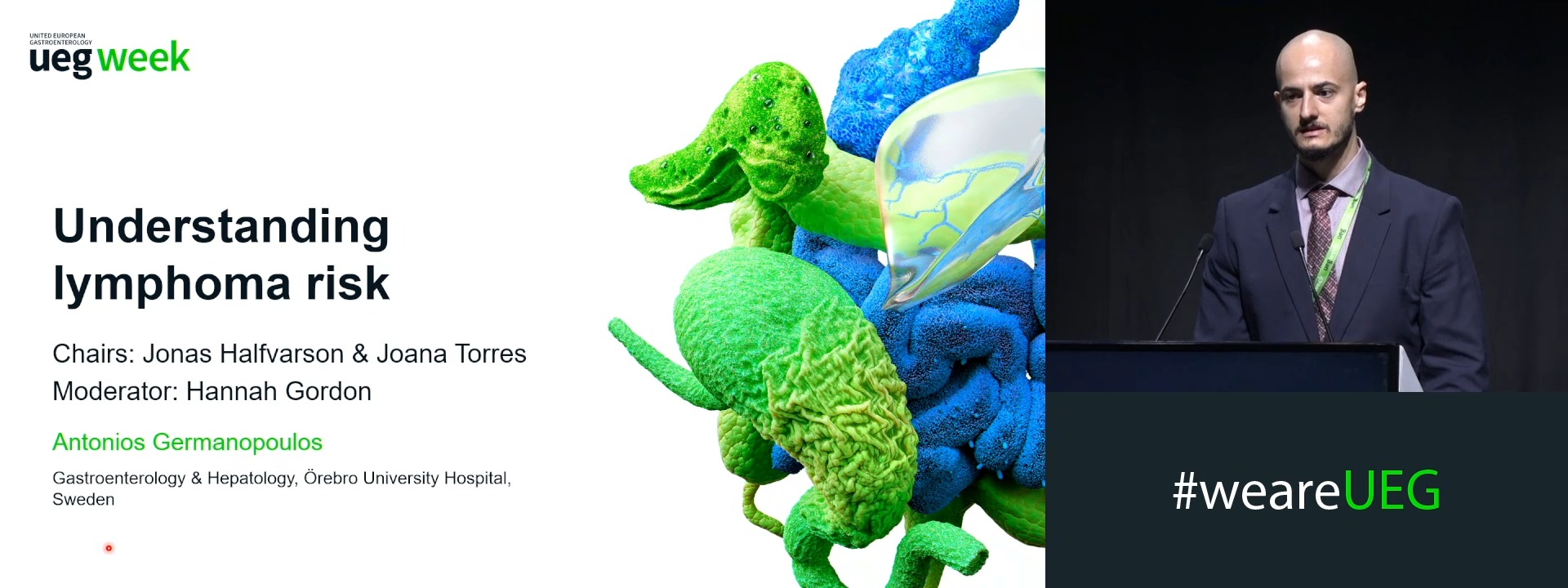
The immunomodulator’s shadow: Understanding lymphoma risk
Affiliations
1 University Hospital of Örebro, Örebro, Sweden
Log in to continue.
This content is part of Gutflix. Log in with your myUEG account, or create one free, to watch it.
Not sure what you can access? Learn more about account types.
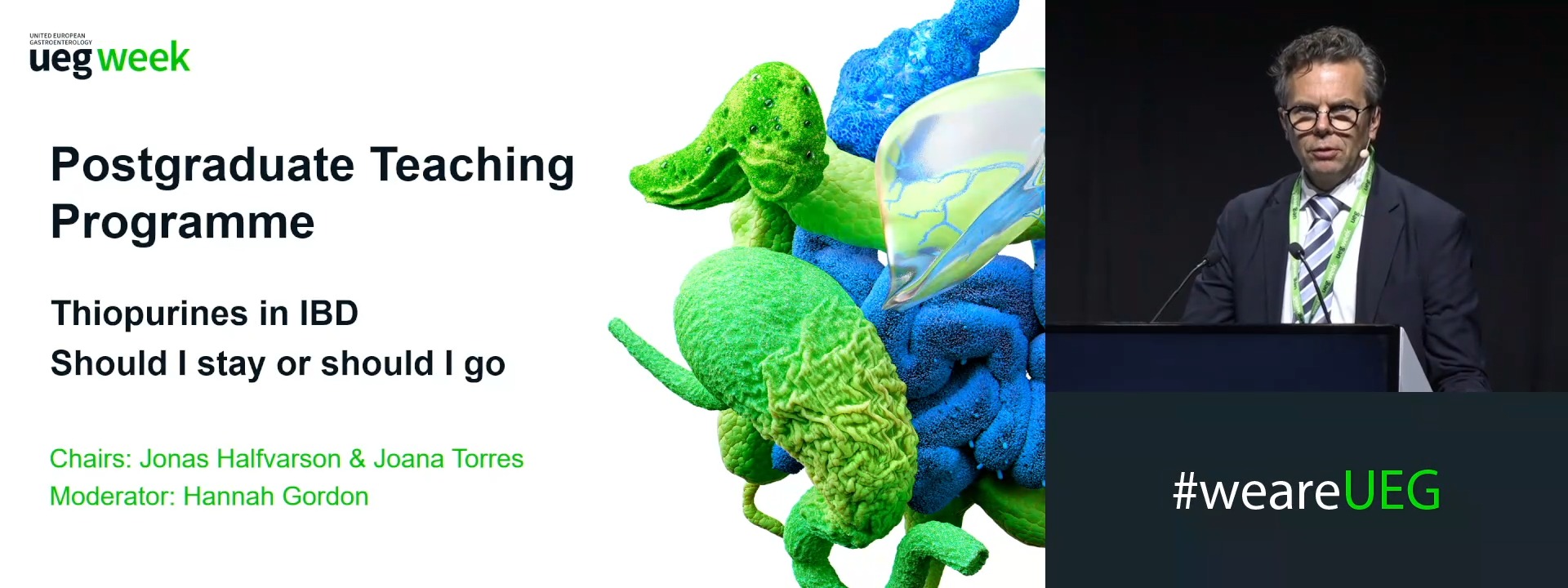
Introduction: Thiopurines in IBD: If I go, there will be trouble; if I stay, it will be double
Affiliations
1 Örebro University, Örebro, Sweden
Log in to continue.
This content is part of Gutflix. Log in with your myUEG account, or create one free, to watch it.
Not sure what you can access? Learn more about account types.
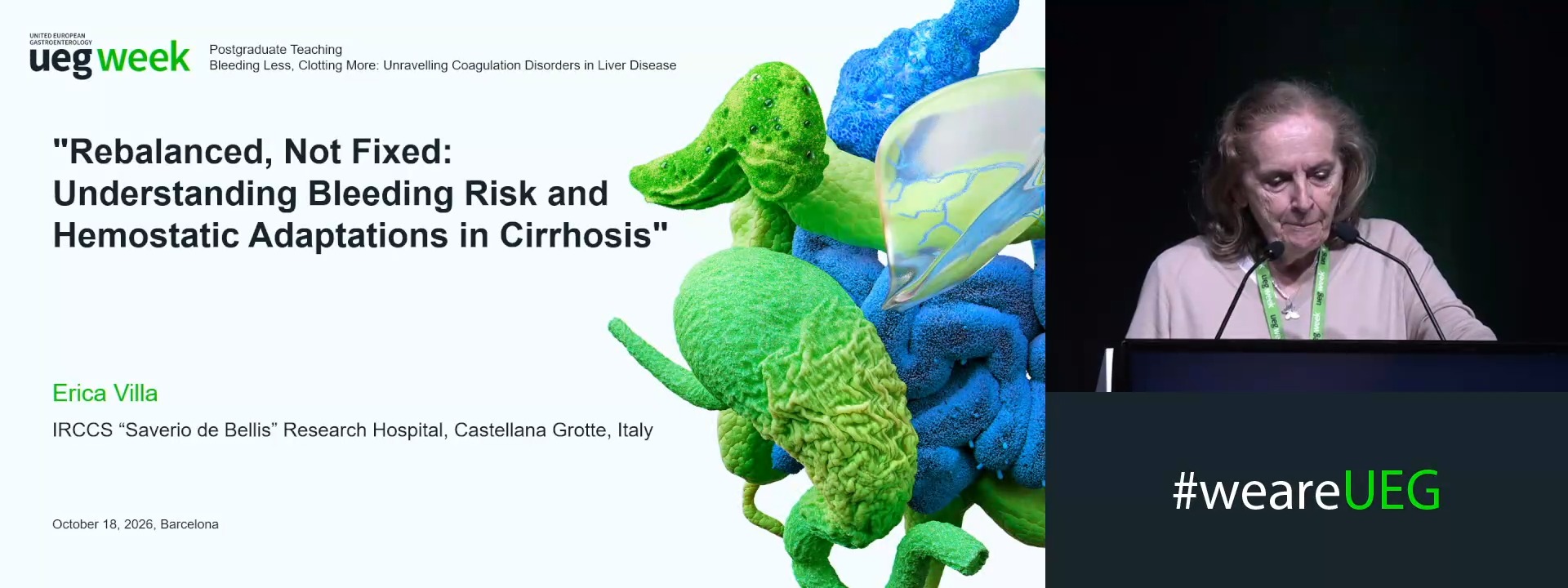
Rebalanced, not fixed: Understanding bleeding risk and haemostatic adaptations in cirrhosis
Affiliations
1 IRCCS Saverio de Bellis, Modena, Italy
Log in to continue.
This content is part of Gutflix. Log in with your myUEG account, or create one free, to watch it.
Not sure what you can access? Learn more about account types.
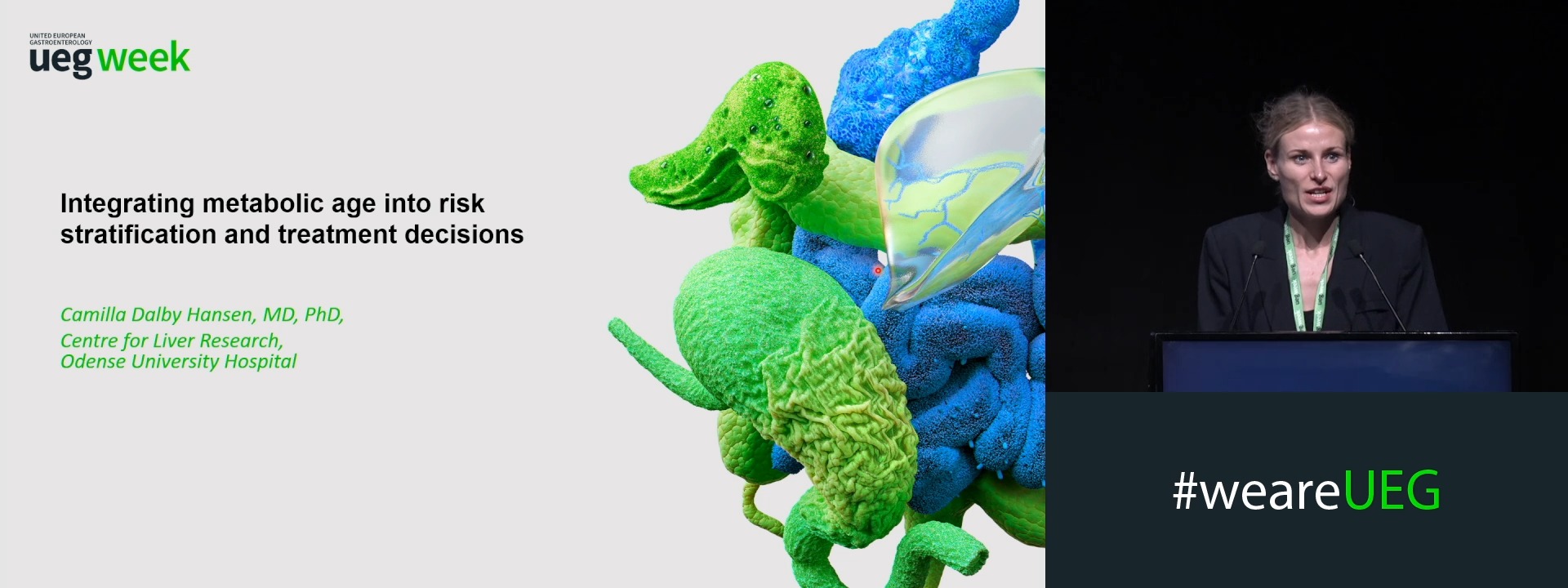
Integrating metabolic age into risk stratification and treatment decisions
Affiliations
1 Odense University Hospital, Odense, Denmark
Log in to continue.
This content is part of Gutflix. Log in with your myUEG account, or create one free, to watch it.
Not sure what you can access? Learn more about account types.
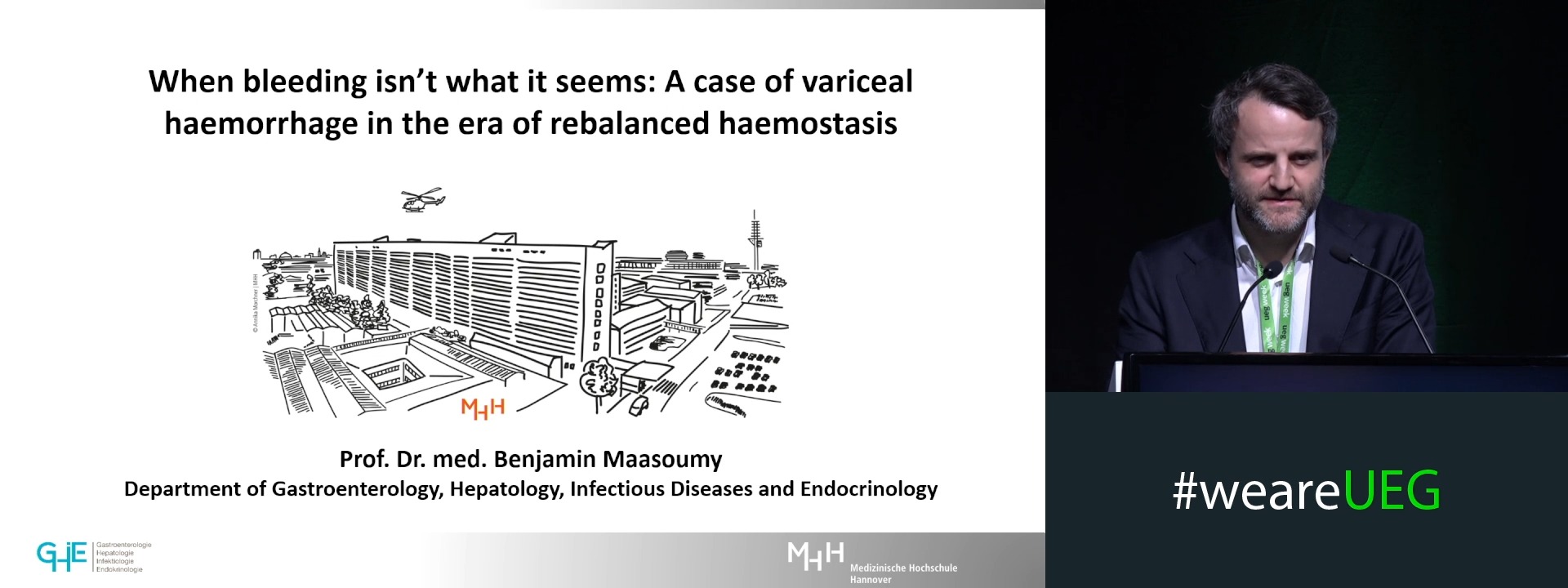
When bleeding isn’t what it seems: A case of variceal haemorrhage in the era of rebalanced haemostasis
Affiliations
1 Medizinische Hochschule Hannover, Hannover, Germany