UEG's educational platform for gastroenterology education bringing recordings, courses, guidelines, and more together in one place.
Most popular content
Rate for better recommendations!
Your feedback helps us show you more of what you like and less of what you dislike!
Log in to access this content.
Free for all myUEG account holders. Your access level is set automatically based on your occupation. Medical professionals get full access to all content. If you are a non-medical user, you can only access UEG Week content from congresses you attended.
Not sure what you can access? Learn more about account types.

COMPARABLE OUTCOMES AFTER EUS-GUIDED GASTROENTEROSTOMY IN PATIENTS WITH VERSUS WITHOUT ABDOMINAL CARCINOMATOSIS: A SINGLE CENTRE STUDY
Benedetto Neri 1, Piera Melatti 1, Dario Biasutto 1, Claudia Marinaccio 1, Serena Stigliano 1, Gianluca Andrisani 1, Nicolò Citterio 1, Marta Pettinelli 1, Roberta Rea 1, Margareth Martino 1, Monica Pandolfi 1, Francesco Di Matteo 1
1 Fondazione Policlinico Campus Bio Medico di Roma, Rome, Italy
Conference
Topics
Submission format
Citation
Published
Log in to access this content.
Free for all myUEG account holders. Your access level is set automatically based on your occupation. Medical professionals get full access to all content. If you are a non-medical user, you can only access UEG Week content from congresses you attended.
Not sure what you can access? Learn more about account types.
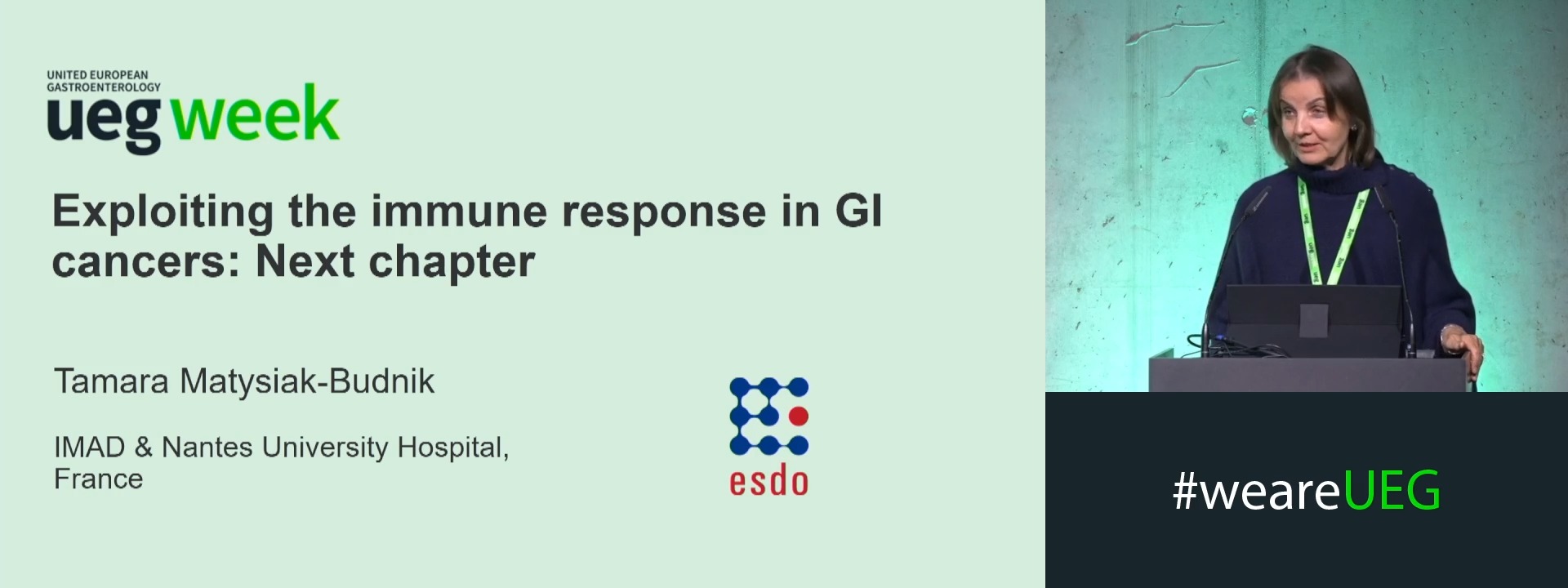
Exploiting the immune response in GI cancer: Next chapter
1 CHU de Nantes IMAD, Nantes, France
Event
Topics
Citation
Published
Log in to access this content.
Free for all myUEG account holders. Your access level is set automatically based on your occupation. Medical professionals get full access to all content. If you are a non-medical user, you can only access UEG Week content from congresses you attended.
Not sure what you can access? Learn more about account types.
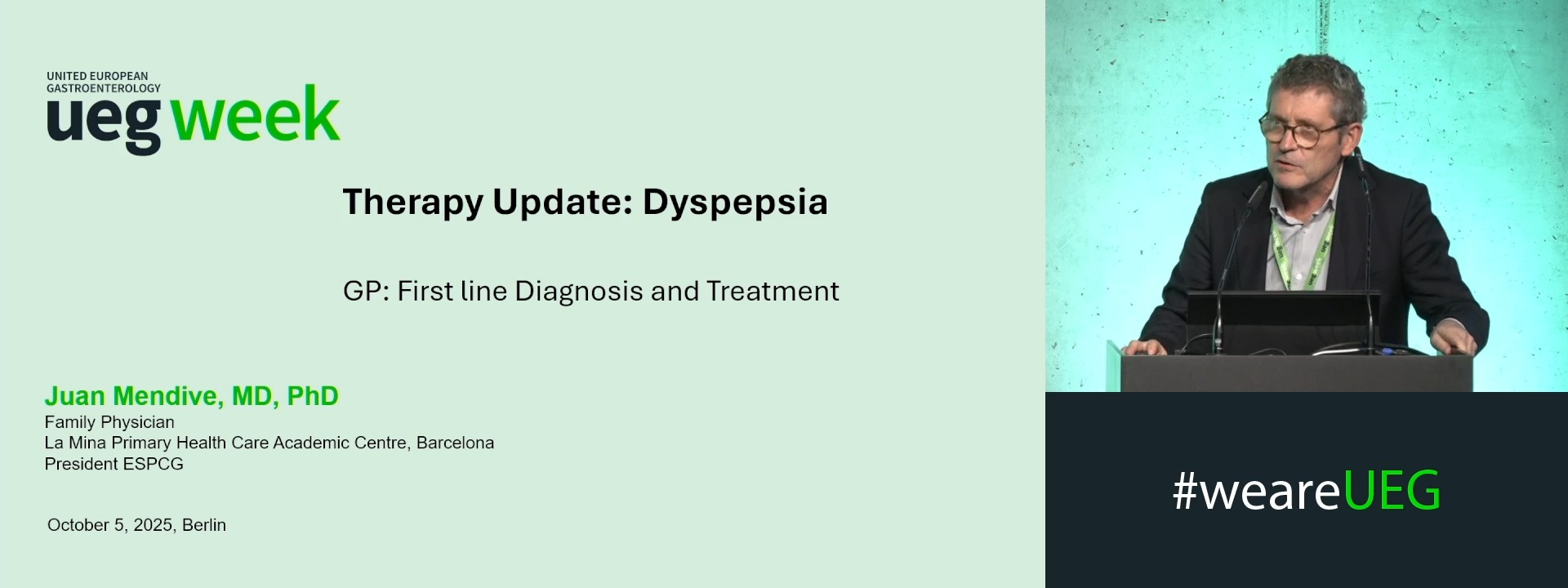
GP: First line diagnosis and treatment
1 European Society for Primary Care Gastroenterology (ESPCG), Sant Adrià de Besòs ( Barcelona), Spain
Event
Session
Citation
Published
Log in to access this content.
Free for all myUEG account holders. Your access level is set automatically based on your occupation. Medical professionals get full access to all content. If you are a non-medical user, you can only access UEG Week content from congresses you attended.
Not sure what you can access? Learn more about account types.
PROTECTIVE EFFECTS OF STW 5 AGAINST CHANGES IN THE MICROBIOME IN AN EXPERIMENTAL MODEL OF FUNCTIONAL DYSPEPSIA
1 Faculty of Pharmacy, Cairo University, Cairo, Egypt
2 Steigerwald Arzneimittelwerk GmbH, Darmstadt, Germany
Conference
Topics
Submission format
Citation
Published
Log in to access this content.
Free for all myUEG account holders. Your access level is set automatically based on your occupation. Medical professionals get full access to all content. If you are a non-medical user, you can only access UEG Week content from congresses you attended.
Not sure what you can access? Learn more about account types.
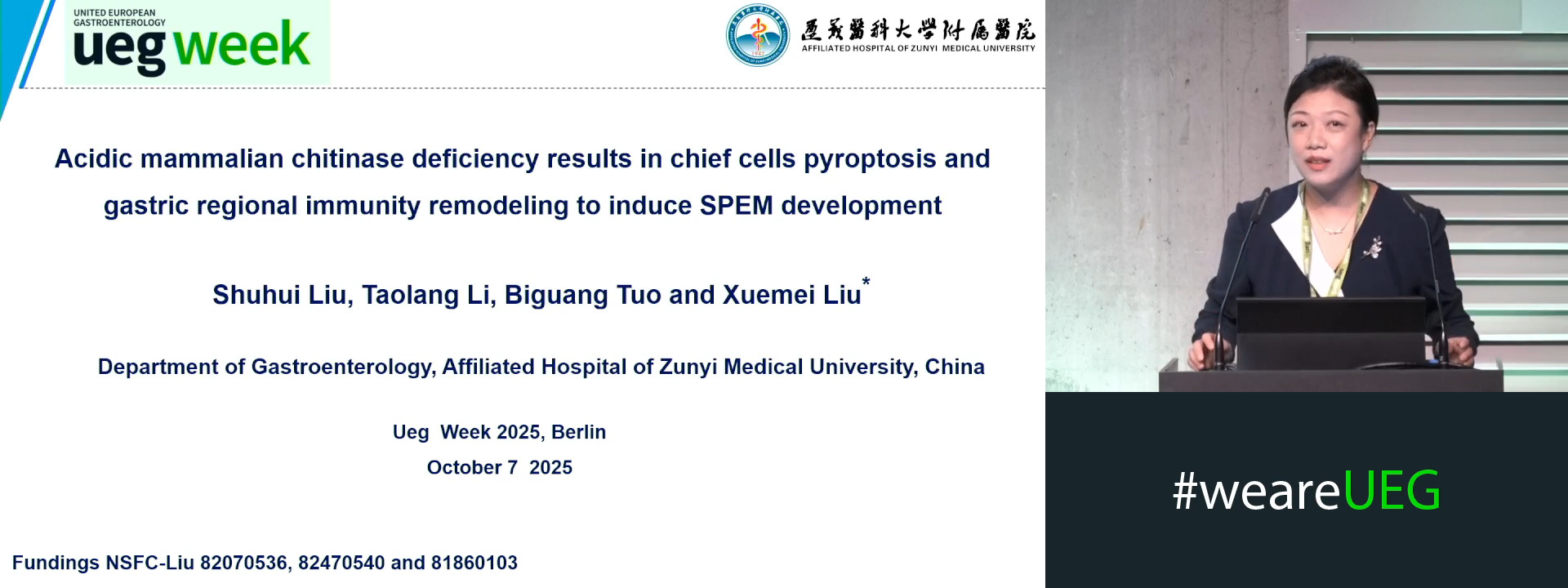
ACIDIC MAMMALIAN CHITINASE DEFICIENCY RESULTS IN CHIEF CELLS PYROPTOSIS AND GASTRIC REGIONAL IMMUNITY REMODELING IS THE NEW CELLULAR ORIGIN OF SPEM
1 Affiliated Hospital of Zunyi Medical University, Zunyi, China
Event
Topics
Submission format
Citation
Published
Log in to access this content.
Free for all myUEG account holders. Your access level is set automatically based on your occupation. Medical professionals get full access to all content. If you are a non-medical user, you can only access UEG Week content from congresses you attended.
Not sure what you can access? Learn more about account types.
GUT HEALTH AND LIPID METABOLISM: THE ROLE OF SIBO THERAPY
1 Danylo Halytsky Lviv National Medical University, Lviv, Ukraine
2 Shupyk National Healthcare University of Ukraine, Kyiv, Ukraine
Conference
Topics
Submission format
Session
Citation
Published

Log in to access this content.
Free for all myUEG account holders. Your access level is set automatically based on your occupation. Medical professionals get full access to all content. If you are a non-medical user, you can only access UEG Week content from congresses you attended.
Not sure what you can access? Learn more about account types.
Metabolic dysfunction-associated fatty liver disease (MASLD)
1 University of Birmingham, Birmingham, United Kingdom