UEG's content platform for gastroenterology education bringing recordings, courses, guidelines, and more together in one place.
Trending on Gutflix
Rate for better recommendations!
Your feedback helps us show you more of what you like and less of what you dislike!
Log in to continue.
This content is part of Gutflix. Log in with your myUEG account, or create one free, to watch it.
Not sure what you can access? Learn more about account types.
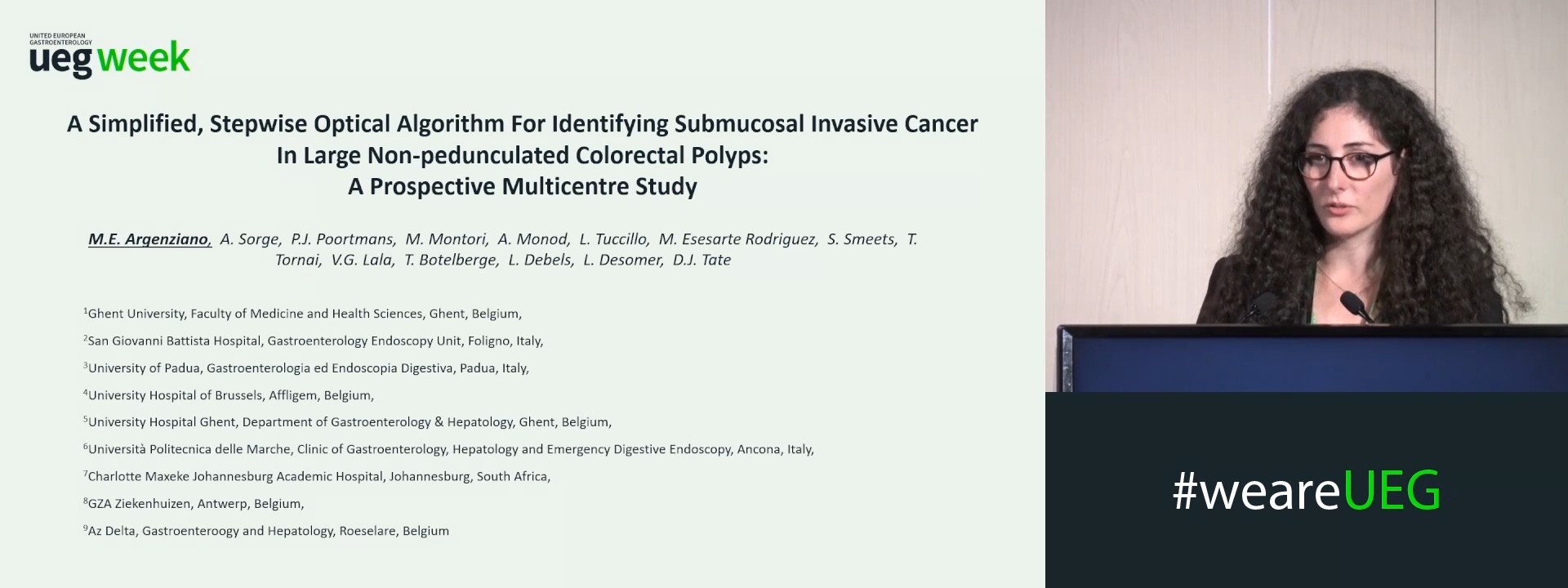
A SIMPLIFIED, STEPWISE OPTICAL ALGORITHM FOR IDENTIFYING SUBMUCOSAL INVASIVE CANCER IN LARGE NON-PEDUNCULATED COLORECTAL POLYPS: A PROSPECTIVE MULTICENTRE STUDY
Maria Eva Argenziano 1,2, Andrea Sorge 3, Pieter Jan Poortmans 1,4,5, Michele Montori 6, Adam Monod 5, Luigi Tuccillo 5, Marisol Esesarte Rodriguez 5, Sander Smeets 5, Tamás Tornai 5, Vikash Goolab Lala 7, Thomas Botelberge 8, Lynn Debels 1,4, Lobke Desomer 1,9, David James Tate 1,5
Affiliations
1 Ghent University, Ghent, Belgium
2 San Giovanni Battista Hospital, Foligno, Italy
3 University of Padua, Padua, Italy
4 University Hospital of Brussels, Affligem, Belgium
5 University Hospital Ghent, Ghent, Belgium
6 Università Politecnica delle Marche, Ancona, Italy
7 Charlotte Maxeke Johannesburg Academic Hospital, Johannesburg, South Africa
8 GZA Ziekenhuizen, Antwerp, Belgium
9 Az Delta, Roeselare, Belgium
Log in to continue.
This content is part of Gutflix. Log in with your myUEG account, or create one free, to watch it.
Not sure what you can access? Learn more about account types.
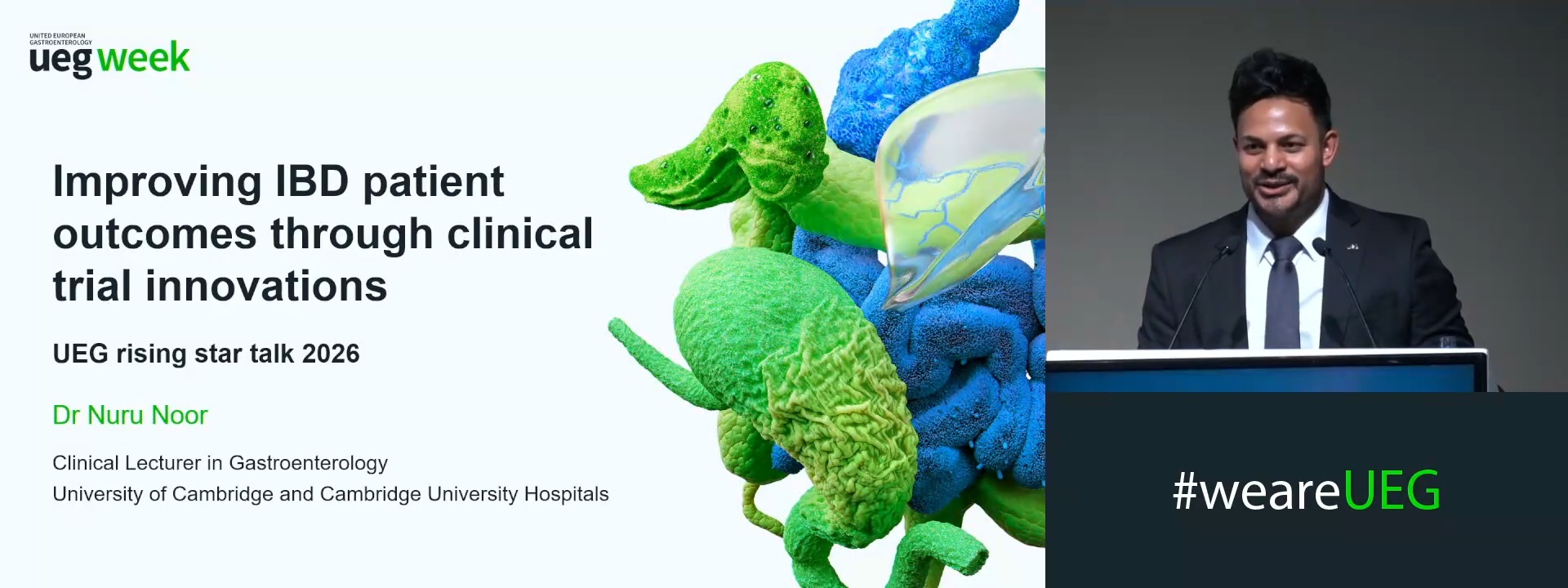
Improving patient outcomes through clinical trial innovations
Affiliations
1 Cambridge University Hospitals, Cambridge, United Kingdom
Log in to continue.
This content is part of Gutflix. Log in with your myUEG account, or create one free, to watch it.
Not sure what you can access? Learn more about account types.
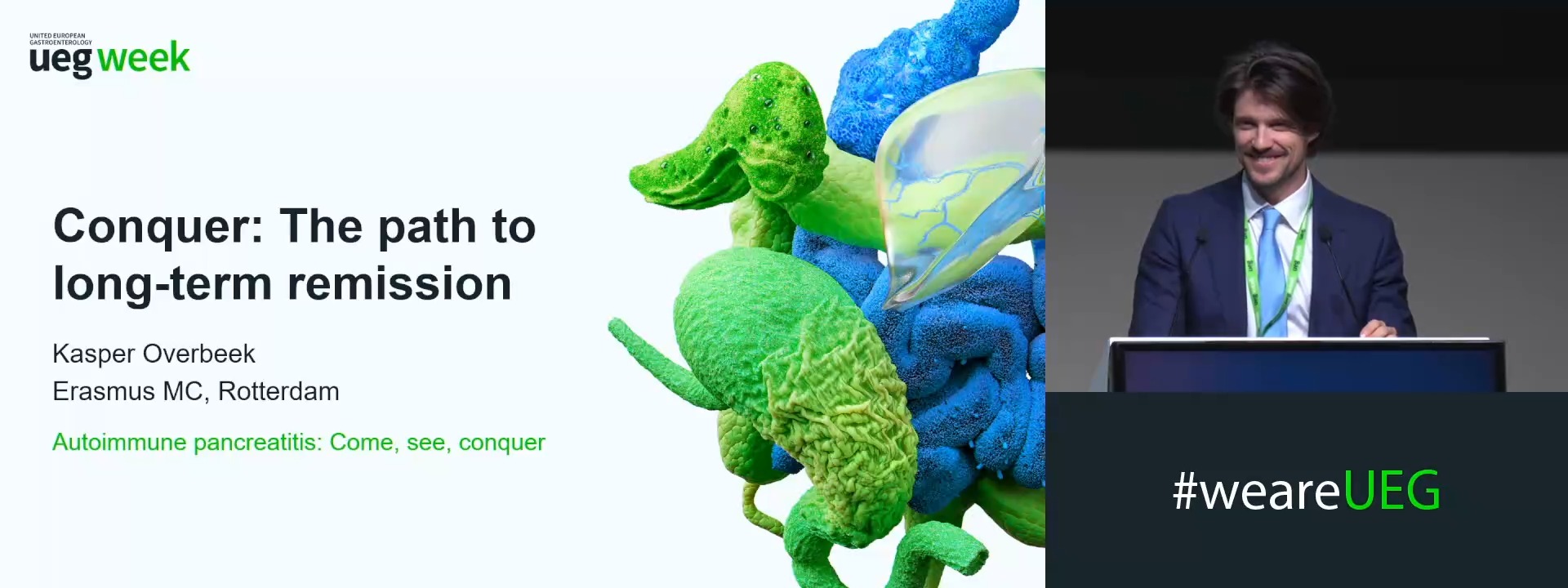
Conquer: The path to long-term remission
Affiliations
1 Erasmus MC Cancer Institute, University Medical Center, Rotterdam, Netherlands
Log in to continue.
This content is part of Gutflix. Log in with your myUEG account, or create one free, to watch it.
Not sure what you can access? Learn more about account types.
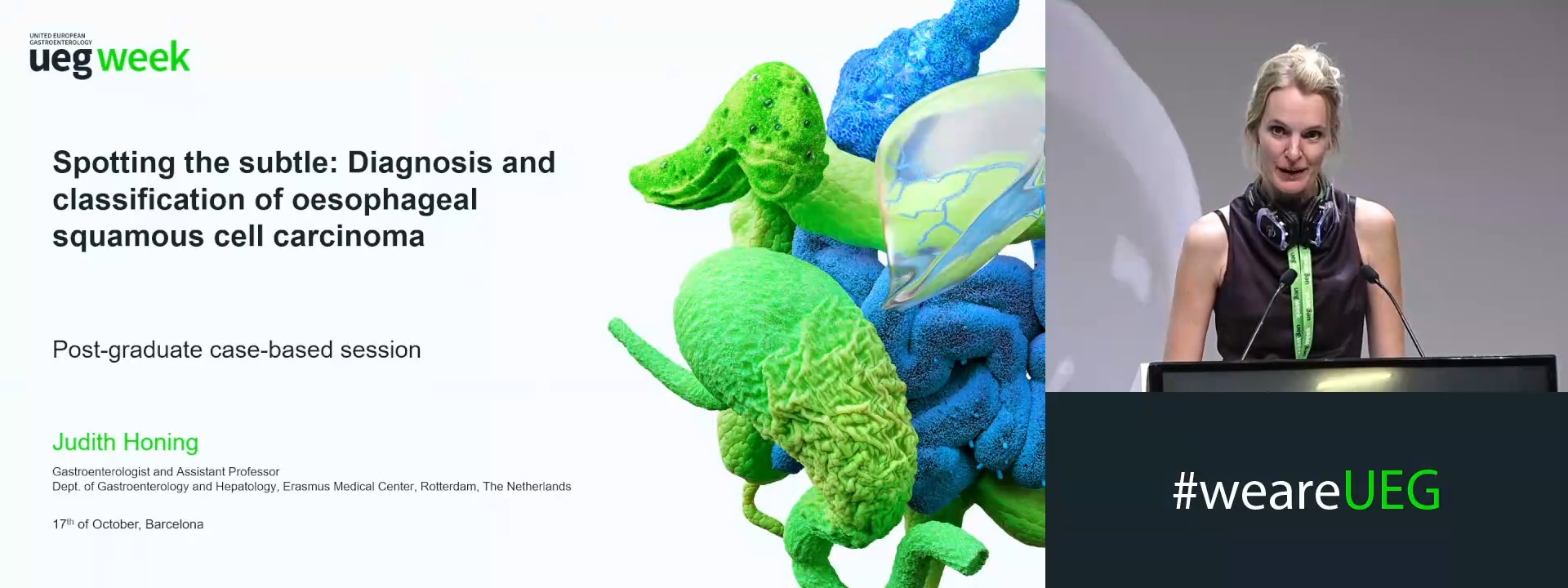
Spotting the subtle: Diagnosis and classification of early squamous cell carcinoma
Affiliations
1 Erasmus Medical Center Rotterdam, Rotterdam, Netherlands
Log in to continue.
This content is part of Gutflix. Log in with your myUEG account, or create one free, to watch it.
Not sure what you can access? Learn more about account types.
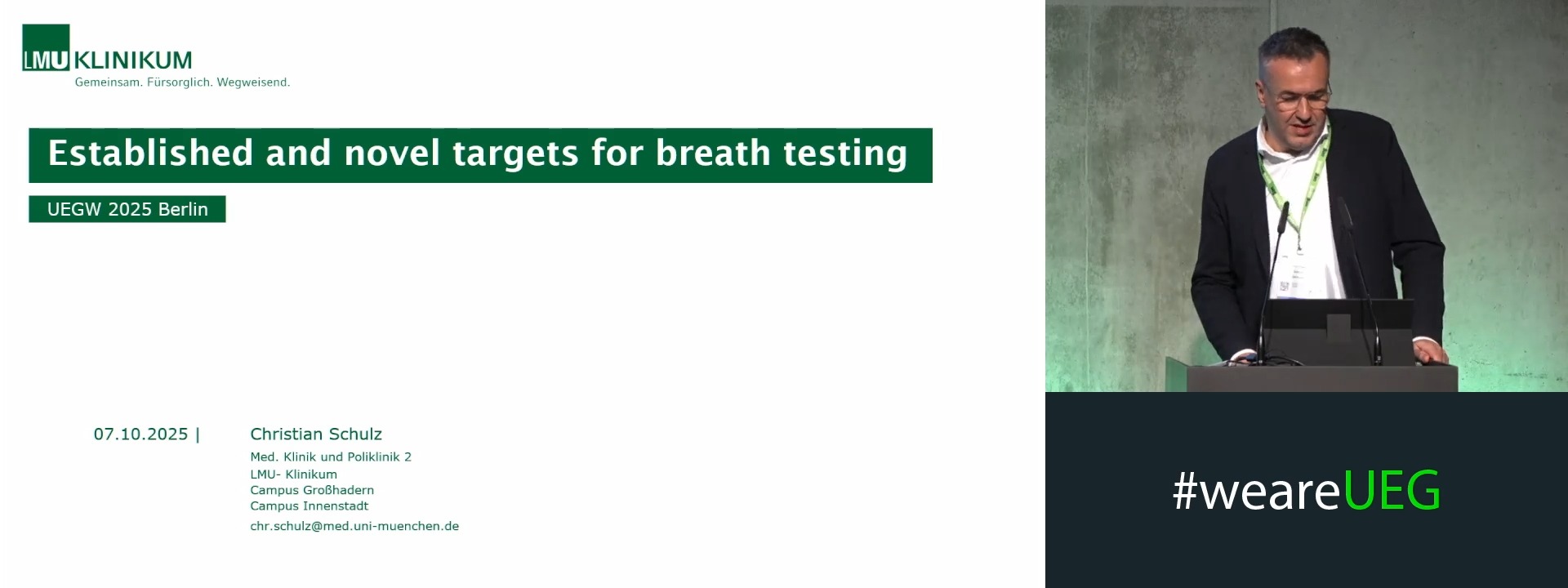
Established and novel targets for breath testing
Affiliations
1 Ludwig Maximilian University, Munich, Germany
Log in to continue.
This content is part of Gutflix. Log in with your myUEG account, or create one free, to watch it.
Not sure what you can access? Learn more about account types.
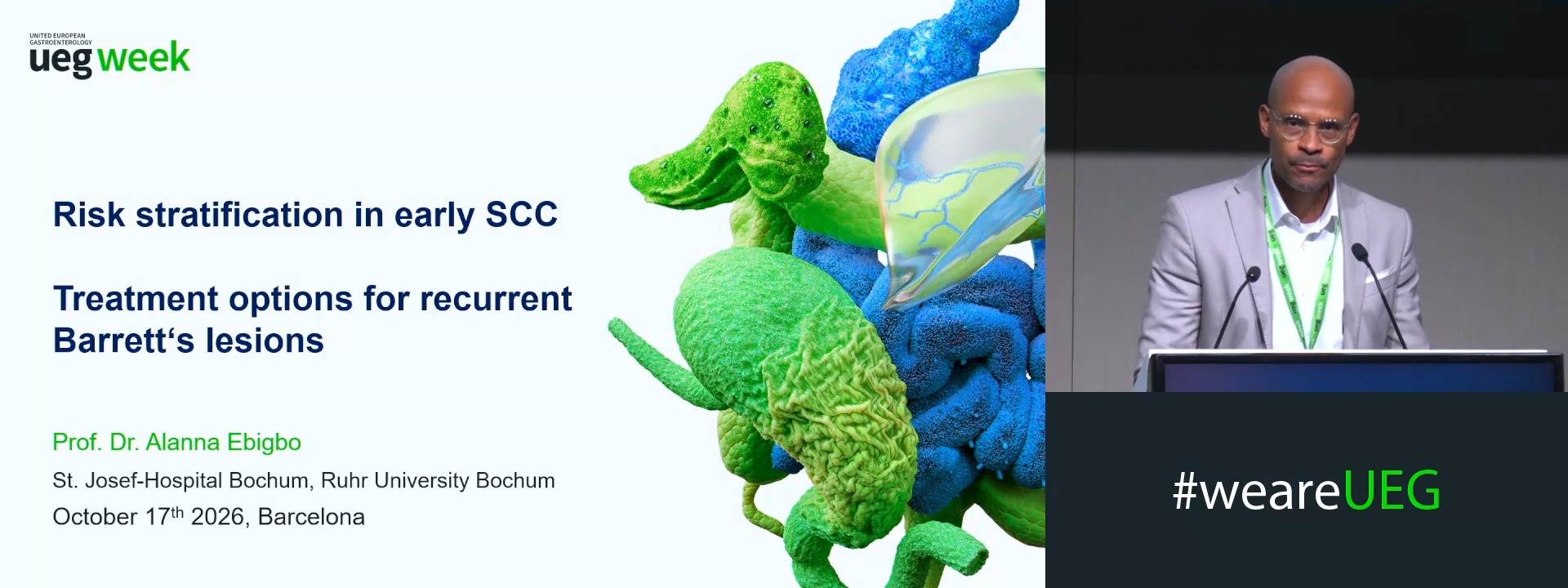
Risk stratification in early squamous cell carcinoma and treatment options for Barrett’s recurrence
Affiliations
1 St. Josef-Hospital, Ruhr-University Bochum, Bochum, Germany