UEG's educational platform for gastroenterology education bringing recordings, courses, guidelines, and more together in one place.
Most popular content
Rate for better recommendations!
Your feedback helps us show you more of what you like and less of what you dislike!
Log in to access this content.
Free for all myUEG account holders. Your access level is set automatically based on your occupation. Medical professionals get full access to all content. If you are a non-medical user, you can only access UEG Week content from congresses you attended.
Not sure what you can access? Learn more about account types.
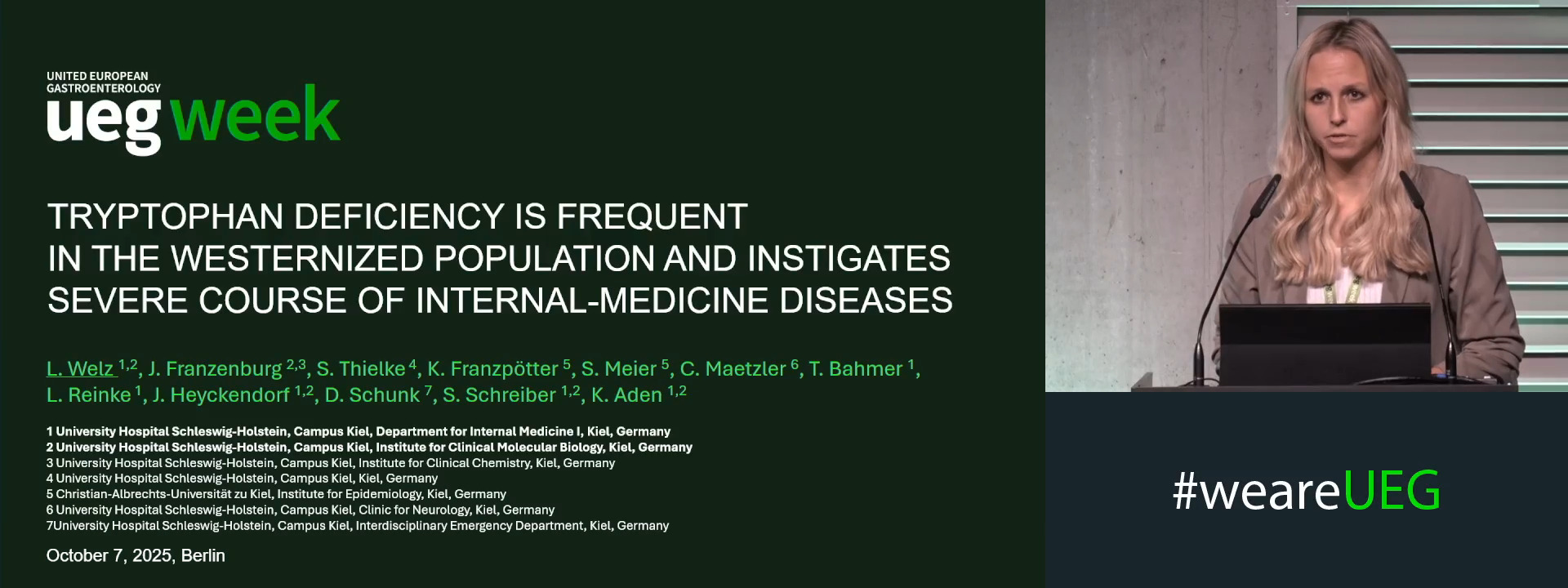
TRYPTOPHAN DEFICIENCY IS FREQUENT IN THE WESTERNIZED POPULATION AND INSTIGATES SEVERE COURSE OF INTERNAL-MEDICINE DISEASES
Lina Welz 1, Jeanette Franzenburg 1, Sascha Thielke 2, Katrin Franzpötter 3, Sarah Meier 3, Corina Maetzler 2, Olaf Schneider 4, Jan Heyckendorf 2, Thomas Bahmer 2, Domagoj Schunk 2, Stefan Schreiber 5, Konrad Aden 1
1 University Hospital Schleswig-Holstein, Campus Kiel, Kiel, Germany|||University Hospital Schleswig-Holstein, Campus Kiel, Kiel, Germany
2 University Hospital Schleswig-Holstein, Campus Kiel, Kiel, Germany
3 Christian-Albrechts-Universität zu Kiel, Kiel, Germany
4 Cerascreen, Leipzig, Germany
5 University Hospital Schleswig-Holstein, Kiel, Germany|||University Hospital Schleswig-Holstein, Campus Kiel, Kiel, Germany
Event
Submission format
Citation
Published
Log in to access this content.
Free for all myUEG account holders. Your access level is set automatically based on your occupation. Medical professionals get full access to all content. If you are a non-medical user, you can only access UEG Week content from congresses you attended.
Not sure what you can access? Learn more about account types.
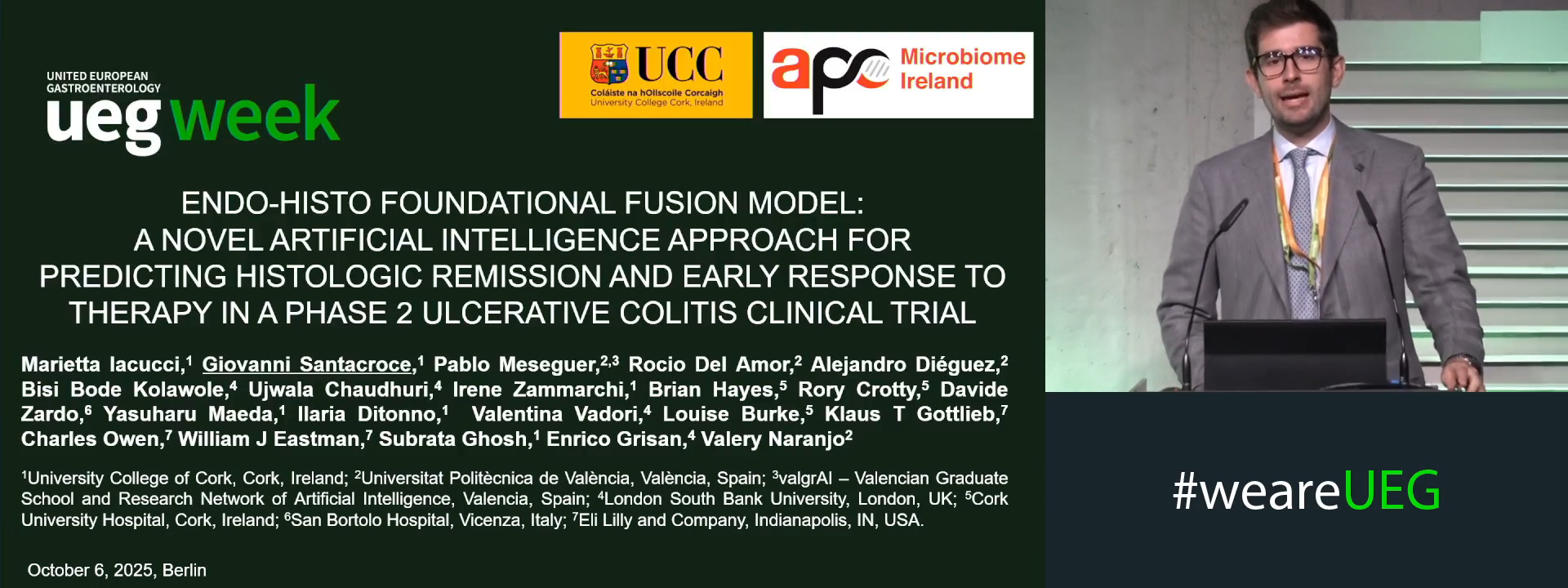
ENDO-HISTO FOUNDATIONAL FUSION MODEL: A NOVEL ARTIFICIAL INTELLIGENCE APPROACH FOR PREDICTING HISTOLOGIC REMISSION AND EARLY RESPONSE TO THERAPY IN A PHASE 2 ULCERATIVE COLITIS CLINICAL TRIAL
Marietta Iacucci 1, Giovanni Santacroce 1, Pablo Meseguer 2, Rocio Del Amor 3, Alejandro Diéguez 3, Bisi Bode Kolawole 4, Ujwala Chaudhari 4, Irene Zammarchi 1, Brian Hayes 5, Rory Crotty 5, Davide Zardo 6, Yasuharu Maeda 1, Ilaria Ditonno 1, Valentina Vadori 4, Louise Burke 5, Klaus Gottlieb 7, Charles Owen 7, William J. Eastman 7, Subrata Ghosh 1, Enrico Grisan 4, Valery Naranjo 3
1 University College Cork, Cork, Ireland
2 Universitat Politècnica de València, Valencia, Spain|||valgrAI – Valencian Graduate School and Research Network of Artificial Intelligence, Valencia, Spain
3 Universitat Politècnica de València, Valencia, Spain
4 London South Bank University, London, United Kingdom
5 Cork University Hospital, Cork, Ireland
6 San Bortolo Hospital, Vicenza, Italy
7 Eli Lilly and Company, Indianapolis, United States
Event
Topics
Submission format
Session
Citation
Published
Log in to access this content.
Free for all myUEG account holders. Your access level is set automatically based on your occupation. Medical professionals get full access to all content. If you are a non-medical user, you can only access UEG Week content from congresses you attended.
Not sure what you can access? Learn more about account types.
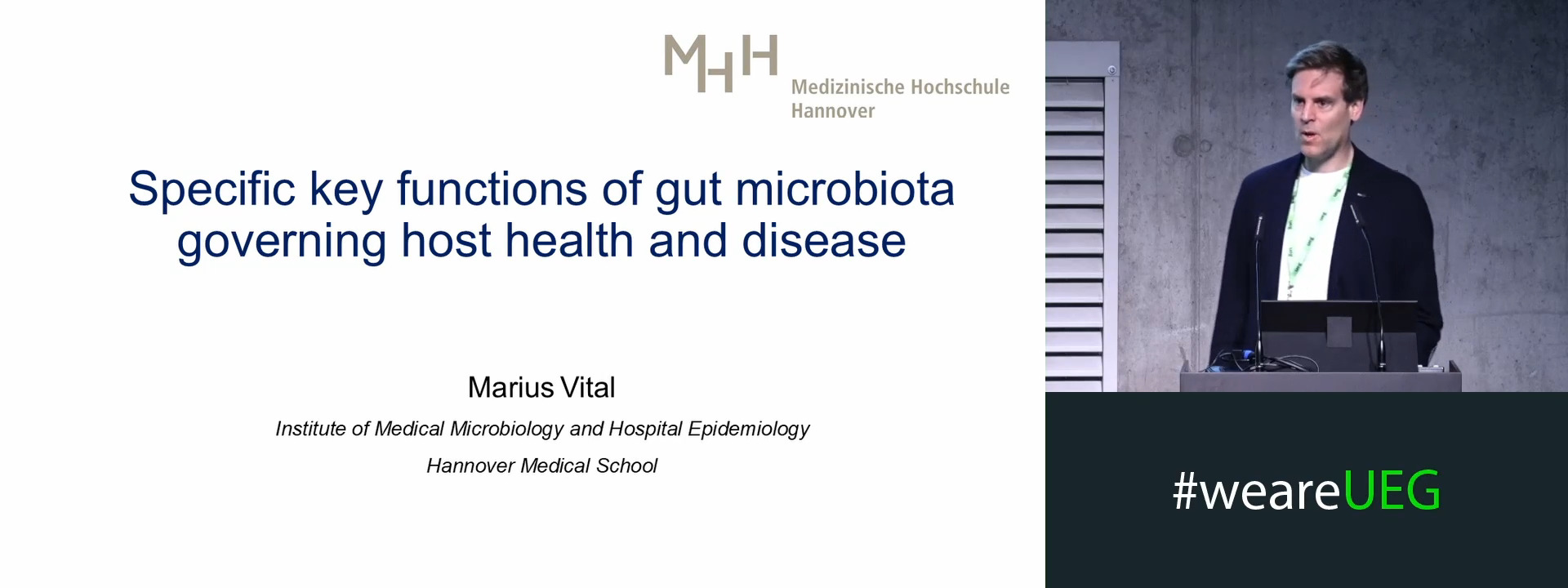
Specific key function of gut microbiota
1 Deutsches Zentrum für Infektionsforschung, Braunschweig, Germany
Event
Topics
Citation
Published
Log in to access this content.
Free for all myUEG account holders. Your access level is set automatically based on your occupation. Medical professionals get full access to all content. If you are a non-medical user, you can only access UEG Week content from congresses you attended.
Not sure what you can access? Learn more about account types.
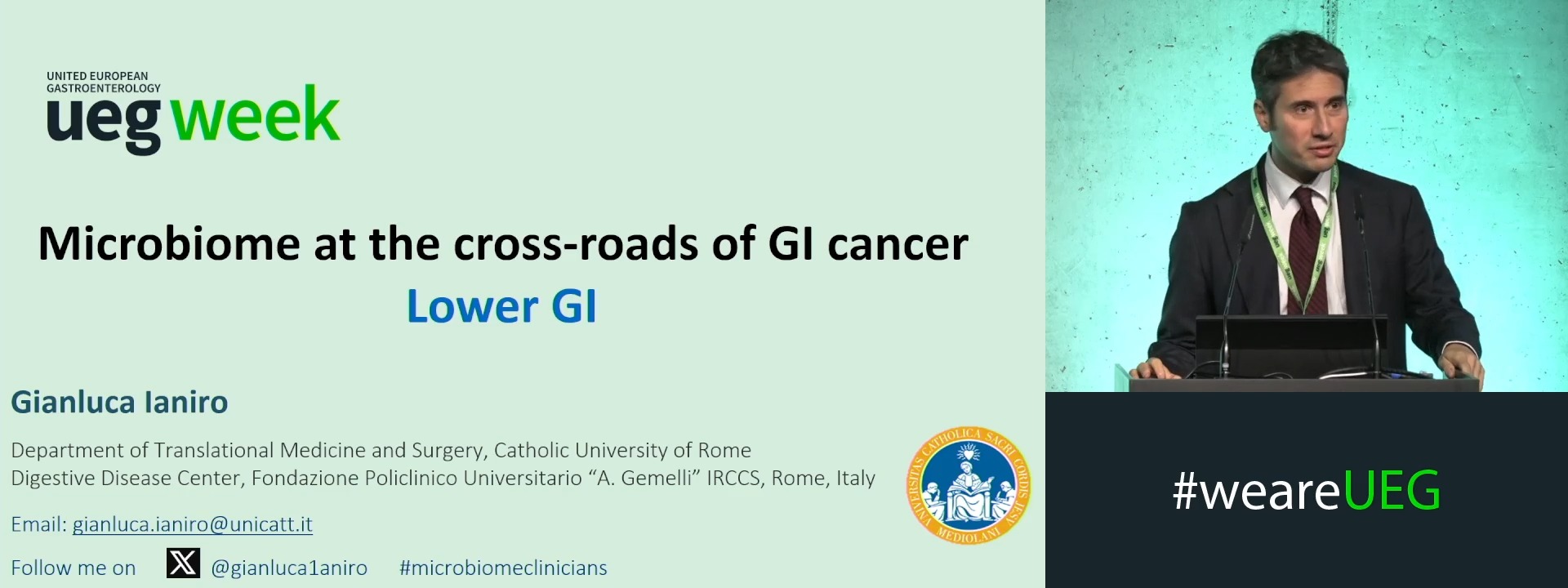
Lower-GI cancer
1 Fondazione Policlinico Universitario "A. Gemelli" IRCCS, Catholic University of Rome, Rome, Italy
Event
Citation
Published
Log in to access this content.
Free for all myUEG account holders. Your access level is set automatically based on your occupation. Medical professionals get full access to all content. If you are a non-medical user, you can only access UEG Week content from congresses you attended.
Not sure what you can access? Learn more about account types.
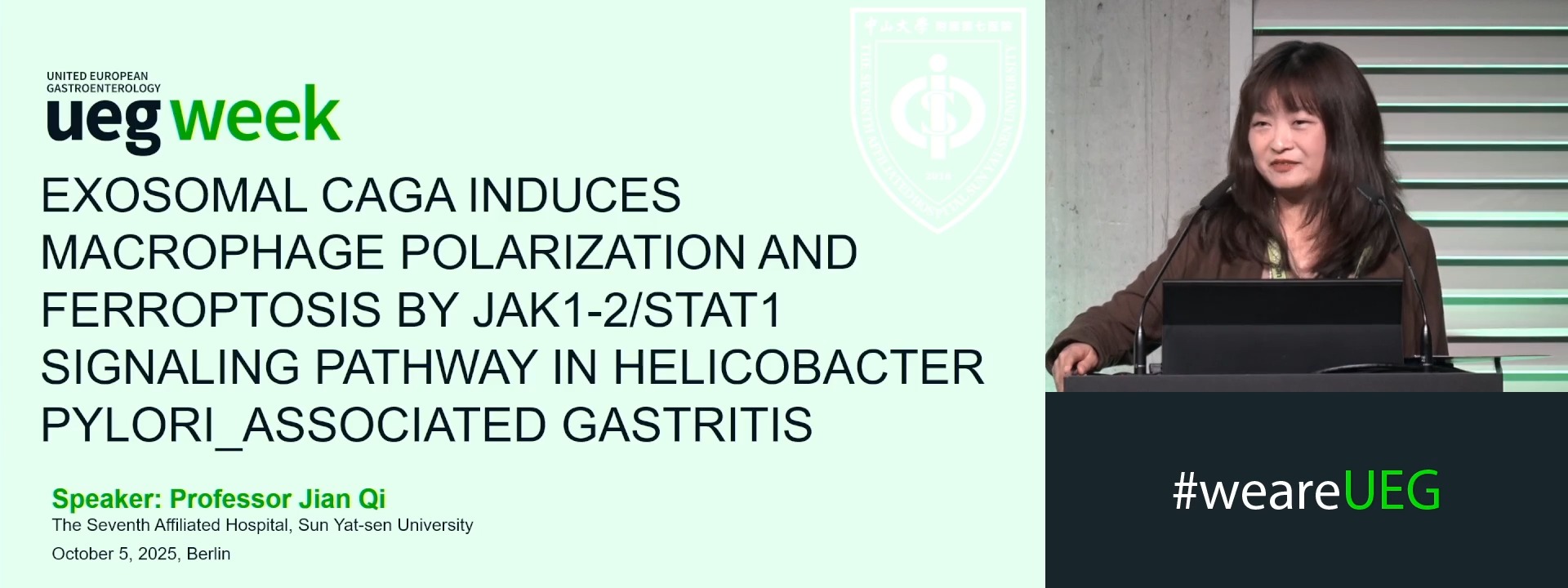
EXOSOMAL CAGA INDUCES MACROPHAGE POLARIZATION AND FERROPTOSIS BY JAK1-2/STAT1 SIGNALING PATHWAY IN HELICOBACTER PYLORI-ASSOCIATED GASTRITIS
1 The Seventh Affiliated Hospital, Sun Yat-Sen University, Shenzhen, China
Event
Submission format
Citation
Published
Log in to access this content.
Free for all myUEG account holders. Your access level is set automatically based on your occupation. Medical professionals get full access to all content. If you are a non-medical user, you can only access UEG Week content from congresses you attended.
Not sure what you can access? Learn more about account types.
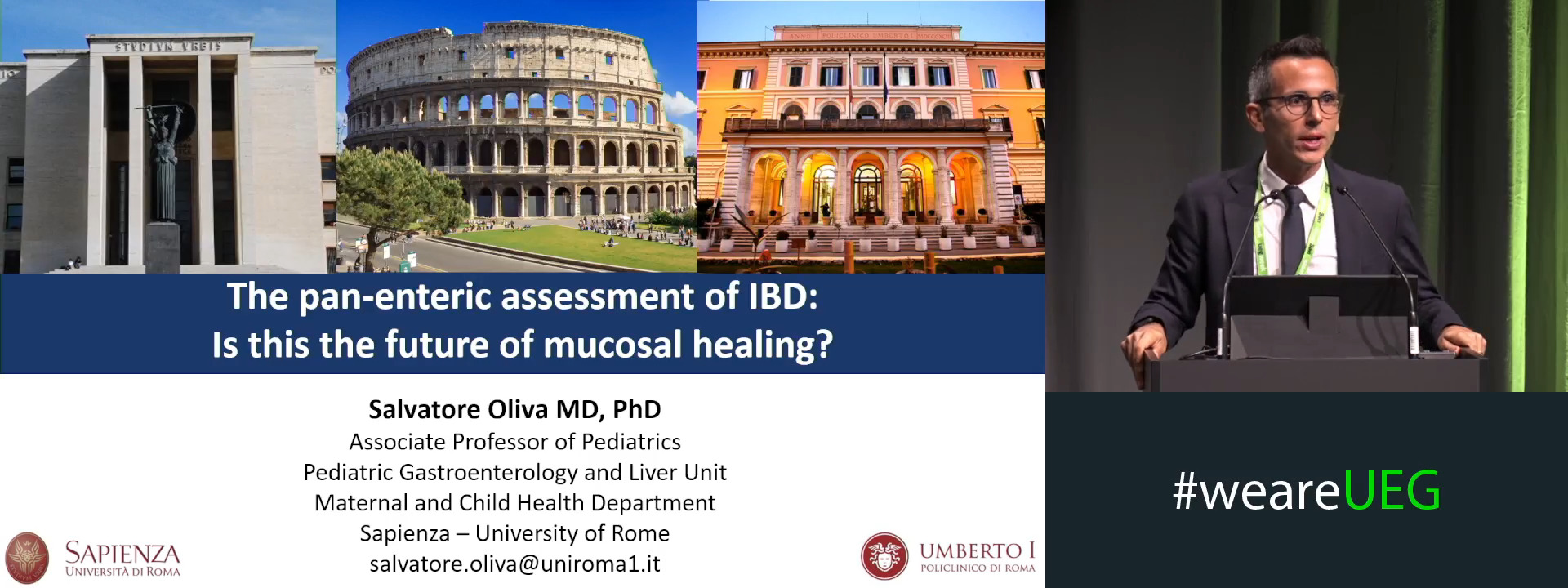
The pan-enteric assessment of IBD: Is this the future of mucosal healing?
1 University Hospital Umberto, Sapienza University of Rome, Rome, Italy
Event
Citation
Published
Log in to access this content.
Free for all myUEG account holders. Your access level is set automatically based on your occupation. Medical professionals get full access to all content. If you are a non-medical user, you can only access UEG Week content from congresses you attended.
Not sure what you can access? Learn more about account types.
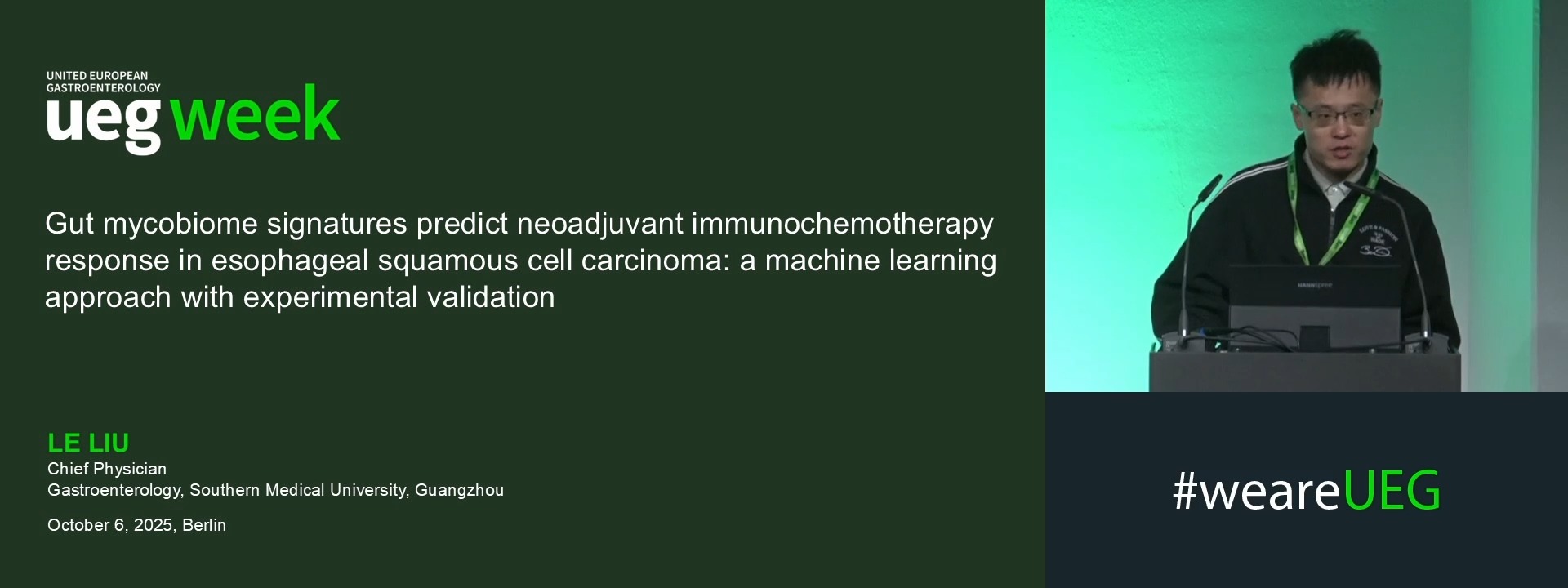
GUT MYCOBIOME SIGNATURES PREDICT NEOADJUVANT IMMUNOCHEMOTHERAPY RESPONSE IN ESOPHAGEAL SQUAMOUS CELL CARCINOMA: A MACHINE LEARNING APPROACH WITH EXPERIMENTAL VALIDATION
1 Zhujiang Hospital, Southern Medical University, Guangzhou, China
2 Guangzhou First People's Hospital, Guangzhou, China
3 Nanfang Hospital, Southern Medical University, Guangzhou, China
Event
Submission format
Session