UEG's content platform for gastroenterology education bringing recordings, courses, guidelines, and more together in one place.
Trending on Gutflix
Rate for better recommendations!
Your feedback helps us show you more of what you like and less of what you dislike!
Log in to continue.
This content is part of Gutflix. Log in with your myUEG account, or create one free, to watch it.
Not sure what you can access? Learn more about account types.
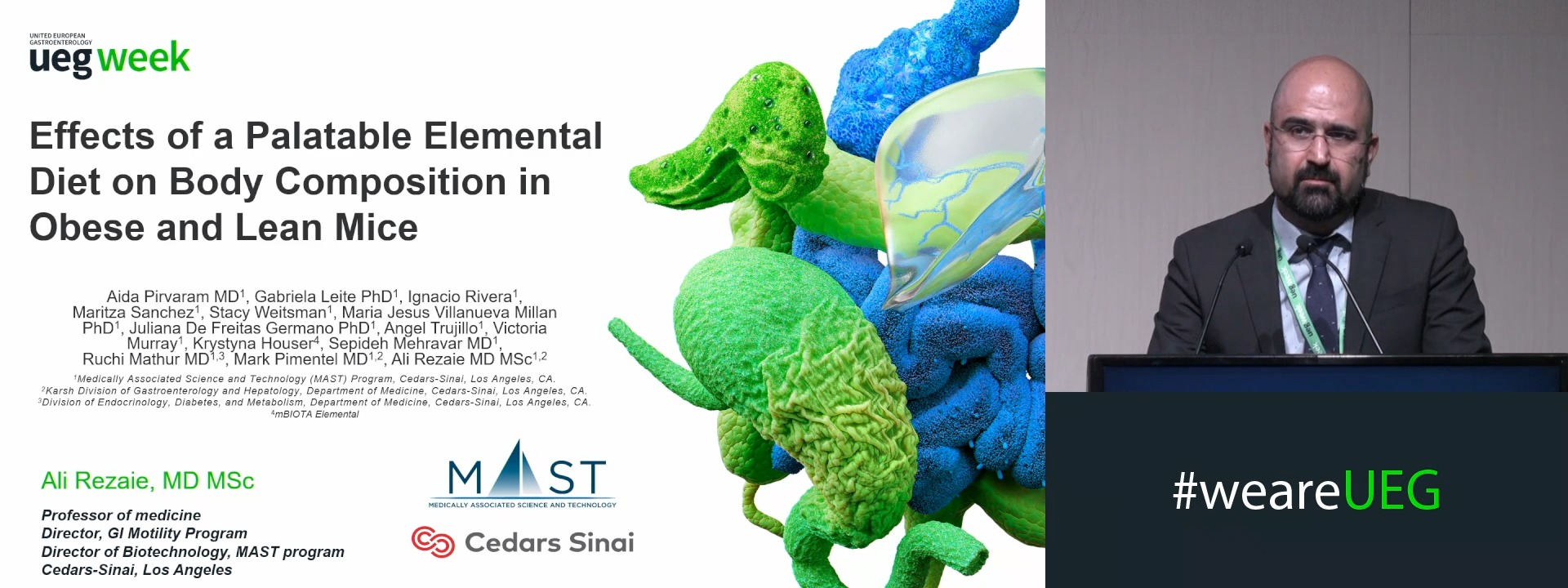
EFFECTS OF EXCLUSIVE PALATABLE ELEMENTAL DIET ON BODY COMPOSITION IN OBESE AND LEAN MICE
Aida Pirvaram 1, Gabriela Laughton 1, Ignacio Rivera 1, Maritza Sanchez 1, Stacy Weitsman 1, Maria Jesus Millan 1, Juliana Germano 1, Angel Trujillo 1, Victoria Murray 1, Krystyna Houser 2, Sepideh Mehravar 1, Ruchi Mathur 1,3, Mark Pimentel 1,4, Ali Rezaie 1,5
Affiliations
1 Medically Associated Science and Technology (MAST) Program, Cedar-Sinai, Los Angeles, CA, Los Angeles, United States
2 mBiota Elemental, Sana Monica, Los Angeles, United States
3 Division of Endocrinology, Diabetes and Metabolism. Department of Medicine, Cedar -Sinai, Los Angeles, CA., Los Angeles, United States
4 Karsh Division of Gastroenterology and Hepatology, Department of Medicine, Cedar -Sinai, Los Angeles, CA, Los Angeles, United States
5 Karsh Division of Gastroenterology and Hepatology, Department of Medicine, Cedar-Sinai, Los Angeles, CA, Los Angeles, United States
Log in to continue.
This content is part of Gutflix. Log in with your myUEG account, or create one free, to watch it.
Not sure what you can access? Learn more about account types.
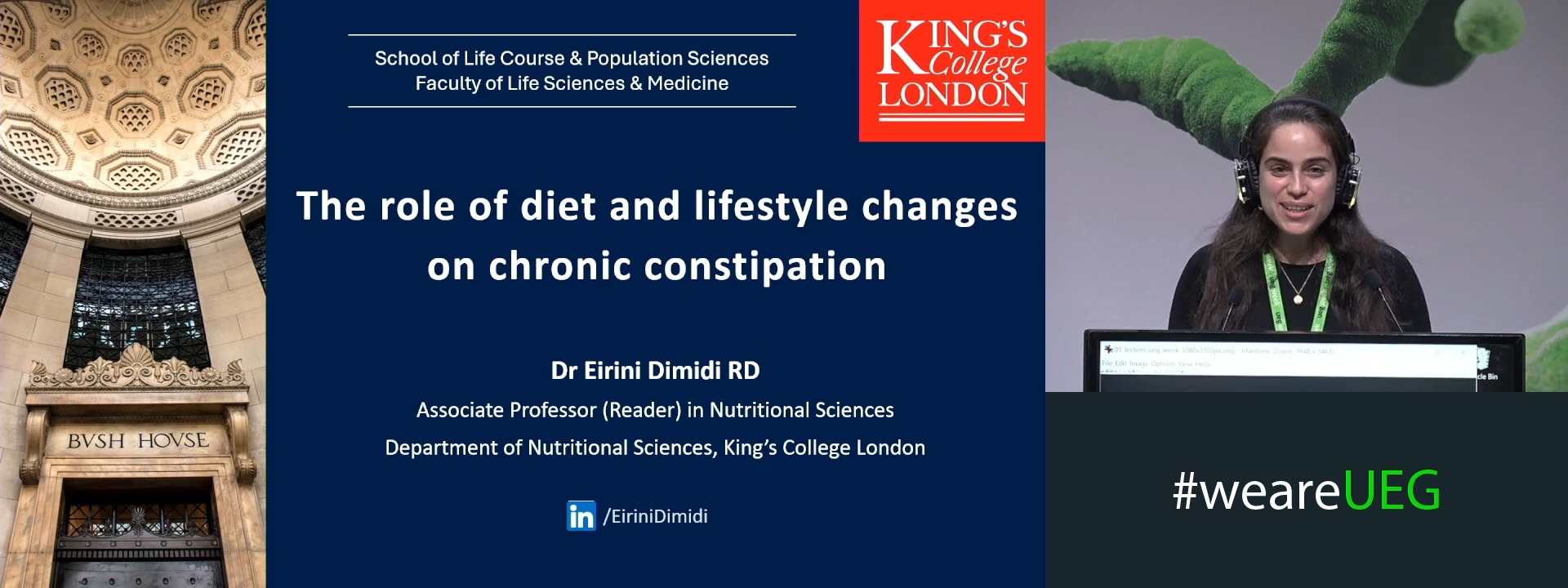
The role of lifestyle changes and diet
Affiliations
1 King's College London, London, United Kingdom
Log in to continue.
This content is part of Gutflix. Log in with your myUEG account, or create one free, to watch it.
Not sure what you can access? Learn more about account types.
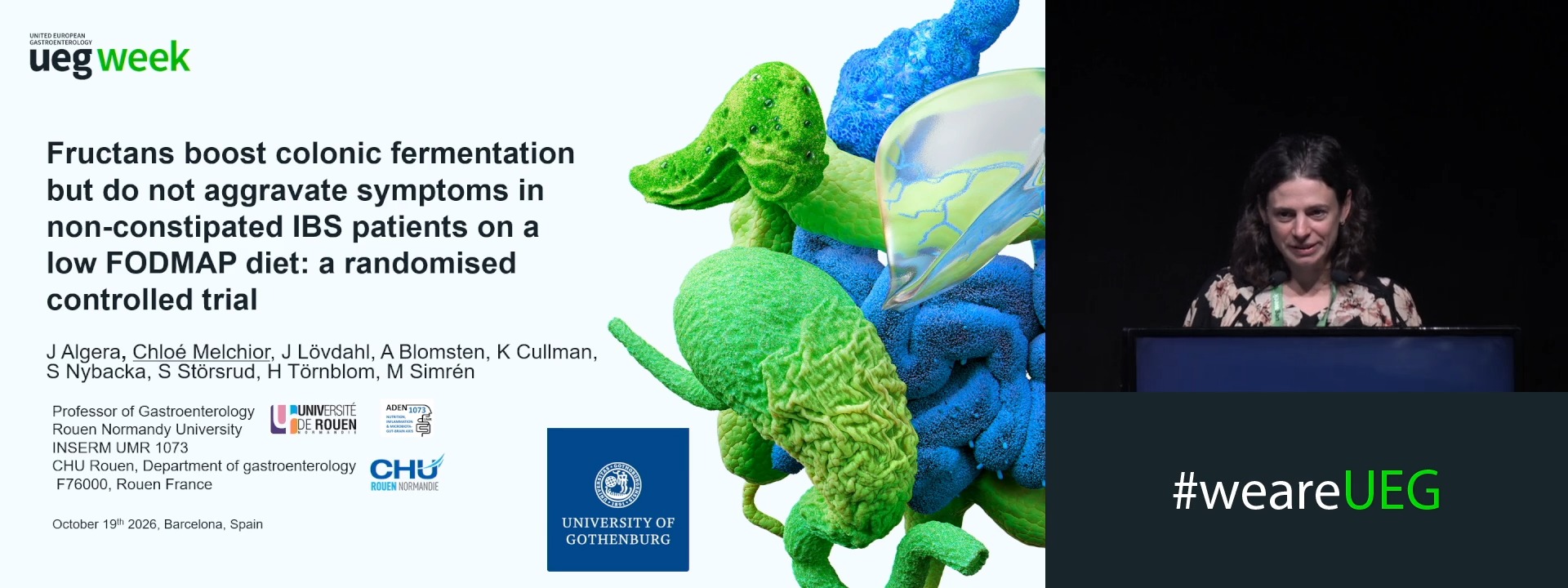
FRUCTANS BOOST COLONIC FERMENTATION BUT DO NOT AGGRAVATE SYMPTOMS IN NON-CONSTIPATED IBS PATIENTS ON A LOW FODMAP DIET – A RANDOMIZED CONTROLLED TRIAL
Joost Algera 1,2, Chloé Melchior 3,1, Jenny Lövdahl 2,1, Kristina Cullman 1, Amanda Blomsten 1, Sanna Nybacka 1, Stine Störsrud 2,1, Hans Törnblom 1,2, Magnus Simrén 1,2,4
Affiliations
1 Sahlgrenska Academy, University Of Gothenburg, Gothenburg, Sweden
2 Sahlgrenska University Hospital, Gothenburg, Sweden
3 Rouen University Hospital, INSERM U1073, CIC-CRB-1404, Rouen, France
4 University of North Carolina, Chapel Hill, United States
Log in to continue.
This content is part of Gutflix. Log in with your myUEG account, or create one free, to watch it.
Not sure what you can access? Learn more about account types.
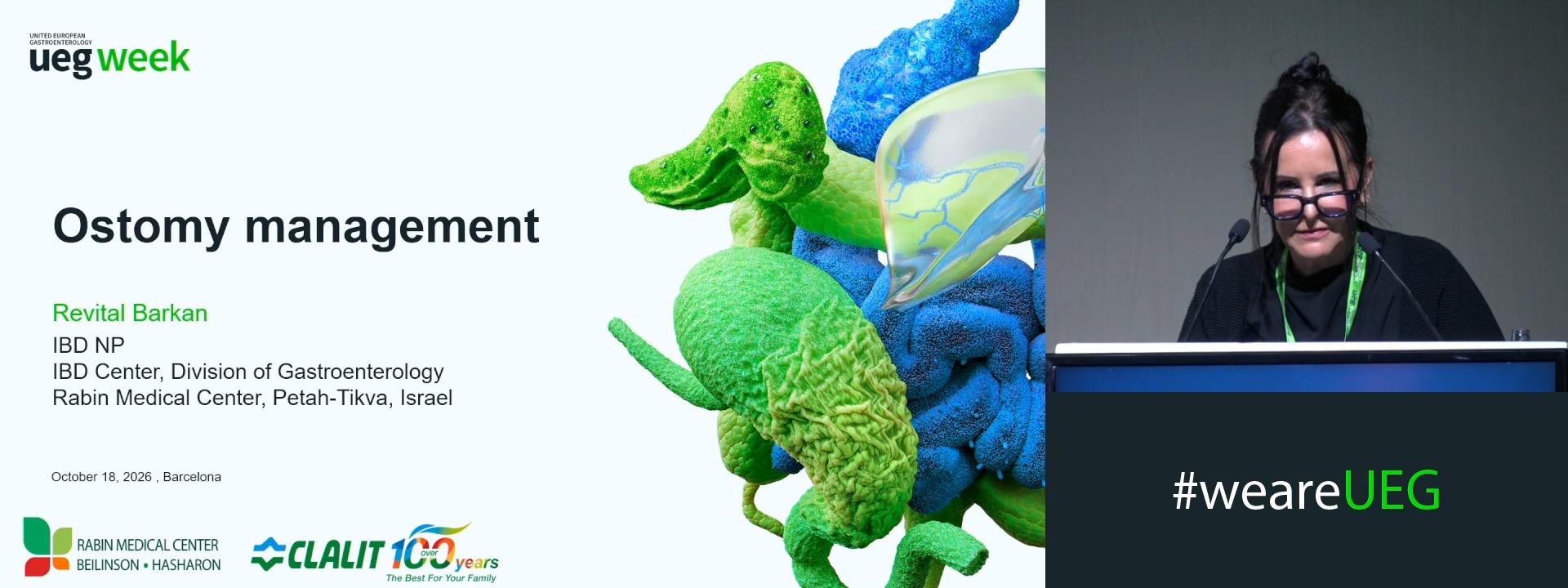
Ostomy management
Affiliations
1 Department of Gastroenterology Rabin Medical Center - Beilinson Hospital, Petah Tikva, Israel
Log in to continue.
This content is part of Gutflix. Log in with your myUEG account, or create one free, to watch it.
Not sure what you can access? Learn more about account types.
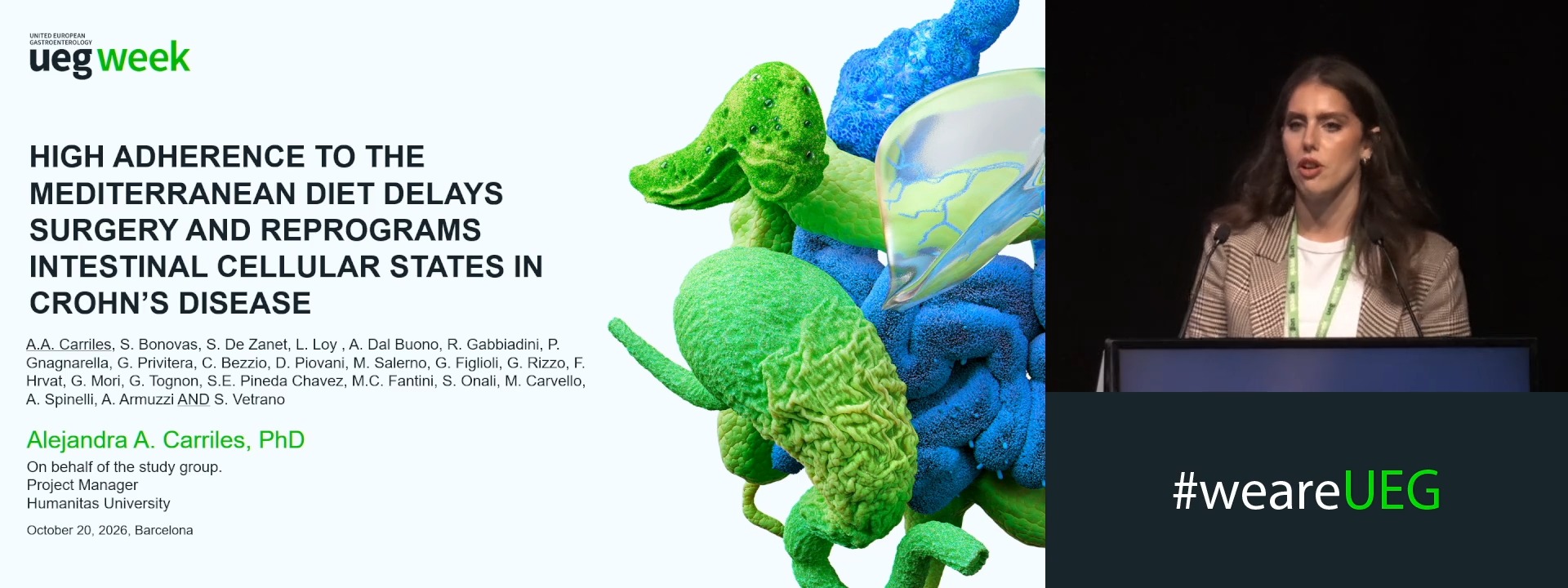
HIGH ADHERENCE TO THE MEDITERRANEAN DIET DELAYS SURGERY AND REPROGRAMS INTESTINAL CELLULAR STATES IN CROHN’S DISEASE
Alejandra Angela Carriles Linares 1,2, Michele Salerno 1,2, Stefano De Zanet 1,2, Faris Hrvat 1, Laura Loy 2, Roberto Gabbiadini 2, Patrizia Gnagnarella 3, Giuseppe Privitera 1,2, Arianna Dal Buono 2, Cristina Bezzio 1,2, Daniele Piovani 1,2, Stefanos Bonovas 1,2, Gisella Figlioli 1,2, Giulia Rizzo 2, Giada Mori 2, Gianluca Tognon 4, Samuel Elias Pineda Chavez 2,1, Massimo Claudio Fantini 5,6, Sara Onali 5,6, Michele Carvello 1,2, Antonino Spinelli 1,2, Alessandro Armuzzi 1,2, Stefania Vetrano 2,1
Affiliations
1 Humanitas University, Pieve Emanuele, Milan, Italy
2 IRCCS Humanitas Research Hospital, Rozzano, Milan, Italy
3 IEO European Institute of Oncology IRCCS, Milan, Italy
4 University of Skövde, Skövde, Sweden
5 Azienda Ospedaliero-Universitaria di Cagliari, Monserrato, Cagliari, Italy
6 University of Cagliari, Monserrato, Cagliari, Italy
Log in to continue.
This content is part of Gutflix. Log in with your myUEG account, or create one free, to watch it.
Not sure what you can access? Learn more about account types.
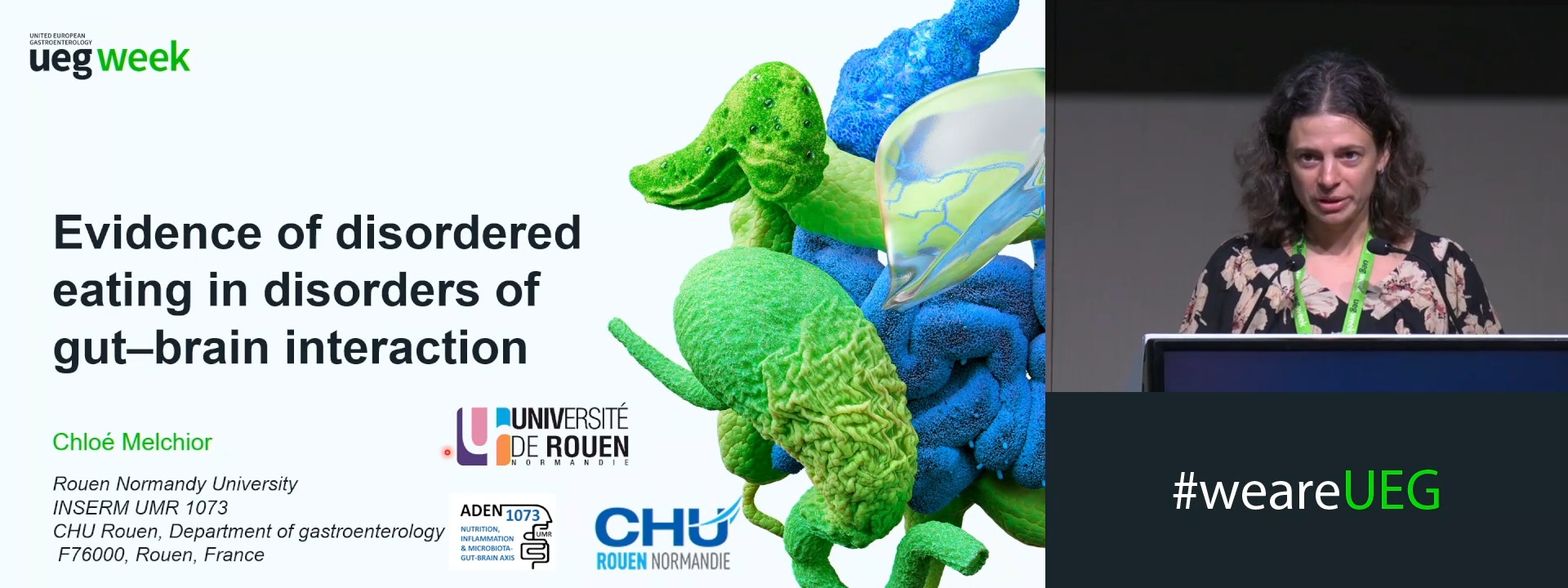
Evidence of disordered eating in disorders of gut–brain interaction
Affiliations
1 Rouen University Hospital, INSERM U1073, CIC-CRB-1404, Rouen, France