UEG's educational platform for gastroenterology education bringing recordings, courses, guidelines, and more together in one place.
Trending on Gutflix
Rate for better recommendations!
Your feedback helps us show you more of what you like and less of what you dislike!
Log in to continue.
This content is part of Gutflix. Log in with your myUEG account, or create one free, to watch it.
Not sure what you can access? Learn more about account types.
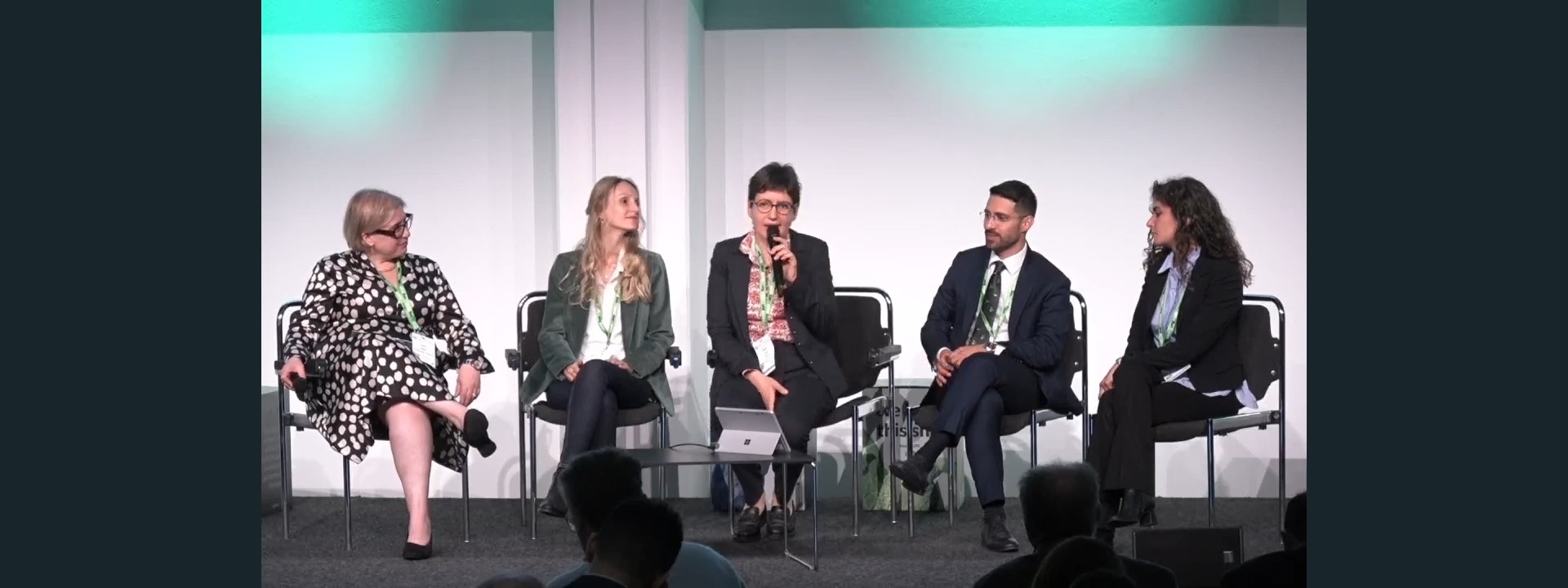
Panel discussion: Non-cardiac chest pain - The tale of a sore oesophagus
Log in to continue.
This content is part of Gutflix. Log in with your myUEG account, or create one free, to watch it.
Not sure what you can access? Learn more about account types.
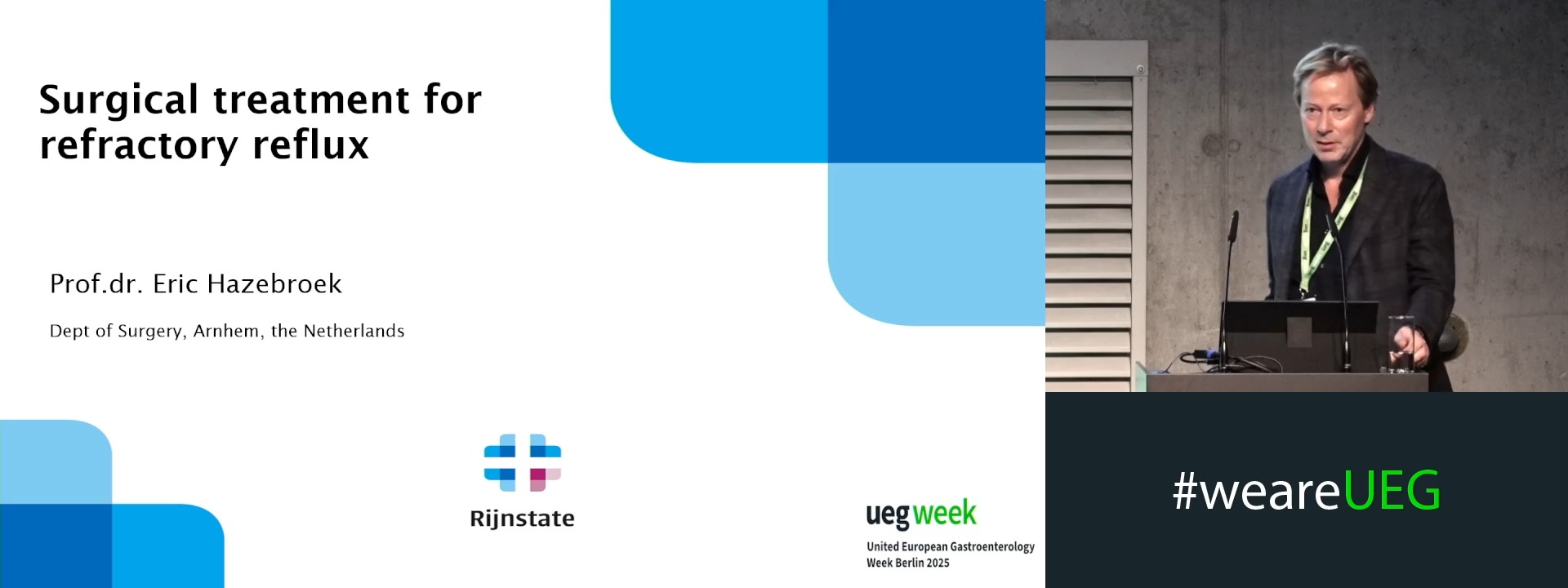
Surgical treatment for refractory reflux
Affiliations
1 Rijnstate Hospital, Arnhem, Netherlands
Log in to continue.
This content is part of Gutflix. Log in with your myUEG account, or create one free, to watch it.
Not sure what you can access? Learn more about account types.
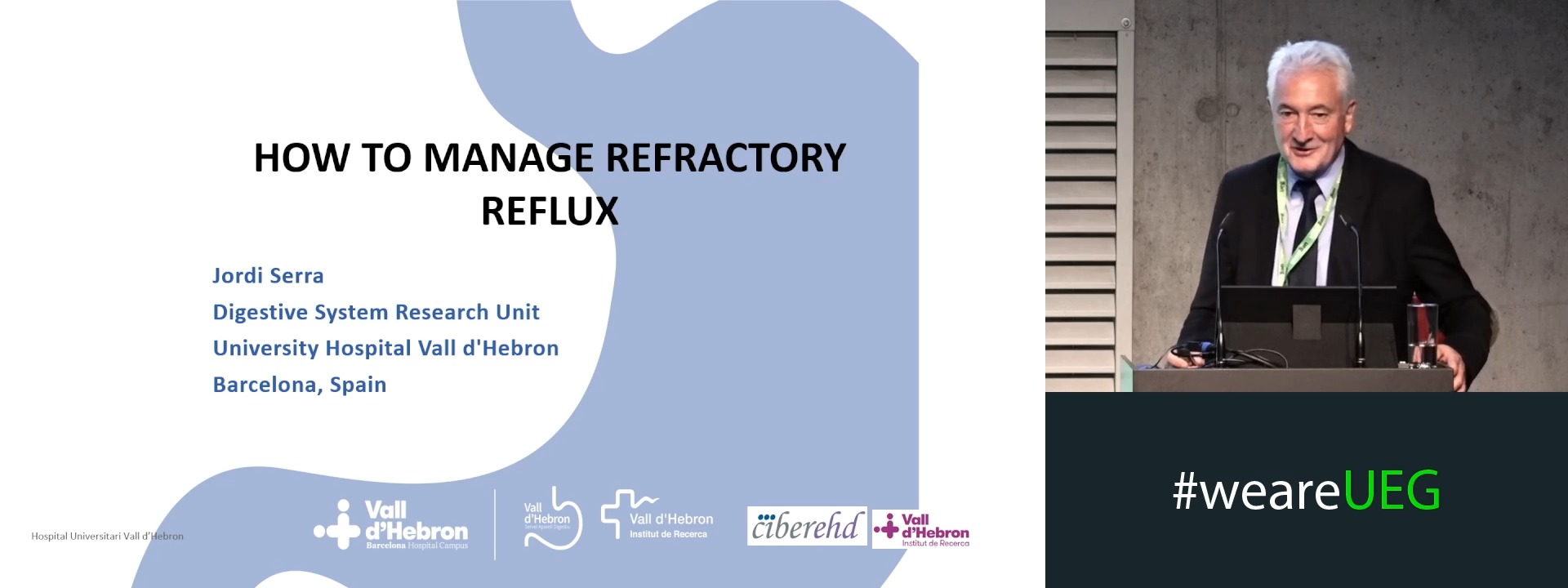
How to manage refractory reflux
Affiliations
1 University Hospital Vall d'Hebron, Barcelona, Spain
Log in to continue.
This content is part of Gutflix. Log in with your myUEG account, or create one free, to watch it.
Not sure what you can access? Learn more about account types.
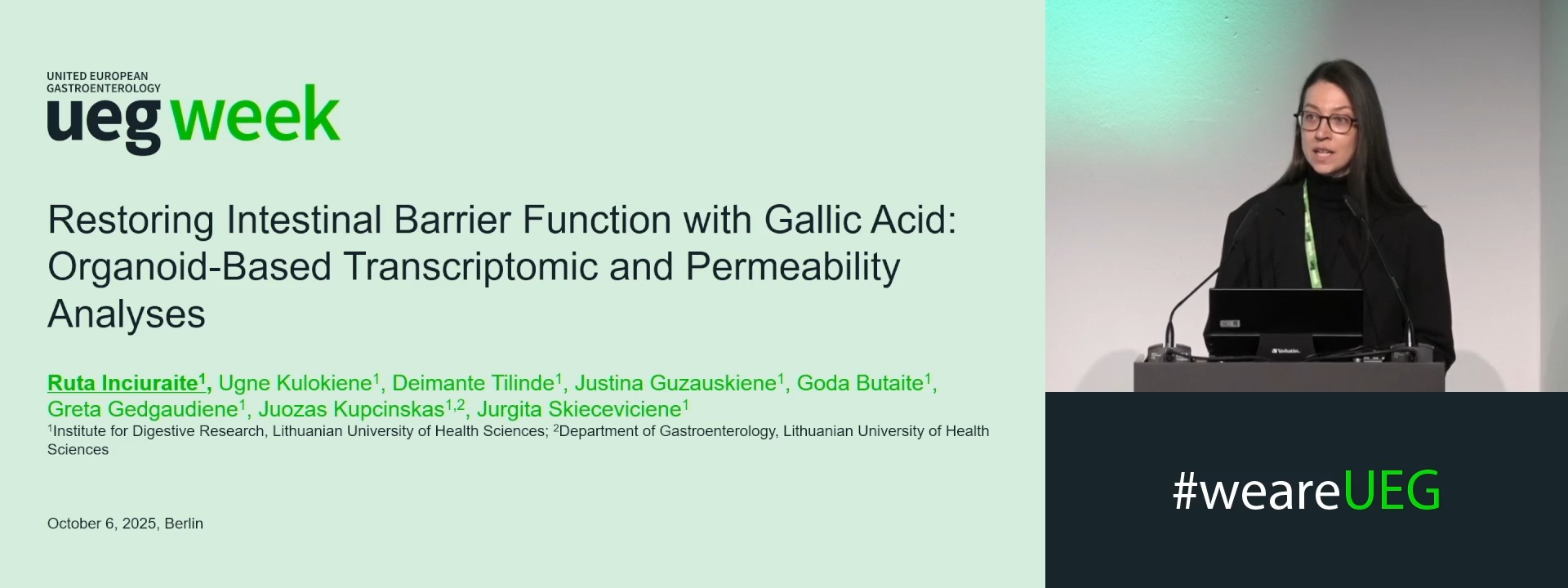
RESTORING INTESTINAL BARRIER FUNCTION WITH GALLIC ACID: ORGANOID-BASED TRANSCRIPTOMIC AND PERMEABILITY ANALYSES
Ruta Inciuraite 1, Ugne Kulokiene 1, Deimantė Tilindė 1, Justina Guzauskiene 1, Goda Butaite 1, Greta Gedgaudiene 1, Juozas Kupcinskas 2, Jurgita Skieceviciene 1
Affiliations
1 Lithuanian University of Health Sciences, Kaunas, Lithuania
2 Lithuanian University of Health Sciences, Kaunas, Lithuania|||Lithuanian University of Health Sciences, Kaunas, Lithuania
Log in to continue.
This content is part of Gutflix. Log in with your myUEG account, or create one free, to watch it.
Not sure what you can access? Learn more about account types.
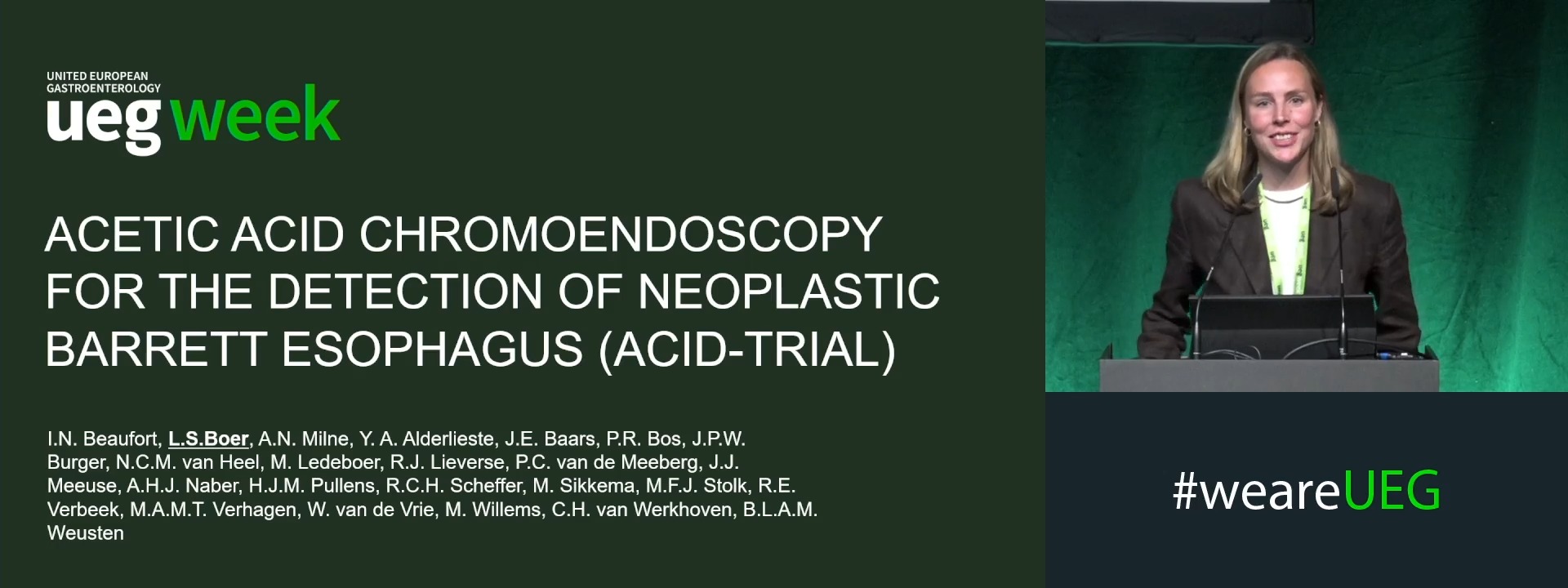
ACETIC ACID CHROMOENDOSCOPY FOR THE DETECTION OF NEOPLASTIC BARRETT ESOPHAGUS: A STEPPED WEDGE CLUSTER RANDOMIZED CLINICAL TRIAL
Ilse Beaufort 1, Laura Boer 2, Anya N. Milne 3, Yasser Alderlieste 4, Judith E Baars 5, Philip Bos 6, Jordy Burger 7, Nicoline Van Heel 8, Michiel Ledeboer 9, Rob Lieverse 10, Paul van de Meeberg 11, Jan Meeuse 12, Ton Naber 13, Paul (H.J.M.) Pullens 14, Robert Scheffer 15, Marjolein Sikkema 16, Mark Stolk 3, Romy E. Verbeek 17, Marc Verhagen 18, Wim van de Vrie 19, Marleen Willems 20, Henri van Werkhoven 21, Bas L.A.M. Weusten 1
Affiliations
1 St Antonius Hospital, Nieuwegein, Netherlands|||UMC Utrecht, Utrecht, Netherlands
2 UMC Utrecht, Utrecht, Netherlands|||St Antonius Hospital, Nieuwegein, Netherlands
3 St. Antonius Hospital, Nieuwegein, Netherlands
4 Beatrix Hospital, Gorinchem, Netherlands
5 Amphia Hospital, Breda, Netherlands
6 Hospital Gelderse Vallei, Ede, Netherlands
7 Rijnstate Hospital, Arnhem, Netherlands
8 Gelre, Apeldoorn, Netherlands
9 Deventer Hospital, Schalkhaar, Netherlands
10 Hospital Group Twente, Almelo, Netherlands
11 Slingeland Hospital, Doetinchem, Netherlands
12 Rivierenland Ziekenhuis Tiel Dept. of Internal Medicine, Geldermalsen, Netherlands
13 Tergooi, Hilversum, Netherlands
14 Meander Medisch Centrum Dept. of Gastroenterology, Amersfoort, Netherlands
15 Jeroen Bosch Hospital, S´Hertogenbosch, Netherlands
16 ETZ Tilburg, Tilburg, Netherlands
17 Groene Hart Hospital, Leiderdorp, Netherlands
18 Diakonessenhuis, Utrecht, Netherlands
19 Albert Schweitzer Hospital, Dordrecht, Netherlands
20 Sint Jansdal Ziekenhuis, Harderwijk, Netherlands
21 Julius Center for Health Sciences and Primary Care, Utrecht, Netherlands
Log in to continue.
This content is part of Gutflix. Log in with your myUEG account, or create one free, to watch it.
Not sure what you can access? Learn more about account types.
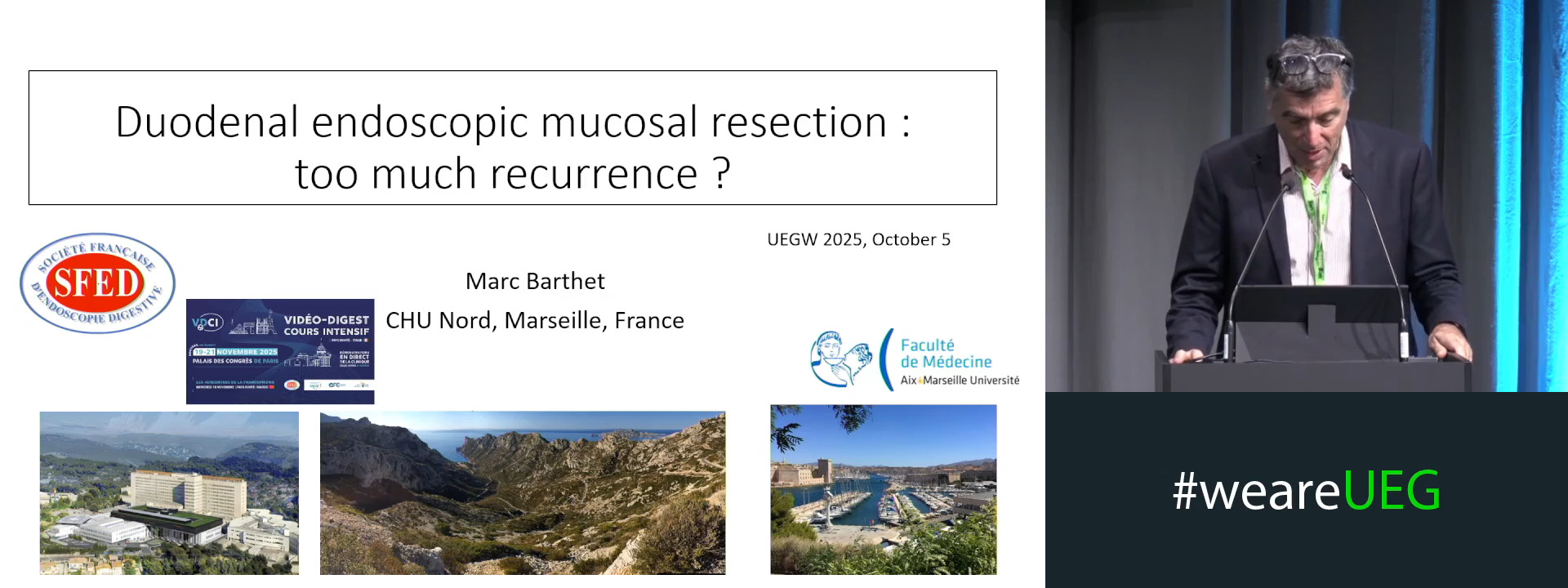
EMR or ESD for duodenal adenoma: Too much recurrence and too much risk?
Affiliations
1 Hopital Nord, Marseille, France
2 Keio University Cancer Center - Cancer Center, Keio University Cancer Center; Tokyo/JP, Tokyo, Japan
Log in to continue.
This content is part of Gutflix. Log in with your myUEG account, or create one free, to watch it.
Not sure what you can access? Learn more about account types.
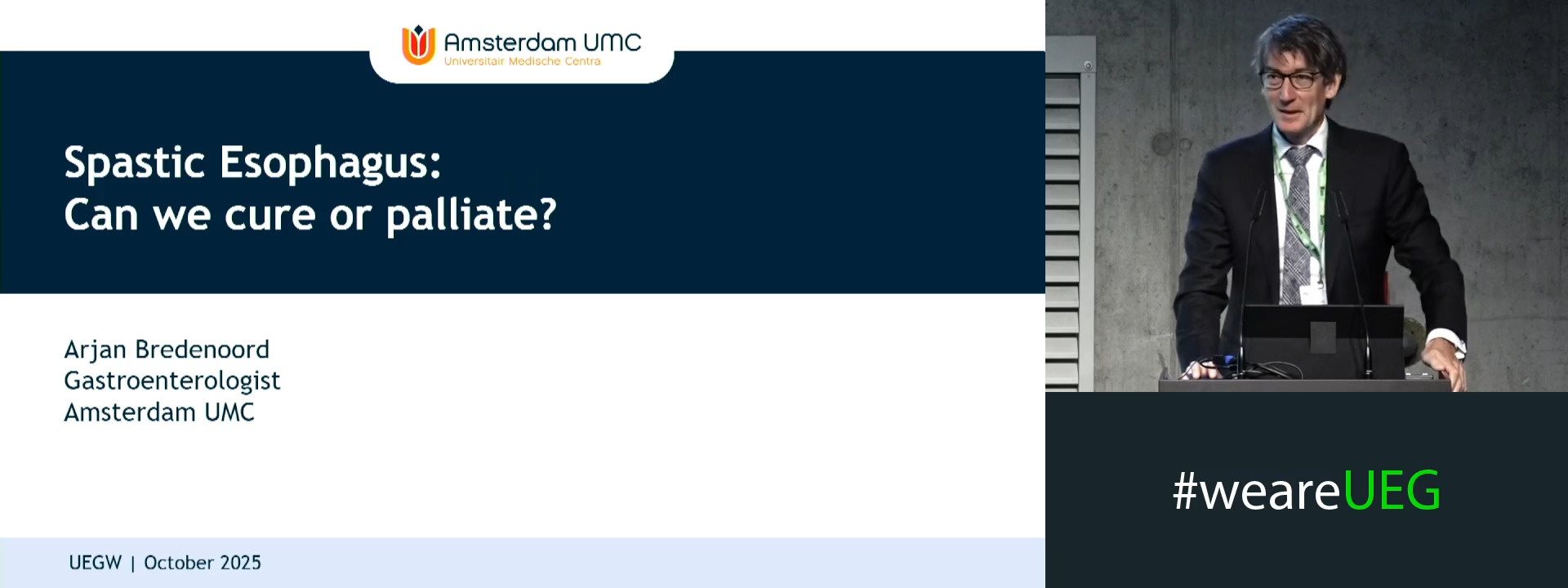
Can we cure or palliate?
Affiliations
1 Amsterdam UMC, Amsterdam, Netherlands