UEG's content platform for gastroenterology education bringing recordings, courses, guidelines, and more together in one place.
Trending on Gutflix
Rate for better recommendations!
Your feedback helps us show you more of what you like and less of what you dislike!
Log in to continue.
This content is part of Gutflix. Log in with your myUEG account, or create one free, to watch it.
Not sure what you can access? Learn more about account types.
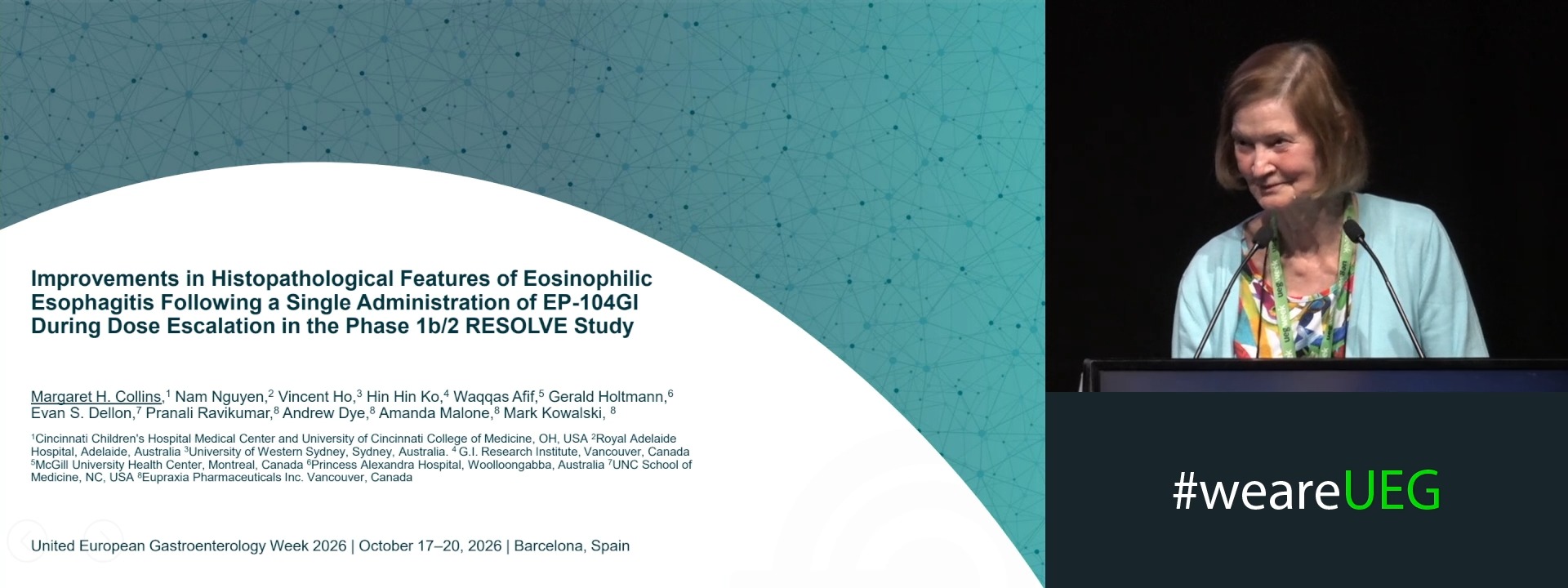
IMPROVEMENTS IN HISTOPATHOLOGICAL FEATURES OF EOSINOPHILIC ESOPHAGITIS FOLLOWING A SINGLE ADMINISTRATION OF EP-104GI DURING DOSE ESCALATION IN THE PHASE 1B/2 RESOLVE STUDY
Margaret H. Collins 1, Nam Quoc Nguyen 2, Vincent Ho 3, Waqqas Afif 4, Gerald J. Holtmann 5, Evan S. Dellon 6, Pranali Ravikumar 7, Andrew Dye 7, Amanda Malone 7, Mark Kowalski 7
Affiliations
1 Cincinnati Children’s Hospital Medical Center and University of Cincinnati College of Medicine, Cincinnati, United States
2 Royal Adelaide Hospital, Adelaide, Australia
3 University of Western Sydney, Brisbane Queensland, Australia
4 McGill University Health Center, Montreal, Canada
5 University of Queensland, Brisbane, Australia
6 University of North Carolina School of Medicine, Chapel Hill, NC, United States
7 Eupraxia Pharmaceuticals, Vancouver, Canada
Log in to continue.
This content is part of Gutflix. Log in with your myUEG account, or create one free, to watch it.
Not sure what you can access? Learn more about account types.
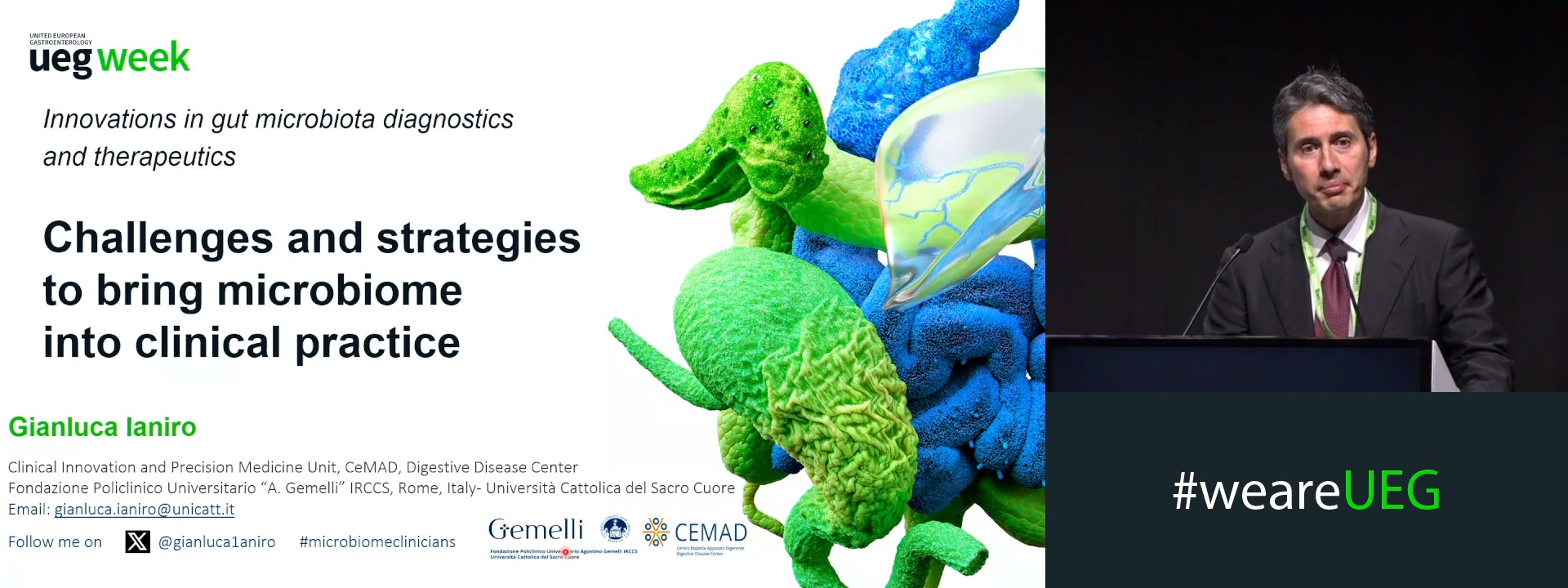
Challenges and strategies to bring microbiome into clinical practice
Affiliations
1 Fondazione Policlinico Universitario "A. Gemelli" IRCCS, Catholic University of Rome, Rome, Italy
Log in to continue.
This content is part of Gutflix. Log in with your myUEG account, or create one free, to watch it.
Not sure what you can access? Learn more about account types.
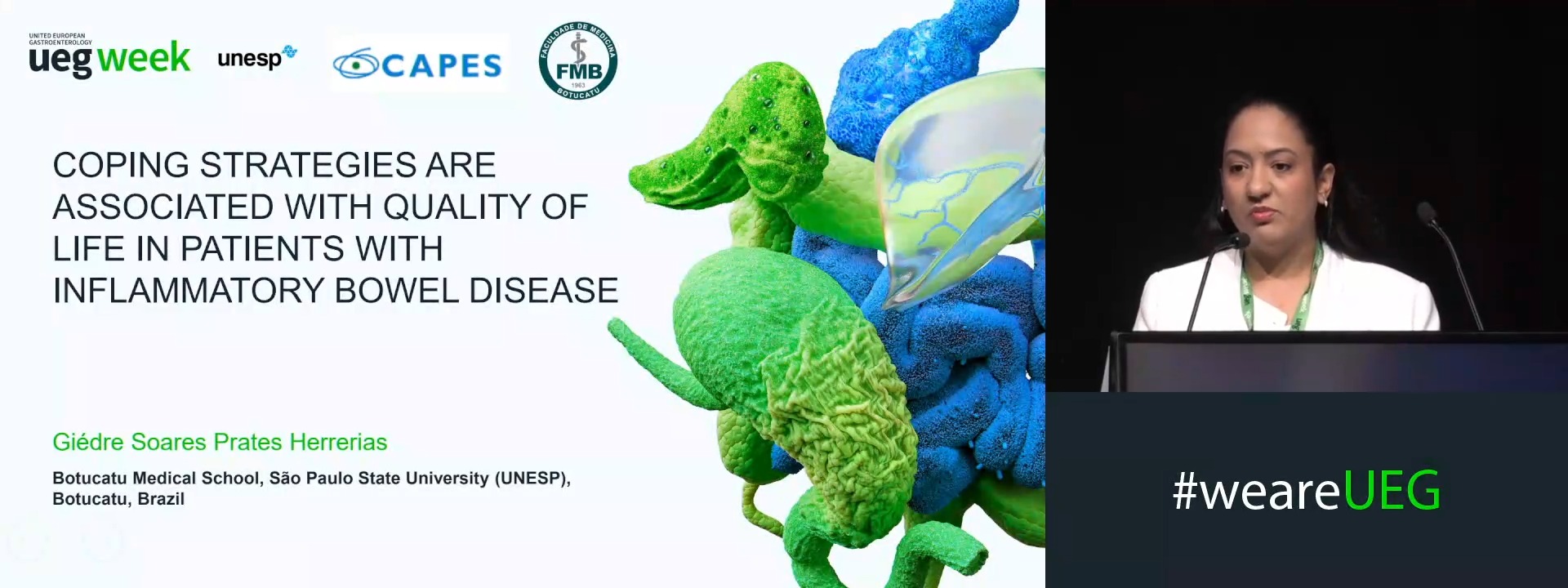
COPING STRATEGIES ARE ASSOCIATED WITH QUALITY OF LIFE IN PATIENTS WITH INFLAMMATORY BOWEL DISEASE
Giédre Herrerias 1, Beatriz Gabriela Costa 1, Rebeca Rodrigues de Oliveira Pinton 1, Marina Amorim Lopes 1, Ryan Nunes Yoshio Yoshihara 1, Jaqueline Barros 1, Natália Salvador Castelhano 1, Amanda Spiller 1, Enya Zucari Nogueira 1, Sofia Vidal Roçafa 1, Beatriz Shimabukuro 1, Mara Janneth Silva Batista 1, Julio Baima 1, Lígia Yukie Sassaki 1
Affiliations
1 Botucatu Medical School, São Paulo State University (UNESP), Botucatu, Brazil
Log in to continue.
This content is part of Gutflix. Log in with your myUEG account, or create one free, to watch it.
Not sure what you can access? Learn more about account types.
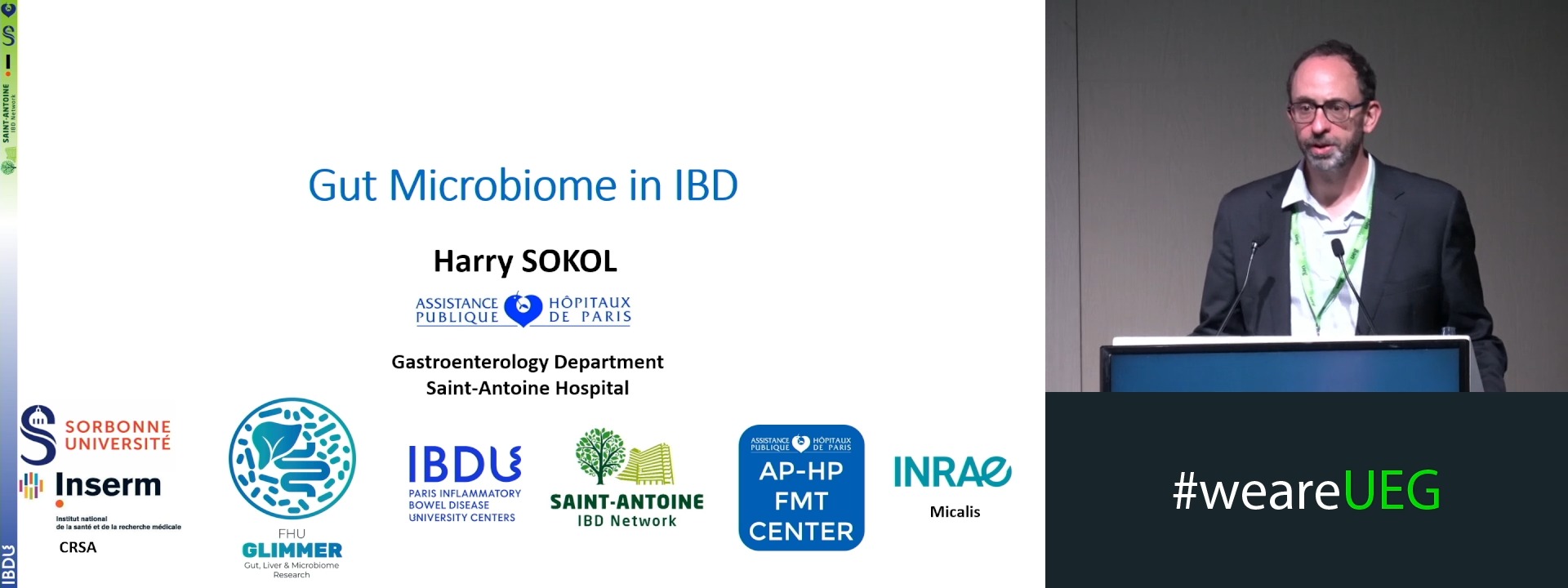
The gut microbiome in IBD
Affiliations
1 Saint-Antoine Hospital, Paris, France