UEG Week Recordings UEG Week Posters Online courses Guidelines Mistakes in... Podcasts Webinars
Visit ueg.eu Create myUEG account Log In

Filters:

UEG Online Course
accredited
Share via Email Share on Facebook Share on X Share on LinkedIn Share on Bluesky

Log in to access this content.

Free for all myUEG account holders. Your access level is set automatically based on your occupation. Medical professionals get full access to all content. If you are a non-medical user, you can only access UEG Week content from congresses you attended.

Log In Create a free account

Not sure what you can access? Learn more about account types.
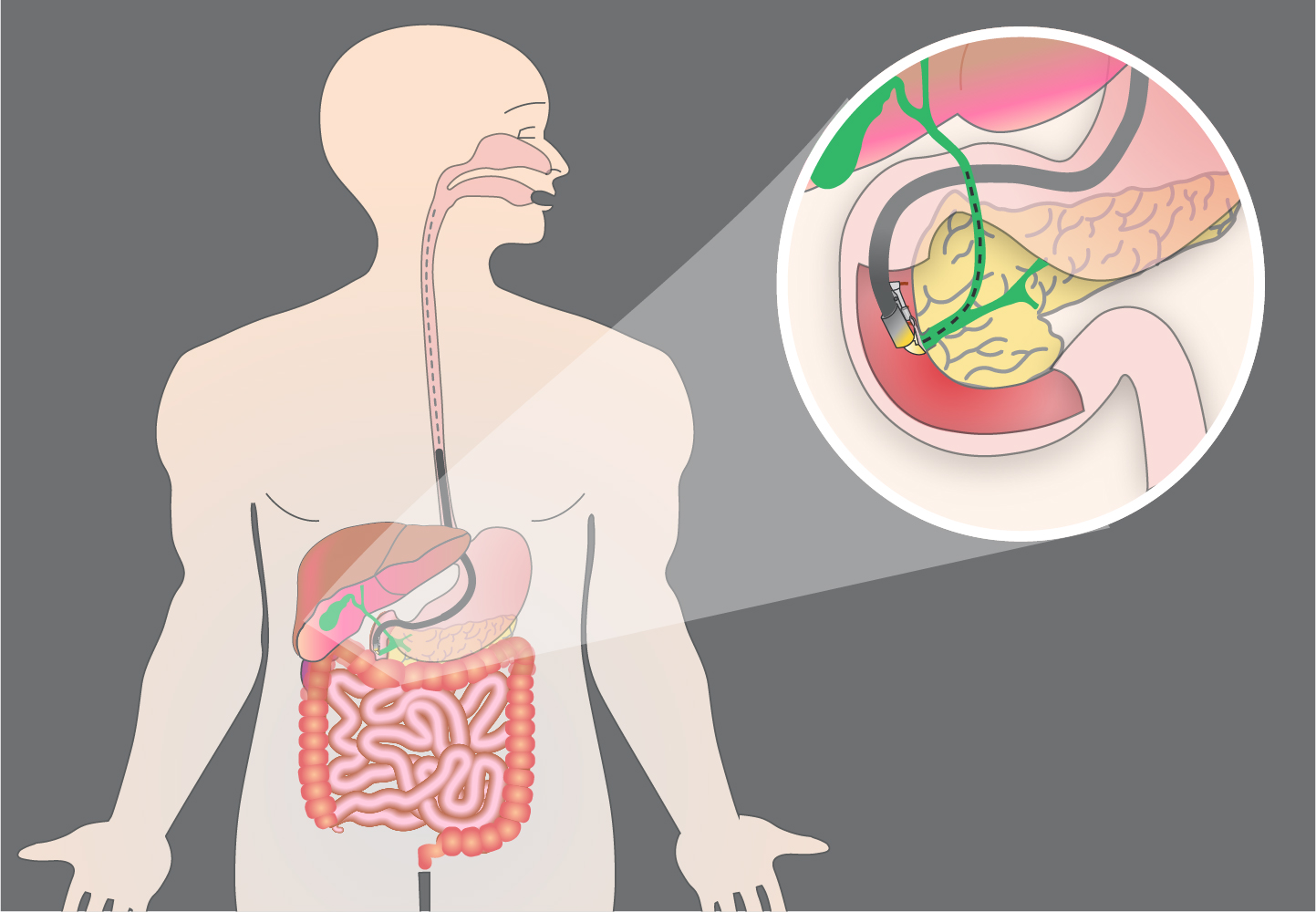
Endoscopic retrograde cholangiopancreatography, or ERCP, is a procedure to diagnose and treat problems in the liver, gallbladder, bile ducts, and pancreas. After initial training, advanced techniques and approaches are necessary for an endoscopist interested in ERCP.

Both parts (four sections in each) constitute the module Advanced ERCP course (eight sections in total). Make sure to attend part I at the beginning for an introductory reminder.

The first part of this online course summarises basic ERCP and dives deeper into difficult cannulation , difficult biliary stones, cholangioscopy and biliary stricture evaluation and management.

The second part of this online course covers proximal obstruction, bile leaks, pancreatic endotherapy, EUS-guided access, aberrant anatomy and a course conclusion for both parts.

Both courses include comprehensive PPT slides and bespoke video presentations by Gavin Johnson, George Webster, and Simon Phillpotts which were filmed in London in 2022. Both parts of the combined material have a total duration of approximately 120 minutes. The estimated time needed to complete the courses, including the final assessment, is 2 hour.

Target audience

This course is suitable for gastroenterologists in training, for gastroenterologists in advanced endoscopy training or in HPB surgery, training in ERCP. It is also appropriate for endoscopy nurses and medical students who have an interest in gastroenterology.

Advanced ERCP  - Part 2

Advanced ERCP - Part 2

Gavin Johnson, George Webster, Simon Phillpotts

Event

Advanced ERCP - Part 2

Topics

Endoscopy

Accreditation status

accredited

Duration

1 hour

Published

2024
Login to access
UEG Online Course
accredited
Share via Email Share on Facebook Share on X Share on LinkedIn Share on Bluesky

Log in to access this content.

Free for all myUEG account holders. Your access level is set automatically based on your occupation. Medical professionals get full access to all content. If you are a non-medical user, you can only access UEG Week content from congresses you attended.

Log In Create a free account

Not sure what you can access? Learn more about account types.

Endoscopic retrograde cholangiopancreatography, or ERCP, is a procedure to diagnose and treat problems in the liver, gallbladder, bile ducts, and pancreas. After initial training, advanced techniques and approaches are necessary for an endoscopist interested in ERCP.

Both parts (four sections in each) constitute the module Advanced ERCP course (eight sections in total). Make sure to attend part I at the beginning for an introductory reminder.

The first part of this online course summarises basic ERCP and dives deeper into difficult cannulation , difficult biliary stones, cholangioscopy and biliary stricture evaluation and management.

The second part of this online course covers proximal obstruction, bile leaks, pancreatic endotherapy, EUS-guided access, aberrant anatomy and a course conclusion for both parts.

Both courses include comprehensive PPT slides and bespoke video presentations by Gavin Johnson, George Webster, and Simon Phillpotts which were filmed in London in 2022. Both parts of the combined material have a total duration of approximately 120 minutes. The estimated time needed to complete the courses, including the final assessment, is 2 hour.

Target audience

This course is suitable for gastroenterologists in training, for gastroenterologists in advanced endoscopy training or in HPB surgery, training in ERCP. It is also appropriate for endoscopy nurses and medical students who have an interest in gastroenterology.

Advanced ERCP - Part 1

Advanced ERCP - Part 1

Gavin Johnson, George Webster, Simon Phillpotts

Event

Advanced ERCP - Part 1

Topics

Endoscopy

Accreditation status

accredited

Duration

1 hour

Published

2023
Login to access
UEG Poster
Standard Poster
Share via Email Share on Facebook Share on X Share on LinkedIn Share on Bluesky

Log in to access this content.

Free for all myUEG account holders. Your access level is set automatically based on your occupation. Medical professionals get full access to all content. If you are a non-medical user, you can only access UEG Week content from congresses you attended.

Log In Create a free account

Not sure what you can access? Learn more about account types.

Introduction

Gastroenterology is a medical specialty that includes several areas of study. Endoscopy occupies a central role in professional practice, whether in hospitals or in the private sector. The quality of initial training and the different needs of trainees are key to the quality of care delivered to the population. This study aims to assess endoscopic training experience during fellowship.

Aims & Methods

This is a cross-sectional, multicenter study conducted on gastroenterology residents practicing endoscopy and in the final phase of their curriculum (6th, 7th and 8th semesters). Postgraduated doctors have been excluded from the study. An electronic survey made by Google Forms and was sent nationwide on January 9, 2024. The survey consisted of 42 questions divided into 3 parts: The first part focused on the participants' socio-demographic data and their endoscopic experience, the second part focused on the quality of training of core endoscopic skills (cognitive and motor skills) during fellowship where a 5-point Likert scale was used to express residents' satisfaction with their skills, ranging from 1="very dissatisfied", 2="dissatisfied", 3="neither satisfied nor dissatisfied", 4="satisfied" and 5="very satisfied". The third part included questions in which participants expressed their needs and expectations for improving their training in endoscopy. A statistical analysis using the Student-t test and the Fisher’s exact test were performed. P values of <0.05 were considered statistically significant. Data were analyzed using Jamovi (Version 2.3).

Results

We were able to collect data from 56 respondents. Most were female residents n=40 (71.4) with a mean age of 29.2 ± 2.5 years. The majority of fellows started practicing EGD in their 4th semester (91.1%), and colonoscopy in their 6th semester (57%). On average, the fellows are supervised by 5 senior doctors, including 2 who practice interventional endoscopy. Furthermore, 37.5% of participants report performing approximately more than 100 EGDs, 14.2% more than 100 colonoscopies, 80.4% report that they have performed less than 20 endoscopic variceal ligation and 14.3% have performed more than 10 polypectomies. An average rating score of 3.34 (1= very dissatisfied; 5= very satisfied) concerning the quality of training and feedback on cognitive aspects of endoscopy was found and we reported greatest emphasis for Procedure indication/contraindication and least on Capsule endoscopy interpretation.
The quality of training in technical aspects of endoscopy was rated higher (average rating score of 3.5). We reported greatest emphasis for Withdrawal/mucosal inspection and least on Esophageal dilation.
A significant association between motor skills and cognitive skills was found with a p<0.001.
Finally, to improve their training, 87.5% of respondents considered simulation to be important/very important, 98.2% of respondents intend to complete their endoscopy training at the end of their curriculum, and 87.5% are prepared to finance such a project (median: 1000 USD [1000;3000]).

Conclusion

Despite a significant improvement in training sites and technical facilities, training in endoscopy in healthcare institutions does not yet provide all the cognitive and technical skills required to enable fellows to be fully autonomous. With the development of endoscopic procedures, it seems essential for fellows to be able to perform more standard endoscopic procedures such as polypectomy and mucosectomy by the end of their curriculum. This may involve introducing regular endoscopy conferences and simulation training as a part of the curriculum.

ASSESSING ENDOSCOPIC TRAINING IN GASTROENTEROLOGY FELLOWSHIPS: A MULTICENTRIC CROSS SECTIONAL PILOT STUDY

ASSESSING ENDOSCOPIC TRAINING IN GASTROENTEROLOGY FELLOWSHIPS: A MULTICENTRIC CROSS SECTIONAL PILOT STUDY

Amine Achemlal 1, Nejjari Fouad 1, salma ouahid 1, Salma Azammam 1, Meriem Amine 1, Sakina Oualaalou 1, chaimae jioua 1, Bangda Yannick 1, Rachid Laroussi 1, Abdelfettah Touibi 1, Tarik ADIOUI 1, Mouna Tamzaourte 1

1 Mohamed V Military Training Hospital, Rabat, Morocco

Conference

UEG Week Vienna 2024

Submission format

Abstract

Session

Other (Posters)

Citation

United European Gastroenterology Journal 2024; 12 (Supplement 8)

Published

2024
UEG Poster
Audio / Video Poster
Share via Email Share on Facebook Share on X Share on LinkedIn Share on Bluesky

Log in to access this content.

Free for all myUEG account holders. Your access level is set automatically based on your occupation. Medical professionals get full access to all content. If you are a non-medical user, you can only access UEG Week content from congresses you attended.

Log In Create a free account

Not sure what you can access? Learn more about account types.

Introduction

Gastric variceal bleeding is life-threating condition with high risk of rebleed with challenging management with standard management including cyanoacrylate glue injection. We aimed to compare efficacy and safety of endoscopic ultrasonography (EUS)-guided coil embolization and cyanoacrylate injection versus EUS-guided cyanoacrylate injection alone in management of gastric varices.

Aims & Methods

Single-centre, parallel-randomized controlled trial involving 24 participants with gastric varices (GOV II and IGV I) who were randomly allocated to EUS-guided coil embolization and cyanoacrylate injection (n = 12) or EUS guided cyanoacrylate Injection alone (n = 12). Primary end points were technical and clinical success rates of both procedures. Secondary end points were reappearance of gastric varices during follow-up with rebleeding, and complication.

Results

Average size of varices were almost similar (21mm and 22mm) in both. Mean number of coils required were 2.1 per patient and volume of cyanoacrylate needed was less in combined modality group (2.5ml vs 4ml). Technical success rate was 100% in both groups. Immediate disappearance of varices was observed in 66.67% of patients treated with coils and cyanoacrylate, versus 8.33% of patients treated with cyanoacrylate alone (P=0.009). Rebleeding at 10 months occurred in none of patients treated with combined and 5 of 12 (41.66%) of those treated alone (P=0.03). 1 patient died in only cyanoacrylate group after intervention because of pulmonary embolism.

Conclusion

EUS guided coil embolization with cyanoacrylate injection achieved excellent clinical success, with lower rates of rebleeding than cyanoacrylate treatment alone. Long term follow-up and mean sample required to further Validate our data.

RANDOMIZED CONTROLLED TRIAL: ENDOSCOPIC ULTRASONOGRAPHY GUIDED DEPLOYMENT OF EMBOLISATION COIL WITH CYANOACRYLATE GLUE INJECTION VERSUS ISOLATED GLUE INJECTION FOR GASTRIC VARIES

RANDOMIZED CONTROLLED TRIAL: ENDOSCOPIC ULTRASONOGRAPHY GUIDED DEPLOYMENT OF EMBOLISATION COIL WITH CYANOACRYLATE GLUE INJECTION VERSUS ISOLATED GLUE INJECTION FOR GASTRIC VARIES

Ashok Jhajharia 1, Sumit Yadav 1, Prachis Ashdhir 1, Saksham Seth 1

1 SMS Medical College & Hospital, Jaipur, Jaipur, India

Conference

UEG Week Copenhagen 2023

Topics

Hepatobiliary

Submission format

Abstract

Session

Liver and biliary: Clinical aspects (Posters)

Citation

United European Gastroenterology Journal 2023; 11 (Supplement 8)

Published

2023
UEG Poster
Standard Poster
Share via Email Share on Facebook Share on X Share on LinkedIn Share on Bluesky

Log in to access this content.

Free for all myUEG account holders. Your access level is set automatically based on your occupation. Medical professionals get full access to all content. If you are a non-medical user, you can only access UEG Week content from congresses you attended.

Log In Create a free account

Not sure what you can access? Learn more about account types.

Introduction

The introduction of biological drugs has led to great expectations and growing optimism in the possibility that this new therapeutic strategy could favourably change the natural history of Inflammatory Bowel Disease (IBD) and in particular that it could lead to a significant reduction in surgery in the short and long term. The evaluation of the incidence of intestinal resection after the introduction of biological therapy is very complex and subject to several potential bias, the most prominent being the shift in IBD management over the last few decades.

Aims & Methods

This study aims to assess the impact of biological versus conventional therapy on surgery-free survival time (from the diagnosis to the first bowel resection) and on the overall risk of surgery in patients with Crohn’s disease (CD) who were never with the surgical option.
This is a retrospective, double-arm study including CD patients treated with either biological or conventional therapy (mesalamine, immunomodulators, antibiotics, or steroids). All CD patients admitted at the GI Unit of the S. Salvatore Hospital (L’Aquila, Italy) and treated with biological therapy since 1998 were included in the biological arm. Data concerning the CD patients receiving a conventional therapy were retrospectively collected from our database. These patients were divided into a pre-1998 and post-1998 group (pre and post biologic era, respectively). Our primary outcome was the evaluation of the surgery-free survival since CD diagnosis to the first bowel resection. Surgery-free time and event incidence rates were calculated and compared among all groups, both in the original population and in the propensity-matched population.

Results

203 CD patients (49 biological, 93 conventional post-1998, 61 conventional pre-1998) were included in the study. Kaplan-Mayer survivorship estimate shows that patients in the biological arm had a longer surgery-free survival compared to those in the conventional arm (p=0.03). However, after propensity matching analysis, no significant difference was found in surgery-free survival (p=0.3). A sub-group analysis showed shorter surgery-free survival in patients on conventional therapy in the pre-biologic era only (p=0.02) while no significative difference was found between the biologic and conventional post-biologic groups (p=0.15).

Conclusion

This study shows that the introduction of biological therapy had only a slight impact on the occurrence of surgery in CD patients over a long observation period. Despite the milder disease, patients in the conventional group in the biologic era had the same surgery-free survival compared to patients in biological therapy. Nevertheless, biological therapy appears to delay the first intestinal resection. However, the cumulative incidence of first intestinal resection between patients who underwent biological or conventional therapy ends up being similar considering a very long period.

Disclosure

None

THE LONG-TERM EFFECT ON SURGERY-FREE SURVIVAL OF BIOLOGICAL COMPARED TO CONVENTIONAL THERAPY IN CROHN’S DISEASE IN REAL WORLD-DATA: A PROPENSITY-SCORE MATCHED STUDY

THE LONG-TERM EFFECT ON SURGERY-FREE SURVIVAL OF BIOLOGICAL COMPARED TO CONVENTIONAL THERAPY IN CROHN’S DISEASE IN REAL WORLD-DATA: A PROPENSITY-SCORE MATCHED STUDY

Marco Valvano 1, Antonio Vinci 2, Marta Ameli 1, Nicola Cesaro 1, sara FRASSINO 1, Angelo Viscido 1, Stefano Necozione 1, Giovanni Latella 1

1 Università degli Studi di L'Aquila, L'Aquila, Italy

2 University of Tor Vergata, Roma, Italy

Conference

UEG Week Copenhagen 2023

Topics

IBD

Submission format

Abstract

Session

PP 05 IBD (Posters)

Citation

United European Gastroenterology Journal 2023; 11 (Supplement 8)

Published

2023
UEG Poster
Standard Poster
Share via Email Share on Facebook Share on X Share on LinkedIn Share on Bluesky

Log in to access this content.

Free for all myUEG account holders. Your access level is set automatically based on your occupation. Medical professionals get full access to all content. If you are a non-medical user, you can only access UEG Week content from congresses you attended.

Log In Create a free account

Not sure what you can access? Learn more about account types.

Introduction

While randomized studies have shown that Amgevita (an adalimumab biosimilar) and Humira (adalimumab originator) are equivalent, concerns persist among patients and prescribers as to its efficacy. Patients switching to a medicine they perceive as lower cost may experience a ‘nocebo’ effect, whereby expectations of poorer efficacy may lead to worse clinical outcomes, resulting in an unmeasured health economic burden.

Aims & Methods

70 patients partook in a biosimilar switch study at our centre in August 2020, undergoing a change in treatment from Humira to Amgevita. Baseline clinical data obtained included faecal calprotectin, drug and drug antibody levels, Harvey-Bradshaw (HBI) and Partial-Mayo scores. Patient-Reported Outcomes (PROs) were recorded through the IBD control-8 (IBDC8) and IBCD visual analogue scale (IBDQ-VAS). Patients took psychometric tests 8 weeks pre-switch, including the ‘Beliefs about Medicines’ questionnaire (BMQ), used to assess beliefs about prescribed medications, the ‘Health Anxiety Index’ (HAI), used to identify patients with high levels of concern about their health, and the EQ-5D questionnaire, used to measure health-related quality of life. The original study found no significant differences in clinical and PROs at 8-week follow-up. We planned to conduct a 32-month follow-up on these patients to examine for temporal changes in outcomes, and whether certain variables could predict the patients experiencing a ‘nocebo’ effect. Approval was obtained from the hospital ethics committee. Patient information from the original study was stored on an excel database. We retrospectively obtained clinical data from electronic records and lab data. Questionnaire results were obtained from clinic appointments.

Results

70 patients were included in the study. 41 male, 29 female. 54 patients had Crohn’s, 13 UC, and 4 indeterminate colitis. 25.7% of patients reported adverse events post-switch, with 33.3% of these patients switching back to Humira. The most common side effects were skin related (8.6%), injection site related (5.7%), and headaches (2.8%). 8.6% of patients felt the medication to be less effective without specific symptoms. 32-months post switch, 72.7% remained on Amjevita, 9.1% had switched back to Humira, 7.6% had switched to another biologic as clinical non-responders, 10.6% had stopped biologic treatment due to surgery or clinical remission.
Median scores were calculated at 8 weeks pre and post-switch, and at 32 months. HBI scores were 2, 1 and 1 respectively, with scores of 1, 0 and 0 in the switchback group. IBDC8 scores were 12, 13 and 14 overall, with scores of 12, 10 and 14 in the switchback group. IBDQ-VAS scores were 87, 80 and 90 overall, with scores of 100, 100 and 85 in the switchback group. Median HAI scores were lower in the switchback group; scoring 12 versus 17 overall. Median scores in four domains of the BMQ questionnaire; general harm, general overuse, specific concerns and specific necessity were lower in the switchback group. Scores were 12, 12, 8, 7, versus overall scores of 21, 14, 10, and 9 respectively, indicating more negative attitudes towards medicines in the switchback group.

Conclusion

Our study found no negative impact in clinical outcomes and PROs in patients switching from Humira to Amgevita at 32-months post-switch. Patients that had more negative attitudes to medicines in the BMQ questionnaire were more likely to switchback to Humira suggesting a nocebo effect. Enhanced patient education may help mitigate the nocebo effect observed in our study and enhance the success rate of future biosimilar switch trials.

KNOW NOCEBO: PREDICTING PATIENT OUTCOMES IN A 32-MONTH ADALIMUMAB BIOSIMILAR SWITCH STUDY

KNOW NOCEBO: PREDICTING PATIENT OUTCOMES IN A 32-MONTH ADALIMUMAB BIOSIMILAR SWITCH STUDY

Ciaran Mc Closkey 1, Louise Rabbitt 1, Sarah Monahan 1, Niamh Martin 1, Laurence Egan 1, Eoin Slattery 1

1 University Hospital Galway, Galway, Ireland

Conference

UEG Week Copenhagen 2023

Topics

IBD

Submission format

Abstract

Session

IBD: We treat them all - but how? (Posters)

Citation

United European Gastroenterology Journal 2023; 11 (Supplement 8)

Published

2023
UEG Poster
Standard Poster
Share via Email Share on Facebook Share on X Share on LinkedIn Share on Bluesky

Log in to access this content.

Free for all myUEG account holders. Your access level is set automatically based on your occupation. Medical professionals get full access to all content. If you are a non-medical user, you can only access UEG Week content from congresses you attended.

Log In Create a free account

Not sure what you can access? Learn more about account types.

Introduction

Endoscopic submucosal dissection (ESD) is a highly effective and safe technique for the resection of superficial colorectal neoplasms, but it can still be technically challenging for lesions in contact with or invading the appendiceal orifice. Until recently, appendicular lesions were considered unresectable or difficult to resect by endoscopy because of the high risk of incomplete resection, perforation or acute appendicitis. Small studies have reported ESD feasibility and efficacy in this particular context, including for lesions deeply invading the appendix. However, strong data about these more complex resections is lacking and the best management strategy for this kind of lesion remains a matter of debate, with upfront surgery still being the first-choice treatment in most western countries.

Aims & Methods

With the present study, we aimed to assess and report the outcomes of ESD for the treatment of lesions in contact with or invading the appendiceal orifice. We prospectively collected data of ESD procedures for appendiceal neoplasia in a multicenter prospective register. En Bloc R0 resection rate was the primary outcome. Morbidity and additional surgery were also reported.

Results

A total of 112 patients were included, comprising 47 (42%) with previous appendectomy. Fifty-six lesions (50%) were type 3 according to Toyonaga classification (15 (13.4%) post-appendectomy). En-bloc and R0 resection rates were 86.6% and 80.4%, with no significant difference associated with different grades of appendiceal invasion (p=0.9 and p=0.4, respectively) or history of previous appendectomy (p=0.3 for both). Curative resection rate was 78.6%. Additional surgery was performed in 16 (14.3%) cases, with 10/16 (62.5%) corresponding to Toyonaga type 3 lesions (p=0.04). This included the treatment of 5 (4.5%) cases of delayed perforation and 1 acute appendicitis. A second case of acute appendicitis and 1 of delayed hemorrhage also observed, both treated conservatively.

Conclusion

To our knowledge, this is the largest reported series of ESDs for the treatment of appendicular lesions. Our results show that ESD is safe and effective in this context, and should thus be considered as a valuable treatment option. New traction strategies and devices should make it progressively less technically challenging and more widely accessible.

ENDOSCOPIC SUBMUCOSAL DISSECTION OF APPENDICULAR LESIONS IS FEASIBLE AND SAFE: A RETROSPECTIVE MULTICENTER STUDY

ENDOSCOPIC SUBMUCOSAL DISSECTION OF APPENDICULAR LESIONS IS FEASIBLE AND SAFE: A RETROSPECTIVE MULTICENTER STUDY

Mariana Figueiredo Ferreira 1, Clara Yzet 2, Thimothée Wallenhorst 3, Jerome Rivory 4, Florian Rostain 4, Marion SCHAEFER 5, Jean-Baptiste Chevaux 6, Sarah Leblanc 7, Vincent Lepilliez 7, Félix Corre 8, Gabriel Rahmi 9, Jérémie Jacques 10, Jeremie Albouys 11, Mathieu Pioche 4

1 Saint-Pierre University Hospital, Brussels, Belgium

2 Amiens University Hospital, Amiens, France

3 CHU Rennes, Rennes, France

4 Hospices civils de Lyon, Lyon, France

5 Centre Hospitalier Régional Universitaire de Nancy, Nancy, France

6 University Hospital of Nancy, Vandoeuvre Les Nancy, France

7 Hôpital Privé Jean Mermoz, Sainte Foy Les Lyon, France

8 Cochin Hospital, Paris, France

9 Hôpital Européen Georges Pompidou Dept. de Gastroenterologie, Paris, France

10 CHU Limoges - Hepato-Gastro-Enterology, CHU Limoges, Limoges, France

11 CHU Limoges / University of Limoges, Limoges, France

Conference

UEG Week Copenhagen 2023

Topics

Colorectal

Submission format

Abstract

Session

Lower GI endoscopy interventions (Posters)

Citation

United European Gastroenterology Journal 2023; 11 (Supplement 8)

Published

2023

The global reference point for the digestive health community

Platform Publisher

United European Gastroenterology

Wickenburggasse 1 1080 Vienna, Austria

Contact us

support@ueg.eu

ueg.eu

T: +43 1 997 1639

Legal

Terms & Conditions

Imprint

Privacy Policy

Explore

My Bookmarks

My recommendations

My fields of interest

© 2026 United European Gastroenterology

Change fields of interest

These fields are selected based on the interests in your myUEG profile.
Click the item to unselect it. You can select multiple items.