UEG's educational platform for gastroenterology education bringing recordings, courses, guidelines, and more together in one place.
Most popular content
Rate for better recommendations!
Your feedback helps us show you more of what you like and less of what you dislike!
Log in to access this content.
Free for all myUEG account holders. Your access level is set automatically based on your occupation. Medical professionals get full access to all content. If you are a non-medical user, you can only access UEG Week content from congresses you attended.
Not sure what you can access? Learn more about account types.

ACCEPTABILITY OF FECAL CALPROTECTIN IN PATIENTS WITH INFLAMMATORY BOWEL DISEASE: IMPACT OF AN ALTERNATIVE COLLECTION DEVICE FOR STOOL SAMPLING (THE ACCALMI STUDY)
Giulia Pasi 1, Amale Antari 1, Damien Masson 1, Hélène Caillon 1, Thomas Dejoie 1, Marie Anne Vibet 1, Michael Collins 1, Arnaud Bourreille 1, Catherine Le Berre 1
1 CHU Nantes, Nantes, France
Conference
Topics
Submission format
Session
Citation
Published
Log in to access this content.
Free for all myUEG account holders. Your access level is set automatically based on your occupation. Medical professionals get full access to all content. If you are a non-medical user, you can only access UEG Week content from congresses you attended.
Not sure what you can access? Learn more about account types.
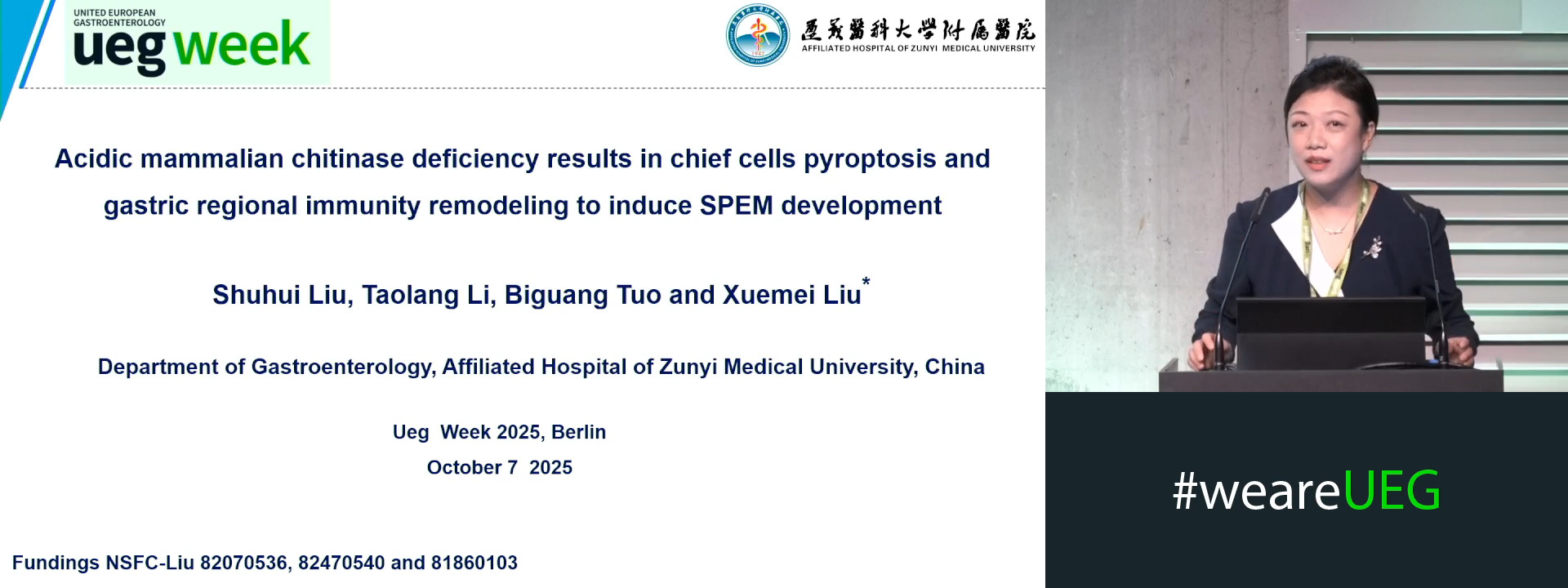
ACIDIC MAMMALIAN CHITINASE DEFICIENCY RESULTS IN CHIEF CELLS PYROPTOSIS AND GASTRIC REGIONAL IMMUNITY REMODELING IS THE NEW CELLULAR ORIGIN OF SPEM
1 Affiliated Hospital of Zunyi Medical University, Zunyi, China
Event
Topics
Submission format
Citation
Published
Log in to access this content.
Free for all myUEG account holders. Your access level is set automatically based on your occupation. Medical professionals get full access to all content. If you are a non-medical user, you can only access UEG Week content from congresses you attended.
Not sure what you can access? Learn more about account types.
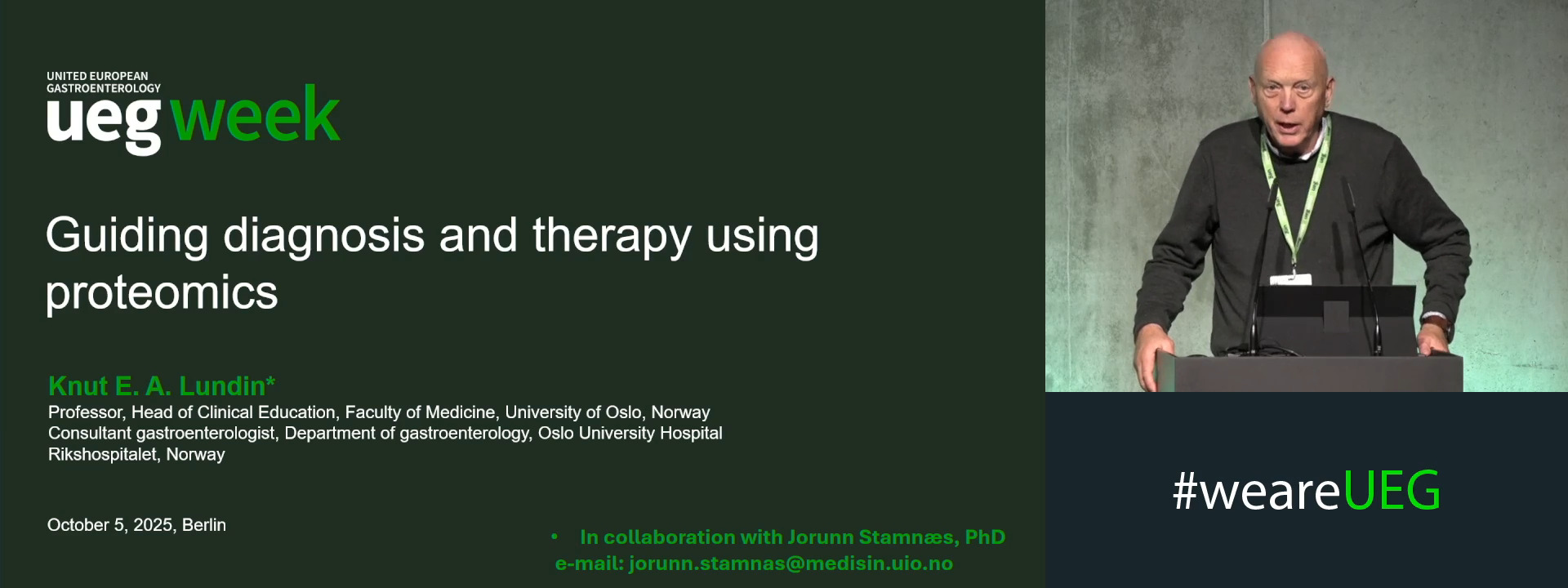
Guiding diagnosis and therapy using proteomics
1 Norwegian Coeliac Disease Research Centre, University of Oslo and Oslo University Hospital, Oslo, Norway
Event
Citation
Published
Log in to access this content.
Free for all myUEG account holders. Your access level is set automatically based on your occupation. Medical professionals get full access to all content. If you are a non-medical user, you can only access UEG Week content from congresses you attended.
Not sure what you can access? Learn more about account types.
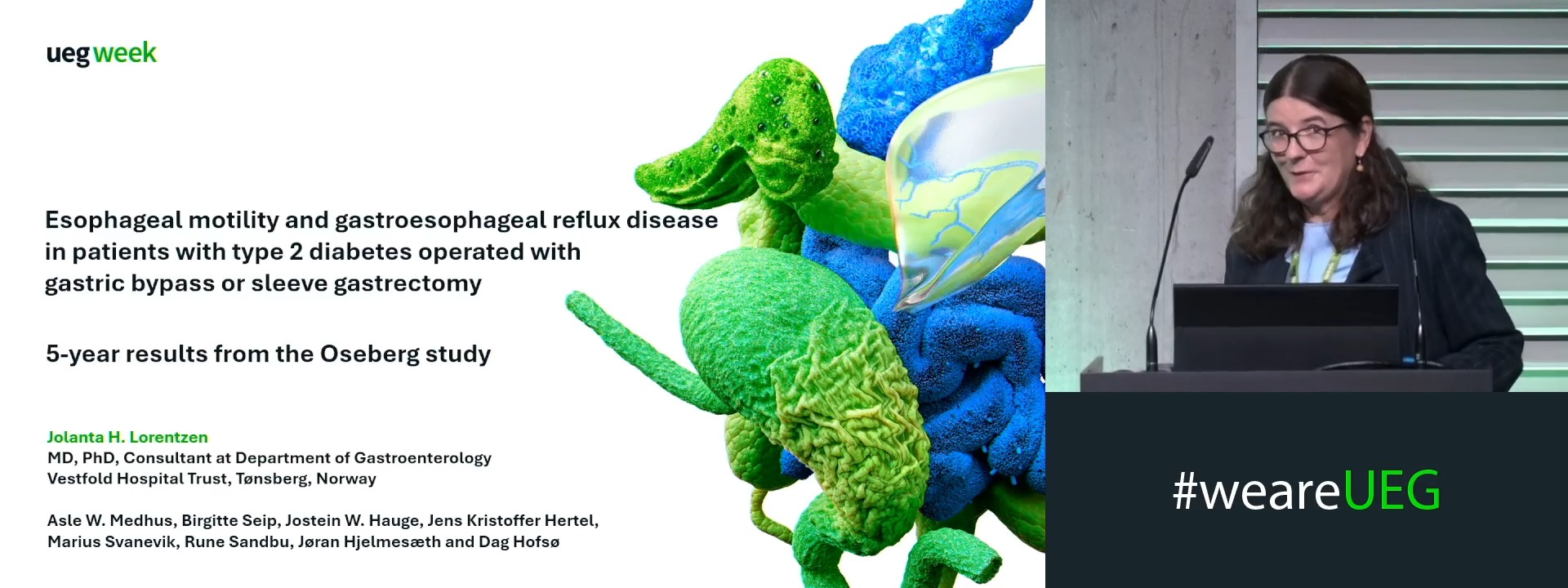
ESOPHAGEAL MOTILITY AND GASTROESOPHAGEAL REFLUX DISEASE IN PATIENTS WITH TYPE 2 DIABETES OPERATED WITH GASTRIC BYPASS OR SLEEVE GASTRECTOMY, 5-YEAR RESULTS FROM THE OSEBERG STUDY
Jolanta Lorentzen 1, Jostein W. Hauge 2, Asle W. Medhus 3, Jens K. Hertel 2, Birgitte Seip 4, Marius Svanevik 2, Rune Sandbu 2, Dag Hofsø 2, Jøran Hjelmesæth 2
1 Vestfold Hospital Trust, Tønsberg, Norway
2 Vestfold Hospital Trust, Tonsberg, Norway
3 Oslo University Hospital, Oslo, Norway
4 Vestfold Hospital, Tønsberg, Norway
Event
Submission format
Session
Citation
Published
Log in to access this content.
Free for all myUEG account holders. Your access level is set automatically based on your occupation. Medical professionals get full access to all content. If you are a non-medical user, you can only access UEG Week content from congresses you attended.
Not sure what you can access? Learn more about account types.
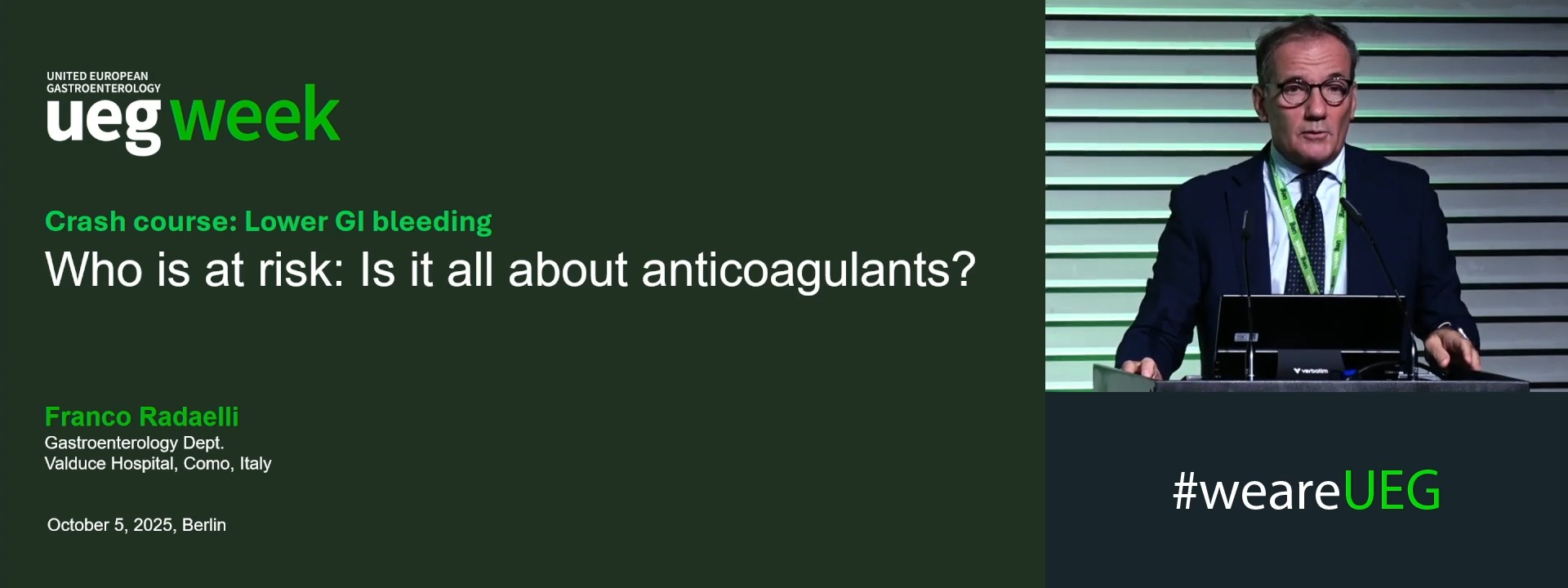
Who is at risk: Is it all about anticoagulants?
1 Valduce Hospital, Como, Italy
Event
Topics
Session
Citation
Published
Log in to access this content.
Free for all myUEG account holders. Your access level is set automatically based on your occupation. Medical professionals get full access to all content. If you are a non-medical user, you can only access UEG Week content from congresses you attended.
Not sure what you can access? Learn more about account types.
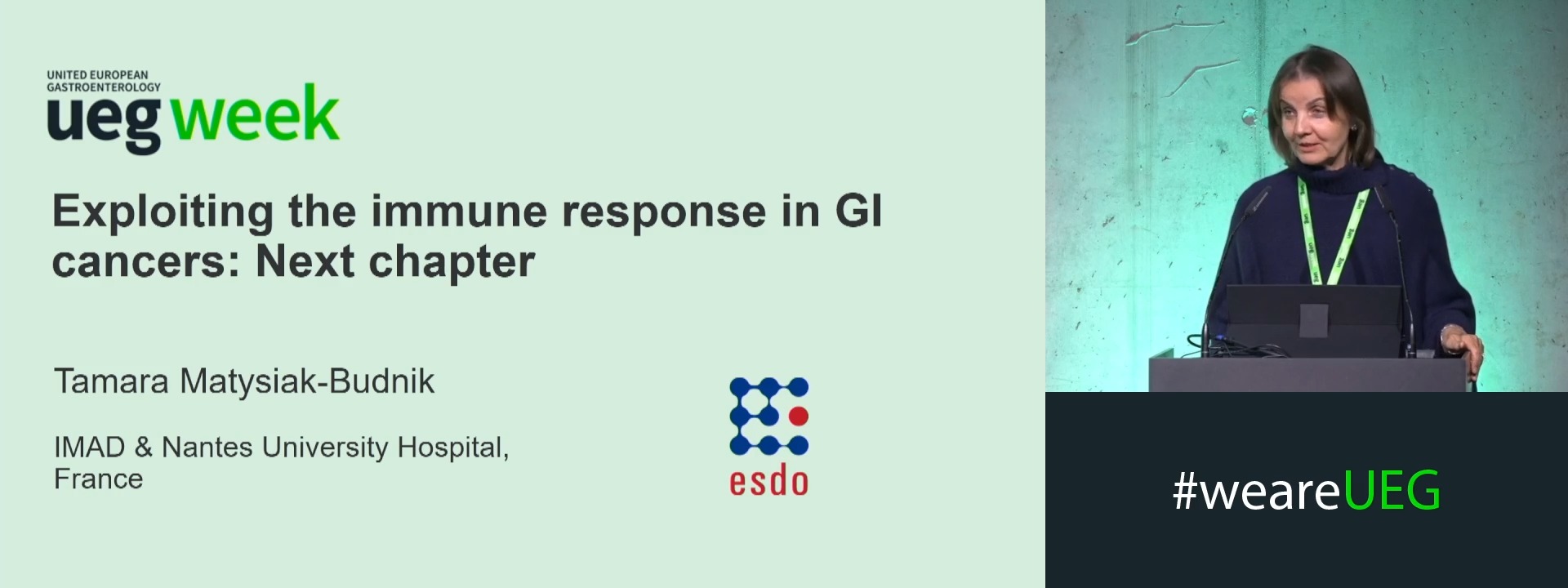
Exploiting the immune response in GI cancer: Next chapter
1 CHU de Nantes IMAD, Nantes, France
Event
Topics
Citation
Published
Log in to access this content.
Free for all myUEG account holders. Your access level is set automatically based on your occupation. Medical professionals get full access to all content. If you are a non-medical user, you can only access UEG Week content from congresses you attended.
Not sure what you can access? Learn more about account types.
IMPACT OF SARCOPENIA ON HEPATOCELLULAR CARCINOMA OUTCOMES: A RETROSPECTIVE MONOCENTRIC STUDY
Nadine Ghithia 1, Myriam Ayari 1, Naradine Douggaz 1, Sarra Ben Azouz 1, Mohamed Hedi Douggui 2, Jomni Mohamed Taieb 3
1 Internal Security Forces Hospital La Marsa, Tunis, Tunisia
2 Service de Gastroenterologie, Tunis, Tunisia
3 Fsi Hospital, Tunis, Tunisia
Conference
Topics
Submission format
Session