UEG's content platform for gastroenterology education bringing recordings, courses, guidelines, and more together in one place.
Trending on Gutflix
Rate for better recommendations!
Your feedback helps us show you more of what you like and less of what you dislike!
Log in to continue.
This content is part of Gutflix. Log in with your myUEG account, or create one free, to watch it.
Not sure what you can access? Learn more about account types.
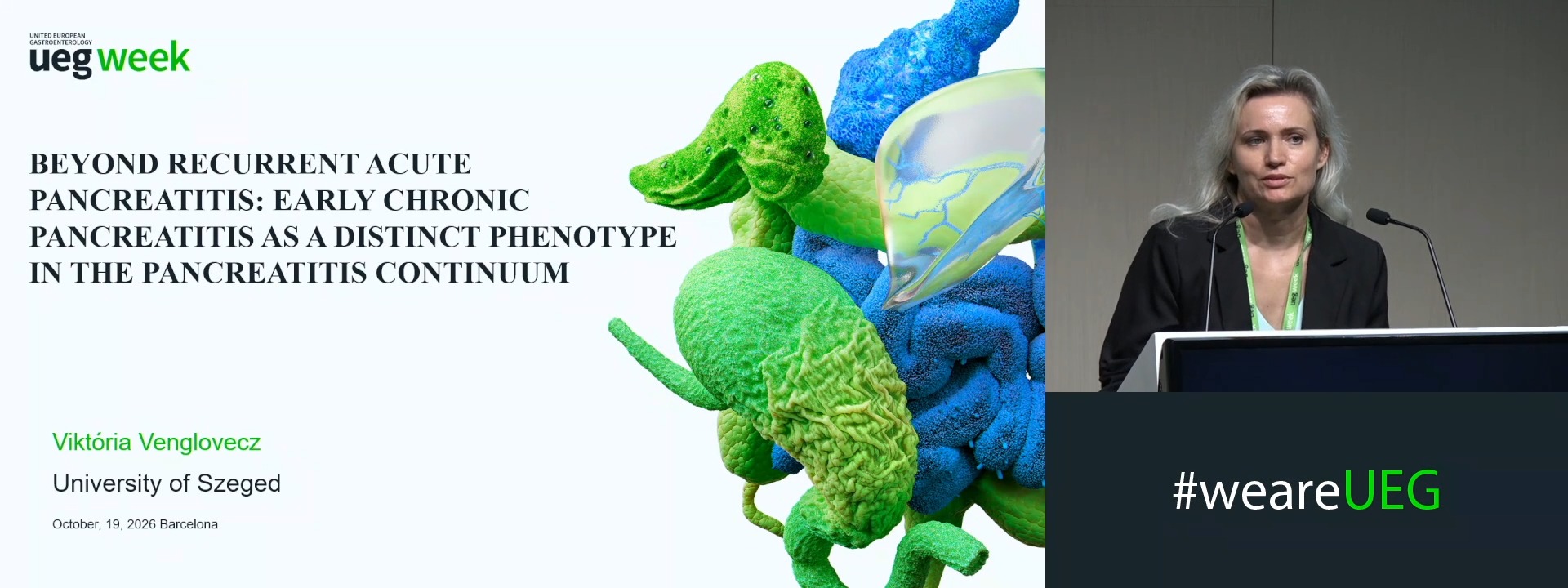
BEYOND RECURRENT ACUTE PANCREATITIS: EARLY CHRONIC PANCREATITIS AS A DISTINCT PHENOTYPE IN THE PANCREATITIS CONTINUUM
Viktoria Venglovecz 1, Zsolt Abonyi Tóth 2, Vivien Vass 3, Petra Széplaki 2, Dalma Dobszai 3, Daniel Marino 4, Tamas Gonda 5, Zsófia Román 2, Balint Eross 2, Peter Jeno Hegyi 2, Áron Vincze 6, Ferenc Izbéki 7, Mária Papp 8, Alexandra Mikó 9, Katalin Márta 10, Andrea Szentesi 6, Peter Hegyi 11
Affiliations
1 University of Szeged, Szeged, Hungary
2 Centre for Translational Medicine, Semmelweis University, Budapest, Hungary, Budapest, Hungary
3 Institute for Translational Medicine, Medical School, University of Pécs, Pécs, Hungary
4 Division of Gastroenterology, New York University, New York, United States
5 Columbia University, New York, United States
6 University of Pécs, Pécs, Hungary
7 Saint George University Hospital, Szekesfehervar, Hungary
8 University of Debrecen, Debrecen, Hungary
9 University of Pécs, Medical School, Pécs, Hungary
10 Semmelweis University, Budapest, Hungary
11 Semmelweis University, Pecs, Hungary
Log in to continue.
This content is part of Gutflix. Log in with your myUEG account, or create one free, to watch it.
Not sure what you can access? Learn more about account types.
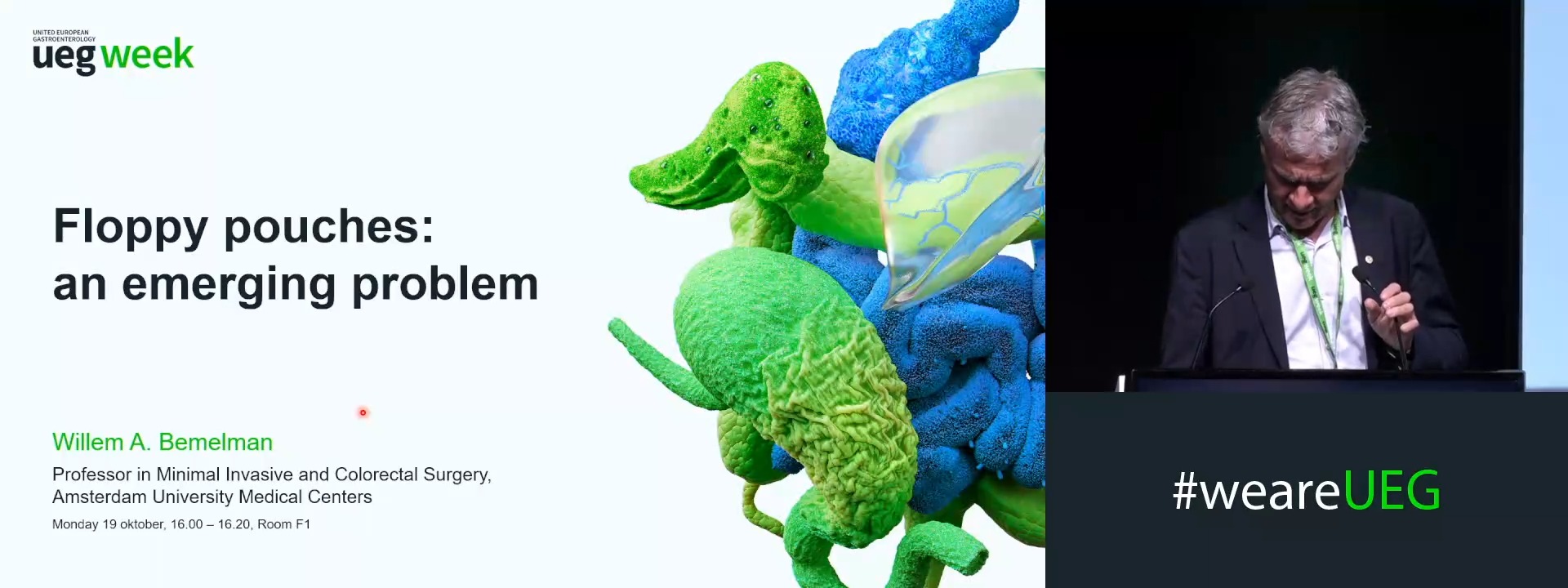
The floppy pouch: An emerging problem
Affiliations
1 Academisch Medisch centrum Dept. of Surgery - Department of Surgery, Academisch Medisch centrum Dept, Amsterdam, Netherlands

Log in to continue.
This content is part of Gutflix. Log in with your myUEG account, or create one free, to watch it.
Not sure what you can access? Learn more about account types.
Untangling the Knots: Exploring the Dynamics of Complex Relationships between Ulcerative Colitis and Clostridioides difficile Infections (Tillotts Pharma AG) (Complete Session)
Affiliations
1 Hvidovre University Hospital, Virum, Denmark
2 Guy’s and St Thomas’ NHS Foundation Trust, London, United Kingdom
3 Consultant Microbiologist, Newcastle Upon Tyne NHS Foundation Trust, Newcastle, United Kingdom

Log in to continue.
This content is part of Gutflix. Log in with your myUEG account, or create one free, to watch it.
Not sure what you can access? Learn more about account types.
EARLY VERSUS STANDARD INITIATION OF TERLIPRESSIN FOR HRS-AKI IN ACUTE-ON-CHRONIC LIVER FAILURE - A RANDOMIZED CONTROLLED TRIAL (ETERLI STUDY) (NCT04416282)
Affiliations
1 Institute of Liver and Biliary Sciences, New Delhi, India
Log in to continue.
This content is part of Gutflix. Log in with your myUEG account, or create one free, to watch it.
Not sure what you can access? Learn more about account types.
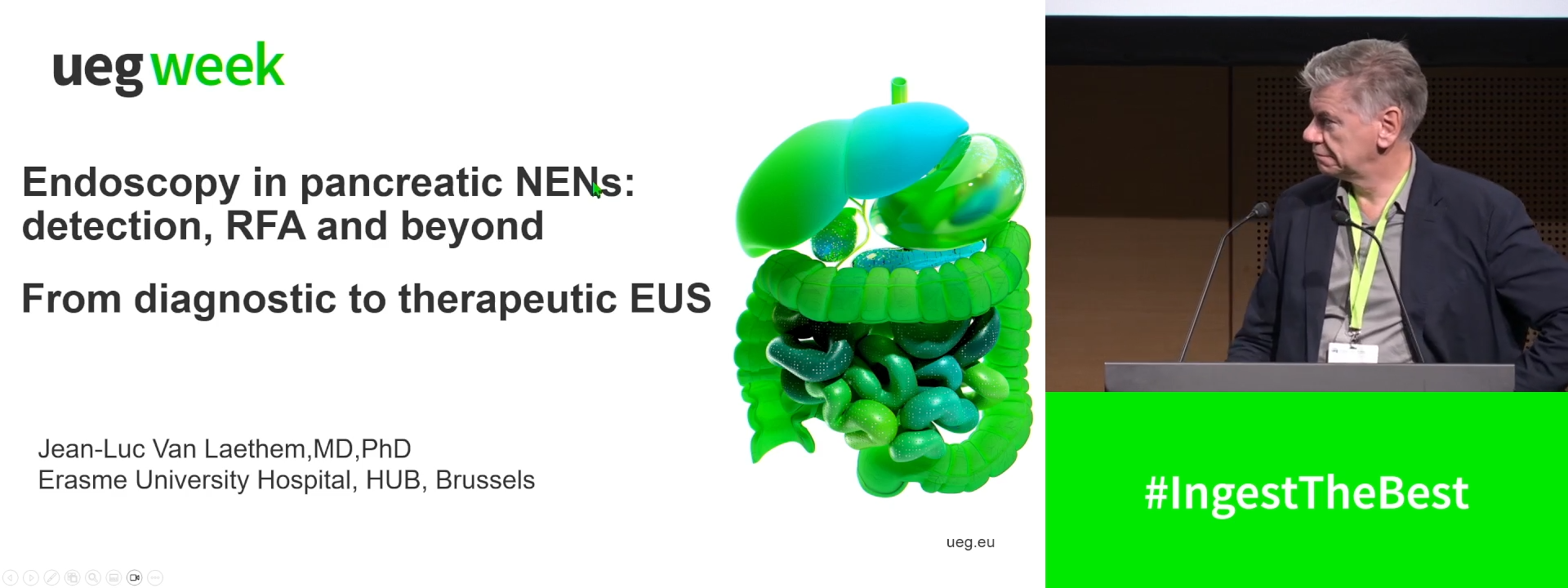
Endoscopy in pancreatic NENs: Detection, RFA and beyond
Affiliations
1 Erasme University Hopsital-ULB, Bruxelles, Belgium