UEG's educational platform for gastroenterology education bringing recordings, courses, guidelines, and more together in one place.
Most popular content
Rate for better recommendations!
Your feedback helps us show you more of what you like and less of what you dislike!
Log in to access this content.
Free for all myUEG account holders. Your access level is set automatically based on your occupation. Medical professionals get full access to all content. If you are a non-medical user, you can only access UEG Week content from congresses you attended.
Not sure what you can access? Learn more about account types.
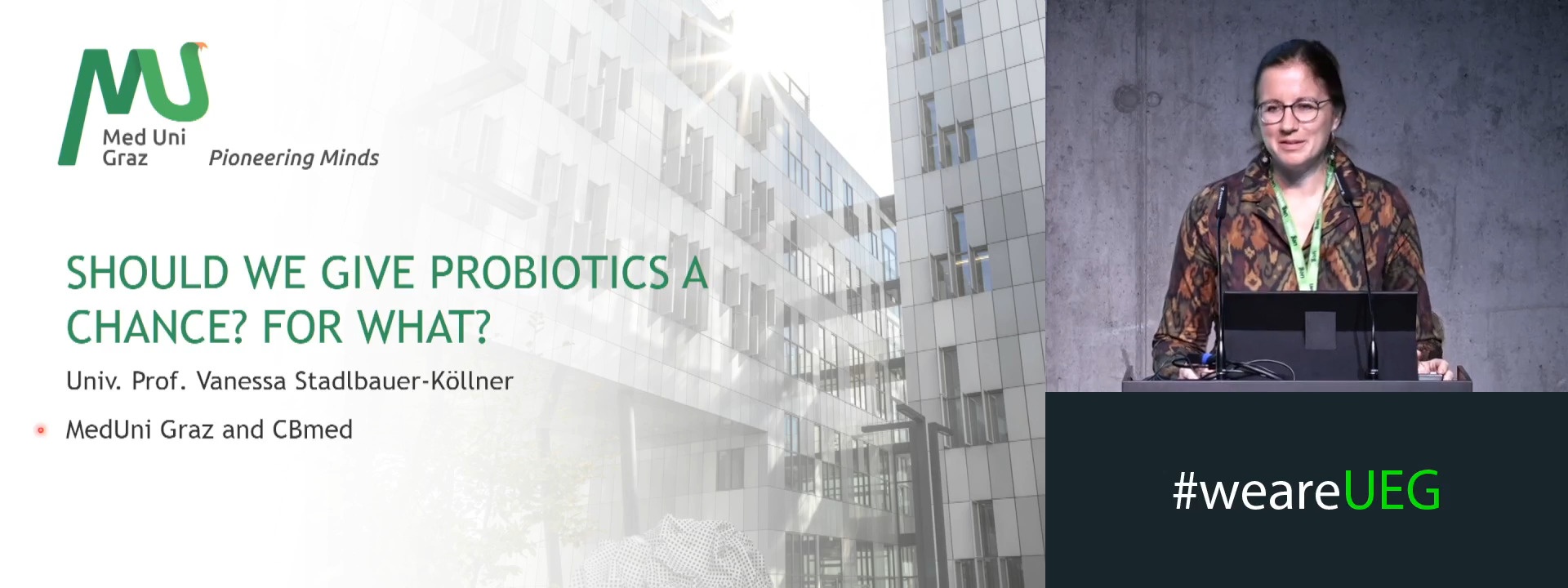
Should we give probiotics a chance? For what?
1 Center for Biomarker Research in Medicine (CBmed), Graz, Austria
Event
Topics
Citation
Published
Log in to access this content.
Free for all myUEG account holders. Your access level is set automatically based on your occupation. Medical professionals get full access to all content. If you are a non-medical user, you can only access UEG Week content from congresses you attended.
Not sure what you can access? Learn more about account types.
Summary: UEG Journal Session
1 University Medical Center Maribor, Maribor, Slovenia
Event
Topics
Citation
Published
Log in to access this content.
Free for all myUEG account holders. Your access level is set automatically based on your occupation. Medical professionals get full access to all content. If you are a non-medical user, you can only access UEG Week content from congresses you attended.
Not sure what you can access? Learn more about account types.
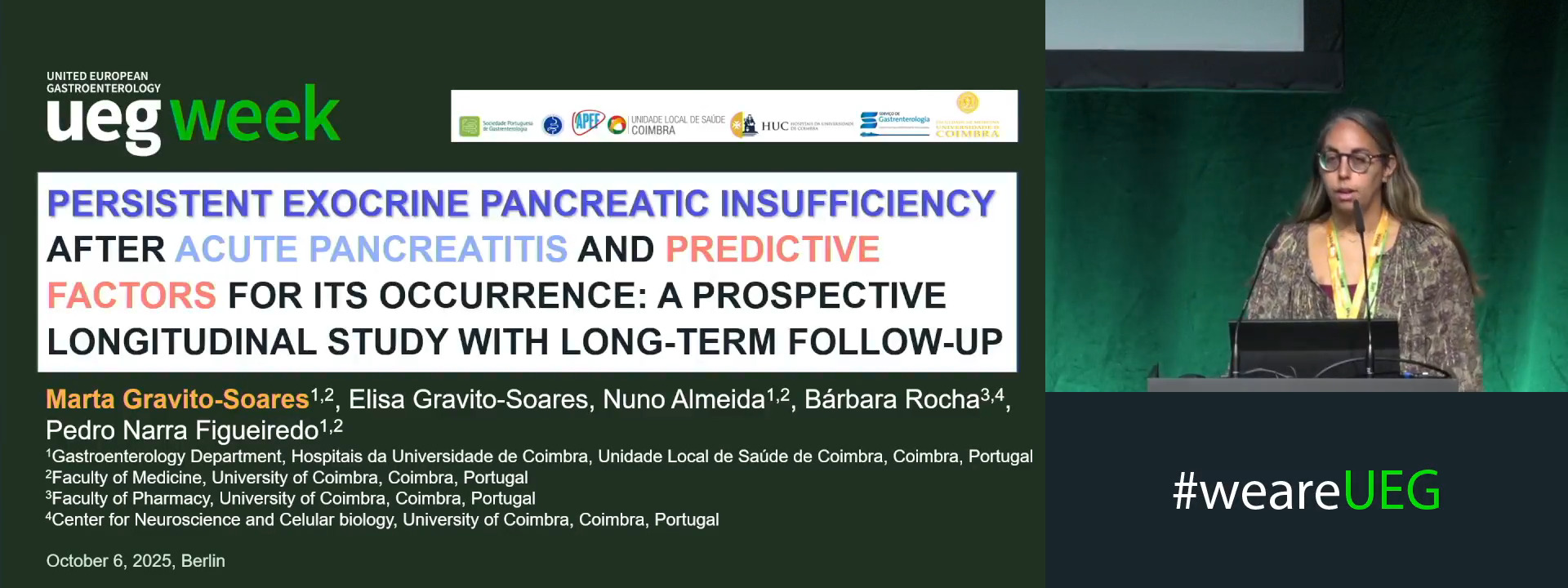
PERSISTENT EXOCRINE PANCREATIC INSUFFICIENCY AFTER ACUTE PANCREATITIS AND PREDICTIVE FACTORS FOR ITS OCCURRENCE: A PROSPECTIVE LONGITUDINAL AND RANDOMIZED CONTROLLED TRIAL STUDY WITH LONG-TERM FOLLOW-UP
Marta Gravito-Soares 1, Elisa Gravito-Soares 1, Nuno Peres Almeida 1, Barbara Rocha 2, Pedro Narra Figueiredo 1
1 Gastroenterology Department, Hospitais Universidade Coimbra, Unidade Local Saúde Coimbra, Coimbra, Portugal; Faculty of Medicine, University of Coimbra, Coimbra, Portugal, Coimbra, Portugal
2 Faculty of Pharmacy, University of Coimbra, Coimbra, Portugal; Center for Neuroscience and Celular biology, University of Coimbra, Coimbra, Portugal, Coimbra, Portugal
Event
Topics
Submission format
Citation
Published
Log in to access this content.
Free for all myUEG account holders. Your access level is set automatically based on your occupation. Medical professionals get full access to all content. If you are a non-medical user, you can only access UEG Week content from congresses you attended.
Not sure what you can access? Learn more about account types.
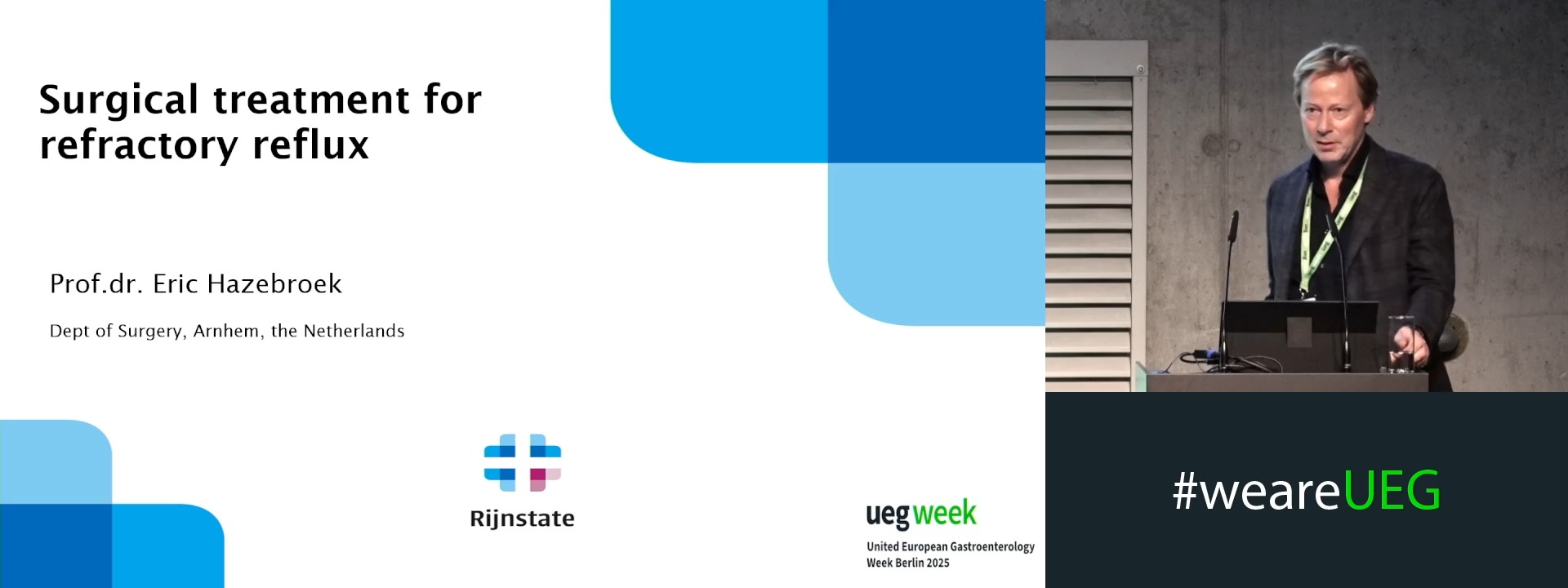
Surgical treatment for refractory reflux
1 Rijnstate Hospital, Arnhem, Netherlands
Event
Topics
Citation
Published
Log in to access this content.
Free for all myUEG account holders. Your access level is set automatically based on your occupation. Medical professionals get full access to all content. If you are a non-medical user, you can only access UEG Week content from congresses you attended.
Not sure what you can access? Learn more about account types.
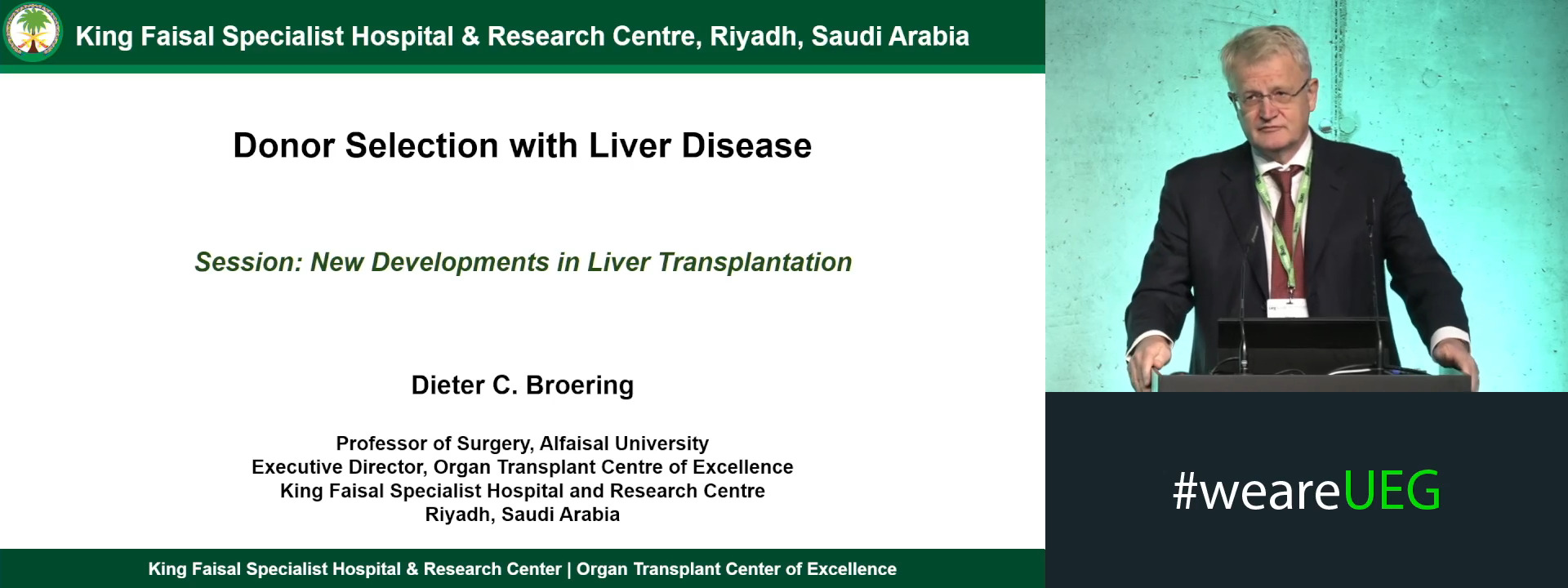
Donor selection with liver disease
1 King Faisal Specialist Hospital & Research Centre (KFSH&RC), Riyadh, Saudi Arabia
Event
Topics
Citation
Published
Log in to access this content.
Free for all myUEG account holders. Your access level is set automatically based on your occupation. Medical professionals get full access to all content. If you are a non-medical user, you can only access UEG Week content from congresses you attended.
Not sure what you can access? Learn more about account types.
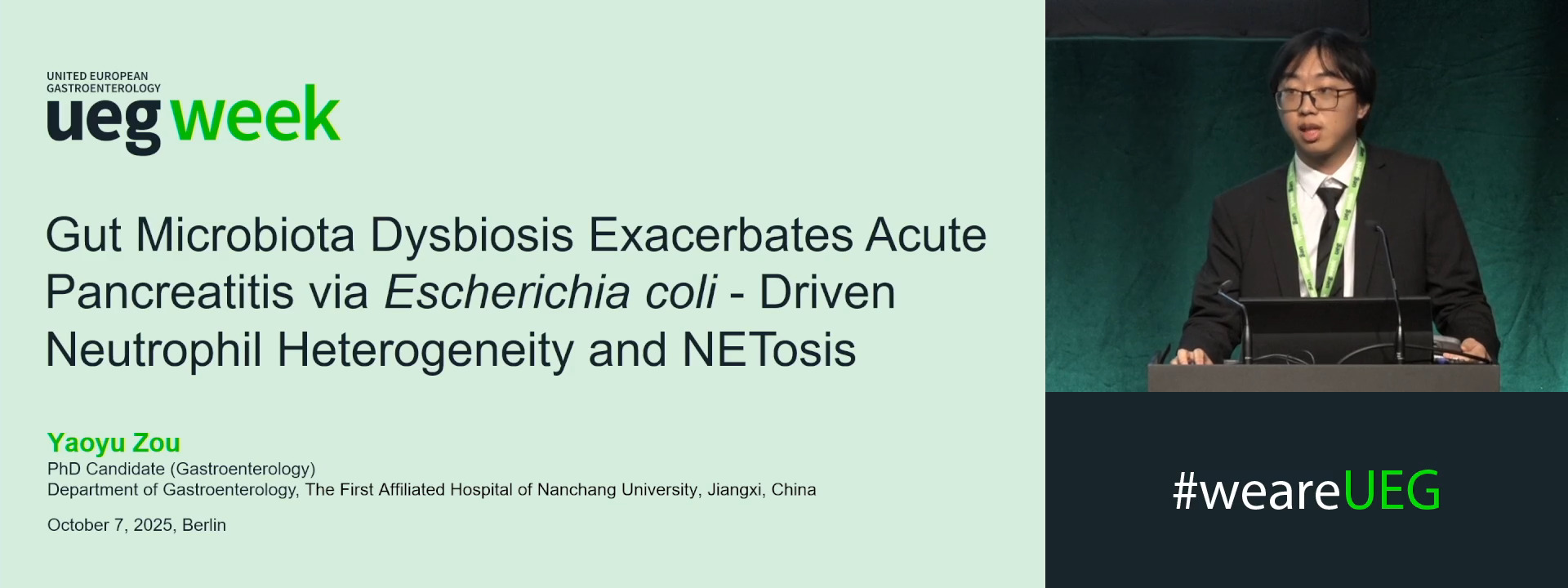
MECHANISTIC STUDY ON THE ROLE OF GUT MICROBIOTA IN REGULATING NEUTROPHIL EXTRACELLULAR TRAPS (NETS) FORMATION TO PROMOTE THE SEVERITY OF ACUTE PANCREATITIS
1 The First Affiliated Hospital of Nanchang University, Nanchang, China
Event
Submission format
Citation
Published
Log in to access this content.
Free for all myUEG account holders. Your access level is set automatically based on your occupation. Medical professionals get full access to all content. If you are a non-medical user, you can only access UEG Week content from congresses you attended.
Not sure what you can access? Learn more about account types.
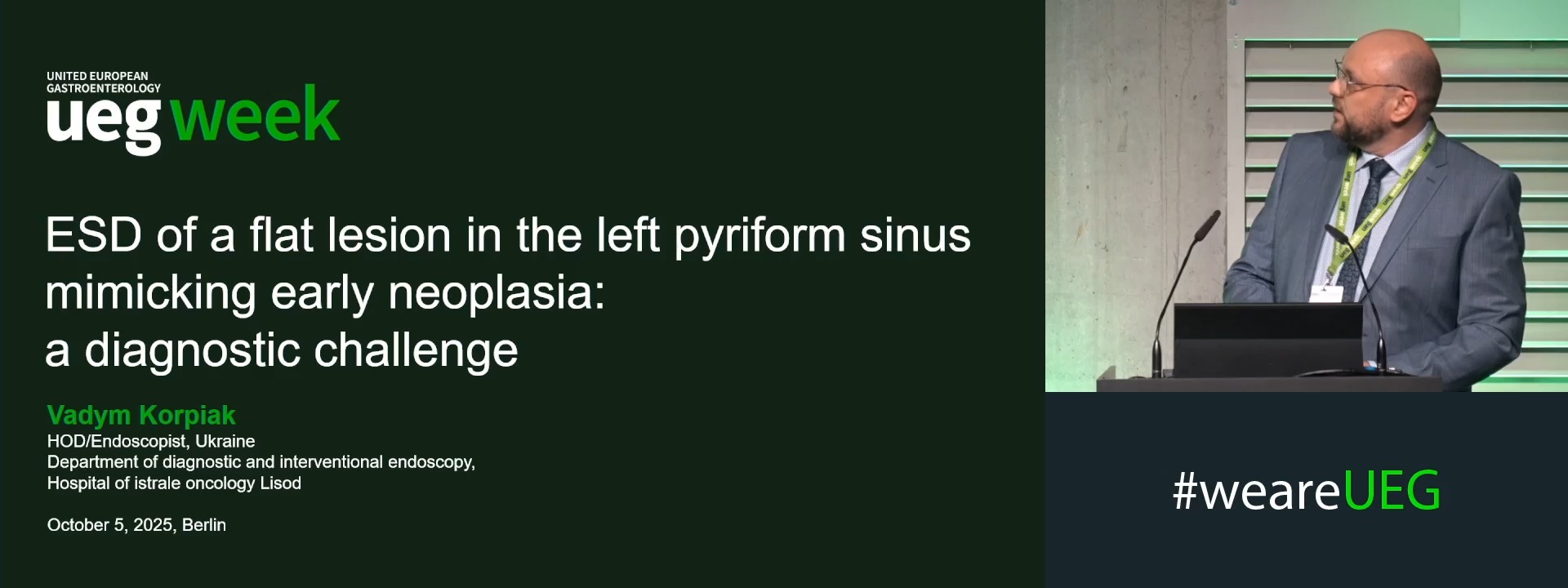
ESD OF A FLAT LESION IN THE LEFT PYRIFORM SINUS MIMICKING EARLY NEOPLASIA: A DIAGNOSTIC CHALLENGE
1 LLC "Gastrocenter", Olymed, Kyiv, Ukraine|||National University of Kyiv Mohyla Academy, Kyiv, Ukraine
2 LLC "Gastrocenter", Olymed, Kyiv, Ukraine
3 CSD Lab Medical Laboratory, Kyiv, Ukraine
4 Lisod Hospital, Kyiv, Ukraine